Surfaces no. 2
 Call Kai
 Learn
 Practice Test
 Spaced Repetition
 Match
 Flashcards
 Knowt Play
1/41

There's no tags or description
Looks like no tags are added yet.
42 Terms
Surface Coatings
is an application of a thin film of
protective material to the surface of an object.
Purposes of surface coatings
1. provide corrosion protection.
2. enhance product appearance.
3. increase wear resistance and/or reduce friction of
there surface.
4. increase electrical conductivity.
5. increase electrical resistance.
6. prepare a metallic surface for subsequent
processing.
7. rebuild surfaces worn or eroded during service
Types Of Coatings
Electroplating (electrochemical plating)
Anodizing
Porcelain Enameling
Hot Dipping
Painting
Electroplating
is the process of covering the surface of an object with metal (plating).
An electric current is used to transfer ions of one metal on to the surface of
another material.
The anode is generally made of the metal being plated
The cathode is the work part.
Direct current from an external power supply is passed between
the anode and the cathode
Purposes of Electroplating
• Improve Appearance
• Increase Corrosion Protection
• Increase Wear Protection
Common metals used for electroplating
1. Chromium
2. Nickel
3. Silver
4. Zinc
5. Copper
6. Gold
Industries Electroplating is used
Automobile
Electronics
Jewelry
Hardware
Anodizing
is a process to increase the thickness
of a metal’s natural oxide surface
It works best on Aluminum metal.
Anodizing Process (Memorize)
1. The aluminum is put into an acid electrolyte bath.
2. An electric current through the medium.
3. Oxygen ions from the electrolyte combine with the aluminum atoms
at the surface creating a protective layer of Al2O3
(Anodizing is highly controlled oxidation process)
Anodizing Advantages
1. Increased resistance to corrosion
2. Increased resistance to wear
3. Increased surface toughness
4. Improved surface appearance
5. Improved painting results
Porcelain Enameling
is a material made by melting
powdered glass on to a surface
Powered glass is applied to a surface and then fired
until the powder melts and then hardens to a smooth,
durable coating.
Firing temperatures are usually between 750 - 850 °C
Enamel can be used on metal and ceramics or any
material that will withstand the melting temperature.
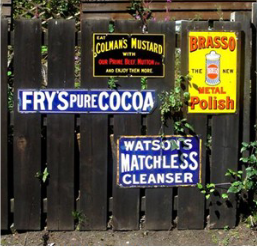
Metal Signs
Porcelain Enamel Application

Porcelain Coated Steel Bathtub
Porcelain Enamel Application

Cookware
Porcelain Enamel Application
Purpose of Porcelain Enameling
It is used to protect surfaces from:
1. Corrosion
2. chemical attack
3. physical damage
4. improve the appearance of the product.
Hot Dipping
• Hot dipping is a process in which a metal substrate is immersed
in a molten bath of a second meta.
• The primary purpose of hot dipping is corrosion resistance.
• Coating thickness is typically 0.04 to 0.09 mm (0.0016–0.0035in). Thickness is controlled largely by immersion time. Bath temperature is maintained at around 450C (850F).
Examples of Hot Dipping
• galvanizing is when zinc (Zn) is coated onto steel or iron.
• aluminizing refers to coating of aluminum (Al) onto a substrate.
• tinning is coating of tin (Sn).
• terneplate describes the plating of
• lead–tin alloy onto steel.
(Galvanizing is by far the most important hot dipping
process)

Hot Dipping Applications
Advantages of Hot Dipping
1. Prevents corrosion
2. Low cost
3. Easy application
4. Long maintenance-free service life
Painting
Has two purposes:
Decorative
Corrosion Protection
Organic Coatings
are polymers and resins, produced either
naturally or synthetically, usually formulated to be applied as liquids
that dry or harden as thin surface films on substrate materials.
Binders (Organic coatings formulation)
are polymers and resins that determine the solid-state
properties of the coating, such as strength, physical properties, and
adhesion to the substrate surface most common binders are natural
oils, resins polyurethan, epoxies, acrylic, and cellulosic.
Dyes (Organic coatings formulation)
are soluble chemicals that color the coating liquid but do
not conceal the surface beneath.
Pigments (Organic coatings formulation)
are solid particles of uniform, microscopic size that are
dispersed in the coating liquid but insoluble in it. They not only color
the coating; they also hide the surface below.
Solvents (Organic coatings formulation)
are used to dissolve the binder and certain other
ingredients in the liquid
• coating composition.
Additives (Organic coatings formulation)
in organic coatings include surfactants (to facilitate
spreading on the surface), biocides and fungicides, thickeners,
freeze/thaw stabilizers, heat and light stabilizers, coalescing agents, plasticizers, defoamers, and catalysts to promote cross-linking.
Methods of Paint Application
1. Dip coating (liquid)
2. Spray coating (liquid)
3. Powder coating (powder)
4. Applicator coating – brushes or roller
Dip Coating
Submerges the whole part in the paint to
form a thin uniform layer coat on all surfaces.
(Used for a protective coat than decorative)
Spray Painting
is a painting technique where a device sprays
a coating of paint through the air onto a surface.
Powder Coating
is a coating that is applied as a dry powder.
1. The powder is applied and is cured under heat to allow it to flow and form a "skin".
2. The powder may be a thermoplastic or a thermoset
polymer.
3. It makes a hard finish that is tougher than conventional paint.
Powder coating is mainly used for coating of metals, such as appliances, hardware, automobile and bicycle parts.
Types of Surface Cleaning
Chemical Cleaning
Mechanical Cleaning
Chemical Cleaning Methods
Use chemicals to remove unwanted contaminants from the work surface
Mechanical Cleaning Methods
Involves removal of contaminants by various mechanical operations
Reasons why parts must be cleaned
1. Prepare surface for processing, such as applying a
coating or adhesive
2. Remove contaminants that might react with the
surface
3. Improve appearance of the product.
Chemical Cleaning Processes
1. Solvent cleaning
2. Alkaline cleaning
3. Emulsion cleaning
4. Acid cleaning
5. Ultrasonic cleaning
Solvent Cleaning
1. Oil and grease are removed from a metallic surface
by chemicals that dissolves them.
Common application techniques:
2. hand wiping
3. immersion
4. Spraying
5. Vapor degreasing
Alkaline Cleaning
Alkaline cleaners contain strong bases like sodium hydroxide or potassium hydroxide.
Uses an alkali solvent to remove:
1.Oils
2.Grease
3.Wax
4.Metal chips
Acid Cleaning
Removes oils and light oxides from metal surfaces using acid solutions combined with water and emulsifying agents
Common application techniques:
1.Soaking
2.spraying,
3.manual brushing or wiping
Acid Pickling
is a heavy duty metal surface treatment used to remove oxides, rusts, and scale.
Acid pickling is a deeper removal process compared to acid cleaning
Mechanical Surface Cleaning
Mechanical cleaning is the removal of soils, scales, or
films from surfaces by using abrasives or similar
mechanical action
Mechanical cleaning processes:
1. Blast finishing and shot peening
2. Mass finishing processes
Blast Finishing
•Is the high velocity impact of particles to clean a surface.
• The particles are projected at the target surface by pressurized air or centrifugal force.
• Well known is sand blasting using SiO2
• Alumina, and silicon carbide, nylon, and crushed nut shell can be used.
• In shot peening: Small cast steel balls
Are used.
• Shot peening is used to improve
fatigue strength

Mass Finishing