AP Bio Unit 2 Test
 Call Kai
 Learn
 Practice Test
 Spaced Repetition
 Match
 Flashcards
 Knowt Play
1/29

There's no tags or description
Looks like no tags are added yet.
30 Terms
Energy Harvest via NAD+
In CR, electrons from organic compounds are transferred to NAD+ (coenzyme)
NAD+ functions as an oxidizing agent (gains electrons = reduced)
NADH → stored energy that is tapped to synthesize ATP (reduced form of NAD+)
NADH passes electrons to ETC
ETC passes electrons in steps while oxygen pulls electrons down the chain in an energy yielding tumble
Energy yielded is then used to regenerate ATP
Substrate level phosphorylation vs. oxidative phosphorylation
Both produce ATP!
But…
Substrate-level phosphorylation occurs in glycolysis and in the citric acid cycle
An enzyme transfers a phosphate from a substrate to ADP to form ATP
Produces small amount of ATP
Oxidative phosphorylation - occurs in last phase of cellular respiration
Requires an ETC (electron transport chain) AND oxygen
Uses ATP synthase chemiosmosis (hydrogen ion gradient)
Produces larger amounts of ATP per glucose
Stages of Cellular Respiration
Glycolysis (breaks down glucose into pryuvate)
Citric acid cycle (completes break down of glucose)
Oxidative phosphorylation (accounts for most of the ATP synthesis which is powered by redox reactions)
Role of Electron Carriers and what they are
NADH and FADH2
Transport electrons to the electron transport chain → temporarily store energy to drive ATP production
Products per glucose in glycolysis
2 pyruvate
2 NADH (take electrons to ETC)
2 ATP (via substrate level phosphorylation)
2 H2O (waste)
Phases of Glycolysis and location
Energy input phase (steps 1-5) → 2 ATP required
Energy payoff phase (steps 6-10) → 4 ATP produced
Therefore, net is 2 ATP glucose
Occurs in the cytoplasm
In total, it takes 10 steps to split O and convert glucose into 2 molecules of pyruvate
Transition reaction “Turner of the wheel”
Occurs after glycolysis and before citric acid cycle
As each pyruvate enters into the mitochondria they go through the transition reaction
Each pyruvate form acetyl CoA (required for citric acid cycle)
Products per Glucose in Transition Reaction
2 acetyl CoA
2 CO2 (waste)
2 NADH
Krebs Cycle - Location, steps, electron carriers
Occurs in the mitochondrial matrix
The acetyl group of ACoA combines with oxaloacetate, forming citrate
Next seven steps decompose citrate back to oxaloacetate
NADH and FADH2 produced by the cycle relay electrons extracted from food to the ETC
Products per turn in Kreb
1 ATP (from substrate-level phosphorylation) → 2 ATP
3 NADH → 6 NADH
1 FADH2 → 2 FADH2
2 CO2 → 4 CO2 (waste)
Oxidative phosphorylation
Occurs in mitochondrial inner membrane (cristae)
Requires oxygen
NADH and FADH account for most of energy extracted from food
2 electron carriers power ATP synthesis via oxidative phosphorylation
Requires oxygen, chemiosmosis (H ion gradient)
Produces most of the ATP (32-34)
Steps for Oxidative Phosphorylation
NADH and FADH2 drop off electrons at the start of the ETC. They are now oxidized and go back to previous steps to pick up more electrons.
Electrons hop down the ETC towards oxygen (final electron acceptor). As they move down the ETC, they release free energy. This free energy is used to pump hydrogen ions AGAINST the concentration gradient from the matrix into the intermembrane space. This creates a high hydrogen concentration in the intermembrane space.
As hydrogen ions build up in the IM space they move ALONG the concentration gradient back into the matrix through ATP synthase (facilitated diffusion). This activates the ATP synthase enzyme
The activated ATP synthase enzyme now catalyzes the reaction of ADP + P → ATP. This produces about 32-34 ATP per glucose
Oxygen also binds to hydrogen ions (along with the electrons from the ETC) to form water which is a waste product
Pathway of ETC
Located in cristae of mitochondrion
Proteins in ETC exist in multiprotein componenets
Carriers are reduced and oxidized
Electrons drop in free energy as they down the chain, pass O2 and form H2O (free energy is used to transfer H+ against the concentration gradient because active transport!)
Fermentation
Occurs after glycolysis if there are no mitochondria or no oxygen. At the end of glycolysis, the pyruvate enters fermentation. Fermentation does not produce any additional ATP. The only reason fermentation occurs is to regenerate the NAD+ so the glycolysis can continue
2 Types of Fertmentation
Alcoholic Fermentation - yeast cells
2 step process that converts pyruvate into alcohol and carbon dioxide
Humans use this in brewing and baking industry
Lactic Acid Fermentation - most bacteria and skeletal muscles in human
No carbon dioxide produced
1 step process where pyruvate gets reduced (from NADH) to form lactate
Signal Transduction Pathway
Molecule that relay a signal from receptor to response are mostly proteins
Receptor activates another protein, which activates another and another until the protein producing the response is avtivated
At each step, the signal is transduced into a different form, usually a conformational change
Pathway similarities with prokaryotes suggest ancestral signaling molecules adopted by eukaryotes
Local signaling
Animal cells communicate by direct contact through cell junctions that connect the cytoplasm of adjacent cells
Animal cells communicate using local regulators

Long distance signaling
Plants and animals use hormones
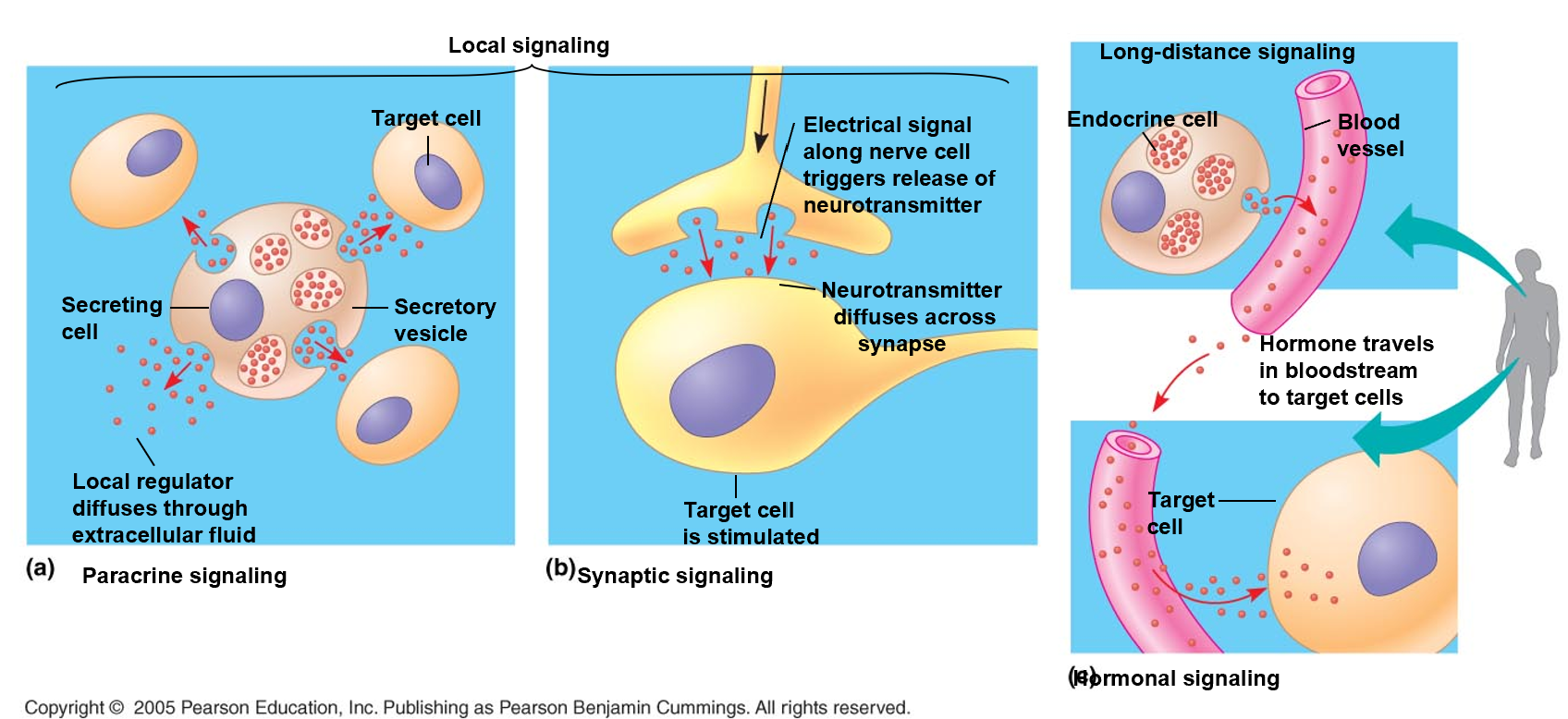
3 stages of cell signaling
Reception: binding between signal molecules (ligands) and receptors (plasma membrane receptors), which triggers a conformational change
Transduction
Response: Cell signaling leads to regulation of cytoplasmic activities or transcription (the cell copies genetic instructions)
Response may occur in the cytoplasm or in the nucleus
Signaling pathways regulate the synthesis of enzymes or other proteins, usually by turning genes on or off in the nucleus
The final activated molecule may function as a transcription factor
G-protein-linked receptors (in plasma membrane)
G-protein-linked works with help of G-protein
G-protein acts as on/off switch: if GDP is bound to G protein, the G protein is inactive
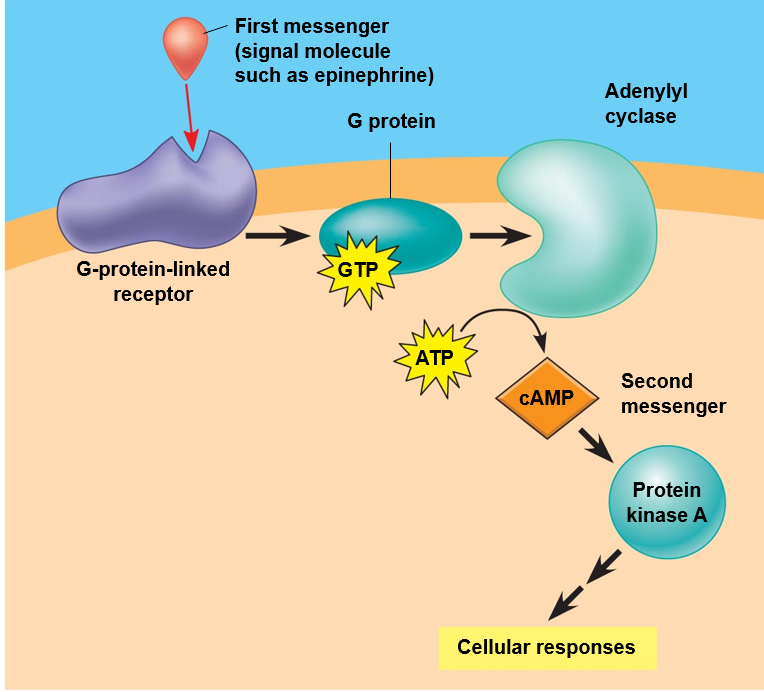
Binding of signal molecule to receptor cause receptor to bind to inactive G protein and activates G protein (GTP replaces GDP)
Activated G protein activates enzyme leading to cellular response
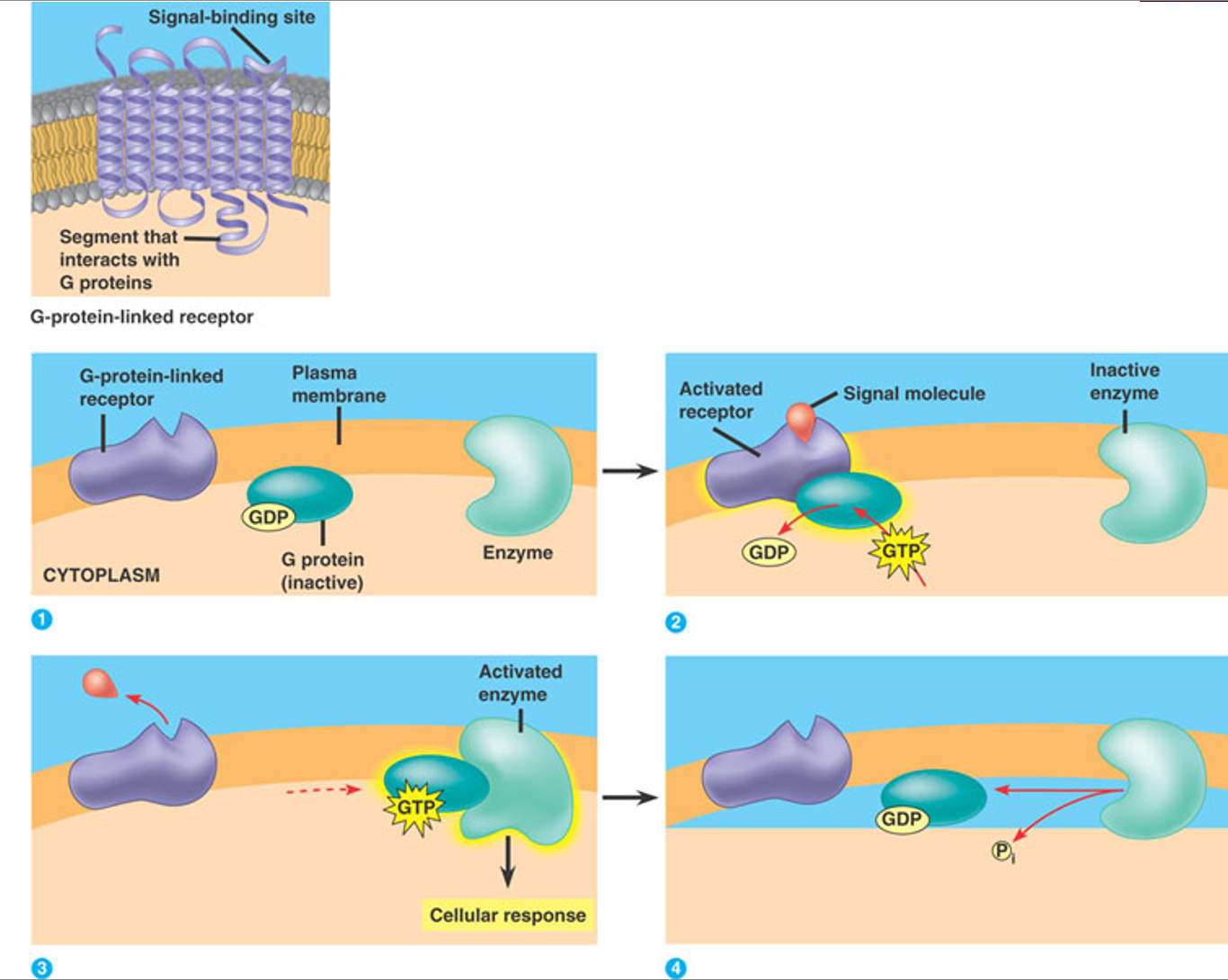
Receptor tyrosine kinases
Receptors that attach phosphates to tyrosine
Binding of a signaling molecule causes 2 tyrosine kinases together (dimerization)
Each tyrosine attaches to a phosphate from ATP, which allows proteins in cells to bind to tyrosine and activate the protein leading to cellular response
Receptor tyrosine kinase can trigger multiple signal transduction pathways at once

Ion Channel Receptors
Act as a gate when receptor changes shape
When signal molecule binds as a ligand to the receptor, the gate allows specific ions, such as Na+ or Ca2+ through channel in the receptor
When signal molecule leaves, gate closes
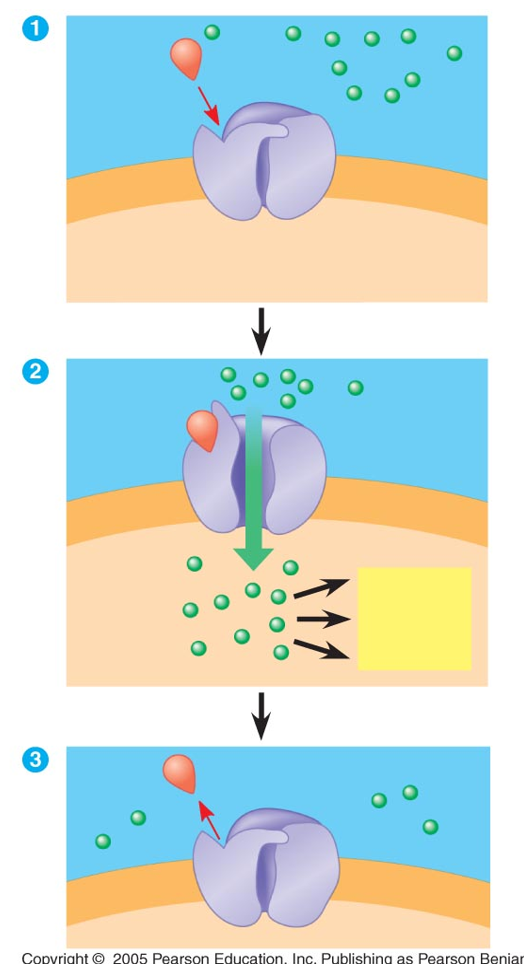
Transduction through protein phosphorylation and dephosphorylation
Signal transmitted through protein phosphorylations
Phosphatase enzymes remove the phosphates from proteins (dephosphorylate) thus deactivating them
Cascade of protein phosphorylation and dephosphorylation which turns molecular activities on and off (happens when the initial signal is not present)
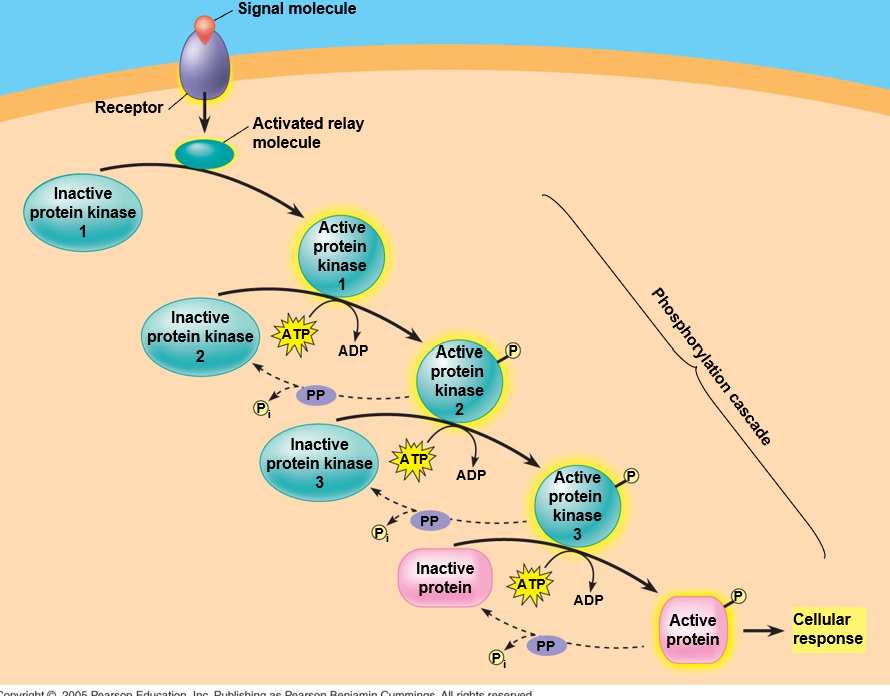
Why multiple steps of transduction?
Amplify signal
More opportunities for cell control
Same stimuli can lead to different responses in different cells depending on transduction pathway
Second Messengers
Small, nonprotein, water-soluble molecules or ions that spread through cell by diffusion
Participate in pathways initiated by G protein-linked-receptors and receptor tyrosine kinases
E.g cyclic amp
Adenyl cyclase, an enzyme in the plasma membrane, converts ATP to cAMP in response to an extracellular signal
cAMP usually activates protein kinase A which then phosphorylates other proteins
Deactivation of cAMP
G protein systems inhibit adenyl cyclase to prevent excess cAMP
Excess cAMP→ Cholera (produces toxins/enxymes that locks G protein in its active form to continously stiumlate production of cAMP)
Increased levels of cAMP cause intestinal cells to secrete large amounts of salts into the intestines by osmosis
Causes diarrhea and dehydration
Calcium ions and Inositol Triphosphate
Ca2+ acts as second messengers in many pathways
Results in cells regulating concentration

Multistep pathways do what?
Amplify signal (and thus response)
# of activated products built up
Contribute to the specificity of the response
Different cells have different proteins
Each cell can receive and respond to signals differently

Scaffolding Proteins and Large Signaling Complexes
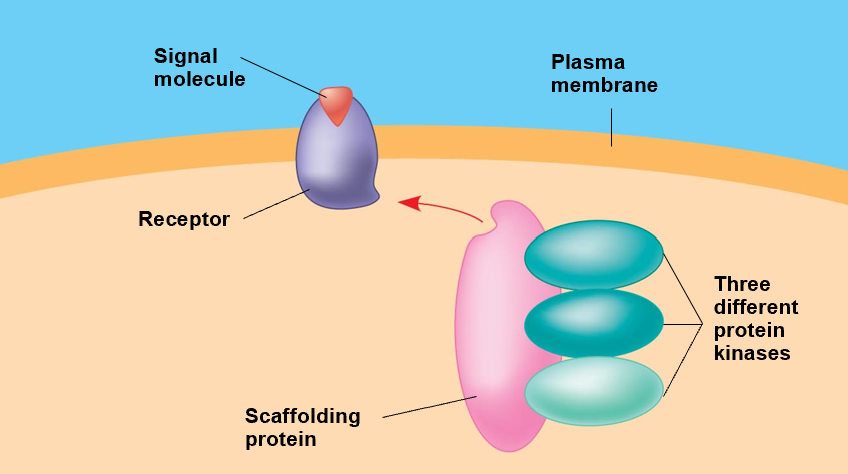
Scaffolding proteins are large relay proteins that have other relay proteins attached to them
Scaffolding proteins can increase the signal transduction efficiency
Different cells have different scaffolding proteins containing different protein kinases
Termination of signal
Inactivation mechanisms are essential
When signal molecules leave the receptor, the receptor reverts to its inactive state