PT 715- Running & Running-Related Injuries 2026

0.0(0)
Studied by 0 people
call kaiCall Kai
learnLearn
examPractice Test
spaced repetitionSpaced Repetition
heart puzzleMatch
flashcardsFlashcards
GameKnowt Play
Card Sorting

1/59

encourage image

There's no tags or description

Looks like no tags are added yet.

60 Terms

1
New cards

Why run?

knowt flashcard image
2
New cards

Health benefits of running

knowt flashcard image
3
New cards

what is running? implications:

knowt flashcard image
4
New cards

Phases of running: formal vs alternate

knowt flashcard image
5
New cards

Phases of running: formal vs alternate

knowt flashcard image
6
New cards

normal mechanics

knowt flashcard image
7
New cards

Biomechanical Requirements

knowt flashcard image
8
New cards

Essential muscles for running

knowt flashcard image
9
New cards

Running Related Injury (RRI)

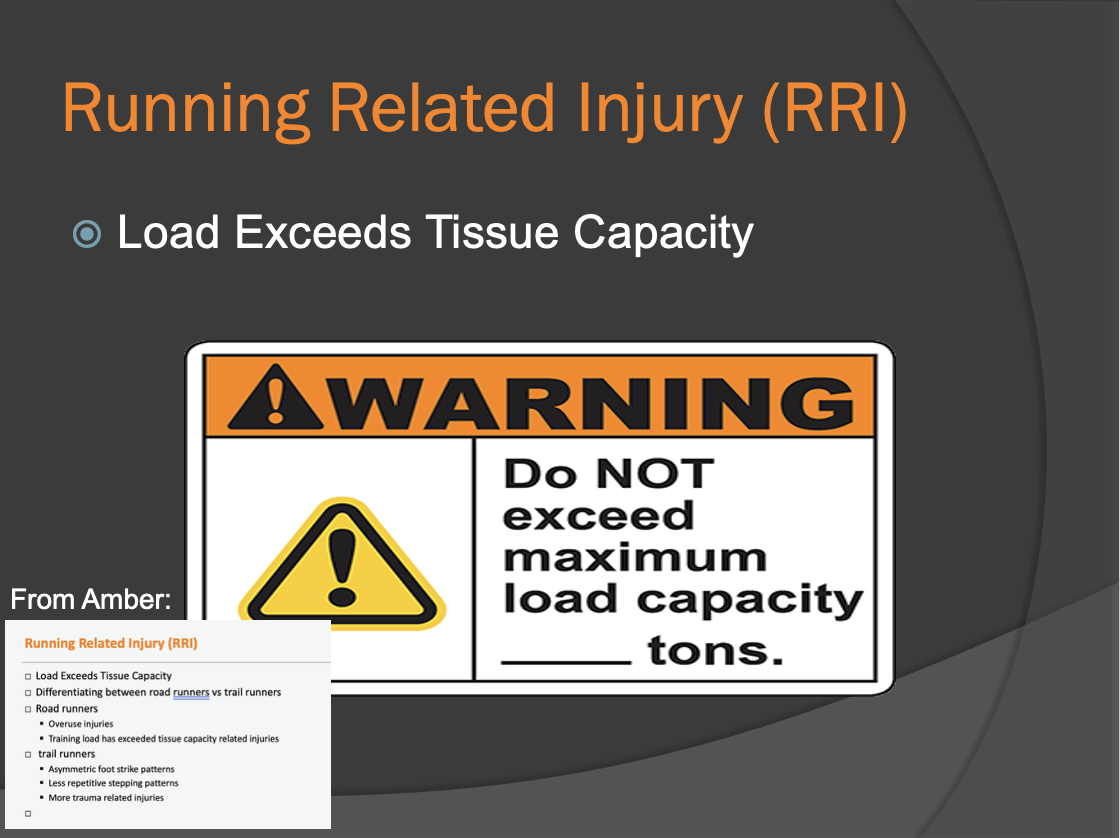
Road runners: typically overuse typ injuries – tissue load has exceeded capacity

Trail: repetitive are less common cause footstrike itsnt as even – they are more trauma related (slipped, fallen, sprained ankle, rolled it, tripped on something)
<p><span>Road runners: typically overuse typ injuries – tissue load has exceeded capacity</span></p><p style="text-align: left;"><span>Trail: repetitive are less common cause footstrike itsnt as even – they are more trauma related (slipped, fallen, sprained ankle, rolled it, tripped on something)</span></p>
10
New cards

Injuries: consistent factors

knowt flashcard image
11
New cards

Factors contributing to running inuries

knowt flashcard image
12
New cards

Shock attenuation (passive vs active picture)

knowt flashcard image
13
New cards

Running impact: does heel strike increase impact?; downhill; uphill

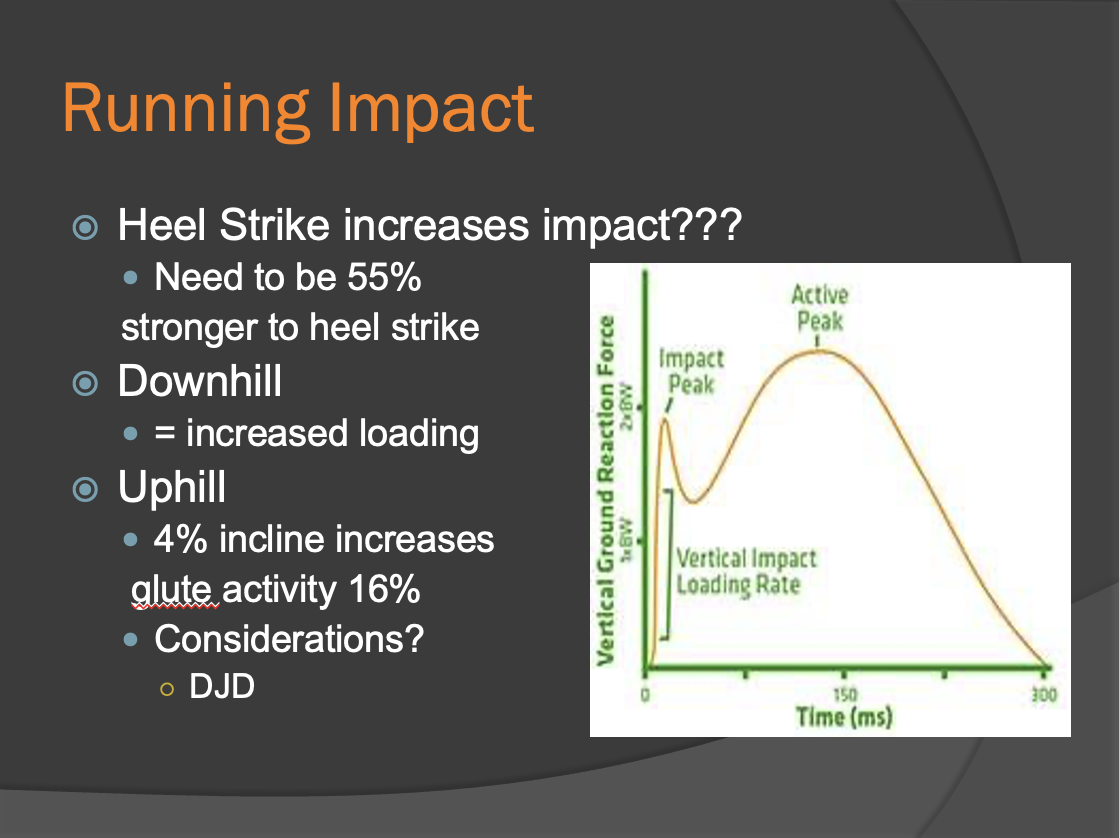
The closer your foot is to under your COM the less ground reaction forces you will have

The more you can get your foot under COM the more efficient you will be

If you put your leg way out front its causing you to provide more effort
<p><span>The closer your foot is to under your COM the less ground reaction forces you will have</span></p><p style="text-align: left;"><span>The more you can get your foot under COM the more efficient you will be</span></p><p style="text-align: left;"><span>If you put your leg way out front its causing you to provide more effort</span></p>
14
New cards

Loading rate

knowt flashcard image
15
New cards

Clinical Conditions associated with poor active shock attenuation

knowt flashcard image
16
New cards

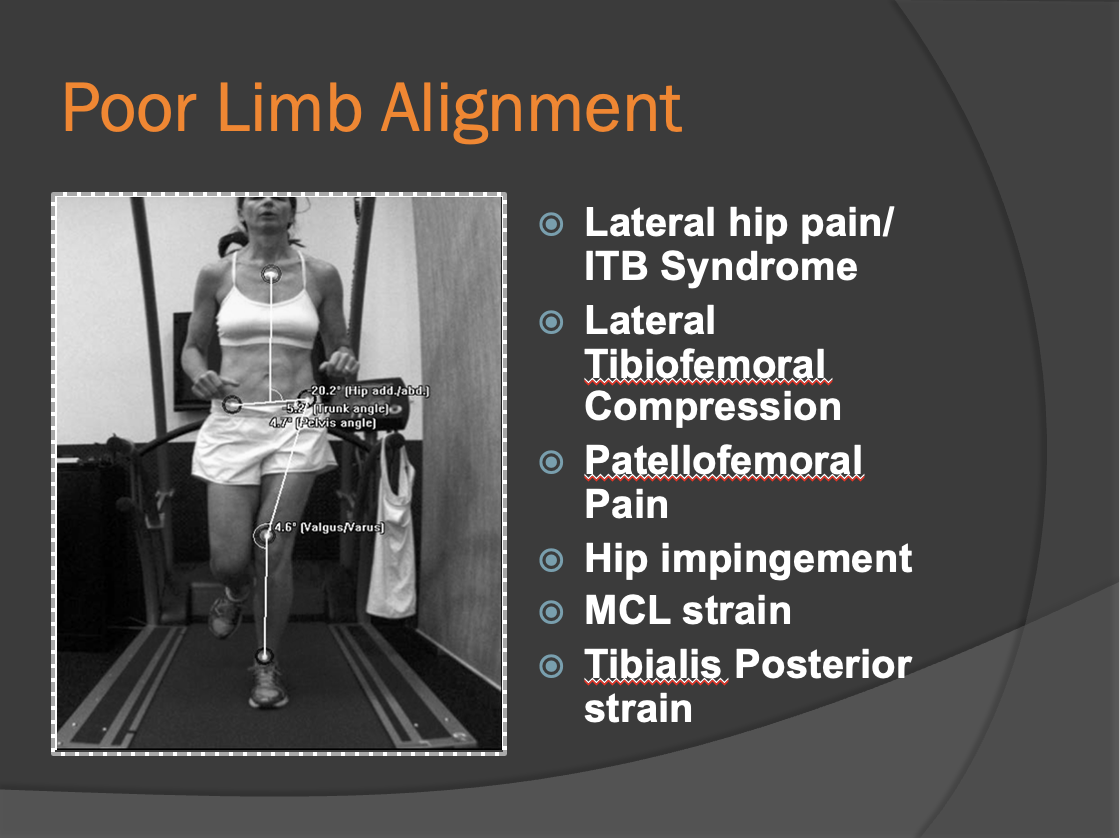
poor limb alignment

knowt flashcard image
17
New cards

clinical conditionas associated with poor pelvis/trunk stability

knowt flashcard image
18
New cards

Runner evaluation

knowt flashcard image
19
New cards

Outcome measures

knowt flashcard image
20
New cards

Running hx

knowt flashcard image
21
New cards

footwear

knowt flashcard image
22
New cards

biomechanical exam

knowt flashcard image
23
New cards

biomechanical evaluation 2

knowt flashcard image
24
New cards

Runner Readiness Assessment

knowt flashcard image
25
New cards

RRA - Breakouts

knowt flashcard image
26
New cards

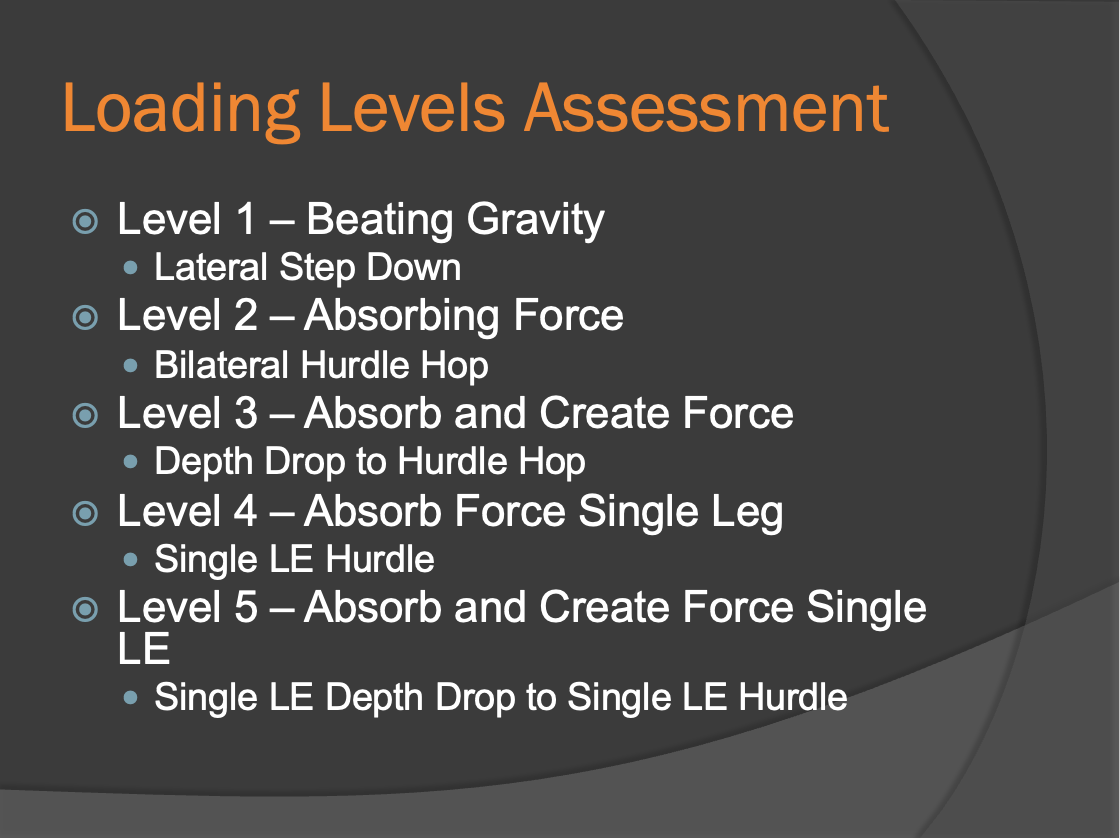
Loading levels assessment

knowt flashcard image
27
New cards

why video?

knowt flashcard image
28
New cards

video analysis

knowt flashcard image
29
New cards

Gait categories

knowt flashcard image
30
New cards

Categorizing allows ___

knowt flashcard image
31
New cards

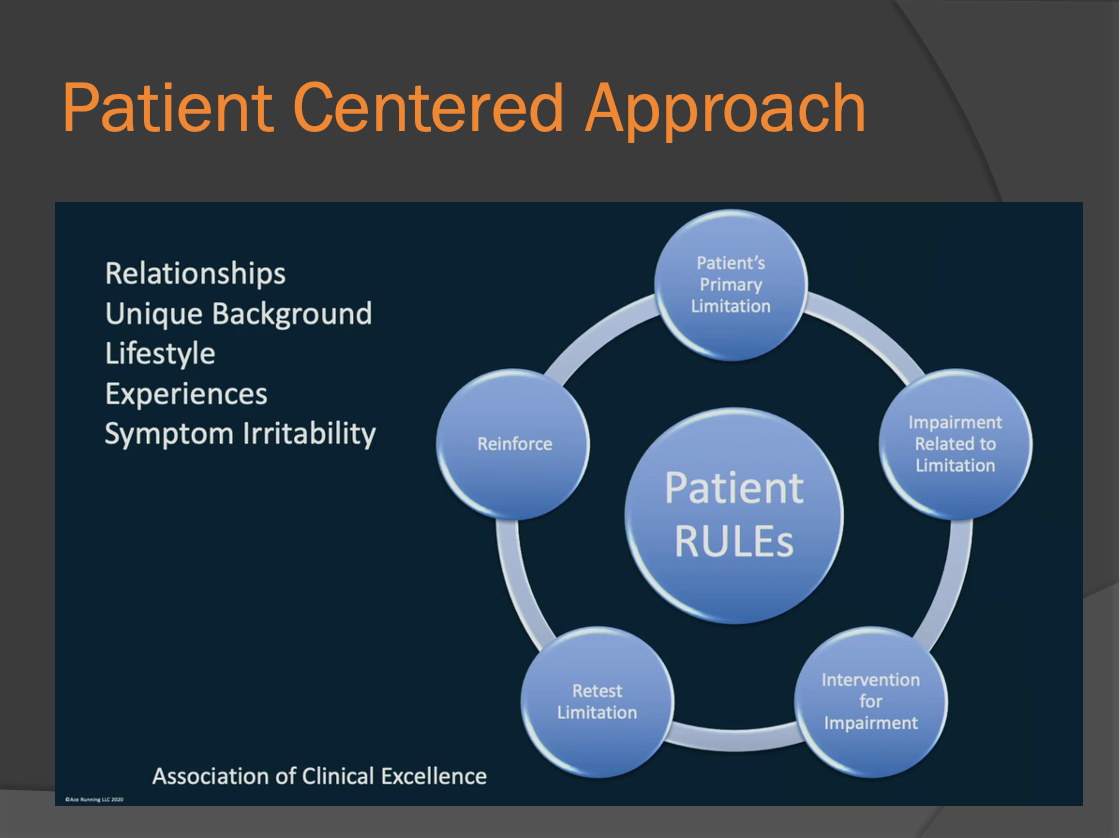
Patient centered approach

knowt flashcard image
32
New cards

treating runners image

knowt flashcard image
33
New cards

Shifting load: active; passive

knowt flashcard image
34
New cards

interventions

knowt flashcard image
35
New cards

running technique

knowt flashcard image
36
New cards

cadence

knowt flashcard image
37
New cards

training progression

knowt flashcard image
38
New cards

general recommendations

knowt flashcard image
39
New cards

Exercise goals

knowt flashcard image
40
New cards

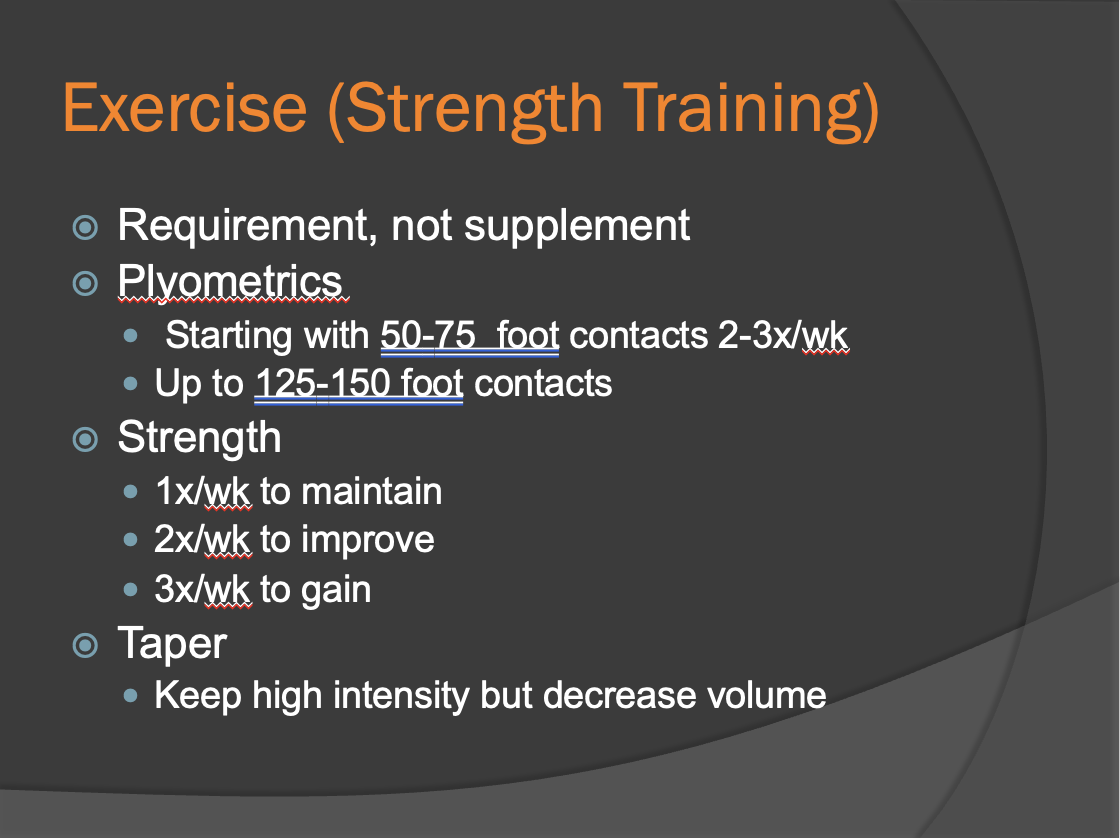
exercise (strength training)

knowt flashcard image
41
New cards

Adding plyometrics

knowt flashcard image
42
New cards

footwear (traditional vs truth)

knowt flashcard image
43
New cards

footwear 2: increasing cushion =

knowt flashcard image
44
New cards

minamalist footwear? requirements

knowt flashcard image
45
New cards

other footwear considerations: what is the best indicator; maximalist vs minamalist

knowt flashcard image
46
New cards

orthotics

knowt flashcard image
47
New cards

what does all that mean?

knowt flashcard image
48
New cards

tibial stress fracture: tensile vs compressive
knowt flashcard image
49
New cards

Cues: tensile

knowt flashcard image
50
New cards

cues: compressive

knowt flashcard image
51
New cards

ITB syndrome

knowt flashcard image
52
New cards

PFPS:

knowt flashcard image
53
New cards

cues: think of your “knee caps” as ____

knowt flashcard image
54
New cards

plantar fascia: one or both of the following (running fault=)

knowt flashcard image
55
New cards

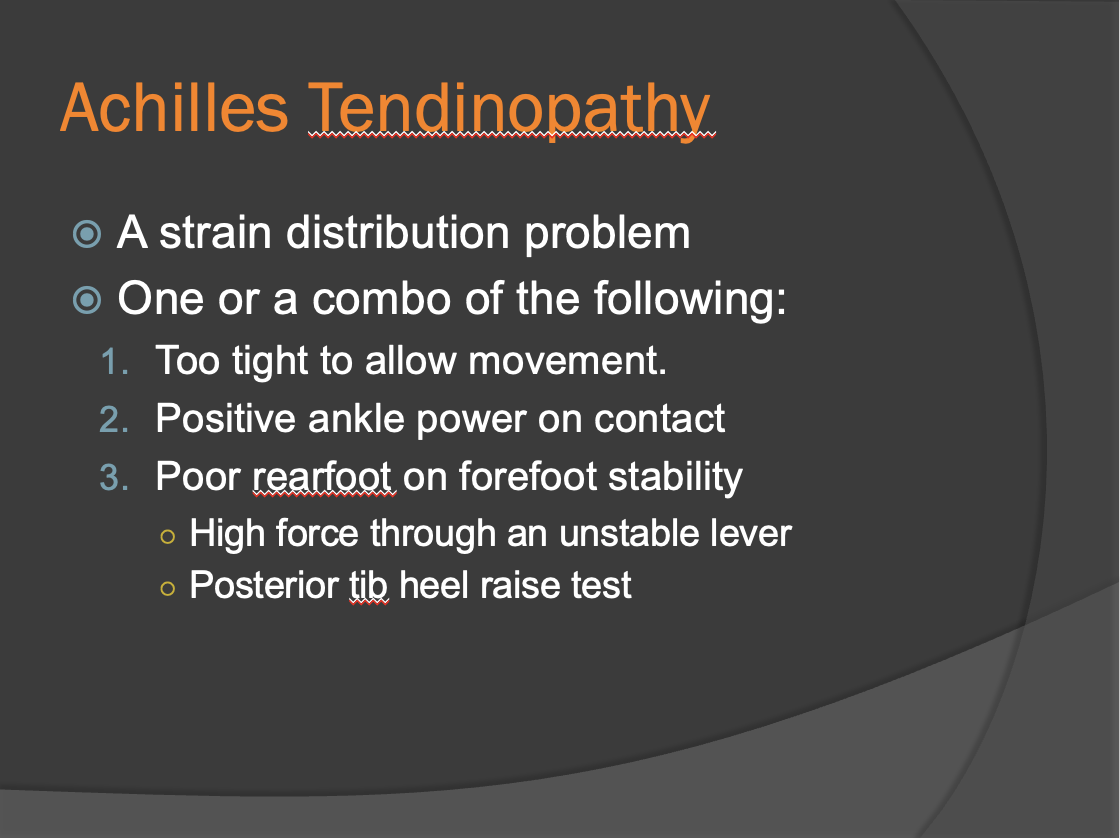
achilles tendinopathy: what problem; one or a combo of the following
knowt flashcard image
56
New cards

Hamstring train/tendinopathy (what problem; one or a combo of the following)

knowt flashcard image
57
New cards

Low back pain

knowt flashcard image
58
New cards

Cues: falling into wall drill; short foot

knowt flashcard image
59
New cards

Minimal vs maximal

knowt flashcard image
60
New cards

minmal vs maximal 2: the resks and mebefits of running barefoot or in minimalist shoes

knowt flashcard image