Flashcards ANAT3022 Hippocampus: Circuits, Memory, Disease and Neurogenesis
 Call Kai
 Learn
 Practice Test
 Spaced Repetition
 Match
 Flashcards
 Knowt Play
1/62

There's no tags or description
Looks like no tags are added yet.
63 Terms
What is the Greek meaning of 'Hippocampus'?
It means 'sea-horse' (Hippo = horse, Kampos = sea monster).

What are the main sub-regions of the hippocampal formation?
Hippocampus proper, dentate gyrus, subiculum, parasubiculum, presubiculum, and entorhinal cortex.

What is the primary function of the entorhinal cortex?
It serves as the main gateway bringing information into the hippocampus.

What role does the dentate gyrus play in the hippocampal formation?
It acts as a pattern separator, distinguishing similar experiences.

What is the function of CA3 in the hippocampus?
It is known as 'The Storyteller' and is responsible for pattern completion, reconstructing memories from incomplete information.

What is the role of CA1 in the hippocampus?
It functions as 'The Fact Checker', comparing and refining reconstructed memories against reality.
What does CA2 specialize in?
It is known as 'The Social Memory Specialist', integrating social and contextual information.
What is the function of CA4 (Hilus) in the hippocampus?
It helps coordinate signaling within the dentate gyrus.
What is the approximate length of the hippocampus?
It is approximately 4-5 cm in length.

Where is the hippocampus located in the brain?
It is located in the mediobasal part of the temporal lobe, deep inside the parahippocampal gyrus.

What is the significance of adult neurogenesis in the hippocampus?
It is the process of generating new neurons in the adult brain, which is crucial for learning and memory.
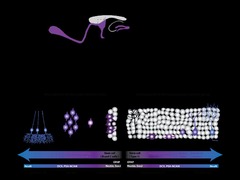
What are the components of the hippocampal formation?
The hippocampal formation includes the hippocampus proper, dentate gyrus, subiculum, parasubiculum, presubiculum, and entorhinal cortex.
What is the role of the subiculum in the hippocampal formation?
It serves as a major output station for the hippocampus.
What type of neurons predominantly make up the hippocampus proper?
It is predominantly made up of pyramidal neurons.
What is the function of the hippocampus in learning and memory?
It is crucial for the formation and retrieval of memories.
What is the relationship between the hippocampus and human disease?
The hippocampus is involved in various human diseases, particularly those affecting memory and learning.

What is the structure of the hippocampus?
It has a large anterior portion that narrows into a comma-like structure at the posterior part.
What is the significance of the hippocampus in neuroanatomy?
It is a key structure for understanding memory processes and neurogenesis.
What is the function of the hippocampal formation as a whole?
It integrates and processes information related to memory and spatial navigation.
How does the hippocampus contribute to distinguishing similar experiences?
Through the dentate gyrus, which acts as a pattern separator.
What is the role of the hippocampus in the context of neurogenesis?
It is a primary site for adult neurogenesis, impacting learning and memory.
What is the primary role of the dentate gyrus?
Pattern separation and spatial navigation.
What are the three cell layers of the dentate gyrus?
Molecular layer, granule cell layer, and polymorphic cell layer (Hilus).
Name one type of cell found in the dentate gyrus.
Dentate granule cells.
What is the function of the subiculum?
Acts as a spokesperson that broadcasts hippocampal information to the rest of the brain.
What is the role of the presubiculum?
Acts as a compass, containing many head-direction cells.
What is the function of the parasubiculum?
Acts as a map-maker, interconnected with grid-cell circuits involved in spatial navigation.
What is the entorhinal cortex known as?
The gateway for the flow of information.
What are the main cell types found in the entorhinal cortex?
Stellate cells, small pyramidal cells, and predominantly pyramidal cells in various layers.
What is the tri-synaptic circuit in the hippocampal formation?
EC -> DG via perforant path (Synapse 1), DG -> CA3 via mossy fibres (Synapse 2), CA3 -> CA1 via Schaffer collaterals (Synapse 3).
What type of memory does the hippocampus primarily support?
Declarative memory (explicit memory), which includes facts and events.
What are the two categories of declarative memory?
Episodic memory (personal experiences) and semantic memory (factual information).
What are the three processes dependent on declarative memory?
Acquisition, consolidation, and retrieval.
What happened to patient HM in 1953?
He underwent bilateral removal of the hippocampus to alleviate epilepsy, resulting in profound anterograde amnesia.

What is retrograde amnesia?
The inability to remember events prior to brain damage.
What is anterograde amnesia?
The inability to remember events that occur after brain damage.
What are place cells and where are they located?
Place cells are located in the hippocampus (CA1 and CA3) and fire when in a specific location, representing spatial landmarks.
What are grid cells and their function?
Grid cells provide internal GPS coordinates and fire at multiple locations arranged in a hexagonal lattice, supporting path integration.
What diseases are associated with hippocampal damage?
Alzheimer's disease and temporal lobe epilepsy.
What is the early atrophy observed in Alzheimer's disease?
The hippocampus is one of the first brain regions to undergo atrophy.
What is the impact of tau accumulation in Alzheimer's disease?
Neurofibrillary tangles composed of tau protein accumulate in the hippocampus, leading to synaptic dysfunction and cell death.
How does hippocampal damage affect memory formation in Alzheimer's disease?
It leads to impaired memory formation and spatial memory disruption.
What is the relationship between the hippocampus and mesial temporal lobe epilepsy?
The hippocampus is especially involved in mesial temporal lobe epilepsy, where seizures often originate.
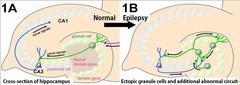
What are the main regions of the hippocampus involved in spatial learning and memory?
CA1, CA3, and the Dentate Gyrus (DG)
What task is used to assess spatial learning in rodents?
Barnes maze

What is the purpose of the Morris water maze?
To assess spatial learning and memory in rodents
Who first described neurogenesis in the adult rodent brain?
Joseph Altman in 1962

What significant discovery was made by Brent Reynolds and Sam Weiss in 1992?
The discovery of neural stem cells, providing a basis for neurogenesis
What evidence supports the existence of adult neurogenesis in humans?
Incorporation of thymidine analog BrdU, 14C dating, and immunohistological analysis

What is the effect of aging on neurogenesis?
Neurogenesis decreases with age
What happens to spatial learning and memory when adult neurogenesis is ablated?
It disrupts spatial learning and memory
Name a factor that can regulate adult neurogenesis.
Nicotine, alcohol, inflammation, exercise, diet, etc.
How does exercise affect adult hippocampal neurogenesis?
Exercise increases NPC proliferation, adult neurogenesis, and synaptic plasticity
What role does dietary selenium play in neurogenesis?
It increases adult hippocampal neurogenesis and spatial learning in aging
What is the significance of Santiago Ramon y Cajal's statement regarding adult neurogenesis?
He believed that once development ended, regeneration of nerve paths was impossible, a view later challenged by discoveries in neurogenesis.
What is the purpose of the Y maze in rodent studies?
To assess spatial learning and memory
What is the role of the DCX marker in neurogenesis studies?
DCX is a marker for newborn neurons
What is the relationship between stress and adult neurogenesis?
Stress can negatively impact adult neurogenesis
What is the effect of enriched environments on neurogenesis?
Enriched environments can enhance adult neurogenesis
What are some factors that can decrease neurogenesis?
Aging, stress, and inflammation
What does the term 'active place avoidance test' refer to?
A test used to assess spatial learning and memory in rodents
What is the significance of the research by Eriksson et al. in 1998?
It provided evidence for adult neurogenesis in humans using BrdU
What does the term 'neurogenesis' refer to?
The process of generating new neurons in the brain