Ceramics exam 1
 Call Kai
 Learn
Learn Practice Test
 Spaced Repetition
 Match
Match Flashcards
 Knowt Play
1/66

There's no tags or description
Looks like no tags are added yet.
Name | Mastery | Learn | Test | Matching | Spaced | Call with Kai | Chat |
|---|
No analytics yet
Send a link to your students to track their progress
67 Terms
Stages of clay
Slip
plastic
Leather hard
Bone dry/greenware
Bisque ware
Glassware
nuances of stage 2 of clay
Plastic, is soft pliable clay, can easily pinch, wedge, roll, coil, etc, and this is the stage you will receive your clay in
What stage of clay is the most fragile
Bone dry
What stage is no longer recyclable
Bisquware, and it is ready for glaze
What stage of clay is best for throwing on the pottery wheel?
Plastic
What stage is the clay in when it comes out of the kiln for the first time?
Bisqueware
What stage does clay need to be in BEFORE it goes into the kiln for the first time?
Bone dry
What is considered the "glue" of the ceramic world?
Slip
What stage is clay typically in when it comes out of the kiln for the second time with color?
Glazeware
Clay is made from minerals naturally found in the earth. true or false?
true
The kiln we have at school is an electric kiln.
true
A ceramic project is usually only fired one time before it is complete.
True
Approximately what temperature does the kiln fire to?
2000 F
What is the process used for joining two pieces of clay?
Slipping and scoring
Name two things that happen as a ceramic project dries other than it hardens/becomes stronger/permanent.
It becomes lighter in color, and it shrinks
Name two things that can cause a project to blow up in the kiln.
Wet clay, and air bubbles
What is wedging?
What does it do to the clay?/Why is it important?
Wedging is the process of rolling and compressing out clay, so there is no more air bubbles in it. It is important, so that it doesen't explode in the kiln with the air bubbles.
Name two different types of kilns we learned about other than electric.
Gas and wooden kilns
Fettling knife

loop tool

Banding wheel

Bat

wooden modeling tool

sgraffito tool

ribbon tool

Provide your own definition of glaze, making sure to including what glaze is and what it provides or gives to ceramic work.
a glass-like, vitreous coating applied to the surface of a clay piece and permanently fused to it through high-temperature kiln firing. It seals the porous pores of unglazed clay, making the ceramic piece watertight, leak-proof, and safe for holding food or liquids, and makes it stronger, It introduces color, shine
Main components of glaze
Modifiers, Colorants, Alumina, Flux, Silica
When mixing glazes, what is NOT an acceptable approach?
Mixing directly in the glaze bottle
If the glaze is opaque you will be able to see through it. true or false
false
It is safe to glaze the bottom half of the outside of a mug with a glaze that is NOT food safe. true or false
true
what does a CL label do
identifies a glaze that is toxic and contains materials that are hazardous to humans.
Explain two ways in which glaze is different from acrylic paint.
Glaze is matte and chalky when it dires on your ceramic perice, while acrylic paint is shiny and what you see is what you get when applied onto your ceramic artwork. Acrylic paint is thinner and can burn up in the kiln but glaze is thicker comes out shiny once it is fired in the kiln.
Explain two ways in which glaze is different from underglaze.
Glaze forms a glassy surface after firing, while underglaze remains matte and can be used for detailed decoration before a clear glaze is applied. Additionally, underglaze typically has a lower melting point than glaze and stays in place without running when fired, Glaze can move, drip, or marble during firing, which makes it better for covering broad surfaces or blending colors rather than fine line work.
List three different ways you can apply glaze.
You can pour it on, use a brush to apply it, or you can dip it
What do you need to do to your bisque fired project before you can apply glaze?
You need to use a sponge and go over it with water, getting rid of any dust and you should sand it, so it is smoother
How do you know if a glaze is not food safe?
There would not be a red dot on it, since food safe glazes have a red dot on the bottle or on the sample piece
Explain two ways in which glaze is different from acrylic paint.
Glaze is matte and chalky when it dires on your ceramic perice, while acrylic paint is shiny and what you see is what you get when applied onto your ceramic artwork. Acrylic paint is thinner and can burn up in the kiln but glaze is thicker comes out shiny once it is fired in the kiln.
foot of a vessel pot

Body of a vessel pot

Shoulder of a pot

Neck of a pot vessel
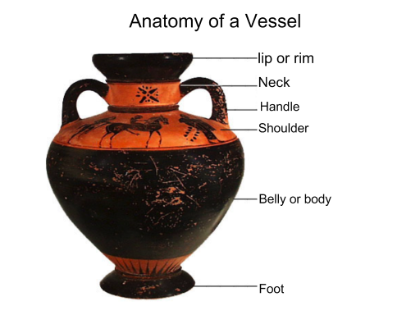
Lip of a pot vessel

What are the 3 hand building techniques
pinch, coil, slab
hand building
A ceramic technique that allows you to create forms with clay and your hands, without using a pottery wheel
Functional ceramics
A utilitarian ceramic object designed to be useful and purposeful. Any ceramic peice that is not purely decorative and has an intended use. Exc. plates, bowls, etc
Slab
A hand building technique in which clay is rolled into thin sheets and manipulated into shapes
Clay
Clay is a mix of naturally occuring materials made up primarily of fine grained minerals. Very finely ground up rock
study Elements & principles of art
Sgraffito
a decorative art technique that involves scratching or carving through an upper layer of pigment, slip, or plaster to reveal a contrasting color or material underneath
Amphora
An ancient form used as a storage jar and one of the the principal vessel shapes in Greek pottery, a gtwo handled pot with a neck narrower than the body

Opaque
an object or substance does not let light pass through, making it impossible to see through
Matte
a surface property, texture, or visual effect that lacks gloss, shine, or reflection
Warpage
Warpage in pottery is the unwanted bending, twisting, or distortion of a ceramic piece during the forming, drying, or firing stage
Conical
conical form refers to pottery that resembles an inverted cone—meaning it has a wide, flared rim that tapers down uniformly to a much narrower base.
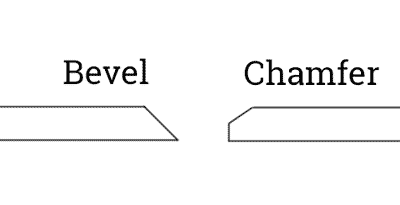
Beveled edge
a sloped or angled cut made along the edge, rim, or base of a clay piece rather than a flat, square cut
Silica
A sand- like substance that forms glass when heated
Relief sculpture
a three-dimensional artwork that remains attached to a solid background plane of the same or a compatible material

Composite
Practice of combining multiple separate images, objects, or materials into a single unified visual piece
Idealation
The creative process of generating, developing, and refining ideas to solve problems or explore new oppertunities
Mishima
East asian method of creating an inlay effect by applying contrasting slip, unglazed, or glaze into a design incised in leather- hard clay. Excess glaze is removed by sponging or scraping
Glaze wash
A highly diluted mixture of oxides, stains, or glaze in water used to highlight surface textures add subtle shading, and create earthly accents on pottery.
Critique
Know what it is, why we do it
a disciplined, thoughtful evaluation of a work—such as an essay, book, artwork, or performance—that analyzes both its strengths and its weaknesses rather than simply declaring it good or bad, A critique serves the project or idea, helping creators spot blind spots, fix errors, and push their craft toward excellence. [1, 2]
Reclaiming clay: know what it is, the process of reclaiming
the process of gathering unfired pottery scraps, trimmings, slurry, or ruined greenware and turning them back into a soft, plastic, and usable stateto create new clay for future use.Collect scraps, Add water or throwing slip to the scraps and let them sit overnight or for a few days until they break down into a smooth, soupy mixture (called slip), mix, dry on a slab, and wedge
Jeanine penell
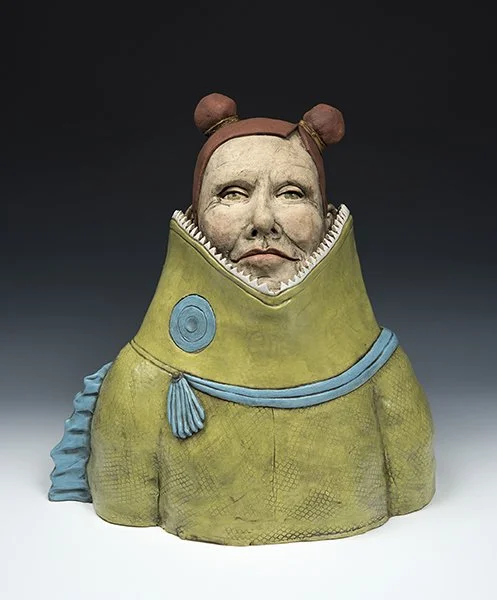
Roberto lugo

Jihyun Kim
