PNB 3270 Introduction to Molecular Endrocrinology
 Call Kai
 Learn
Learn Practice Test
 Spaced Repetition
 Match
Match Flashcards
 Knowt Play
1/175

There's no tags or description
Looks like no tags are added yet.
Name | Mastery | Learn | Test | Matching | Spaced | Call with Kai | Chat |
|---|
No analytics yet
Send a link to your students to track their progress
176 Terms
Bioregulation
- the maintenance of homeostasis by means of signaling throughout the body
- includes: the endocrine system, the nervous system, and the immune system

Bioregulators
chemicals involved in biological systems
molecular endocrinology
studies of structures, synthesis and actions of hormones (bioregulators) at cellular and molecular levels
Classic definition of a hormone
Hormones are chemical substances produced by specialized tissues (endocrine glands) and secreted into the blood stream, where they are carried to target organs to produce a desired effect
Broader definition of a hormone
hormones are chemical, non-nutrients, intracellular messengers that are effective at micromolar concentrations or less. In other words, hormones are chemical substances that carry information between two or more cell types. They are also called "bioregulators."
Discrepancies between the classic (hormones) and the broader (bioregulators) definitions
- specialized tissue for hormone synthesis vs. multiple tissues
- blood for hormone distribution vs. blood, intercellular fluid
- a separate organ for hormone action vs. multiple target tissues
Categories of Bioregulators
1. Neurocrines (neurotransmitters or neuromodulators)
2. Neurohormones
3. Hormones
4. Autocrine/paracrine regulators
5. Ectohormones (semiochemicals

Neurotransmitter
secreted by neurons into synaptic space
Examples of Neurotransmitters
Acetylcholine, dopamine, substance P, GABA
neuromodulator
Secreted by neurons into synaptic space; modulates sensitivity of postsynaptic cell to other neurotransmitters
examples of neuromodulators
endorphins and various other neuropeptides
Neurohormone
secreted by neurons into the blood or CSF; may be stored in neurohemal organ prior to release
examples of neurohormones
TRH, CRH, oxytocin, dopamine
examples of hormones
Thyroxine, GH, insulin
cytocrine
- secreted by cells into surrounding extracellular fluid; these local regulators typically travel short distances to nearby target cells
- include growth factors, mitogenic regulators, embryonic tissues-inducing substance
- can act as autocrines or paracrines
examples of cytocrines
somatostatin, norepinephrine
paracrine
secreted by cells that affect other cell types
examples of paracrines
embryonic inducers, somatostatin, interleukins
Autocrine
secreted by cells that affect emitting cells
examples of autocrines
mitogenic agents, interleukins
Intracrine
- Intracellular messengers; typically mediators of other regulators that bind to membrane receptors
- govern intracellular events
- secondary messengers or transcription factors
examples of intracrines
cAMP, DAG, IP3, cGMP, calmodulin, calcium ions
semiochemicals/ectohormones
secreted into the environment
examples of semiochemicals/ectohormones
Pheromones, allelomones
Pheromones
act only on the same species
ex. ant trail pheromones
Allelomones
act on different species
1. allomone: benefit own species (snake venom, skunk spray)
2. Kairomone: benefit recipient species (sweat has 1-lactate which attracts mosquitos for feeding)
Regulator classes
Nonpeptides
Hypothalamic-releasing peptides
Other neuropeptides
Acetylcholine
nonpeptide
Carbon monoxide
nonpeptide
Dopamine
nonpeptide
Epinephrine
- nonpeptide
- amino acid derivative

Gamma-aminobutyric acid (GABA)
nonpeptide
Glutamate
nonpeptide
Nitric oxide
nonpeptide
norepinephrine
nonpeptide
serotonin
nonpeptide
Corticotropin-releasing hormone (CRH)
- hypothalamic-releasing peptide
- Promotes secretion of adrenocorticotropic hormone (ACTH)
Gonadotropin-releasing hormone (GnRH)
- hypothalamic-releasing peptide
- Promotes secretion of follicle-stimulating hormone (FSH) and luteinizing hormone (LH)
melanotropin-releasing hormone (MRH)
-hypothalamic-releasing peptide
-a hexapeptide that stimulates the secretion of melanotropin
Prolactin Releasing Hormone (PRH)
- hypothalamic-releasing peptide
- stimulates secretion of prolactin
Prolactin release-inhibiting hormone (PRIH)
- hypothalamic-releasing peptide
- inhibits the secretion of prolactin
Somatostatin (SS)
hypothalamic-releasing peptide
Thyrotropin-releasing hormone (TRH)
- hypothalamic-releasing peptide
- peptide hormone
- Promotes secretion of thyroid-stimulating hormone (TSH) and prolactin (PRL)

Angiotensin II
neuropeptide
arginine vasopressin (AVP)
neuropeptide
targets the kidney for water reabsorption
Atrial natriuretic peptide (ANP)
neuropeptide
Brain Natriuretic Peptide (BNP)
neuropeptide
Cholecystokinin
neuropeptide
Insulin
- neuropeptide
- A protein hormone secreted by the pancreas that is essential for the metabolism of carbohydrates and the regulation of glucose levels in the blood.
Neuropeptide Y (NPY)
neuropeptide
Neuropeptide YY (PYY)
neuropeptide
Peptide histidine isoleucine (PHI)
neuropeptide
Substance P
neuropeptide
Vasoactive Intestinal Peptide (VIP)
neuropeptide
duodenal hormone that stimulates buffer secretion, inhibits acid production, and dilates intestinal capillaries
Exocrines
bioregulators secreted by exocrine glands into ducts through which the secretions are conveyed to their sites of action on the free surface of the epithelium (digestive tract, reproductive tract, or skin)
Peptide and protein hormones
-Most abundant class of chemical messengers
-Consist of specific amino acids
-Hydrophilic
-Chains of amino acids
-peptides (< 50 amino acids)
-proteins (> 50 amino acids)
-TRH (shortest peptide hormone - 3 amino acids long), GnRH, GH, PRL, insulin
amino acid derivative hormones
-derived from 1 or 2 amino acids w/ additional modifications
-Include epinephrine, norepinephrine, and thyroid hormone
-Have names that end in -in or -ine (thyroxine)
steroid hormones
-derived from cholesterol
-produced by gonads and adrenal cortex
-Bind to intracellular receptors
-function by binding to DNA to alter gene transcription
-Slower and longer lived (have direct actions on DNA)
-Not water soluble --> must be carried by proteins in bloodstream --> inactive while attached to carrier protein (must dissociate from carrier to function)
-Have names that end in -one, -ol, or -oid (testosterone, cortisol, glucocorticoids, estrogen, cortisone)
Lipid Hormones
prostaglandin
retinoic acid
etc.
synthesized on smooth ER
Nucleotides
cAMP, cytokinins, 1-methyladenine etc.
Oligosaccharides
short chains of 3 or more monosaccharides (at least 10)
alpha-1,4-oligogalacturonide
Gas bioregulators
CO, NO, ethylene
Cortisol
- a steroid hormone
hydrophobic
- stress hormone

Prostaglandin
lipid molecule that has hormone-like effect; tissue hormone

platelet activating factor
Inflammatory mediator generated from a complex lipid stored in cell membranes.

alpha-1,4-oligogalacturonide (an elicitor)
an oligosaccharide

Zeatin
a cytokinin
--> a nucleoside

ethylene
A gaseous plant hormone that promotes fruit ripening and opposes auxins in its actions

steroid secreting cells
abundance of SER >> stains with eosin producing a pink cytoplasm
Lipid vacuoles do not stain >> appear as small clear openings in cytoplasm
mitochondria with tubular cristae
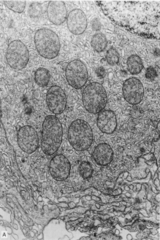
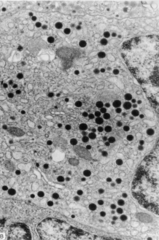
Growth hormone secreting cells
vesicle-like secretions
dense secretory granules, well-developed Golgi apparatus, and mitochondria with plate-like cristae
merocrine secretion
- secretions released by vesicle exocytosis - most common
- often continuous
eg sweat, pancreatic cells, saliva, enzymes

apocrine secretion
- sloughing of apical portion of secretory cells
- partial cell breakdown
- cytoplasm and vesicular contents secreted
- arm pit sweat, mammary glands (milk)

Holocrine secretion
- release through cell death and lysis
- entire cell lost with secretion
- cells fill up with secretion and burst releasing cytoplasmic contents
- stem cells divide and replace lost cells
- ex. sebaceous (oil) glands

Cytogenous Secretion
release of whole, viable cells
ex. sperm or ova release
1.
Hypothalamus

2.
Pituitary

3 a.
Endocrine glands
1. HP-A axis: Hypothalamus-Pituitary-Adrenal axis
2. HP-L axis: Hypothalamus-Pituitary-Liver axis
3. HP-G axis: Hypothalamus-Pituitary-Gonad axis
4. Hypothalamus-Pituitary-Thyroid axis

3 b.
Endocrine glands independent of HP axis
pancreas: insulin and glucagon parathyroid gland: PTH
kidney: renin and erythropoietin
adipose tissues: leptin
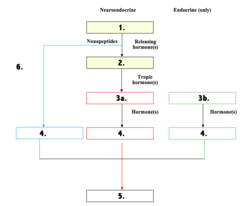
4.
target organs

5.
effect
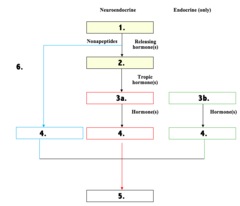
6.
nonapeptide hormones
oxytocin
vasopressin

neuroendocrine system
brain (hypothalamus) and pituitary gland (producing tropic hormones and other hormones)
Tropic hormones
Hormones secreted by the pituitary glands that regulate the secretion of hormones from classic endocrine glands
classical endocrine glands
thyroid gland, adrenal glands, gonads, and liver
independent endocrine glands
parathyroid glands, thymus, endocrine pancreas, organs of the gastrointestinal tract, pineal gland, and the kidney
Hypothalamus
- producing hypothalamus releasing neurohormones such as TRH, GnRH, GHRH, GH-RIH, PRIH, PRH, MRIH, MRH
- producing other neurohormones such as AVP, OXY, Endophines/enkephalins
Growth hormone-releasing hormone (GHRH)
-Promotes secretion of growth hormone (GH) from anterior pituitary
- Hypothalamus
Growth hormone-release inhibiting hormone (GH-RIH)
- Inhibits the secretion of growth hormone (GH) from anterior pituitary
- Hypothalamus and Endocrine Pancreas
melanotropin-release inhibiting hormone (MRIH)
hypthalamus
inhibits release of melantropic
arginine vasopressin
- is involved in raising blood pressure.
- hypothalamus
- nonapeptide hormone
oxytocin
- A hormone released by the hypothalamus that stimulates uterine contractions during childbirth and milk ejection during breastfeeding.
- nonapeptide hormone
enkephalins and endorphins
- Two neurotransmitters that act like *opiates* to block pain.
- hypothalamus
anterior pituitary
- producing glycoprotein tropic hormones such as TSH, LH, and FSH
- producing nonglycoprotein tropic hormones such as GH, PRL, ACTH, and MSH
Thyroid Stimulating Hormone (TSH)
- stimulates secretion from thyroid gland
- stimulated by TRH
- anterior pituitary
- glycoprotein tropic hormone
Leutinizing Hormone (LH)
- stimulates ovaries/testes to start producing sex hormones
- stimulated by GnRH
- anterior pituitary
- glycoprotein tropic hormone
Follicle-stimulating hormone (FSH)
- stimulates production of ova and sperm
- stimulated by GnRH
- anterior pituitary
- glycoprotein tropic hormone
Growth Hormone (GH)
- stimulates all tissues to grow and metabolize nutrients
- stimulated by GHRH
- inhibited by GH-RIH
- anterior pituitary
- nonglycoprotein tropic hormone
Prolactin (PRL)
- stimulates mammary glands to secrete milk
- stimulated by PRH
- inhibited by PRIH
- anterior pituitary
- nonglycoprotein tropic hormone
Adrenocorticotropic hormone (ACTH)
- Stimulates adrenal cortex to secrete glucocorticoids (cortisol)
- stimulated by CRH
- anterior pituitary
- nonglycoprotein tropic hormone
Melanotropin (MSH)
- stimulates melanocytes to produce and release melanin
- stimulated by MRH
- inhibited by MRIH
- anterior pituitary
- nonglycoprotein tropic hormone