Lesson 1.1: Investigating the Scene
 Call Kai
 Learn
Learn Practice Test
 Spaced Repetition
 Match
Match Flashcards
 Knowt Play
1/79

Earn XP
Description and Tags
Name | Mastery | Learn | Test | Matching | Spaced | Call with Kai | Chat |
|---|
No analytics yet
Send a link to your students to track their progress
80 Terms
Decedent
legal term for a person who has died
Link Method
used to find linked associations between evidence
investigators form logical links between crime scene activity and the likely places additional evidence could be found at the scene
based on the notion that one piece of evidence leads to another
works with large and small, indoor and outdoor crime scenes
Line (Strip) Method
search team members are arranged parallel to one another
proceed in straight paths
used in large, outdoor scenes

Grid Method
searchers first follow a straight line path (similar to line method)
once the pattern is complete, investigators configure a path perpendicular to the original direction
used in large, outdoor scenes

Zone Method
teams are assigned small zones for searching
other search methods are paired with the zone method
used on crime scenes with readily definable zones (ex: houses/buildings)

Spiral Method
used on scenes with no physical barriers (ex: open water)
Outward Spiral: members begin at critical point of scene
Inward Spiral: members begin at the outer edge of the scene

Wheel/Ray Method
investigators start from a critical point and travel outward along many straight lines
used on small, circular scenes

Point of Origin
an item/location from which a forensic scientist takes all their measurements in order to make an accurate crime scene sketch
the measurements typically start from the point of origin to a critical piece of evidence
Persons of Interest
someone who law enforcement thinks may have information related to a possible crime
Physiological Responses
involuntary reactions to stimuli that can be felt, detected, and/or measured
Polygraph Tests
commonly known as lie detector tests
sometimes used in forensic cases to help determine the truthfulness of someone who may be connected to a possible crime
also used in employment screenings
use multiple sensors and computer software to record and display data
seniors record physiological changes in;
heart rate
respiration rate
blood pressure
skin conductivity
perspiration/sweat
Heart Rate
a measure of cardiac activity usually expressed in numbers of beats per minute (bpm)
one of the key vital signs used to assess overall health
each heartbeat sends blood though our vessels to our tissues, delivering oxygen and taking away carbon dioxide
high bpm: body working hard to meet oxygen demands
low bpm: body may not get enough oxygen to function
Blood Pressure
the pressure exerted by the blood upon the walls of the blood vessels
arteries: a type of blood vessel - will bulge up and expand its walls in reaction to a surge of blood
Pulse
the rhythmic expansion and recoil of arteries resulting from heart contraction
Respiration Rate
the number of breaths an organism takes per minute
key vital sign
1 breath = inhalation + exhalation
our respiratory system works with the cardiovascular system to take in oxygen, deliver it to cells, and remove carbon dioxide
Skin Conductivity
how the amount of sweat produced impacts the ability to conduct electricity
“What are some activities that can affect your heart rate and respiratory rate?”
Exercise —> increases bpm
Stress —> increases bpm
Illness —> increases heart rate
Meditation —> slows respiratory rate
Vital Signs
measurements that indicate the state of a patient’s essential body functions
pulse rate
temperature
respiration rate
blood pressure
Baseline/Control
data that serves as a reference on how the subject responds without the independent variable
polygrapher establishes baseline by asking the subject a series of yes/no questions with known answers
Independent Variable
the variable that the researcher intentionally changes to determine its influence on the dependent variable
Dependent Variable
the variable being measured and whose value is influenced by another variable
Experimental Design
identify the question
make a prediction
design an experiment
conduct the experiment
analyze the data
communicate findings
Locard’s Principle of Exchange
when a person comes in contact with an object or another person, a cross-transfer of physical material can occur
hypothesizes that it is impossible for a criminal to act without leaving traces
Trace Evidence
small but measurable amount of physical or biological material found at a crime scenes
Class Evidence
narrows an identity to a group of persons or things
Individual Evidence
narrows an identity to a single person or thing
Parts of Hair
Shaft
contains keratin
keratin is a protein that provides hair its strength and shape
Follicle
club shaped
contains DNA
Sebaceous Gland
provides oil

Parts of the Shaft
Three Layers
Medulla: inner layer
Cortex: middle layer; contains melanin
Cuticle: outer layer

Medulla Patterns
Continuous:
one unbroken line or color
Interrupted/Intermittent:
pigmented line broken at regular intervals
Fragmented/Segmented:
pigmented line unevenly spaced
Solid:
pigmented area filling both the medulla and the cortex
None:
no separate pigmentation in the medulla
Hair Evidence Analysis
with follicle - nuclear DNA —> individual evidence
without follicle - microscopic pattern or mtDNA —> class evidence
can provide the persons’s characteristics (race, sex, age)
Fingerprints
an impression left on any surface that consists of patterns made by the ridges on a finger
imprint consists of excretions;
water
oils
salt
dirt
a piece of individual evidence
formed beginning at the 10th week of gestation (time since conception)
identical twins have different fingerprints
fingerprints are protected by the outer layer of epidermis (outermost layer of skin)
fingerprints cannot be altered or destroyed
Fingerprint Patterns
Loop - 65%
Whorl - 30%
Arch - 5%

Minutiae
def: very tiny fingerprint ridge details that can help compare/contrast a set of fingerprints
12-15 minutiae should match
ridge ending (including broken ridge)
fork (bifurcation)
island ridge (short ridge)
dot (very short ridge)
bridge
spur (hook)
eye (enclosure)
double bifurcation
delta
triple fork (trifurcation)

Digital Footprint
an online form of evidence that can be used to examine an individual’s activities across multiple platforms, such as social media apps
can determine where and when an individual has been
Function of Blood
carries oxygen and nutrients to all parts of the body
carries carbon dioxide and other waste products back to the lungs, kidneys, and liver for disposal
fights against infections and helps heal wounds
Facts About Blood
adult has about 5 L of blood in their body
7-8% of a person’s body weight
1 billion red blood cells in 2-3 drops of blood
for every 600 red blood cells;
40 platelets
1 white cell
Components of Blood
red blood cells
white blood cells
platelets
plasma
Red Blood Cells
scientific name: erythrocytes
most abundant
contains hemoglobin (iron), which carries oxygen to our cells
White Blood Cells
scientific name: leukocytes
fight infections
white blood cells increase in response
Platelets
scientific name: thrombocytes
responsible for clotting
don’t want too little or too much clotting
Plasma
yellowish liquid portion
contains H2O, electrolytes, nutrients, hormones, and antibodies
carries nutrients across the body
Presumptive Testing
the initial testing that suggests a sample may be blood
usually performed at the scene
identifies blood on its properties, such as hemoglobin
Leucocrystal Violet (LCV)
type of presumptive testing
turns a violet color when it reacts with hemoglobin
used on porous/permeable surfaces
not the best test to use in lab environments
Luminol
type of presumptive testing
glows bright blue in the dark when it comes in contact with blood (presumably)
reacts with other substances, not just blood
not the best test to use in the lab
Kastle-Meyer Test
most common type of presumptive testing
uses phenolphthalein
reacts with the iron carried by hemoglobin
can be used in the lab
positive result = pink color
RSID Test
designed to identify glycophorin A
a human-specific protein
found on the surface of human erythrocytes
confirms if a sample is human blood
detects glycophorin A by using two monoclonal antibodies that are formatted in a lateral flow
test cassettes show a different amount of red lines
ABO Blood Type Testing
determines if the sample is type A, B, AB, or O blood
identifies ABO antigens on erythrocytes and corresponding antibodies in serum
results are displayed through clumps or a smooth mixture
Positive Control
a sample/group that the researcher expects to have a positive result
shows that the experimental setup was capable of producing results
Negative Control
a sample/group that is expected to produce a negative outcome
negative control groups help identify confounding variables
Antigen
anything that stimulates an immune response
the absence and/or presence of these structures on erythrocytes’ surfaces can determine what type of blood a person has
Antibodies
a protein produced by B cells (type of white blood cells) that works to impair pathogens
Agglutination
the clumping of particles
can occur when blood antigens and their corresponding opposite antibodies are exposed to each other
Blood Typing
4 Types;
A
B
AB (universal recipient)
O (universal donor)
A and B are codominant
O is recessive
determined by attached protein called antigens
A = antigen A
B = antigen B
AB = both antigen A and B
O = neither
plasma contains antibodies based on type
A = anti-B bodies
B = anti-A bodies
AB = none
O = anti-A, anti-B
blood type must match for transfusion
Transfers
type of blood spatter that is produced when a blood source comes into contact with a surface
smudges
smears
hand prints
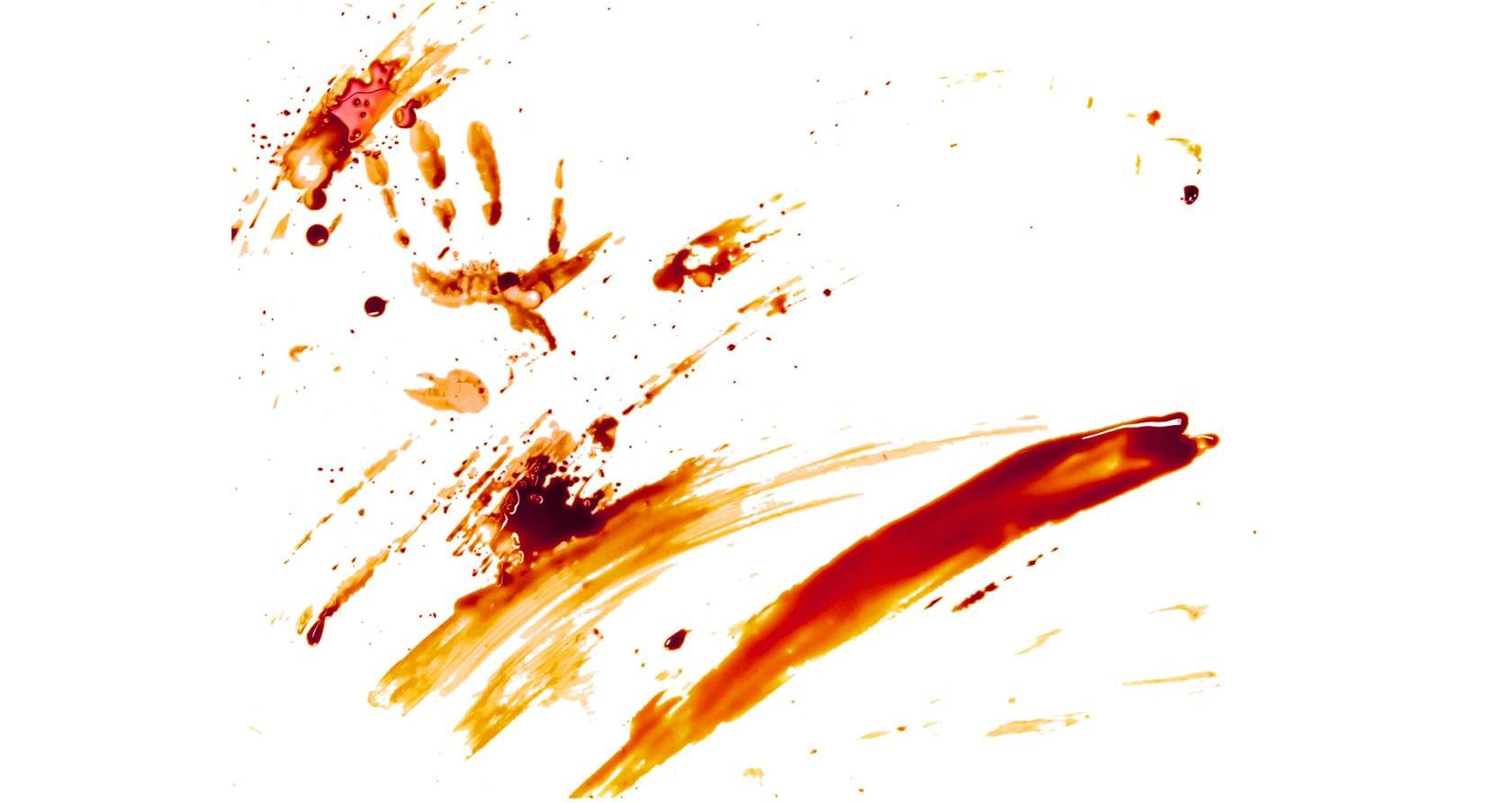
Spatters
type of blood spatter that is produced when a source of liquid blood travels through the air before landing on a target surface

Falling Droplets
type of blood spatter that is produced when a droplet of blood is dropped directly from above and strikes a horizontal surface at 90°
diameter of the circular stains can be used to predict the height the droplets fell from

Force and Direction
type of blood spatter that is produced when an external force was applied that provided horizontal velocity, speed in a given direction, to the droplet
the more elongated the droplet, the faster they were moving
the long tail of each droplet indicates the direction it was moving when it struck the surface

Radial Spatter
type of blood spatter that is produced when there was an impact (the larger pool), which sent blood droplets traveling away from the impact at high speed
the impact occurred with significant force.

Cells
basic unit of life
all organisms are made u of cells
all existing cells are produced by other living cells
DNA (deoxyribose nucleic acid)
stores, copies, and transmits genetic information
double helix
composed of nucleotides
Nucleotides
contains;
deoxyribose - 5 Carbon sugar
phosphate group
nitrogenous base
4 Different Types of Nitrogenous Bases
adenine (A)
guanine (G)
cytosine (C)
thymine (T)
Chargaff’s Rule
noticed that the relative proportions of DNA bases were similar between A and T, G and C
concluded that A=T, C=G
Gene
a specific sequence of DNA that codes for a specific trait
Genome
a complete set of genes in an organism
Chromosomes
tightly coiled DNA that is found in the nuclei of cells
healthy humans have 46 chromosomes in somatic cells (23 in sex cells)
Eukaryotic Cells
cells that have membrane-bound organelles
Prokaryotic Cells
cells that lack membrane-bound organelles
unicellular organisms are prokaryotic
Organelles
tiny structures that perform a function in a cell
examples;
nucleus
ribosomes
cell membrane
mitochondria
Why Might DNA Be Analyzed
Body ID
Genetic Testing - paternity, maternity, ancestry, medical reasons
Forensic Evidence
Steps in DNA Analysis
Extraction
Polymerase Chain Reaction (PCR)
Restriction Digestion
Gel Electrophoresis
DNA Extraction
get DNA out of cells
must lyse the cell
break down the cell’s membrane
not usually a large sample
Polymerase Chain Reaction (PCR)
produce millions of copies of a specific DNA sequence
make enough to analyze
steps (repeated 30-40 times);
denaturation - strands separate
annealing - primers attach to a sequence’s ends
extension - build new strands
Restriction Digestion
restriction enzymes cut DNA at specific sites (recognition sites)
over 200
some cut straight through - blunt ends
some cut at angles - sticky ends
produce RFLP’s (restriction fragment length polymorphism)
Restriction Enzymes
a specialized protein that recognizes specific nucleotide sequences and cuts DNA at these sequences called restriction sites
named after the bacteria from which they were discovered and typically follow a standard naming scheme:
Bacterial Source
Strain (or genetic variant)
Order of Discovery
Gel Electrophoresis
used to separate and compare DNA fragments
negatively charged DNA moves toward positive pole
gel filters DNA fragments by size
larger pieces move more slowly through gel than smaller ones
Sources of DNA
bone
hair
preserved body parts
clothing and fibers
saliva/body fluids
DNA Ladder
the baseline for DNA analysis
composed of known sizes of DNA
Accuracy
how close a measurement is to the true or accepted value
Precision
the degree to which repeated measurements show the same result