EXAM 4 PREP: 19-25
 Call Kai
 Learn
 Practice Test
 Spaced Repetition
 Match
 Flashcards
 Knowt Play
1/217

There's no tags or description
Looks like no tags are added yet.
218 Terms

Locate facial pulse point
upper cervicis/cervical
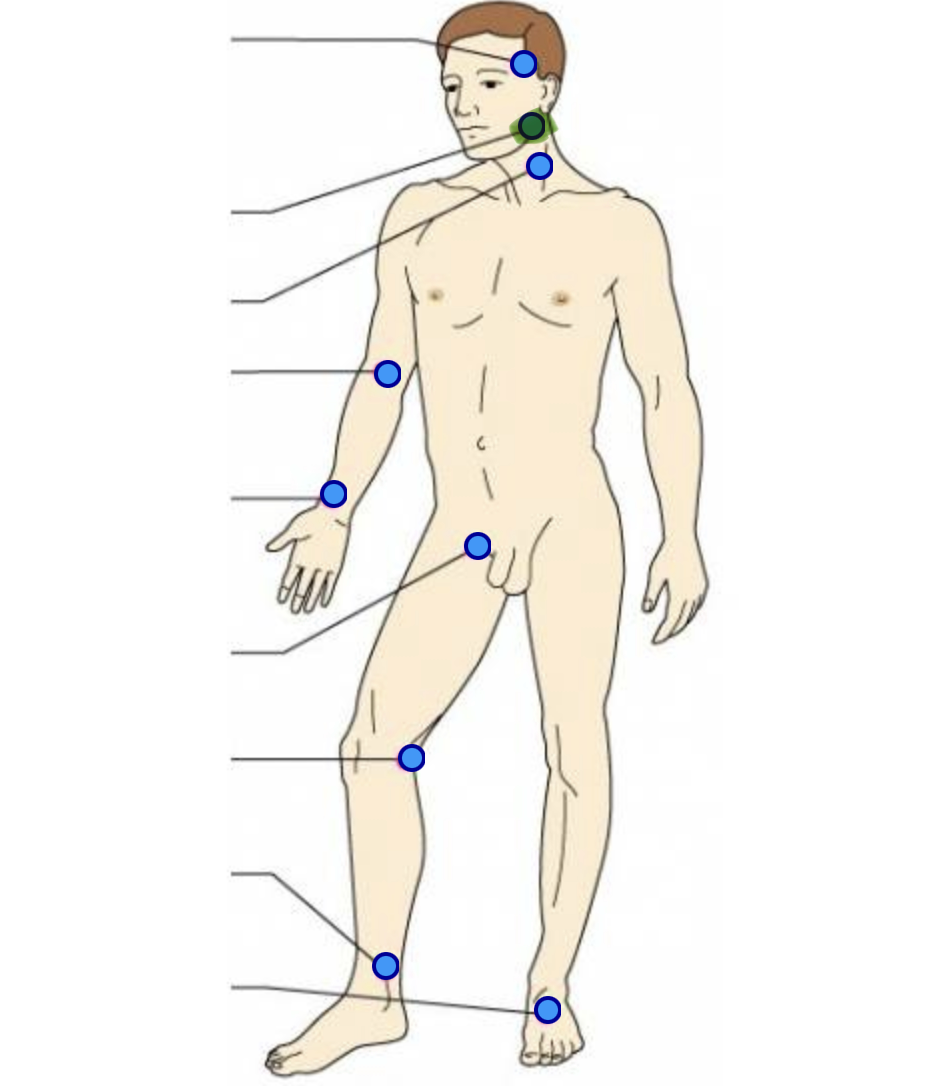

Locate radial pulse point
carpus/carpal

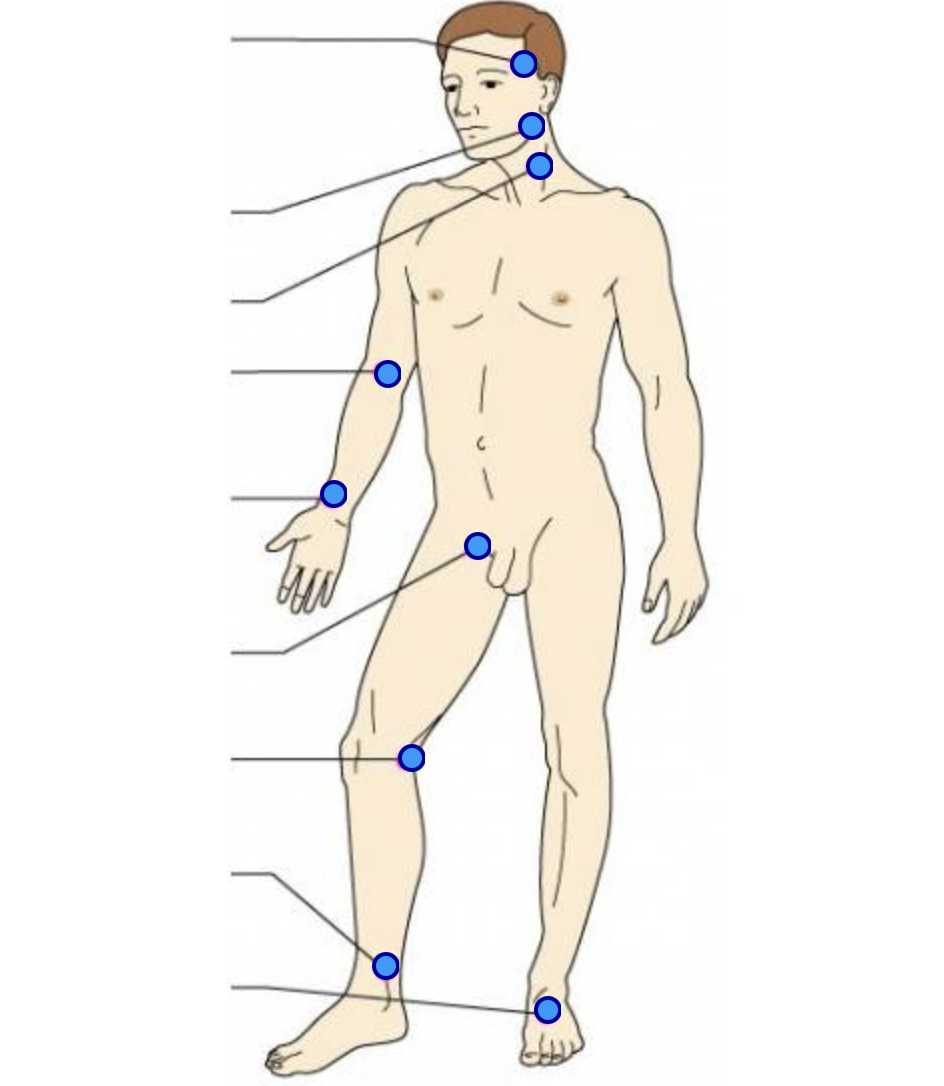
Locate brachial pulse point
uppper/lower brachium

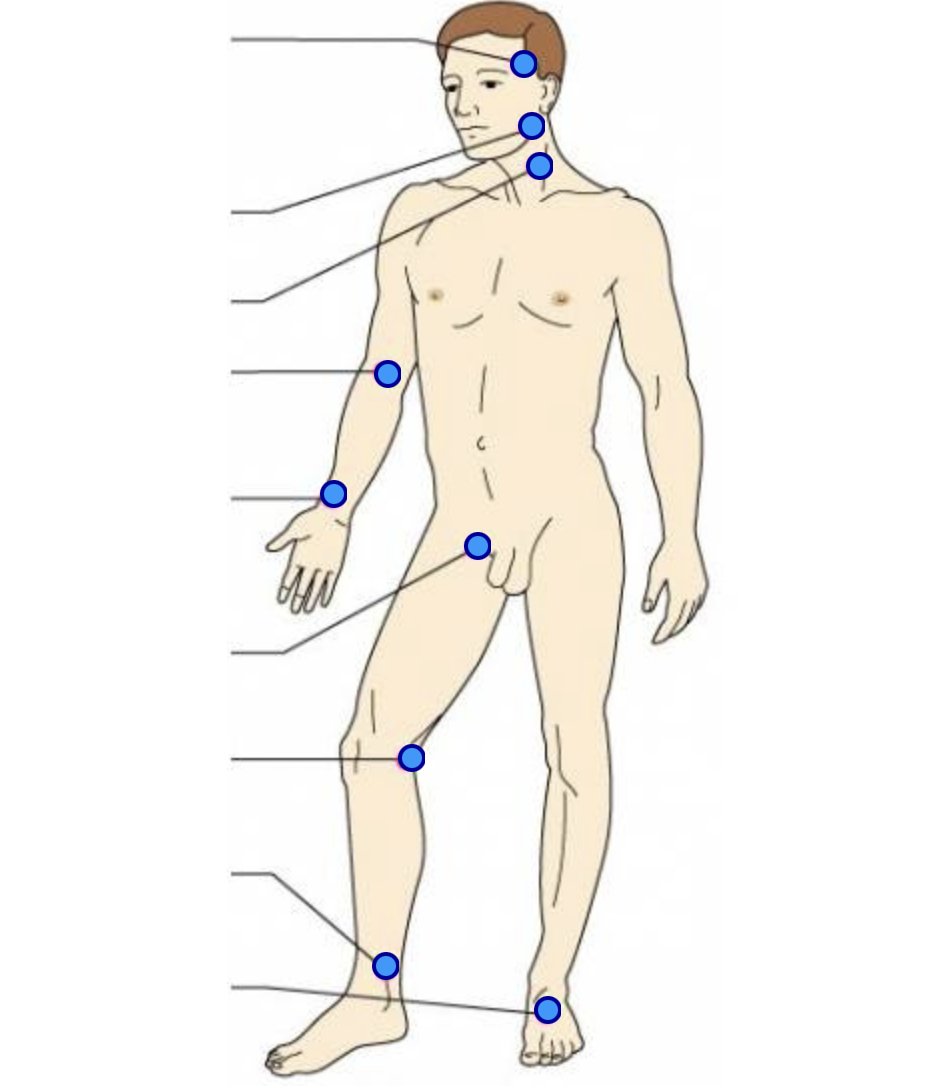
Locate common carotid pulse point
lower cervicis


Locate dorsalis pedis pulse point
pes


Locate temporal pulse point
temporal region


Locate posterior tibial pulse point
near talus


Locate popliteal pulse point
near popliteal


Locate femoral pulse point
near proximal femur


What is the highlighted area called?
sulcus

What are these?
auricles

Locate right auricle
3

Locate left auricle
6

Locate superior vena cava
1

Locate right atrium
5

Locate right ventricle
8

Locate inferior vena cava
10

Locate aorta
2

Locate pulmonary trunk
4

Locate pulmonary veins
7

Locate left atrium
9

Locate left ventricle
11

Locate interventricular septum
23

Locate fossa ovalis
12

Locate tricuspid valve
13

Locate pulmonary valve
16

Locate mitral/bicuspid valve
14

Locate aortic valve
15

What is 17?
chordae tendineae

Locate papillary muscles
18

Locate trabeculae carneae
19

Locate epicardium
20

Locate myocardium
21

Locate endocardium
22

What is this called?
pericardial cavity
How many valves does the heart have?”
four
What functions do heart valves have?
prevent blood from flowing backward and keep it moving in the correct direction through the heart
The heart is surrounded by the ________ sac.
pericardial

What is the outer layer of the heart made of?
a tough, thick, and inelastic layer made of dense irregular connective tissue

What is the outer layer of the heart called?
fibrous pericardium

What are the two sublayers of the serous pericardium?
-Parietal Layer
-Visceral Layer

What is the inner layer of the heart called?
Serous pericardium
______ receives blood and contracts to push blood into lower chambers
atria
_______ pump blood to lungs or rest of the body
ventricles

Brings deoxygenated blood from body to lungs
right atrium/ventricle

Brings oxygenated blood from lungs to the rest of the body
left atrium/ventricle

Away from the heart
artery

Going towards the heart
vein
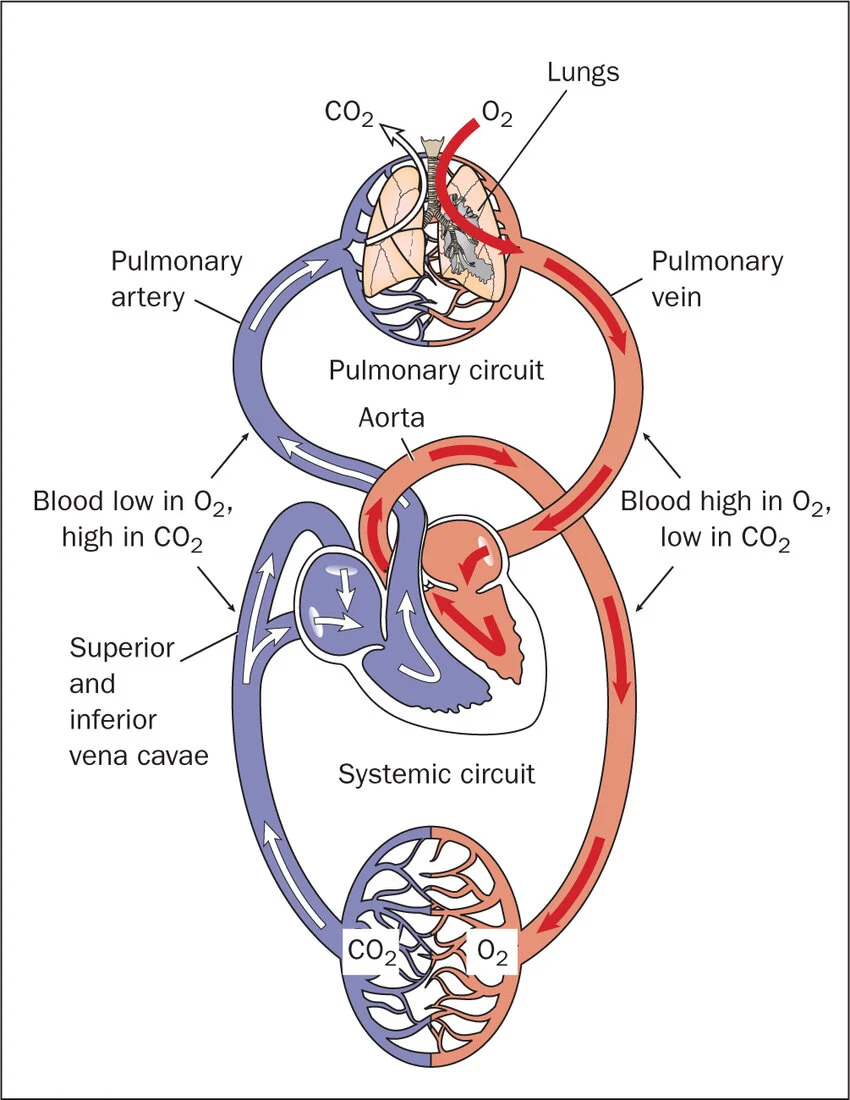
Transports blood to and from the lungs and picks up oxygen and delivers carbon dioxide
pulmonary circulation
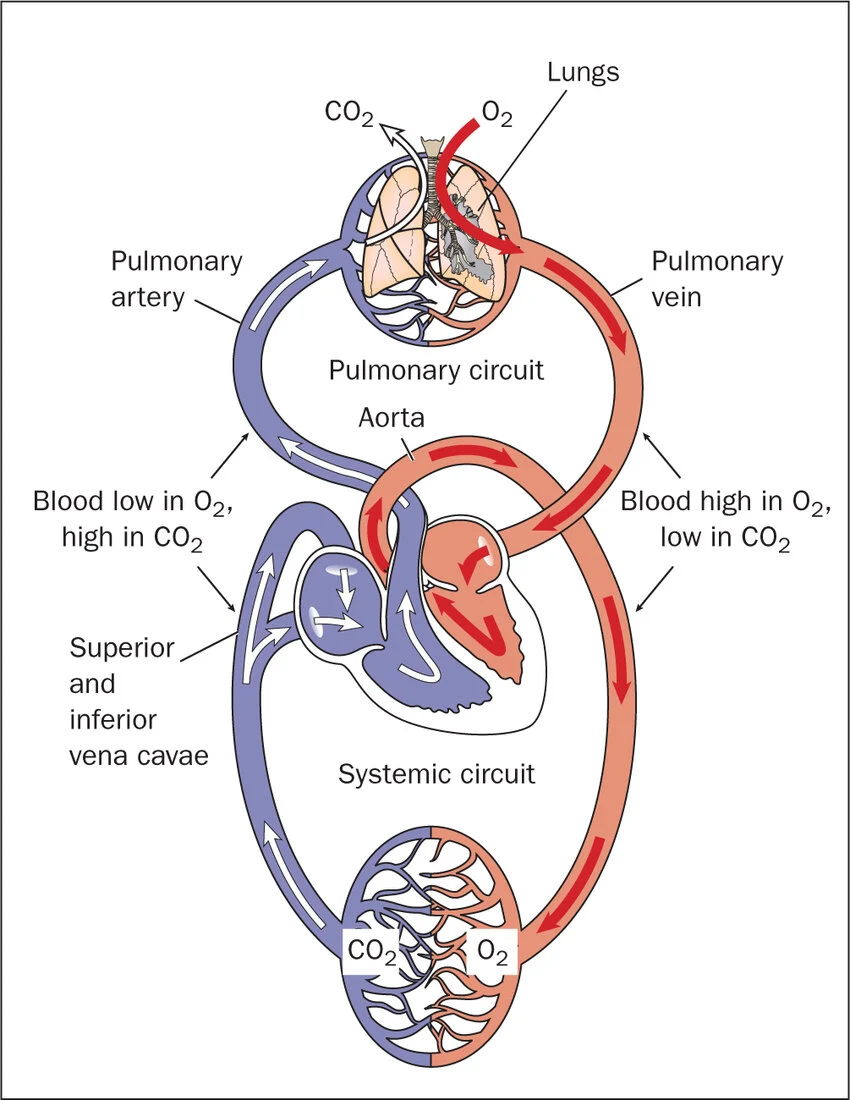
Transports oxygenated blood to all tissues of the body
Systemic circulation

Site of gaseous exchange
capillaries
The superior broad surface of the heart is known as the __________, while the inferior pointed surface is known as the __________.
base; apex
The superior chambers of the heart are referred to as __________, while the inferior chambers are referred to as __________.
atria; ventricles
The function of pericardial serous fluid is to
fill the pericardial cavity and reduce friction as the heart contracts
From superficial to deep, the layers of the wall of the heart are the
epicardium, myocardium, endocardium
The period of time between the onset of atrial contraction and ventricular relaxation
cardiac cycle
The period of time when the heart muscle is contracting
systole
The period of time when the heart muscle is relaxed and the chambers fill with blood
diastole
Heart sounds are produced
when the valves close
smallest blood vessels in our body
vassa vasorum
Normal heart rate in adults
60-100 bpm
Bradycardia
RHR: <60 bpm
Tachycardia
RHR: >100bpm
Is systolic pressure the higher or lower number?
higher- usually 120 mmHg
Is diastolic pressure a higher or lower number?
lower- usually 80 mmHg
Hypertension systolic and diastolic #’s
S: >140 mmHg
D: >90 mmHg
Hypotension systolic and diastolic #’s
S: <90 mmHg
D: <60 mmHg

Thin walls, large lumens, low pressure, have valves. What am I?
veins

Thick walls, small lumens, high pressure, lack of valves. What am I?
arteries
In the systemic circuit, arteries will carry blood __________ the heart.
away from

The blood vessel that leaves the heart to deliver blood to the systemic circuit is the __________.
aorta

Which chamber of the heart initially recieves blood from the pulmonary circuit?
left atrium

Which chamber of the heart pumps blood into the pulmonary circuit toward the lungs?
right ventricle

Which chamber of the heart initially receives blood returning from the systemic circuit?
right atrium

Which chamber of the heart pumps blood into the systemic circuit tissues that supply the body?
left ventricle
Gas is exchanged at the respiratory membrane by a process of ________.
simple diffusion
T/F: Oxygen and carbon dioxide move down their partial pressure gradients?
true
Structure that serves as a common passageway for both air and food
pharynx
When the diaphragm contracts (is pulled downward), _________ occurs.
inhalation
T/F: The left lung has 3 lobes?
false
T/F: The right lungs has 3 lobes?
true
How many lobes does the left lung have?
2
The epiglottis is part of the _________ and covers the glottis.
larynx
What is the primary function of the nasal conchae?
increase surface area and turbulence to condition inhaled air

What is 1?
epiglottis

what is 2?
larynx

what is 3?
soft palate

What is 4?
nasopharynx

What is 5?
oropharynx

What is 6?
laryngopharynx

What is 1?
nasal cavity


What is 2?
nasal conchae


What is 5?
epiglottis


What is highlighted?
trachea

What is highlighted?
epiglottis

What is the highlighted area called?
cardiac notch

What is the highlighted area called?
primary bronchi

What is 1?
alveoli

________ moves gases from outside of the body into the lungs, and then the blood.
external respiration

_________ is the gas exchange between the blood and tissues.
internal respiration