Intro to zoo Exam 3
 Call Kai
 Learn
Learn Practice Test
 Spaced Repetition
 Match
Match Flashcards
 Knowt Play
 Podcast
1/11

There's no tags or description
Looks like no tags are added yet.
Name | Mastery | Learn | Test | Matching | Spaced | Call with Kai | Chat |
|---|
No analytics yet
Send a link to your students to track their progress
12 Terms
Phylum Tardigrada (water bears)
In superphylum Ecdyzosoa: has an exoskeleton (chitin), molt to grow, cuticle is divided into plates
Body Plan: Bilateral
Cylindrical body
Four pairs of legs, 3 for locomotion, one is for clinging
bands of muscle for leg movement
pair of eye spots (light sensing)
sensory papillae (light sensing)
Tissues: Triploblastic, eucoelomate (have a true hemocoel)
Protostome
Simple Cephalization
Digestive system: Complete (well developed)
prey enters mouth → pharynx → intestines →anus
mouth with saliva
Exchange of gas: absorbed/ released through epidermis
Excretory system: malpighian tubules
transport metabolic waste to digestive system
No circulatory system: bodily fluid + blood (hemolyph) contained within hemocoel
Nervous system: have a simple brain with ventral nerve cord
ganglia along each leg with a nerve along each leg
Defining characteristics: Cryptobiosis (suspended metabolism), real legs, mouth with saliva
Reproduction: Dioecious, external fertilization (sexual)
occurs when animals molt → eggs are attached to molted cuticle → will be fertilized by male →eggs will developed attached to exoskeleton
young molt many times as they grow into adults


Phylum Arthropoda
In superphylum Ecdyzosoa: has an exoskeleton (chitin)
Molt to grow (dangerous and costly)→ controlled by hormones
structure in brain releases neurohormone into blood
hormone reaches epidermal cells, ecdysone is formed causing cells to divide and create new cuticle layers
most only molt as juveniles
most crusteceans molt as adults
Contains the greatest number of species
Terrestrial, aquatic, arieral species
Body Plan: Bilateral
exoskeleton is (chitin + protein) → inside is softer than outside
Exoskeleton has modifications (sensilla) → receive chemical + mechanical stimuli from environment
Compound eyes (composed of many light receiving units→ ommatidia)
have cornea and lens
Extremely sensitive to movement detection
Tissues: triploblastic, eucoelomate, protosome
three main layers:
Epicuticle: outer hard layer
Exocuticle: inside epicuticle, hard, no wax lipids,
Endocuticle: innermost, soft,reabsorbed at molting
Digestive system: Complete
Exchange of gas: system varies
terrestrial species have series of tubes (tracheae) through body, open to surface by spiracles
Aquatic species have gills
Metabolic waste: system varies
green gland in crustaceans
Malpighian tubules in insects
Circulatory system: Open
Hemocoel is main body cavity, coelom is greatly reduce in most arthropods (is divided into blood-filled spaces so that all tissues contact blood)
Blood is moved through dorsal vessel by heart contraction + moved through hemocoel by muscular contraction
blood movement: enters heart through ostia → pumped from vessel into hemocoel → circulated through hemocoel → is oxygenated by respiratory organ → returns to heart/ dorsal vessel, enters through ostia
Nervous system: elaborate 3 lobed brain (initiates + controls behaviors)
Ventral nerve cord down length of body
segmental ganglia extending throughout each segment and all appendages
Neuromuscular system
striated muscles (fast movement)
Nerve control of muscle responds to signals from nerve endings along the segments + appendages
Defining characteristics:
jointed leg appendages
sensing environment, capturing prey, walking, swimming, jumpung, digging
striated appendage muscles attach inside of exoskeleton
Body segmentation, Cephalothorax + abdomen, Head + trunk

Arthropoda subphyla: Trilobita
All extinct now (present 500MYA) → defining character
Thought to be closely related to chelicerata
Diverse when they were alive

Arthropod Subphyla: Chelicatera
Include: spiders, ticks, scorpions, horshoe crabs, etc.
Mostly terrestrial, few aquatic
Body: divided into prosoma (cephalothorax) + opisthosoma (abdomen)
no antennae
Defining Character: First set of appendages (chelicerae) are modified mouth parts from legs
all but few have neurotoxin venom (comes from glands on chelicerae, pedipalps, posterior stinger, or a combination
Most produce silk → for food capture/ storage and reproduction
Respiration:
Aquatic: gill book appendages
Terrestrial: book lungs
Metabolic waste:
Aquatic: ammonia diffuses from gill books
Terrestrial: Malpighian tubules
Reproduction:
Aquatic: external fertilization by courtship spawning
Eggs develop in sand → hatch as larvae → molt through instar stages
Terrestrial: internal fertilization
Males transfer sperm in spermatozoa → young hatch from eggs fully developed

Arthropoda Subphyla: Myriapoda
Includes: millipedes + centipedes
Terrestrial, found in humid environments
Defining character: Many legs
Centipedes: one pair of legs per flattened body segment (projected laterally)
Carnivorous predators, venomous forcipules
Millipedes: two pairs of legs per rounded body segment (projected ventrally)
Eat decomposing material and plants, no venom
Respiration: Internal tracheal system connects to spiracles on the outside of the body
one spiracle on each side of a segment
Excretory: Malpighian tubes
Nervous: Brain w ventral nerve cord and peripheral ganglia into appendages
Circulatory: Open system
Reproduction: Internal fertilization
Males transfer sperm in spermatozoa → females lay eggs in ground, young hatch fully developed

Athropoda Subphyla: Crustacea
Includes: crabs, lobsters, shrimp, + barnacles
Mostly aquatic, few terrestrial (isopods)
Defining Character: Two pairs of antennae, biramous appendages
Exoskeleton of aquatic species has calcium in addition of chitin
Body divided into cephalothorax (covered by carapace) + abdomen
Respiration: gills
Excretory: green glands → releases waste over gills
Circulatory: open system
Nervous: Brain w ventral nerve cord + segmented ganglia to appendages
Reproduction: mostly external fertilization,
Males transfer sperm in spermatozoa → females uses sperm to fertilize eggs → she carries the eggs in modified appendages until the eggs hatch
Crustacean larva fall into one of two types: Nauplius (crabs, lobster), or Zoea (shrimp)

Antropoda Subphyla: Hexapoda
Include: True Insects (six legs)
Terrestrial
Defining characteristics:
Body divided into head, thorax, + abdomen
Head has mouth, antennae, and compound eye
thorax has two pairs of legs + wings
Abdomen divided into 11 subsegments (has one pair of legs +external reproductive opening (s)
Wings
Present in all but entognatha
Novel adaptation in hexapoda
for flight + Thermal regulation
Respiratory: Tracheal system connects to outside spiracles
Excretory system: Malpighian tubules→ regulate water loss during excretion of uric acid metabolic waste → uric acid is excreted into rectal area of digestive system → water is removed from fecal material to prevent desiccation of animal
Circulatory: Same as general arthropod
Nervous: same as general arthropod
Reproduction: internal fertilization, males transfer/ gift sperm in spermatozoa
female lays eggs
some exhibit complete metamorphosis ( larva stages look different from adult → stages called instars)
Larva often have differnet food resources compared to adults (no competition)

Phylum Mollusca
Superphylum Lophotrochozoa
Includes: snails, cephalopods
Body Plan: Bilateral
mouth contain an abrasive tongue (radula, not in class bivalvia)
Mantle: viceral mass (respiratory structures derived from this, produces calcium carbonate shell)
Dorsal most organ (is epidermis in some species)
Aquatic species have gills formed from the mantle lining
Terrestrial species have “lungs” formed from the mantle lining
Secretes calcium carbonate to create shell in species with a shell
Visceral Mass: internal body where organs are located
Located ventral to mantle
Contains major organs/ organ systems
Muscular Foot: For locomotion
Most ventral organ
Used for locomotion but varies in form + function depending on species
In species with shells, the foot is the same size as the shell + is extendable/ retractable
Classification is based on modifications of muscular foot and the mantle

Phylum Mollusca: Class Polyplacophora (Chitons)
All are marine
Body:
shell is divided into 8 plates
Large muscular foot
Minimal cephalization
Nervous: many ethetes (photoreceptors) in shell valves
Two lateral nerves, one ventral nerve extending down length of body
Digestive: feed on mostly sessile organisms
have a scraping radula with hard chiton teeth
Respiration: Gills along the mantle tissue
Oxygen in water diffuses into gills
Open Circulatory system: with a heart and aorta
Blood circulates through internal cavities
Metabolic waste: concentrated and excreted in/ by kidneys
Reproduction: Diecious
Most exhibit broadcast spawning
Sperm in water enter female body through respiration → eggs are fertilized internally → larvae are released from female body to complete development
eggs develop into trochophore larvae
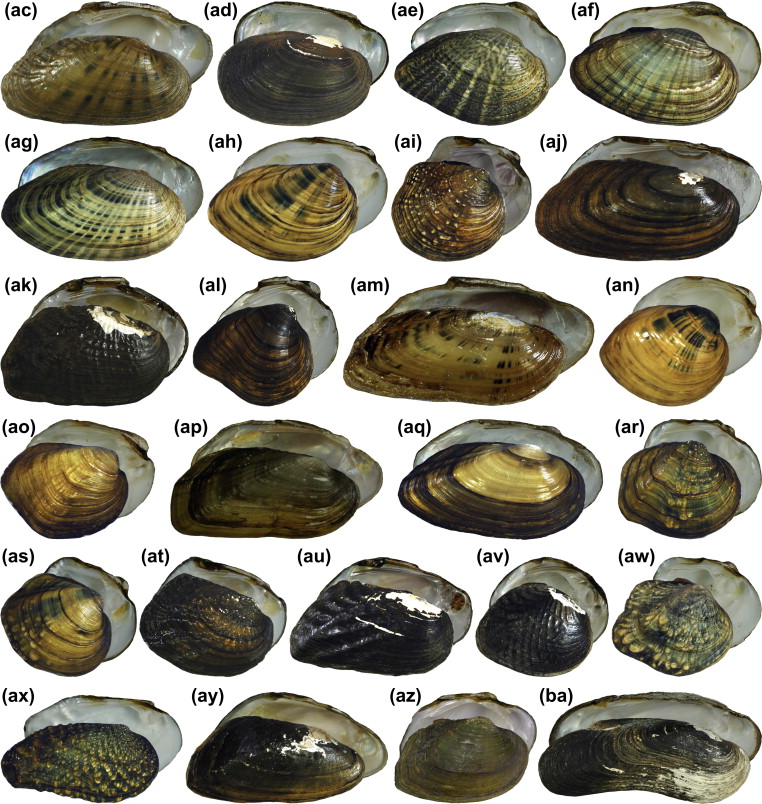
Phylum Mollusca: Class Bivalia
Includes: Musscles, oysters, clams
Body: enclosed in a two part shell (fused on dorsal side)
Adductor muscles close shell, abductor muscles open shell
Mantle: fused to inside of shell
produces pearl by encasing foreign material in calcareous material
Muscular foot: allows for burrowing + movement
No cephalization, some have eye spots
Digestive: filter feeders
intake and expel water
food captured by gills and movement to mouth by cilia (no radula)
Open Circulatory system: heart + aorta
Metabolic waste: excreted by a pair of nephridia/ kidneys
Reproduction: Most are dioecious, broadcast spawning
trochophore larvae develop into various types of veliger larvae (eventually settle on substrate, as spat, to finish development)
Some species are brooding with sperm entering the female body in water → eggs are fertilized in female body → larvae are released from female to develop in water column → eventually settle on substrate

Phylum Mollusca: Class Gastropoda
Marine, freshwater, and terrestrial
Body: diverse in size, body, shell morphology (some do not have shells)
Muscular foot: for locomotion
True caphalization: head, eyes, tentacles
Digestive: Predators, herbivores, scavengers, suspension feeders
have radula for scraping, grinding, boring, etc.
Defining characteristic of shell species: Embryonic torsion
Mantle and visceral mass are rotated and twisted back over the perpendicular
Anus is now above and slightly behind the head
left-sided organs are now on the right sight, right-sided organs on the left
This allows for space for the head to be tucked into the shell
Respiration:
Aquatic: gills
Terrestrial: thin blood vessels in the mantle uptake oxygen by diffusion (some have a modified lung of tissue derived from the mantle)
Circulatory: Heart with blood vessels to head/ foor and to visceral mass
Metabolic Waste: concentrated in nephridia/ kidney
Nervous: Brain is typically three pairs of cerebral ganglia
those branch into nerve cords that run the length of body
Reproduction:
Marine: all but one are dioecious, broadcast spawning (external fertilization/ some do internal)
larvae develop first into trochophore larvae → velinger larvae → they settle and develop into adults
terrestrial: Monoecious, internal fertilization
eggs are laid underground → young hatch as miniature versions of adults

Phylum Mollusca: Class Cephalopoda
Includes: Squid, octopuses, etc.
All are marine ( some can tolerate freshwater for short periods)
Body: Only nautilus has shell (others is reduced to internal calcium “pen”
Muscular foot: modified into funnel, tentacles, and arms
True Cephalization (highly inteligent)
Digestive: carnivorous predators (beaked jaw)
Defining character: color and texture changing camouflage
pigments are in the skin, in chromatophore cells
Chromatophore cells can make black, yellow, brown, and black pigments
Have iridophores and leucophores that reflect light to make blue, green, and white
Respiration: well developed gills
Circulatory: Closed Circulatory system (systemic heart and gill hearts)
Metabolic waste: managed by well developed kidney
Nervous system:
Largest, most well developed brain of all invertebrates
Greater brain to body weight ratio than fish and most reptiles
central brain in head is the “command center”
Each arm has a mini brain that controls that arm and receives sensory info
Optical lobes process visual sensory input
Vertical lobe for arms, tentacles, suckers (serve as sensory receptors), gravity
Extremely sophisticated eyes, comparable vertebrate eyes
Extremely inteligent
Buoyancy control: achieved by movement of water and gas within the chanbers of the Nautilus’ shell (cuttle fish use cuttlebone for the same purpose)
Sodium and chloride ions are actively pumped out of the chanbers. Water follows through osmosis ( causes the chambers to fill with gas = animal is lighter)
Pumping Sodium and chloride into the chambers causes water to follow through osmosis (causes the chambers to filll w water = animal is heavier)
Ink defense: all but nautilus use ink for defense
ink sac is modified portion of the digestive tract, it empties into the anus (animal uses water expulsed from funnel to eject the ink)
Ink can be compromised of mixture of melanin protein, mucus, and (in some animals) dopamine
melanine protein = ink cloud
melanine + mucus = blob of ink
dopamine = disorientation
Reproduction: Dioecious, courtship mating, internal fetilization
sperm transferred in packets (spermatophores)→ transferred into female mantle through male penis or modifies arm (hectocotylus)→ females lay eggs ( most gueard eggs)→ embryo development takes place within the egg ( young are mobile at hatching, no larval stage)