COMM1000 M6: Conflict in Communication
 Call Kai
 Learn
 Practice Test
 Spaced Repetition
 Match
 Flashcards
 Knowt Play
1/32

There's no tags or description
Looks like no tags are added yet.
33 Terms
Conflict
Expressed struggle b/w 2 interdependent parties w/:
Incompatible goals
Scarce resources
Interference from others in achieving goals
What are 4 types of conflict?
Intrapersonal
Interpersonal
Intragroup
Intergroup

Intrapersonal conflict
Conflict within ourselves
Interpersonal conflict
Conflict with someone in a relationship
Intragroup conflict
Conflict within a group
Intergroup conflict
Conflict b/w groups
What are 4 purposes of conflict?
Persuasion
Regulating relationships
Catharsis
Clarifying issues
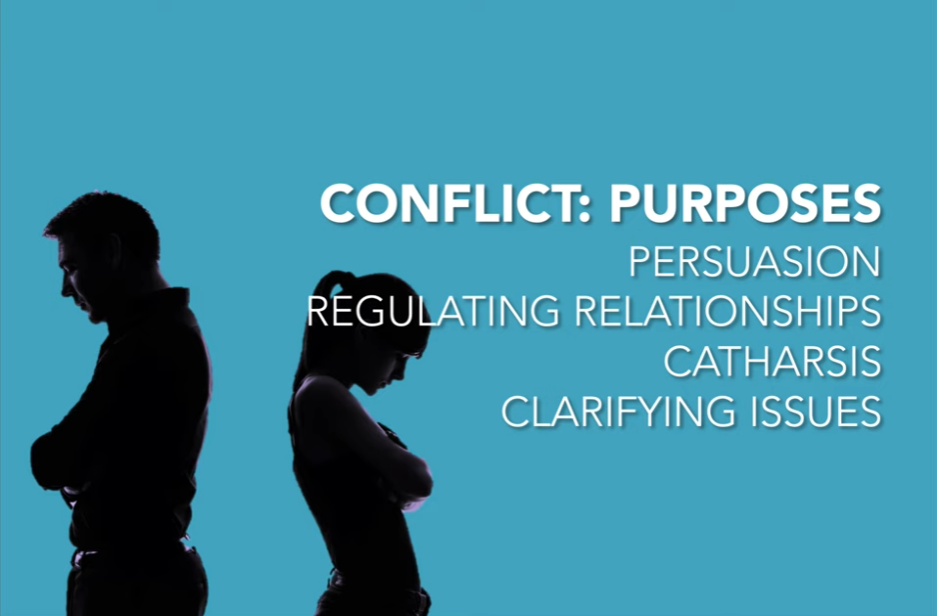
Persuasion = purpose of conflict
Get others to believe what we want them to believe
Regulating relationships = purpose of conflict
Set boundaries when other person as overstepped/violated expectations
Catharsis = purpose of conflict
Feels good to fight
Clarifying issues = purpose of conflict
Illustrate issues in relationship
What are 3 causes of conflict?
Behavior
Personalities
Relationship rules

Behavior = cause of conflict
Way others behave → arguments
Personalities = cause of conflict
Incompatible personalities → arguments
Relationship rules = cause of conflict
Boundaries or expectations are violated
What are the 6 stages of conflict?
LEEDRR
Latent conflict
Emergence
Escalation
De-escalation
Resolution
Reconciliation
Latent conflict = 1st stage of conflict
Frustration has not yet emerged publicly
Emergence = 2nd stage of conflict
Event triggers conflict
Escalation = 3rd stage of conflict
What begins fights
Conflict → intensifies → certain peak
De-escalation = 4th stage of conflict
Attempt to lessen conflict
Resolution = 5th stage of conflict
Decision to make a deal/solution about conflict
Reconciliation = 6th stage of conflict
End of conflict → deciding next steps
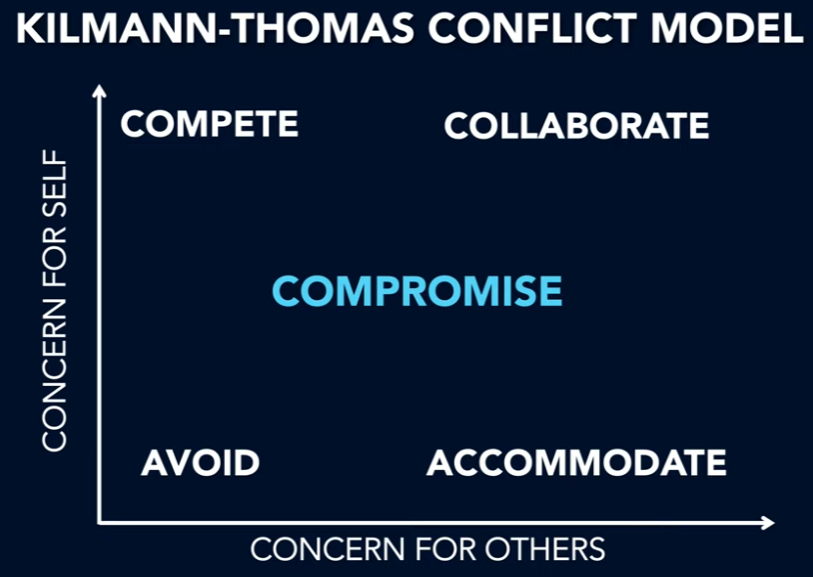
Kilmann-Thomas Conflict Model
X-axis = concern for others
Y-axis = concern for yourself
Approach conflict differently depending on different concern levels (others vs. self)
What are 4 common emotions in conflict?
Anger
Jealousy
Hurt
Guilt

Emotional flooding
System overload from negative emotions associated w/ conflict → unable to respond rationally nor in an organized manner
Need to remove yourself from situation to reorganize thoughts

What are 4 styles of couples’ conflict?
Validating couples
Volatile couples
Conflict-avoiding couples
Hostile couples

Validating couples = couples’ conflict style
Collaborative approach to issue
Open, cooperative, respectful, calm
Volatile couple = couples’ conflict style
Aggressive conflict, but affection afterwards
Open, competitive, persuasive
Conflict-avoiding couple = couples’ conflict style
Avoid conflict, focus on similarities
Good in short term
Bad in long term
Hostile couple = couples’ conflict style
Frequent, intense, negative conflict
Personal attacks
Ugly
Cascade Model of Relational Conflict
Conflict can escalate in cascade of negativity
Continuously worsens
What are the Four Horsemen of the Apocalypse?
4 behaviors to avoid in relationships (could lead to end of relationships):
Criticism (personality rather than behaviors)
Contempt = behavior to hurt partner
Defensiveness = refusal to understand other’s perspective
Stonewalling = silence, change subject, block productive conversation

Ethical Conflict Management: 5 components
Truthful
Avoid personal attacks + name-calling
Accountable
Avoid coercion = avoid bribing or changing subject
Focus on conflict
Confidence Model for Conflict Management
Focus on appropriateness, effectiveness
Communicate mindfully
Pick correct strategy → resolution