Art History-part 2
 Call Kai
 Learn
 Practice Test
 Spaced Repetition
 Match
 Flashcards
 Knowt Play
1/41

There's no tags or description
Looks like no tags are added yet.
42 Terms
Northern Renaissance vs. Italian Renaissance
Northern= “external exactness,” natural, less focus on humans, more focus on landscape, nature, portraiture, symbolism
Italian= “compositional harmony,” human ideals, showing divine
International Gothic style (1300-mid1400s)
influenced North due to attention to detail in everyday life
Jan Van Eyke (1309-1441)
-First to use oil painting
-Shows how an artist in the North is a “recorder” instead of a “divine” like Michelangelo

Key work
Van Eyck, The Arnolfini Portrait, 1434
shows off wealth through clothes, furniture, and dog
Symbols: One candle=light of God, Orange=Garden of Eden, convex mirror=all seeing eye of God
Artist signature placed in the photo above the mirror=recorder/was there
Key work
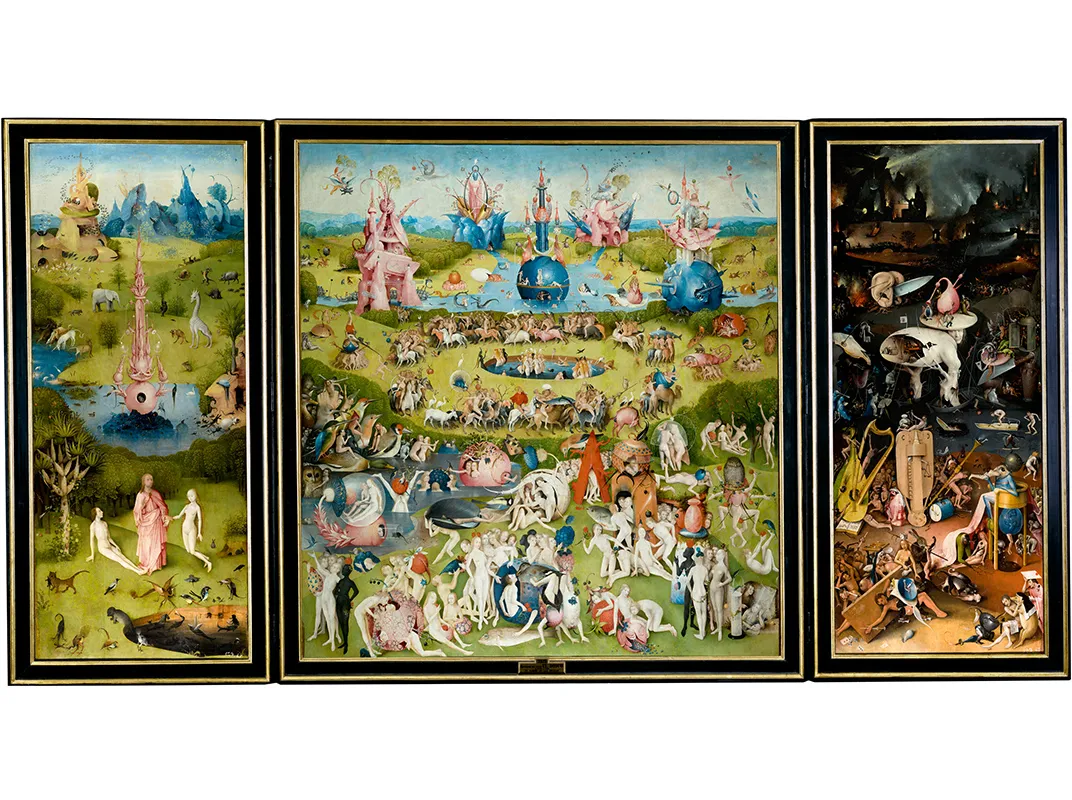
Bosch, The Garden of Earthly Delights, c. 1500
Triptych (three panels): past/creation, present (life on Earth), future (hell)

Key work
Bruegel, Netherlandish Proverbs, 1559
Peasant life
Human flaws
Proverbs=sayings/lessons, exp. “make ends meet”
Icon vs. Symbol
Icon: looks exactly like what it represents, exp: camera icon on phone
Symbol: Don’t look like what it represents, exp: light=God
Hieronymus Bosch
Strange art focussing on human sin
Protestant Reformation (1517)
Martin Luther creates faith based on the text of the Bible. He was frustrated with Catholicism.
The North took on this religion.
Iconoclasm
Churches become white washed to put less focus on images
Portrait
picture of “sitter” (individual) that record specific features of that person
Evolution of profiles in portraiture
side profile to better show features
¾ view for men: relationship between sitter and view is formed.
¾ view for women (Mona Lisa is the first!)
Leonardo Da Vinci (1452-1519)
“Renaissance man”
Engineer, inventor, musical

Key work
Leonardo, Mona Lisa, 1503
First portrait not showing off wealth, but instead personality
Smile=captured moment in time
painted at dusk=mood, harmony with her and background
Sfumato=softened features to capture more realistic look
Baroque (1600-1700)
Barocco= irregular pearl=curvy buildings
First style to spread globally (Italy>Europe>world)
Counter-reformation: Southern Italy keeping Protestant ideas from the north out by using magnificent art to show catholic images
Rembrandt
Manipulates art market and becomes a highly skilled portrait painter
Highlights sitter’s sense of identity, social conventions, and painter’s perception of identity
Invented group portraiture
Carved with paint

Key work
Rembrandt, Portrait of Nicolaes Ruts, 1631
Fur trader
Highlights naturalism of fur and hair
Shadows help animate
Show tired/worried face

key work
Rembrandt, The Anatomy Lesson of Dr. Nicolaes Tulp, 1632
Caravaggio (1571-1610)
Unusual, troubled, angry
Tells biblical stories in a dramatic way
Chiaroscuro
arrangement of light and shadows in a dramatic way

key work
Caravaggio, The Calling of St Matthew, c. 1599
Jesus calling sinner, tax collector, Matthew
Chiaroscuro
Pregnant moment: Moment before Mathew sees Jesus
Radical naturalism: dirty building, real bar, no ideals, figures are not symmetrical
Pregnant moment
moment right before the action actually occurs
Gianlorenzo Bernini (1598-1680)
Interested in theater/drama
Stage designer
Adds drama to classical antiquity style
Goes to France to work with Louis XIV (doesn’t get along)

key work
Bernini, David, 1623
shows action/pregnant moment wight before throwing stone
meant to walk around/interact with: breaking the 4th wall!
easy to imagine scene where Goliath standing behind him
kew work
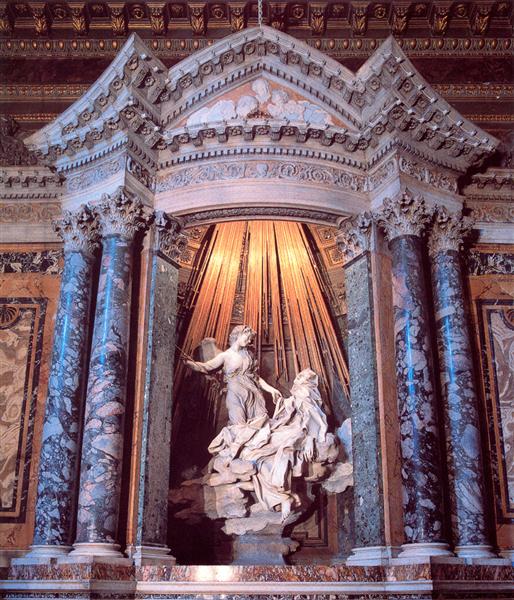
Bernini, The Ecstasy of St. Teresa, Cornaro Chapel, Rome, c. 1650
Angel comes to saint
plays with lighting to animate scene
Illusionism of no ceiling=heaven
Art around helps tell story/how to interact
Break fourth wall
Absolutism
Government with sovereignty
Louis XIV (1643-1715)
France
Great patron of the arts
Used art as propaganda to communicate his power
starts the baroque in France
Baroque in France
massive, luxurious
in favor of classical antiquity (repetition, regularity)
Rejects extreme emotion and naturalism

Key work
French, The Palace of Versailles, begun 1661
Louis XIV moves court outside of Paris
Displays his control over the court, nature, people of France
Meant to surprise and overwhelm

Wall of mirrors/ inside of Palace
very advanced for the time
Meant to be huge
Not a lot of furniture, more for display then living
Kings bedroom=public

Enfilade
Series of open doors to show off a big space

Gardens
huge/artificial
Irrigation engineering
exotic animals

Charles Le Brun
convinces Louis to make an art academy, but art has to promote the king (art=text)

Key work
Nicolas Poussin, The Holy Family on the Steps, 1648
Shows intellectual parts of painting
Lines over color
painting as text
Desegno
Line/drawing vs. color
Line=intelligent and tells story
color: works with sense to help with reasoning, empiricism, persuasion
Rococo (17th-18th century)
Birth of modern ideas: furniture designed for comfort, rooms have meanings/impact how we behave
Intellectual revolution
Quarrel of the ancients and moderns: Antiquity isn’t the major idea because we can use experiments to prove things
Reason and empiricism
Louis XIV dies: no more King’s watchful eye + court moves back to Paris
Art exceeds bizarre design: curves, asymmetrical, luxury materials
Fete galante
Color over line to promote visual pleasure
Antoine Watteau (1684-1721)
Promotes fete galante in academy

Key work
Antoine Watteau, The Embarkation for Cythera, 1717
meant to scan canvas
there is no real. meaning
color is meant to enjoy

key work
Antoine Watteau, Gersaint’s Signboard, 1720-1721
painting=material objects
put Louis to rest
consumer culture

key work
Jean-Honoré Fragonard, The Swing, 1767
The Swing reflects libertine attitudes because it celebrates secret romantic encounters, pleasure, and sexual flirtation rather than traditional moral restraint.
Libertine
A person who rejects traditional religious beliefs or lives without moral restraints, especially regarding sexual behavior.