UNIT 15.2 AEROBIC NON-SPORE FORMING GRAM- POSITIVE BACILLI
 Call Kai
 Learn
 Practice Test
 Spaced Repetition
 Match
 Flashcards
 Knowt Play
1/188

There's no tags or description
Looks like no tags are added yet.
189 Terms
T
generally, yes. except for M. marinum (spore former)
T or F
Mycobacteria are generally non-motile, non-spore former, non-encapsulated
M. marinum
Mycobacteria are all non-spore formers except for ____ because it demonstrates spore or spore-like structures
N-glycolylmuramic acid
lipid
Mycobacteria cell wall contain ___ and has extremely high __ content → ACID FASTNESS
strictly aerobic
Mycobacteria oxygen requirement
catalase (+)
Mycobacteria catalase reaction
MUCH’s Granules
contributes to the beaded appearance
non-acid fast, gram(+) granules
T
T or F
Mycobacteria have palisade or X, Y, V and L (snapping) formation.
2-3 days
20-40 °C
rapidly growing species grow on simple media in ___ days at ___°C
2 to 6 weeks
mycobacteria associated with disease require ___ of incubation on complex media
6.5-6.8 pH (culture media)
pH requirement of Mycobacteria
>12 hours
generation time of Mycobacteria
Robert Koch
1882
“Koch’s Bacillus”
M. tuberculosis was first described by ____ in ____, thus it is called the ____
10-20 days
M. tuberculosis have very slow growth, requiring approx. ____ before growth can be visualized
Capnophilic (5-10% CO2)
37°C
M. tuberculosis CO2 and Temp. growth reuqirements
M. tuberculosis
first appears as small (1-2mm), dry friable colonies that are rough, warty, granular and buffed-colored
cauliflower
M. tuberculosis typical colonies have a flat irregular margin and a "____" center after several weeks
glycerol
eugenic
M. tuberculosis have luxuriant growth enhanced by ___ thus termed ___
dysgonic
other mycobacteria are ____ (smooth scanty growth)
M. tuberculosis
slowly growing, typically raised, with a dry, rough appearance = "CAULIFLOWER-LIKE" COLONIES

Nonpigmented = BUFF-COLORED COLONIES
Color of M. tuberculosis colonies
20-22 hours
M. tuberculosis longest replication time
slant
M. tuberculosis are grown in a tube using a ___
T
T or F
M. tuberculosis resist adverse environmental conditions such as drying, heat and chemical agents.
CORD FACTOR
SULFATIDES
ENUMERATE
Virulence factors of M. tuberculosis
CORD FACTOR (Trehalose-6, 6'-dimycolate)
Virulence factors of M. tuberculosis
glycolipid responsible for the formation of tight serpentine cords in smears and on cord media
SULFATIDES
Virulence factors of M. tuberculosis
glycolipids responsible for neutral red reacting associated with virulent strains of MTB
PRIMARY TUBERCULOSIS
EXTRAPULMONARY TUBERCULOSIS
ENUMERATE
Related Infections & diseases to M. tuberculosis
PRIMARY TUBERCULOSIS
Related Infections & diseases to M. tuberculosis
disease of the respiratory tract
chronic granulomatous infection transmitted through inhalation of infected droplets (1-5 um)
PRIMARY TUBERCULOSIS
Related Infections & diseases to M. tuberculosis
cough, sputum with hemoptysis, chest pain, shortness of breath, low-grade fever, night sweats, fatigue, anorexia, and weight loss
EXTRAPULMONARY TUBERCULOSIS
Related Infections & diseases to M. tuberculosis
other than causing primary infections involving the lungs, M. tuberculosis can also disseminate in other parts of the body
Tuberculin Test
● diagnostic skin test which identifies TB infection, recent or past, with or without disease
● person infected with tubercle bacilli develop hypersensitivity to the proteins of the organism
OLD TUBERCULIN (OT)
● original test reagent
● prepared from boiled 6 weeks old broth cultures, from which the organism were filtered and concentrated by steaming
● active component of the filtrate is a heat-stable protein that is now introduced to out patients
PURIFIED PROTEIN DERIVATIVE (PPD) SKIN TEST
partially purified preparation of OT prepared by ammonium sulfate fractionation
consist of mixture of small tuberculoproteins
test reagent currently used for tuberculin skin test
culture extract of MTB injected intracutaneously
0.1 ml of PPD
5 TU (tuberculin units)
MTB diagnosis standard dose for skin testing is _____ or ____
Mantoux Test
MTB Diagnosis Methods of Administration:
intracutaneous injection
Von Pirquet Test
MTB Diagnosis Methods of Administration:
scratching the tuberculin into the skin test
Vollmer Patch Test
MTB Diagnosis Methods of Administration:
piece of cloth soaked in OT/PPD and placed over skin (for infants)
Moro Percutaneous Test
MTB Diagnosis Methods of Administration:
OT/PPD+ lanolin-ointment rubbed onto skin
Tuberculin Tine Test
MTB Diagnosis Methods of Administration:
multiple puncture technique
Mantoux Test
Von Pirquet Test
Vollmer Patch Test
Moro Percutaneous Test
Tuberculin Tine test
ENUMERATE
MTB Diagnosis Methods of Administration
granuloma formation
M. tuberculosis is capable of intracellular multiplication that’s why we have ____ (dormant)
48-72 hours
MTB test results should be read ____ after injection → delayed hypersensitivity reaction
Erythema
Induration → firmness as a result of influx of immune cells
MTB positive results indicated by:
>10 mm or more
MTB test results:
diameter of induration that indicates infection with MTB
>5 but <10 mm
MTB test results:
diameter of induration that indicates doubtful, may due to other mycobacterial infection
Erythema without induration or <5
MTB test results:
negative result
restested with 250 TU
Miliary TB
EXTRAPULMONARY TUBERCULOSIS
seeding of many organs outside the pulmonary tree with AFB through hematogenous spread
common sites: spleen, liver, lungs, bone marrow, kidney, adrenal gland, and eyes
Pott disease
EXTRAPULMONARY TUBERCULOSIS
invasion of MTB into the spinal vertebrae
common characteristic: back pain
common site: hip and knee
SKELETAL TB
SPONDYLITIS TB
Pott disease is aka ____ and ___ when it reaches the bone
Pleurisy
EXTRAPULMONARY TUBERCULOSIS
unexplained pleural effusion with mononuclear pleurocytosis, manifests as cough, fever, and chest
Lymphadenitis
EXTRAPULMONARY TUBERCULOSIS
painless head or neck swellings
Meningeal
EXTRAPULMONARY TUBERCULOSIS
rupture of a tubercle into the subarachnoid space
Genitourinary infections
EXTRAPULMONARY TUBERCULOSIS
kidneys and genital organs
Rifampin,
Isoniazid (INH),
Pyrazinamide (PZA),
Ethambutol,
Streptomycin
[RIPES]
ENUMERATE
First-line antituberculosis drugs
Pyrazinamide (PZA)
First-line antituberculosis drugs
suspicion of lowered cellular immunity and to obtain bactericidal levels intracellularly in macrophages
for a shorter course, initially along with isoniazid and rifampin
Aminoglycosides
Fluoroquinolones
ENUMERATE
Second-line antituberculosis drugs:
INH and rifampicin
PZA
Newly diagnosed MTB patients
____ for 9 months;
____ may be added for the first 2 months, duration of treatment may be shortened to 6 months
Multidrug-Resistant Mycobacterium tuberculosis
have resistance to at least isoniazid and rifampin
Extensively drug-resistant TB (XDR-TB)
have resistance to isoniazid and rifampin plus resistance to any fluoroquinolone and at least one of three injectable second-line anti-TB drugs-aminoglycosides amikacin, kanamycin, or capreomycin
Niacin accumulation (+)
Nitrate reduction (+) 10-20 days
Catalase (+)
Pyrazinamidase (+)
ENUMERATE
Biochemical tests that MTB yield a positive result to
a. Serpentine Cord Formation
b. Neutral Red Dye Test
ENUMERATE
VIRULENCE TESTS OF M. TUBERCULOSIS
Serpentine Cord Formation
VIRULENCE TESTS OF M. TUBERCULOSIS
virulent strain tend to orient in parallel chains resembling "Serpentine Cords"
best observed in smears from the condensation water or by direct observation of colonies on cord medium
Neutral Red Dye Test
VIRULENCE TESTS OF M. TUBERCULOSIS
sulfolipids presents in virulent MTB bind red dye Organism 50% methyl alchol → decant → organism + fresh barbital buffer and neutral red dye solution
Yellow → RED COLOR
Neutral Red Dye Test positive indication
37°C for 1 hour
Neutral Red Dye Test incubation
M. bovis
TB primarily in cattle but also in dogs, cats, swine, parrots, and humans
acquired through ingestion of contaminated milk or exposure to infected animals
Bacillus-Calmette-Guerin (BCG)
attenuated strain of M. bovis used for vaccination of newborns against TB
Egg-based media
Middlebrook 7H10 medium
ENUMERATE
Culture media for M. bovis
Egg-based media
Culture media for M. bovis
slow-grower, small, granular, rounded, nonpigmented colonies with irregular margins
21 days of incubation at 37° C
Middlebrook 7H10 medium
Culture media for M. bovis
similar to those of MTB but slower to mature
Glycerol
Culture media for M. bovis
____ selectively inhibits growth and should not be included in media
Niacin accumulation (-)
Nitrate reduction (-)
Heat-stable, catalase-negative (-)
ENUMERATE
Biochemical tests that M. bovis yield a negative result to
Thiophene-2-carboxylic acid hydrazide (T2H) (S)
Serpentine cord formation (+)
ENUMERATE
Biochemical tests that M. bovis yield a positive result to
M. africanum
Mycobacterium associated with human cases of TB in tropical Africa
detection requires the use of spoligotyping (spacer oligotyping)
M. africanum
inactive biochemically but urease (+)
variably (+) growth in TCH
M. canetti
smooth strain of MTB
grows more rapidly than MTB (6 days on solid media)
M. canetti
isolated from an AIDS patient with mesenteric TB
Niacin and Nitrate reduction (+)
M. microti
Mycobacterium isolated from TB patients in both immunocompetent and immunocompromised individuals
NONTUBERCULOUS MYCOBACTERIA / ATYPICAL MYCOBACTERIA / MOTTT
Group of Mycobacterium that is Anonymous, Unclassified, Unknown, Tuberculoid, Environmental or Opportunistic
present in the environment and sometimes colonize skin, respiratory and GIT of healthy individuals
NTM / MOTT
clinical presentation: Chronic pulmonary disease resembling TB
inhalation
non-transmissible from person to person unlike M. tuberculosis
NTM mode of transmission
Runyon (1959)
____ classified NTM into 4 groups based on the phenotypic characteristics
growth rate: rapid growers or slow growers
colonial pigmentation: capability of producing pigment in the presence of dark and light, only light, or none at all
Basis of RUNYON CLASSIFICATION OF NTM
Group I (Photochromogens)
RUNYON CLASSIFICATION OF NTM
Develop pigment on exposure to light after being grown in the dark
take longer than 7 days to appear on solid media
cream or buff; orange or yellow
Group II (Scotochromogens)
RUNYON CLASSIFICATION OF NTM
Develop pigment in the dark or light
take longer than 7 days to appear on solid media
yellow to orange colonies
Group III (Nonphotochromogens)
RUNYON CLASSIFICATION OF NTM
Nonpigmented regardless of whether they are grown in the dark or light
take longer than 7 days to appear on solid media
Group IV (Rapid growers)
RUNYON CLASSIFICATION OF NTM
Grow on solid media
take fewer than 7 days to appear
varying pigmentation
Photochromogens
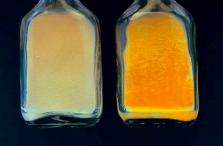
Scotochromogens
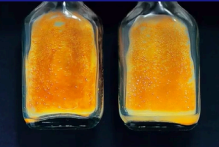
Nonphotochromogens

M. kansasii
PHOTOCHROMOGEN
YELLOW BACILLUS
second to MAC as the cause of NTM lung disease
M. kansasii
PHOTOCHROMOGEN
Chronic Cavitary Pulmonary lesions
Extrapulmonary: lymphadenitis, skin and soft tissue infection and joint infection
Middlebrook 7H10 agar
Culture medium for M. kansasii
M. kansasii
slow-growing, smooth to rough, with characteristic wavy edges and dark centers
Prolonged exposure to light: dark red crystals of B-carotene on surface and inside the colony
M. kansasii
appears as long rods with distinct crossbanding
Strongly Catalase (+) (>45 mm in semiquantitative test)
Tween 80 Hydrolysis (+) = 3 days
Nitrate reduction (+)
Pyrazinamidase production (+)
[NSTP]
ENUMERATE
Biochemical tests that M. kansasii yield a positive result to
Niacin (-)
M. kansasii Niacin test reaction
M. marinum
implicated in diseases of fish and isolated from aquariums
M. marinum
tender red or blue-red subcutaneous nodule, or SWIMMING POOL granuloma
occurs on the elbow, knee, toe, or finger
Egg-based medium
M. marinium appears smooth to rough and wrinkled when grown in ____