History IDs
 Call Kai
 Learn
Learn Practice Test
 Spaced Repetition
 Match
Match Flashcards
 Knowt Play
1/90

There's no tags or description
Looks like no tags are added yet.
Name | Mastery | Learn | Test | Matching | Spaced | Call with Kai | Chat |
|---|
No analytics yet
Send a link to your students to track their progress
91 Terms

Diffusion
the spread of traits, language, culture, etc. through trade, communication, travel, witnessing, etc.
direct: elements spred through close, frequent contact between two distinct societies through trade, intermarriage, or warfare
Indirect: traits pass from one society to another through an intermediary 3rd party, without direct contact between the original and resulting cultures
Forced: dominant culture conquers or limits another by forcibly imposing its own customs and values

Syncretism
a blending of beliefs and practices from different religions into one unified system
Combination of discrete traditions, merging of mythologies, rituals, worldviews, cultural practices, etc
Infuses, not borrows, elements to create new practices

Upper Paleolithic (Old Stone)
The last part (70,000 BP to 10,000 BP) of the Old Stone Age, featuring tool industries characterized by long slim blades and an explosion of creative symbolic forms.
First behaviorally modern humans
Explosion of new types and variety of tools
Modern Humans leave Africa

Neolithic
Final section of the Stone age from about 10,000 BP to 2,000 BP
Humans transitioned from nomadic hunter-gatherers to permanent agricultural settlements/ were in all habitable continents
all at similar levels of technological development
New tools were shaped and polished, not simply chipped
Pottery and weaving became widespread for storage, cooking, and clothing
Societies built permanent housing and dwellings as well as large megalithic monuments like Stonehenge

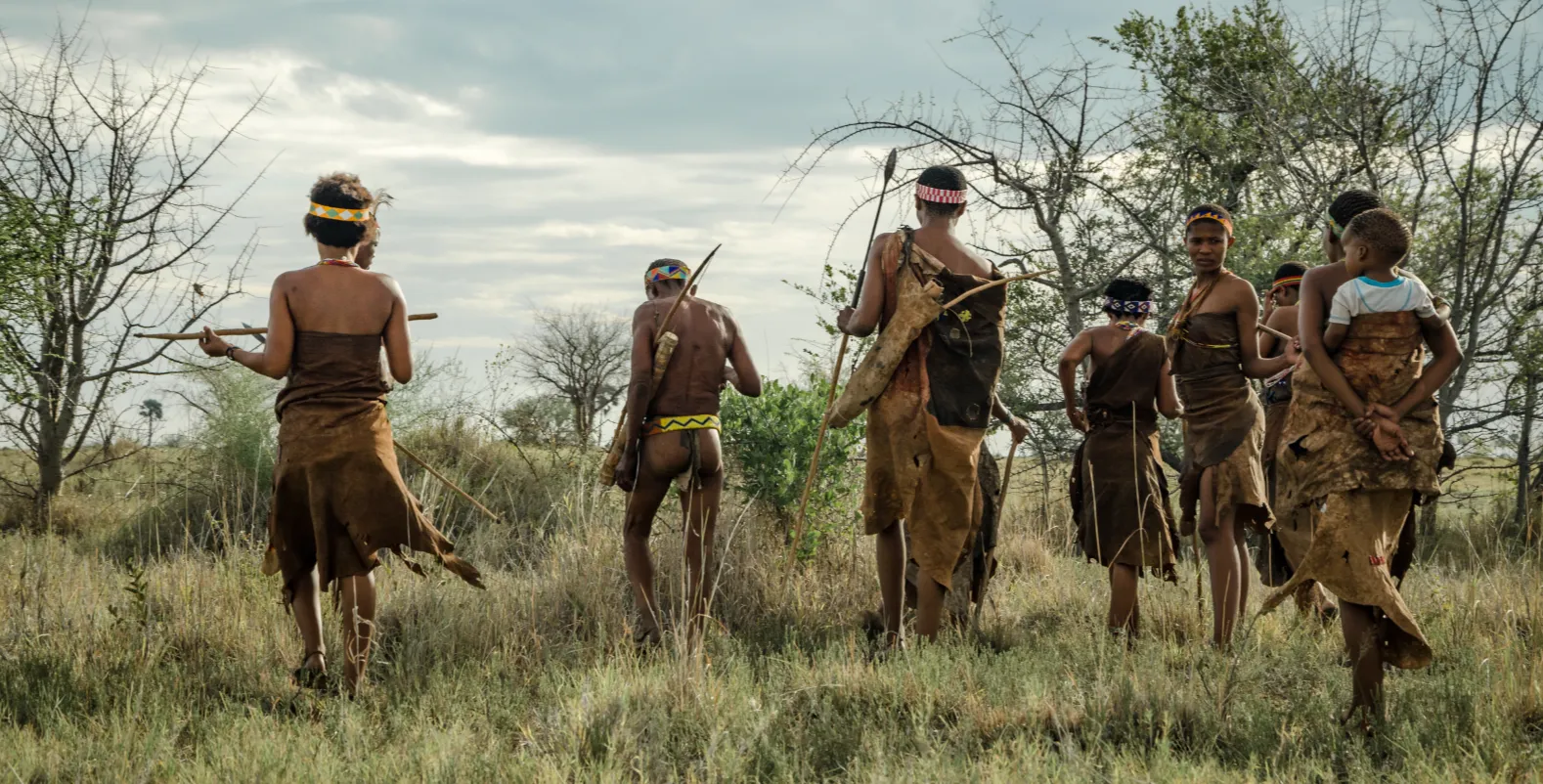
Hunter-Gatherer (Foraging)
survived mostly on hunting wild animals, fishing, and gathering wild plants, seeds, herbs, and nuts
Egalitarian, mobile, few material possessions, no government/ taxation
had great mobility, remained mobile enough to maintain egalitarian bands of related families instead of hierarchical societies.
Coexisted with farmers of this time, as well as traded with them for goods and resources
They didn’t change their lifestyle to a more static on because being mobile enable a diverse diet with wild fish, fruits, game, and poultry. Settled farmers relied heavily on one particular crop succeeding, and if it didn’t they were in danger of starving.
Because of the low labor needs, less children were needed, and being moved around a lot meant children would needed to be carried if they weren’t old enough to walk. Farmers were somewhat forced to have more children because they needed the labor and they could afford them because of their sedentary lifestyle.
Gender Division of Labor
Males associated tasks:
skeletal activity reveals men were typically buried with tools associated with hunting, butchery, heavy woodworking, and interpersonal conflict like battle, war, or disputes
Men also dealt with heavy field work
Female associated tasks:
women were frequently buried with specialized tools used for working animal hides, leather-working, and processing cereal grains.
in charge of child rearing but cooperated in larger familial groups
Some scholars debate the social impact of the roles. There’s some evidence to support that strenuous physical labor was shared and flexible between genders. Some models suggest that sedentary farming and private property gradually laid the groundwork for increasing patriarchy and gender inequality over time.

Agricultural revolution
Neolithic agricultural revolution shifted human cultures from a lifestyle of hunting and gathering to one of agriculture and permanent settlement.
Beginning in 10,000 BCE to 12,000 BCE in the Middle East’s Fertile Crecsent
Independent cultivation of multiple different crops at the same time in different places (China had rice and millet, Africa had sorghum, and Mesoamerica had squash and maize

Neolithic Farmers
Fertile Crescent- roughly 11,000 years ago. Domestication of not just animals but also plants and various wildlife. Coexistence with hunter gatherers and interbreeding rather than complete replacement.
proposed explanations are:
environmental stress
social demand
slow entanglement
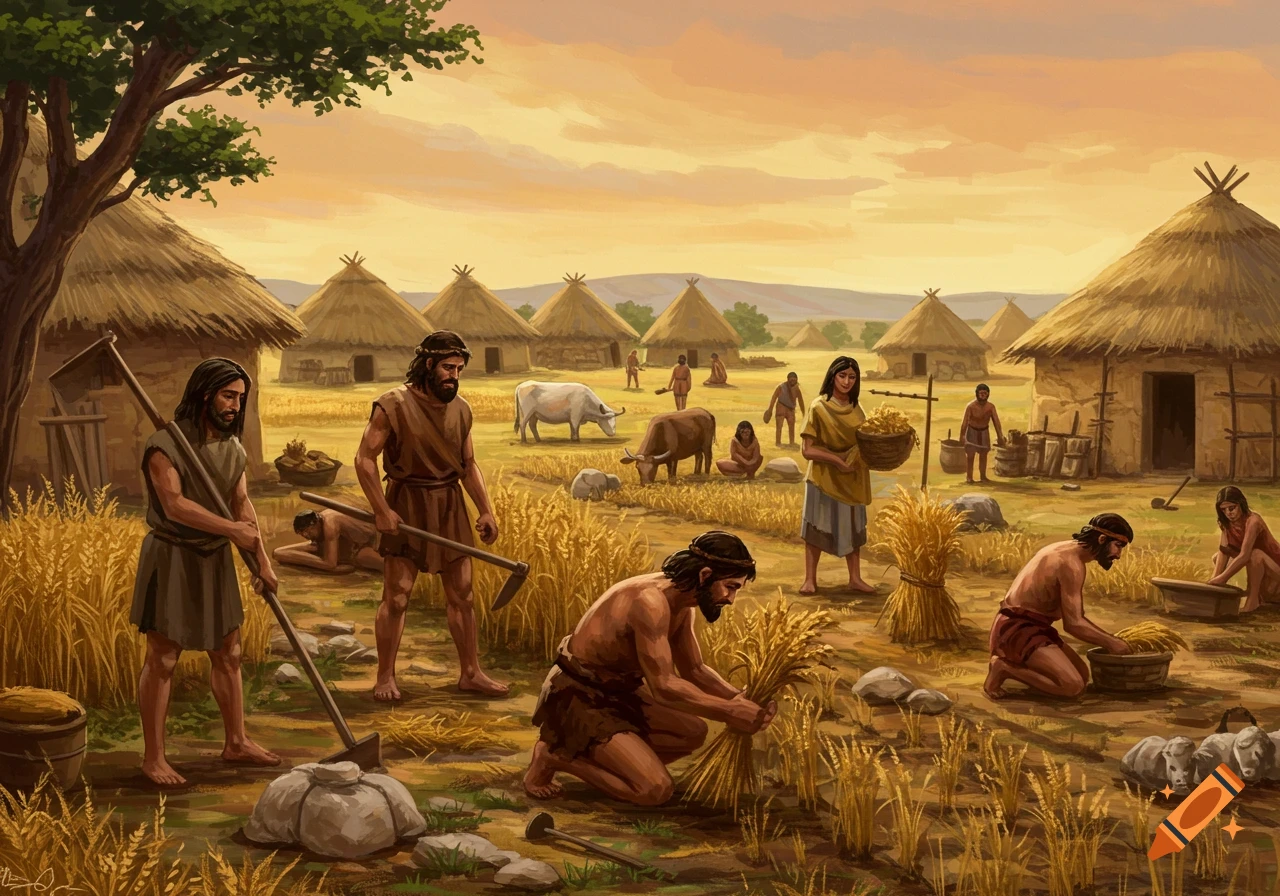
Grain Gathering
11,000 BCE roughly
Ground collecting meant that instead of cutting stalks completely where they stood, they would rather gather grains directly off the ground as plants naturally ripened. The approach ensured they’d have daily crop collection and only the most ripe grains and fruits would be selected.
By grabbing grains and collecting them into bags or baskets, they were also accidentally spreading seeds, sowing future plants for harvest

Neolithic Hand Axe
Produced during the final period of the stone age
finely shaped/ sharpened tool made from hard rocks like flint or granite
used grinding and polishing to refine the shape
Mass produced for daily use and often included in trading

Slash and Burn
started roughly 10,000- 12,000 years ago
early farmers cut down trees, bushes, and forested areas, let some of the biomass dry, then burn it to clear the land and enrich the soil with the nutrient-rich ash.
Showed a very refined understanding of the connection between fire, ash, and soil.
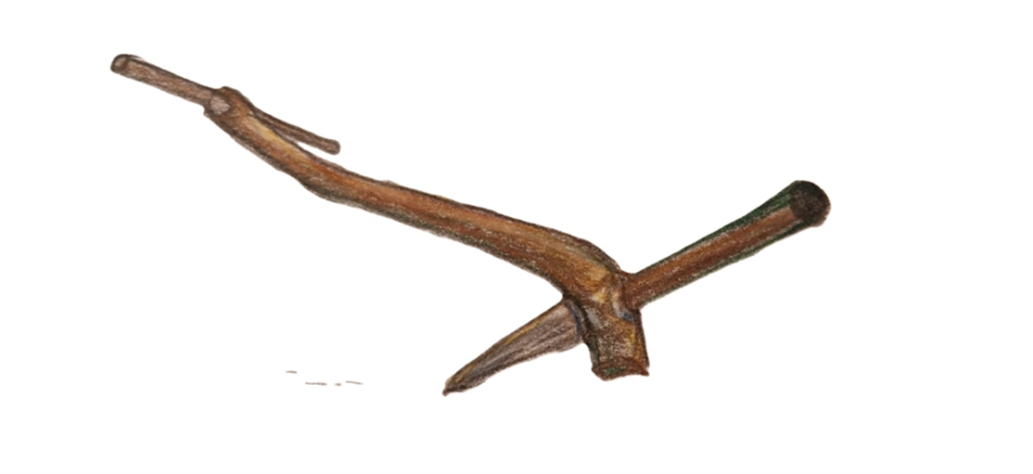
Plow
Usually carved from a single piece of wood
used to break up, scratch, and loosen topsoil to prepare fields for planting seeds

Irrigation
simple water carrying and ditch-dipping methods that allowed farmers to grow crops in dry areas
Allowed for cities to grow far larger and sparked the transition into settled societies
Flood management consisted of low walls (levees and ditches) to trap seasonal floodwaters, allowing nutrient rich moisture to soak into the soil without flooding certain areas

Mesopotamia
10,000 BCE
human societies shifted from mobile bands to more dense sedentary civilizations and societies
because of the growth of major cities, major cultures and language systems were far more easily spread and developed
agriculture soared in this region through the cultivation of wheat, barley, legumes, and the domestication of sheep, goats, pigs and bulls.
architecture- circular mud brick houses evolved into multi-room rectangular houses with lime-plastered floors
food surpluses led to population growth, early trade networks, and the beginnings of social stratification

Sumer
Urban Copper Age civilization (founded in the Neolithic Age)
Domestication of founder crops in Mesopotamia allowed for livestock and human groups to go from nomadic hunting to permanent farming
In 3500 BCE, true cities started to take shape as literacy, temples, social stratification, and early record-keeping become prominent parts of life
The Sumerians developed their own particular language and identity in written records by the late 4th millennium (3,000 BCE)

Fertile Crescent
10,000 to 9,000 BCE
Stretches from the Persian Gulf through to Palestine and often down to the Nile River
Water sources provided rich deposits of silt and fresh soil, water systems like the Tigris, Euphrates, and the Nile enabling farmers to grow crops in fertile areas
Founder crops (world’s first cultivated crops): emmer wheat, einkorn wheat, barley, flax, chickpeas, peas, lentils, etc
Cradle of civilization: the food surpluses allowed for large population influxes, ushering in the need for government and thus, social stratification ensued. Saw the rise of early civilizations like Sumer and Mesopotamia.

Semites
anyone who speaks a language from the semitic family (Arabic, Hebrew, or Aramaic)
Today it is considered an obsolete racial and ethnic category, typically being used for the study of languages
Ancient groups included the Akkadians, Phoenicians, Hebrews, Arameans, and early Arabs who lived across the Near East

Akkad
City founded by Sargon the Great in 2334 BCE after rising from humble beginnings to unite the independent Sumerian civilization with the Akkadian city-states
Mesopotamian city and capital of the Akkadian Empire
First known unified empire in the world, lasted from 2334 to 2154 BCE
Believed to be somewhere near the River Tigris and Euphrates in central Iraq
Sargon had a very centralized government, standardizing weights, measures, and taxes while building and protecting reliable trade routes.
Sumerian cuneiform dominated their writing system and recording styles in laws, stories, and royal messages

Mesopotamian City-States
flourished between 4,000 to 2,000 BCE in the Tigris-Euphrates River valley
each state had its own independent rule and functioned like a modern sovereign country, complete with its own government, king, and army.
Large Ziggurats sat at the core of each city and functioned as religious centers, dedicated tot eh community’s specific patron god or goddess
Highly influenced by irrigation and defensive walls
Uruk was a major city state and home of King Gilgamesh, the heroine in the Epic of Gilgamesh

Sargon the Great
King and founder of the Akkadian Empire (2334 to 2279 BCE)
uniter of the Akkadian city-states with Sumer
unified Mesopotamia through conquering all of southern Mesopotamia and defeating the King of Uruk, along with others
Credited with establishing the regions first professional standing army and advancing tactical formations
The installation of Akkadian governors in conquered cities made Akkadian the official administrative language
Standardized weights across his empire to improve commerce across the multi-ethnic empire
Appointed his daughter Enheduanna, as high priestess of Ur, she’s is celebrated as the first named author in history

Gilgamesh (The epic of…)
First recorded story, written on clay tablets using cuneiform script, and originating from Sumerian poems dating back to around 2100 BCE
reveals the Mesopotamian view of the gods-human relationship and what they expect from each other
serves as a window into the Mesopotamian view of mortality, life, expectations of human-life, etc.

Enlil
Mesopotamian supreme king of gods who was angered by humanity’s loud nature and excessive growth. Flooded the earth tp destroy humanity but was thwarted by Enki/ Ea by saving Utnapishtim
represents ultimate cosmic order and the strict boundaries of human mortality which even a legendary king like Gilgamesh must obey and ultimately respect
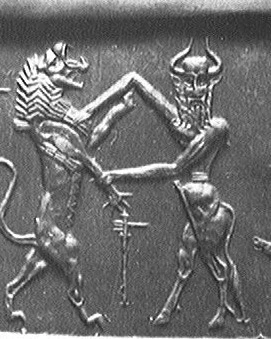
Enkidu
Companion of Gilgamesh
created by the mother goddess Aruru/ Anu from a handful of clay in the wilderness
Designed to temper the arrogance and tyranny of Gilgamesh
Eventually learned about civilization from a temple prostitute and afterwards the animals of the wild rejected him
Blocked Gilgamesh’s path and challenged his oppressive rule, then a wrestling match broke out and it ended in a stalemate, leading the two to embrace each other and become inseparable brothers/companions
Together, they undertook several legendary quests and slayed Humbaba, the guardian of the Cedar Forest, and the Bull of Heaven
Because they killed the Bull of Heaven and Humbaba, the angry gods decreed that one of the heroes must dies, Enkidu was struck down by a fatal, painful illness
This pushes Gilgamesh to search for a secret to eternal life, ultimately prompting him to discover that humanity’s true legacy lies immortal achievements and stories

Urban Revolution
Roughly 3000- 1200 BCE
Large-scale shift from agrarian, village societies to communities with complex, stratified urban civilizations and city-states
Bronze and metallurgy: discovery/ spread of bronze sparked long-distance metal trade routes and hubs which then grew into early cities and trading hubs
Agricultural surplus led to the vast influx of populations in fertile areas, enabling larger-scale societies to thrive from the additional labor force
Concentrated wealth, trade checkpoints, state and trade taxation, and organized labor lead to a rise of ruling elites, taxing authorities, and rigid social systems
Monumental architecture: ziggurats, temples, defensive ramparts, fortified walls, and palaces became commonplace in may advanced areas and cities
Literacy and Numeracy: managing trade, food storage, and state taxes required writing and record-keeping systems, meaning more and more people required literacy and numeracy skills

Civilization's Attributes
advanced cities: large urban centers that act as hubs for populations, trading, and economic activity
Stable food supply: intensive agriculture and the domestication of plants and animals, made possible by the nearby rivers and innovative irrigation techniques
specialized workers: increase in population allowed for increased degrees of skilled labor like merchants, artisans, carpenters, and other professionals to produce goods and services instead of everyone relying on farm work
record keeping: advancements in language and record-keeping methods allowed for greater degrees of recording stockpiles of goods, purchase amounts for various merchandise, etc.
Standardization: large trading hubs along major waterways and rivers championed standardization of measurements and common economic language, making trading and communication in these areas far easier and more accessible
social structure: hierarchal classes ranked by wealth, job specialization, or political power (such as rulers, priestesses/ priests, merchants, and laborers)

Barbarians
Linguistic label for a foreigner, over time in the Persian Wars, the Greeks changed the word to be and insult; meaning uncivilized, uncultured, and inferior
derives from the concept of the “dangerous other”: dominant group portrays an individual/ out-group as a fundamental threat to the safety, morality, or order of society
The term is an onomatopoeia of “bar-bar-bar” which mimics the foreign speech the Greeks couldn’t understand
There are three distinct stages of cultural evolution (according to Lewis H. Morgan)
Savagery: Nomadic hunter-gatherers (Paleolithic/Neolithic Eras)
Barbarism: Societies that had developed agriculture and pottery (Neolithic era) but had not yet developed a written language or large urban states
Civilizations: Societies with writing, advanced technology, unique systems of language, and city-states.
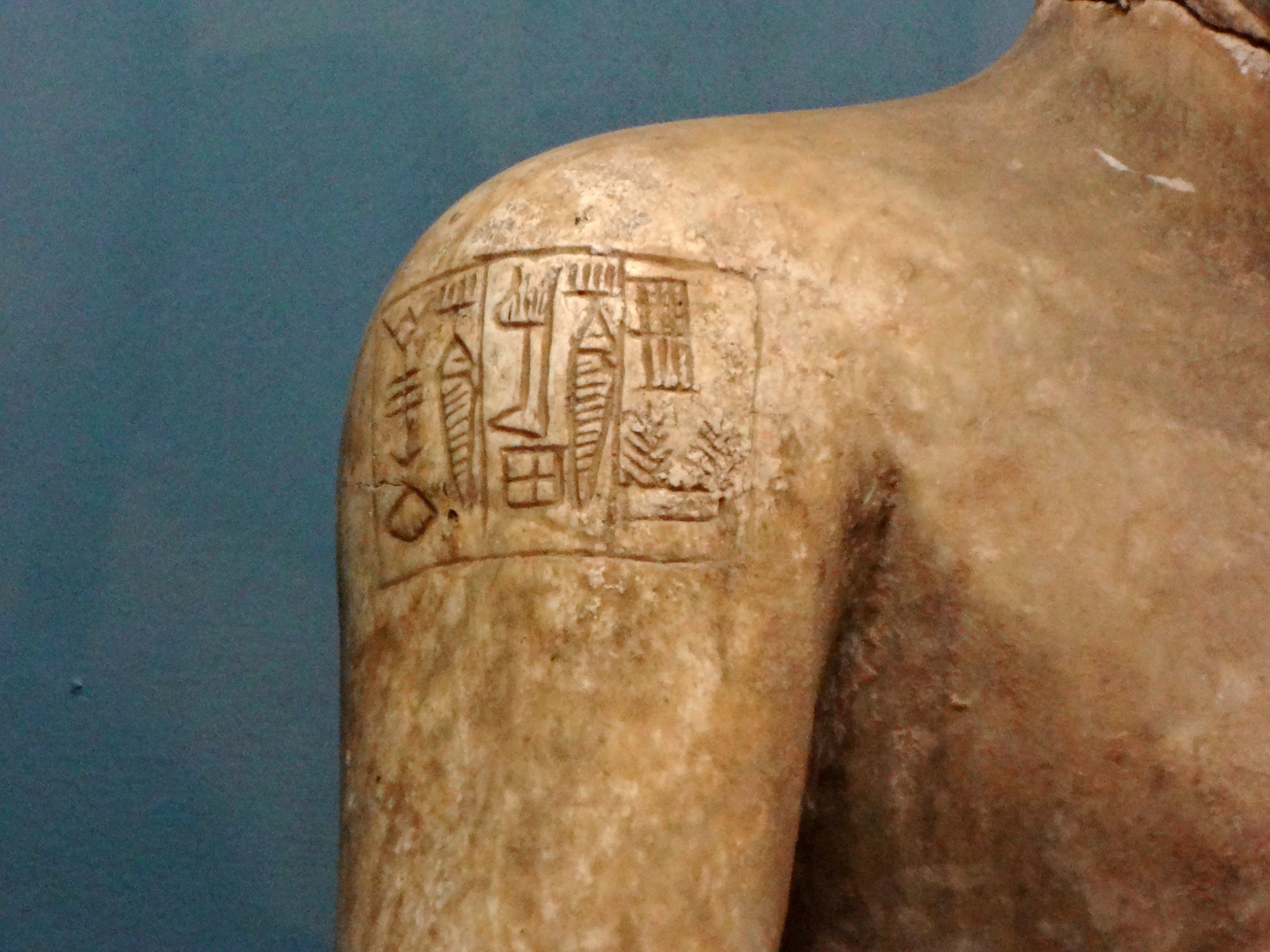
Lugal
Sumerian term for “big man” or king
Used in ancient Mesopotamian around 2700 BCE
Denoted to a king, master, or head state
Ranked than Ensi, which was a local city governor or prince
King Lugalzagesi of Uruk, overthrown by Sargon the Great during the establishment of the Akkadian Empire

Egypt
First river valley civilization alongside Mesopotamia
developed side by side around 3500 to 3000 BCE
Because of the flooding of the Euphrates and Tigris rivers in Mesopotamia, and the flooding in the Nile River, the land around ther areas was regularly, and predictably flooded with nutrient rich waters and silt deposits
Mesopotamia formed a collection of independent city-states ruled by local kings. Power shifted later to larger empires like the Akkadian Empire and Babylon. Ancient Egypt united early into a single, centralized state ruled by pharaohs who were viewed as living gods
Nile River
Lifeblood of ancient Egypt
annual flooding ensured constant
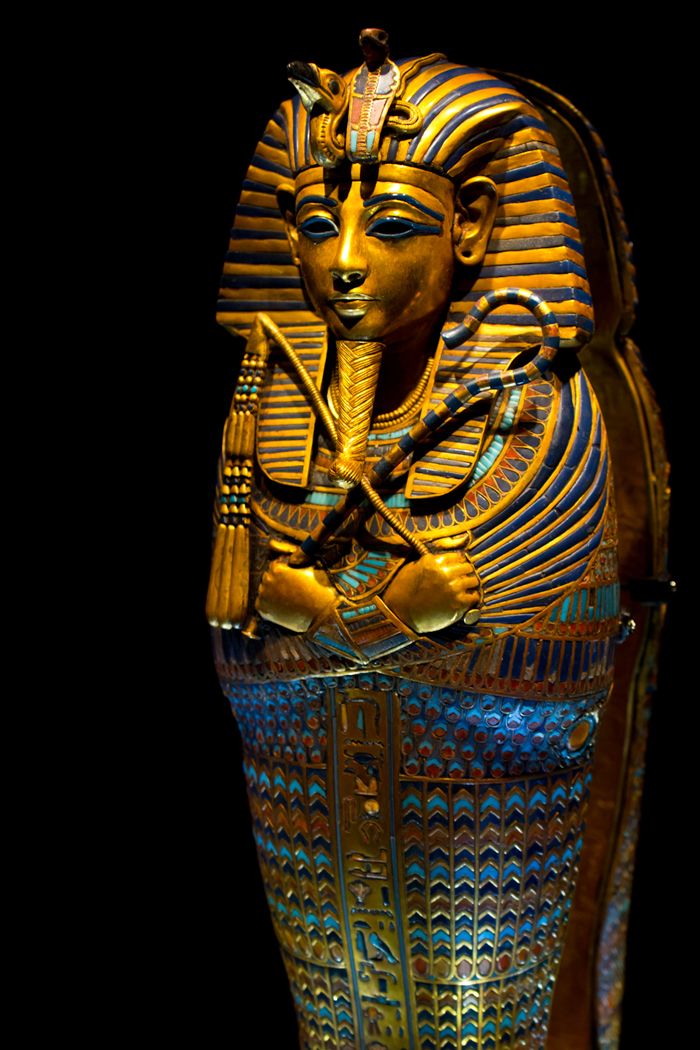
Pharoh
Old Kingdom
Ancient Egypt spanned from roughly 2700-2200 BCE
Included the 3rd- 6th Egyptian Dynasties
“Age of the Pyramids”
Centered around Memphis in Egypt
Royal authority gradually weakened because of local district governors (nomarchs) gaining their power through hereditary means
Middle Kingdom
Roughly from 2030- 1650 BCE
triggered by the reunification of Upper an Lower Egypt under Mentuhotep II of the 11th Dynasty
Includes the 11th- 13th dynasties (some scholars include the 14th dynasty)
12th dynasty brought widespread stability, economic prosperity, and major cultural achievements like art, architecture, and literature
ended in roughly the 13th dynasty as centralized authority weakened, leading to the fragmentation of the country and rise of the Hyksos
New Kingdom
roughly 1550-1070 BCE
includes the 18th- 20th dynasties
Famous Pharaohs in lude, Hatshepsut, Ramesses II
Shifted royal burials to the Valle of the Kings and constructed temples like Karnak and Luxor
Declined due to rising military costs, internal corruption by priests, climate shifts, and invasions by “sea peoples”

Indus River
major bronze age civilization (3300- 1300 BCE)
included parts of Pakistan, northwest India, and northeast Afghanistan
Harappa
Mahenjo-Daro
Indus River Valley civilization in modern-day Pakistan
Yellow River
Xia
Shang
Zhou
Mandate of Heaven
The Bronze Age
(Think of the Odessey)
Chariots
Iron Age
Sanskrit
The Vedas
Rig Ved

Vedic Age
Roughly from 1100- 500 BCE
Create a society that is based on dispersed settlement and pastoralism
Warrior sky gods
Indra
Vedic God
Varna/Caste
hereditary class system
Brahmins- priests
Kashatriyas- warriors
Vaishya- farmers later merchants
Shudras- servants/ slaves later farmers
Dalits- casteless
Each caste has its own Dharma
Kshatriya
second highest of the four traditional social varnas (classes)
Brahmin (in the caste system)
Vaisya
Sudra
Mycenaeans
Bronze Age civilization
Cyclopean Architecture- the use of abnormally large stones had historians of their era convinced the Mycenaeans has used cyclopes to lift the boulders into place along the city walls.
Dorians
Ahura Mazda
The God in Zoroastrianism
Zoroaster claims the Indo-European religions of Persia are false religion
Ahura Mazda is good and Ahriman (the Liar) is bad
There is a struggle between Good and Evil
Your choices make a difference
Eventually Ahura Mazda will prevail
Evil will be defeated and thrown into the cosmos, good live on in a world without death
Evil are cast into a lake of fire
Ahriman
Evil devil in Zoroastrian faith
The Liar
Zoroaster
Creator of Zoroastrianism and principal prophet
claimed the Indo-European faith of Persia was a false religion
Received revelations/visions in the form of Avesta and Gathas, which instructed him to spread word of Ahura Mazda and Ahriman
Monotheism/ Monolatry
Ethical Monotheism
Single, personal god
Demands a high degree of moral behavior of their followers
., historical religions
God makes the world, affects the world, sends messages to the world, at some point ends the world
Monolatry
many gods, but one for a people
“You shall have no other gods before me” this doesn’t claim there are no other gods, it simply states you can have no other gods above him
Hebrews
Yahweh
Babylonian Captivity
Judiasm

Upanishads
New scripture which supplements the Vedas in roughly 7000 BCE
Sets out new vision of reality and human place in the world
Co-exists with Vedas and Vedic practice, doesn’t negate it
Tangible world is not real
Brahman (world soul) is real
Atman: real self
Jivatman- ignorance
Samsara- transmigration of souls (circle of life, death, rebirth, etc)
Kharma- Action
Dharma- Laws and the preordained path
Moksha- Release (freedom from samsara)
Brahman
Atman

Samsara
the never-ending cycle of life, death, reincarnation, and suffering
Karma
Dharma
life purpose, goal, or achievement needed to reach moksha and be free from samsara
Moksha
liberation/ freedom from the endless cycle of birth, death, and reincarnation (samsara)

Hinduism

Buddhism
No caste
one dharma for all
not theistic
Buddha makes no claims about the afterlife
Buddha is Guatama d. 485 (just before Socrates is born)
Kashatriya
Lives sheltered prince life, goes out of palace with charioteer and learns that life is actually rough for those outside of luxury and royalty
Discovers the four noble truths and becomes the Buddha
Life is suffering
Suffering is caused by desire
You can end these desires
It is possible by following the Eight fold path
Founds Buddhism

Four Noble Truths
Life is suffering
Suffering is caused by desires/ cravings
You can put an end to these desires
The way to end cravings is to follow the eight fold path

The Eight-Fold Path
Right:
Views
Aspirations
Speech
Conduct
Livelihood
Effort
Mindedness
Rapture

Dorian
time period and people group in ancient Greece
spans from roughly 1100 BCE to around 30 BCE
Migrated from northwestern Greece into central Greece, coinciding with the collapse of the Mycenaean Bronze Age
Greek dark ages (1200- 800 BCE)- rise closely tied to the transition from the Bronze Age tot he Iron Age
Classical period (600- 323 BCE)- became one of the main four ethnic groups of Greece alongside Ionians, Aeolians, and Achaeans. Prominent Dorian city-states included Sparta and Corinth
Hellenistic Period (323-30 BCE)- Dorian culture, dialects, and architecture persisted across Greece, Sicily, and parts of Asia Minor
marks a critical transition in ancient history, witnessing the collapse of the Bronze Age Mycenaean civilization and laid the cultural, political, and technological groundwork for classical Greece
Dorian Invasion- traditional historical framework describing the migration or conquest of the Peloponnese by Dorian tribes roughly 1100- 1000 BCE, contributing to the Greek Dark Ages
Mycenaean
First advanced and distinctly Greek culture on the mainland of Europe from roughly 1700- 11000 BCE
Heavily inspired by the older Minoan civilization of Crete
Around 1400 BCE, the Mycenaean took dominance of the Aegean and became a dominant military power
Cyclopean Architecture- mastery of maneuvering large, unreasonably sized boulders and stones into towering city walls lead historians and contemporaries to believe their city walls were built by Cyclopes
Polis
large cities
Solon
630- 560 BCE statesman and lawmaker
Born in Athens, died in Cyprus
helped lay the groundwork for Athenian democracy
Lycurgus
Socrates
Athens
Sparta

Zhou/Chou
Longest last dynasty in ancient Chinese history
1046-256 BCE
Agriculture: introduction of iron-working, ox-drawn plows, horseback riding, crossbows, and large-scale irrigation, road, and canal projects
Introduced the Mandate of Heaven (the idea that rulers gained their right to rule from divine approval) and also banned human sacrifice
Birthed schools of thought like Confucianism, Legalism, Daoism, with philosophers like Confucius
Introduced metal coinage, expanded Chinese writing system, and produced fine works made of bronze, jade, and lacquer
Confucius/Confucianism
Legalism
Warring States Period
Civilization- differences from Neolithic societies + Barbarian, how does barbarian societies' history affect the history of civilization?
Technology- relationship between technology and political, economic, and social change? To what extent?
Civilizations- are they inherently coercive? Do people always live in them because of some benefit to themselves, or are they forced to/ made to be?
No they aren’t always coercive. People don’t always live in them because of some benefit to themselves, sometimes they are forced by where they are, or are made to be somewhere.
they are coercive by nature, seeing as complex societies rely upon mechanisms like laws, taxation, policing, and social stratification to maintain order and manage large populations
early modern civilizations formed purely by voluntary social contract; they emerged alongside territorial control, taxation, and hierarchy
Human Society- how do changes in the scale of society affect the religious beliefs of its people? What about social and politic beliefs?
Religious:
From local to universal: religions were typically local, ancestor-to-land based, and exclusive to a specific lineage or clan. As societies scale up into larger chiefdoms and states, religions evolve into “universalizing” faiths
Moralizing high gods: deities who actively monitor human behavior, pass judgement, enforce ethical codes (honesty, fairness, strength, etc.), and punish wrongdoing to maintain large-scale cooperation
Institutionalization and Specialization: small societies have part-time shamans or priestesses but large scale societies need professionalized, bureaucratic religious institutions with full-time clergy, formal written scriptures, standardized dogma, and permanent temples, churches, altars, and/or places of worship and congregation
Social:
Mechanical to Organic Solidarity: Durkheim says that small, low-scale societies rely on mechanical solidarity- unity based on shared likeness, identical values, and face-to-face conformity. Large- scale societies rely on organic solidarity;
Expanding circles of Empathy (and anonymity): small-scale societies are founded in social trust and are based on personal acquaintance and kinship. Scaling up forces societies to develop abstract social trust- belief in impersonal rules, human rights, and institutional fairness
Political:
Centralization of authority: small-scale civilizations are usually egalitarian, consensus-driven, or based on personal charisma/ familial ties
Bureaucracy and rule-based governance: mass populations cannot be governed by informal custom alone. Political beliefs shift towards codified legal systems, universal citizenship, bureaucratic administration, and state-enforced order