PE Cardiovascular - Abnormal heart sounds
 Call Kai
 Learn
 Practice Test
 Spaced Repetition
 Match
 Flashcards
 Knowt Play
1/16

There's no tags or description
Looks like no tags are added yet.
17 Terms
Systolic Murmors
Mitral regurgitation
Tricuspid regurgitation
Aortic stenosis
Pulmonary stenosis
Diastolic Murmurs
Mitral stenosis
Tricuspid stenosis
Aortic regurgitation
Pulmonary regurgitation

Mitral Stenosis
Timing - Mid diastolic with opening snap
Loudest point - limited to apex
Special maneuver - heard best using the bell with the patient in left lateral decubitus position

Mitral Regurgitation
Timing - holosystolic (throughout the entire systolic phase)
Loudest point - Apex
Radiation - Left axilla
Special maneuver - left lateral decubitus position
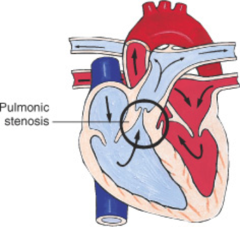
Pulmonic Stenosis
Timing - Mid-systolic
Amplitude - soft to loud with a thrill
Loudest point - 2nd and 3rd intercostal space
Radiation - left shoulder and neck

Tricuspid Stenosis
Timing - mid-diastolic
Loudest point - 2nd and 3rd left intercostal space

Pericardial Friction rub
Timing - one systolic and two diastolic
Quality - Squeaky, grating, scratching, or rasping

Aortic Regurgitation
Timing - early diastolic
Loudest point 2nd to 4th intercostal spaces
Special maneuver - heard best with the patient sitting, leaning forward and holding breath in full expiration or with isometric exercises

Pulmonic Regurgitation
Timing - early diastole
Loudest point - left sternal border (pulmonic area)
Special test - heard better during inspiration with pt standing
Mitral Valve prolase
Timing - Mid systolic click with late systolic murmer (Only significant late systolic murmur)
Loudest point - Apex
Special maneuver - accentuated by having the patient valsalva
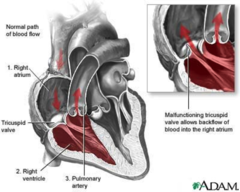
Tricuspid Regurgitation
Timing - Holosystolic
Amplitude - Varies with breathing
Loudest point - left 4th intercostal space
Special maneuver - the murmur increases with inspiration and decreases with expiration

Hypertrophic Cardiomyopathy
Timing - Holosystolic S4
Loudest point - Apex, 3rd and 4th left intercostal space
Radiation - To base of heart or axilla
Special maneuver - Squatting decreases, valsalva increases

Aortic stenosis
Timing - Holosystolic
Loudest point - Right 2nd intercostal space
Radiation - Carotids
Other features - Delayed carotid upstroke, ejection clicks

Patent Ductus Arteriosus
Holosystolic, extends into diastole
Quality - Harsh, machinery like sound
Loudest - left 2nd intercostal space
Radiation - left clavicle
Special maneuver - PMI is laterally displaced; a thrill may be present in the suprasternal notch

Ventricular septal defect
Timing - holosystolic
Amplitude - very loud
Loudest - Left 3rd to 5th intercostal space
Radiation - Right lower sternal border
Special maneuver - does not intensify with inspiration
Murmurs that radiate up
Systolic
Mitral regurgitation - Axilla
Aortic stenosis - Carotids (Mostly right)
Murmurs that radiate down
Diastolic
Aortic regurgitation - Apex
Pulmonary regurgitation - Xiphoid