Human reproduction- IEB

0.0(0)
Studied by 0 people
call kaiCall Kai
learnLearn
examPractice Test
spaced repetitionSpaced Repetition
heart puzzleMatch
flashcardsFlashcards
GameKnowt Play
Card Sorting

1/22

flashcard set

Earn XP

Description and Tags

23 Terms

1
New cards

Functions of male reproductive system

  1. Produce male gametes (in the seminiferous tubules)

  2. Deposit the gametes in the female’s body

  3. Produce the male hormone (testosterone)


<ol><li><p>Produce male gametes (in the seminiferous tubules)</p></li><li><p>Deposit the gametes in the female’s body </p></li><li><p>Produce the male hormone (testosterone) </p></li></ol><p></p>
2
New cards

Testes

The testes are a pair of primary male sex organs located in the scrotum, they produce sperm cells and secrete the hormone testosterone.

<p>The testes are a pair of primary male sex organs located in the scrotum, they produce sperm cells and secrete the hormone testosterone.</p>
3
New cards

Function of the testes

  1. To produce the male gametes (sperm cells in seminiferous tubules)

  2. To produce testosterone (leading cells)


<ol><li><p>To produce the male gametes (sperm cells in seminiferous tubules)</p></li><li><p>To produce testosterone (leading cells)</p></li></ol><p></p>
4
New cards

Epididymis

A long, coiled tube lying outside each testis where sperm are stored temporarily and gain mobility

<p>A long, coiled tube lying outside each testis where sperm are stored temporarily and gain mobility</p>
5
New cards

Vas deferens (sperm duct)

A muscular tube that transports sperm from the epididymis to the urethra during ejaculation
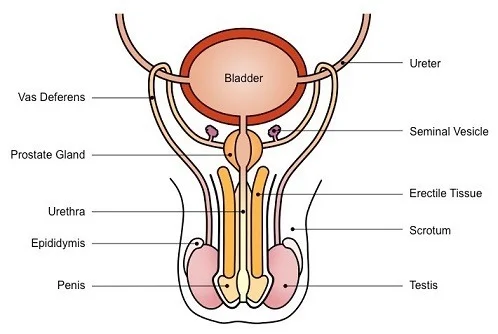
<p>A muscular tube that transports sperm from the epididymis to the urethra during ejaculation </p>
6
New cards

Accessory glands

Seminal vesicles- secrete a fluid rich in fructose providing energy for sperm

Prostrate gland- secretes an alkaline milky fluid which increases sperm motility and neutralises acidity in the vagina

Cowper’s (bulbourethral) glands- secrete pre-ejaculate, a clear fluid that neutralises acidic residues in the urethra and lubricates it
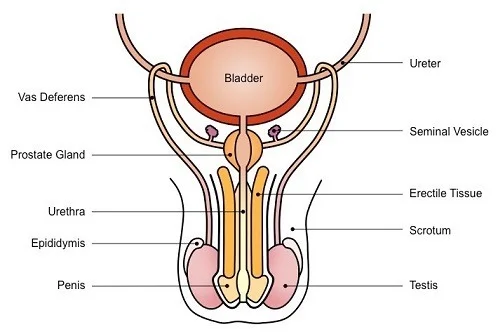
<p>Seminal vesicles- secrete a fluid rich in fructose providing energy for sperm </p><p>Prostrate gland- secretes an alkaline milky fluid which increases sperm motility and neutralises acidity in the vagina</p><p>Cowper’s (bulbourethral) glands- secrete pre-ejaculate, a clear fluid that neutralises acidic residues in the urethra and lubricates it </p>
7
New cards

Urethra

A tube that carries semen and urine to the outside of the body (not simultaneously)

<p>A tube that carries semen and urine to the outside of the body (not simultaneously) </p>
8
New cards

Puberty in males

Puberty is a stage at which a male becomes sexually mature (around 13). At the onset of puberty, the hypothalamus begins to secrete GNRH (Gonadotropin-releasing hormone) which stimulates the pituitary gland to release: Growth hormone, Follicle-stimulating hormone and Luitenising hormone.


<p>Puberty is a stage at which a male becomes sexually mature (around 13). At the onset of puberty, the hypothalamus begins to secrete GNRH (Gonadotropin-releasing hormone) which stimulates the pituitary gland to release: Growth hormone, Follicle-stimulating hormone and Luitenising hormone.</p><p></p>
9
New cards

Role of testosterone

The testes secrete testosterone. It: maintains male sex drive, increases muscle mass and strength, causes the development of secondary sexual characteristics, stimulates the development of the primary sex characteristics such as growth of the penis.

<p>The testes secrete testosterone. It: maintains male sex drive, increases muscle mass and strength, causes the development of secondary sexual characteristics, stimulates the development of the primary sex characteristics such as growth of the penis.</p>
10
New cards

Spermatogenesis

The process by which sperm cells are produced in the testes. Beginning at puberty when androgens (including testosterone) start to be secreted, produced in the leading cells in the testes under the influence of FSH and LH.

Spermatogenesis occurs in the seminiferous tubules, the lining of the tubules consists of diploid germinal epithelium which divides its cells by mitosis to form diploid sperm cells. Finally the diploid sperm cells divide to form haploid sperm cells.

<p>The process by which sperm cells are produced in the testes. Beginning at puberty when androgens (including testosterone) start to be secreted, produced in the leading cells in the testes under the influence of FSH and LH. </p><p>Spermatogenesis occurs in the seminiferous tubules, the lining of the tubules consists of diploid germinal epithelium which divides its cells by mitosis to form diploid sperm cells. Finally the diploid sperm cells divide to form haploid sperm cells.</p>
11
New cards

Sertoli cells

Found within the seminiferous tubules, nourish and support developing sperm cells.
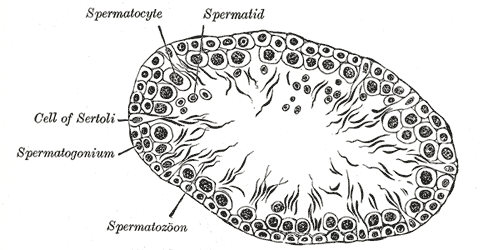
<p>Found within the seminiferous tubules, nourish and support developing sperm cells. </p>
12
New cards

Structure or sperm cell

Head- contains the haploid nucleus with genetic material. The acrosome stores enzymes that enable the sperm cell to penetrate and enter the egg cell

Neck- contains several mitochondria which provide the energy necessary for the movement of sperm

Tail - enables the sperm to swim in the semen (extension is cell membrane). The sperm moves in a cork screw motion.
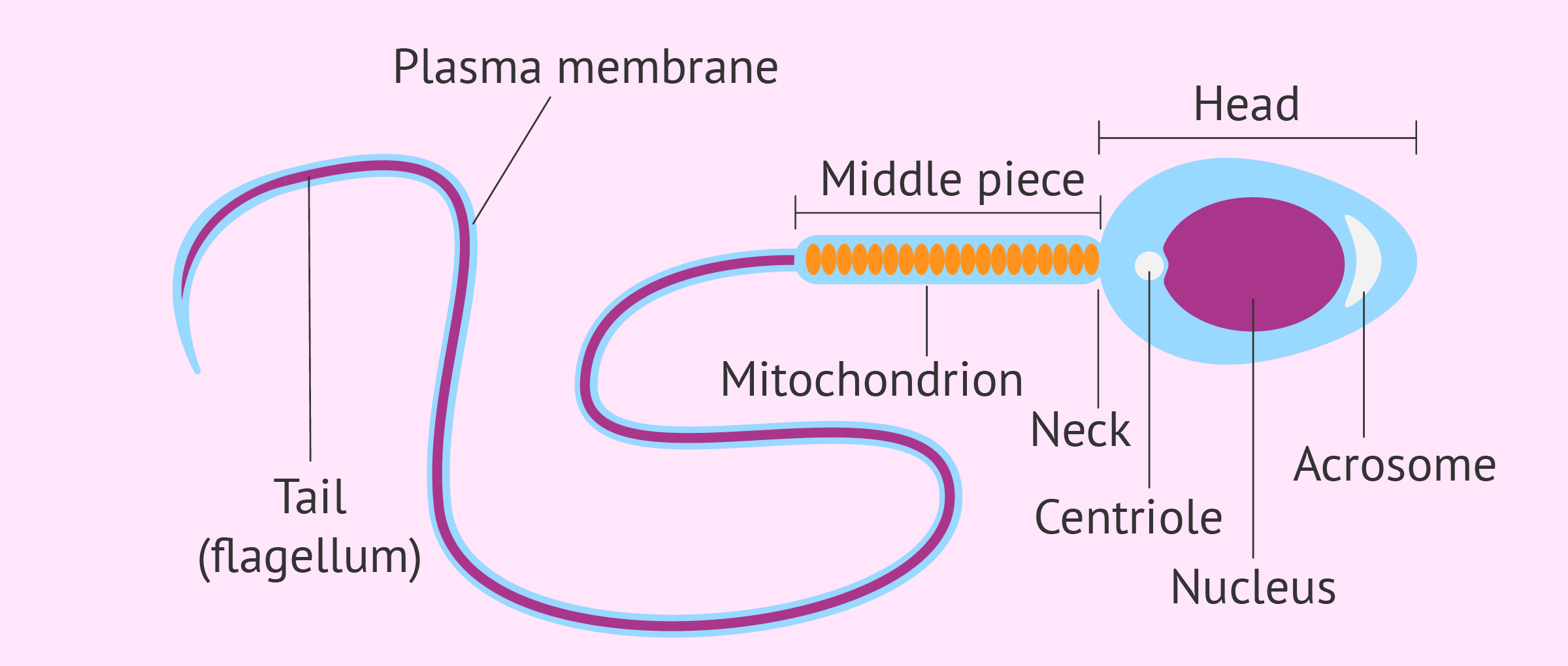
<p>Head- contains the haploid nucleus with genetic material. The acrosome stores enzymes that enable the sperm cell to penetrate and enter the egg cell</p><p>Neck- contains several mitochondria which provide the energy necessary for the movement of sperm </p><p>Tail - enables the sperm to swim in the semen (extension is cell membrane). The sperm moves in a cork screw motion. </p>
13
New cards

Erection

The filling of blood of the sinusoids in the penis causing a buildup of pressure and an erect penis.

<p>The filling of blood of the sinusoids in the penis causing a buildup of pressure and an erect penis.</p>
14
New cards

Ejaculation

The process by which semen (consisting of sperm cells and secretions from ejaculatory glands) is expelled from the penis.

During ejaculation sperm move from the epididymis through the vas deferens as sperm pass the seminal vesicles, prostrate gland, and cowper’s gland fluids are added. These fluids provide nutrients, protection and alkaline medium for the sperm.


<p>The process by which semen (consisting of sperm cells and secretions from ejaculatory glands) is expelled from the penis. </p><p>During ejaculation sperm move from the epididymis through the vas deferens as sperm pass the seminal vesicles, prostrate gland, and cowper’s gland fluids are added. These fluids provide nutrients, protection and alkaline medium for the sperm. </p><p></p>
15
New cards

Function of female reproductive system

The primary function of the female reproductive system is to produce female gametes (eggs), support fertilization, and enable the gestation and birth of offspring, alongside regulating key sex hormones.

<p><span>The primary function of the female reproductive system is to </span>produce female gametes (eggs), support fertilization, and enable the gestation and birth of offspring, alongside regulating key sex hormones.</p>
16
New cards

Ovaries

The primary female reproductive organs (gonads), suspended in the abdominal cavity by ovarian ligaments. The outer layer contains germinal epithelium which forms primary follicles containing primary oocytes.
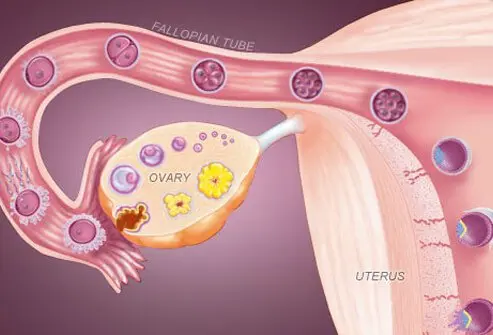

<p>The primary female reproductive organs (gonads), suspended in the abdominal cavity by ovarian ligaments. The outer layer contains germinal epithelium which forms primary follicles containing primary oocytes.</p><p></p>
17
New cards

Fallopian tubes (oviducts)

Tube that lead from each ovary to the uterus, lined with ciliated epithelium (cilia and muscular contractions move the ovum towards the uterus). Fertilisation normally occurs in the fallopian tube

<p>Tube that lead from each ovary to the uterus, lined with ciliated epithelium (cilia and muscular contractions move the ovum towards the uterus). Fertilisation normally occurs in the fallopian tube</p>
18
New cards

Uterus

A muscular, hollow organ where the foetus develops (cervix is the lower part of the uterus that opens into the vagina). It is also lined with endometrium which thickens to prepare for implantation.

<p>A muscular, hollow organ where the foetus develops (cervix is the lower part of the uterus that opens into the vagina). It is also lined with endometrium which thickens to prepare for implantation.</p>
19
New cards

Vagina

A muscular tube that open to the exterior, it serves as: a passage for sperm, the birth canal, the exit for menstrual flow.
<p>A muscular tube that open to the exterior, it serves as: a passage for sperm, the birth canal, the exit for menstrual flow. </p>
20
New cards

Vulva

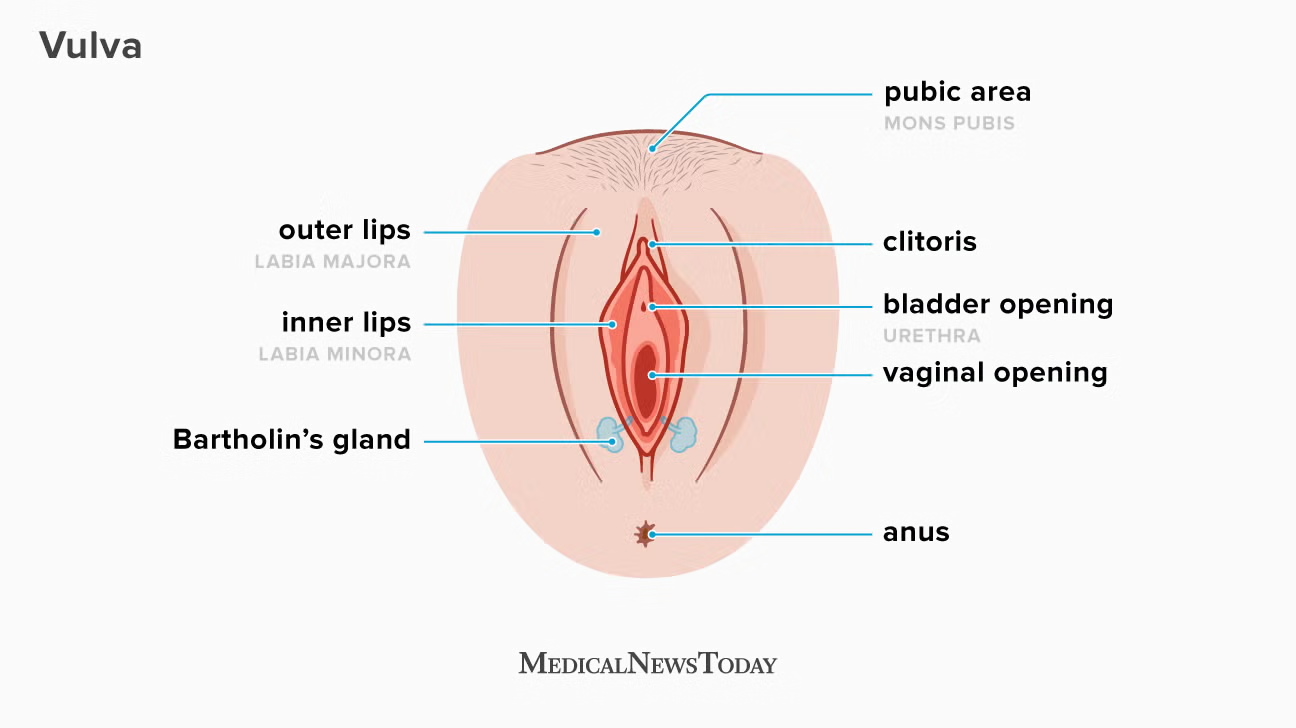
The external genital region, it consists of two outer and one inner folds labia). The vulva protects the clitoris which is an erectile structure rich in nerve endings and involved in sexual sensation.
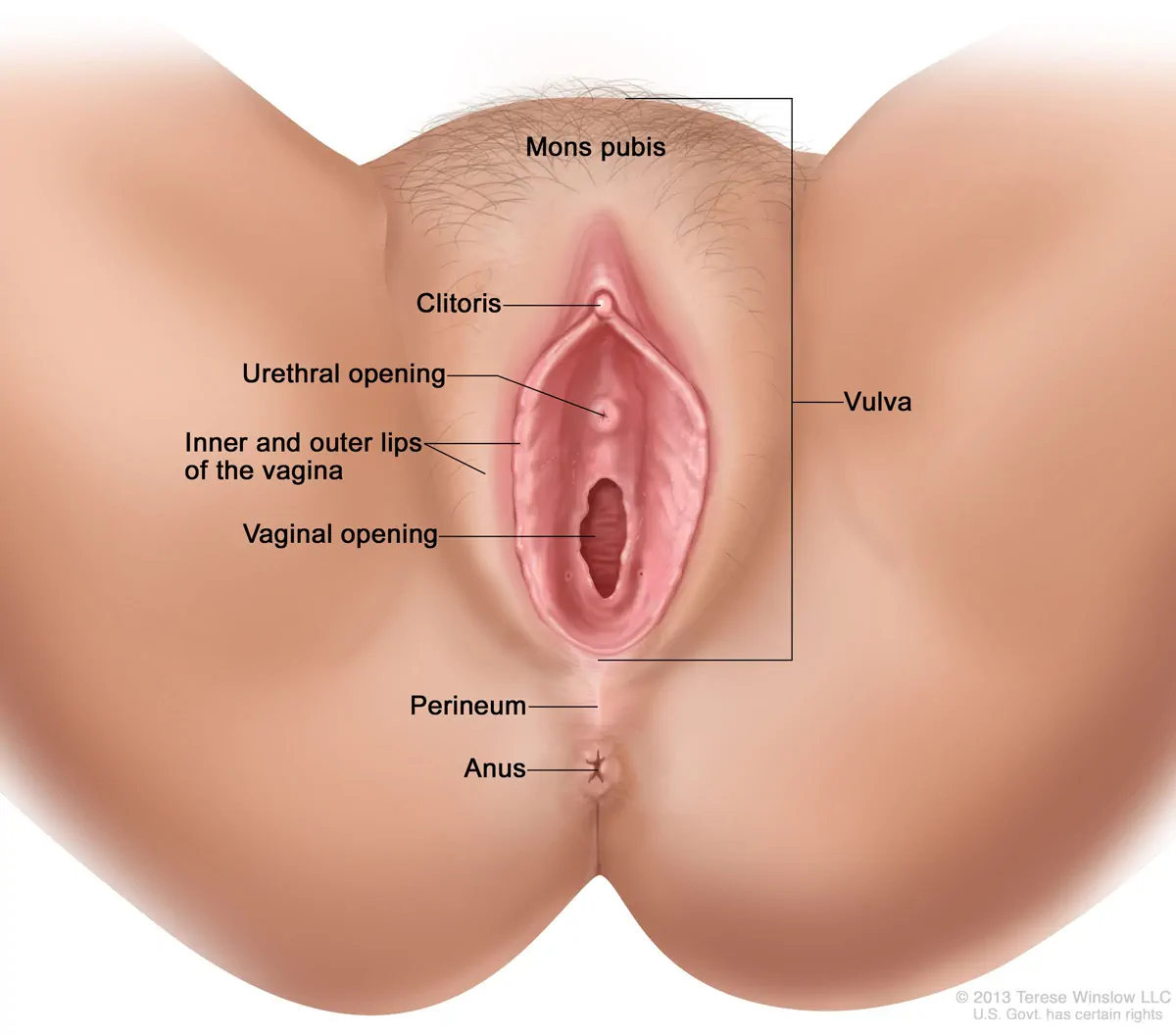
<p>The external genital region, it consists of two outer and one inner folds labia). The vulva protects the clitoris which is an erectile structure rich in nerve endings and involved in sexual sensation.</p>
21
New cards

Puberty in females

In females puberty usually begins between 11-15 years of age. This process is regulated by hormones as the pituitary gland secretes FSH and LH resulting in the ovaries secreting oestrogen and progesterone.

<p>In females puberty usually begins between 11-15 years of age. This process is regulated by hormones as the pituitary gland secretes FSH and LH resulting in the ovaries secreting oestrogen and progesterone.</p>
22
New cards

Changes that occur during female puberty

  • Growth spurt in height

  • Development of breasts

  • Pelvis widens

  • Ovaries begin releasing ova

  • Increased fat deposition on hips, thighs and buttocks


23
New cards

Oogenesis

This is the process of producing mature ova (continues from puberty until menopause). It begins before birth when primary oocytes start meiosis and stop at prophase 1, and after puberty one primary oocyte is stimulated each month to continue meiosis.
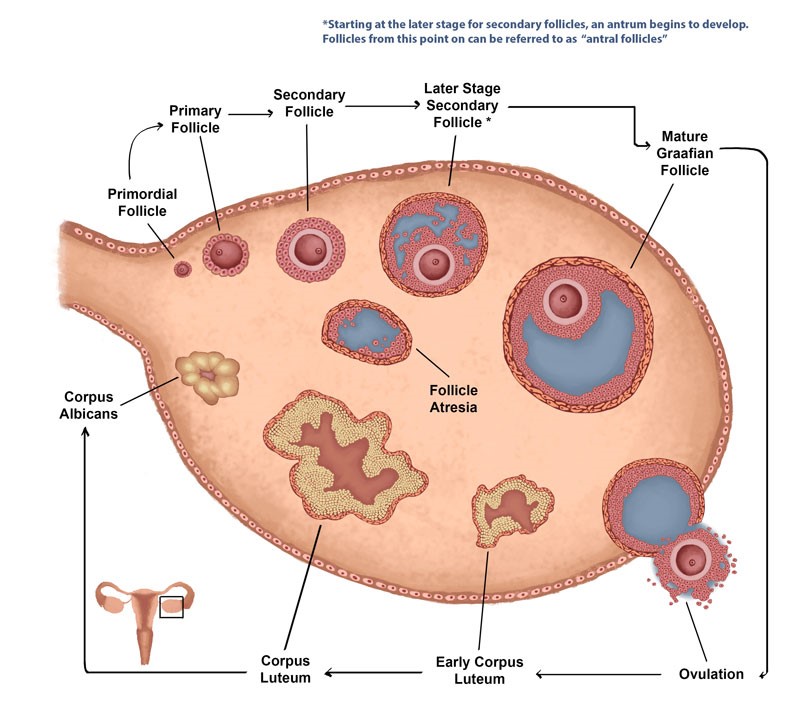
<p>This is the process of producing mature ova (continues from puberty until menopause). It begins before birth when primary oocytes start meiosis and stop at prophase 1, and after puberty one primary oocyte is stimulated each month to continue meiosis. </p>



