Quiz 4
 Call Kai
 Learn
 Practice Test
 Spaced Repetition
 Match
 Flashcards
 Knowt Play
1/68

There's no tags or description
Looks like no tags are added yet.
69 Terms
cathedra
seat of the bishop

fastigium
screen with a pediment separating laity from clergy

nave
central and principal part of a Christian church, extending from the entrance to the transepts
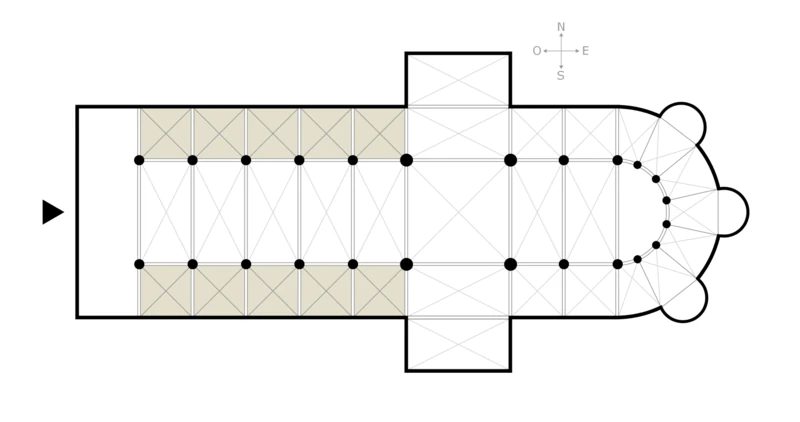
side aisles
the walkways adjacent to the nave

clerestory
the upper part of the nave, choir, and transepts of a large church, containing a series of windows

apse
a large semicircular or polygonal recess in a church, arched or with a domed roof, typically at the eastern end, and usually containing the altar

trussed wooden roof
roofing framework that uses wooden triangular units to support the roof deck and transferring loads to exterior walls
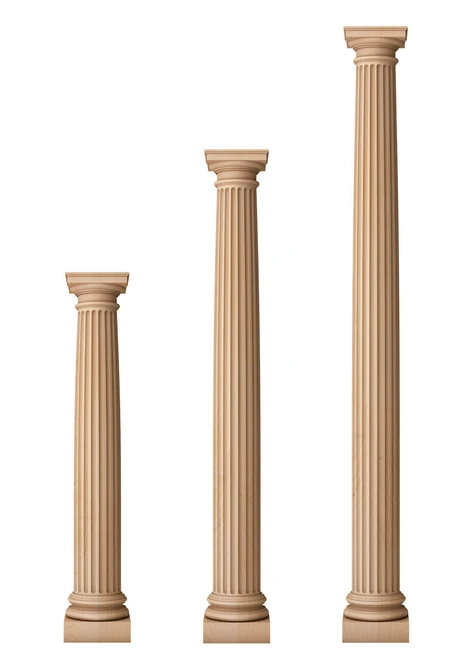
column
an upright pillar, typically cylindrical and made of stone or concrete, supporting an entablature, arch, or other structure or standing alone as a monument

architrave
a main beam resting across the tops of columns, specifically the lower third entablature

The Basilica of Maxentius and Constantine, c. 307 CE
Christian basilicas follow the same format as Roman forum ones (which were for secular/civil gatherings)
Facing east (rising sun/Jesus)
apse reserved for bishop and clergy

The Theodosian Walls of Constantinople, 5th century
shorter outer walls, moats, inner walls with archer towers
defensive
city was refounded as Nova Roma in 330 CE by Emperor Constantine

The Column of Constantine, 330 CE, Porphyry, Constantinople
triumphal monument commemorating the dedication of Constantinople
reminiscent of Column of Trajan (in form and in representing the expansion of the Roman Empire)
porphyry was difficult to acquire and carve; associated with the imperial court
scholars suspect that some kind of statue might have once been on top
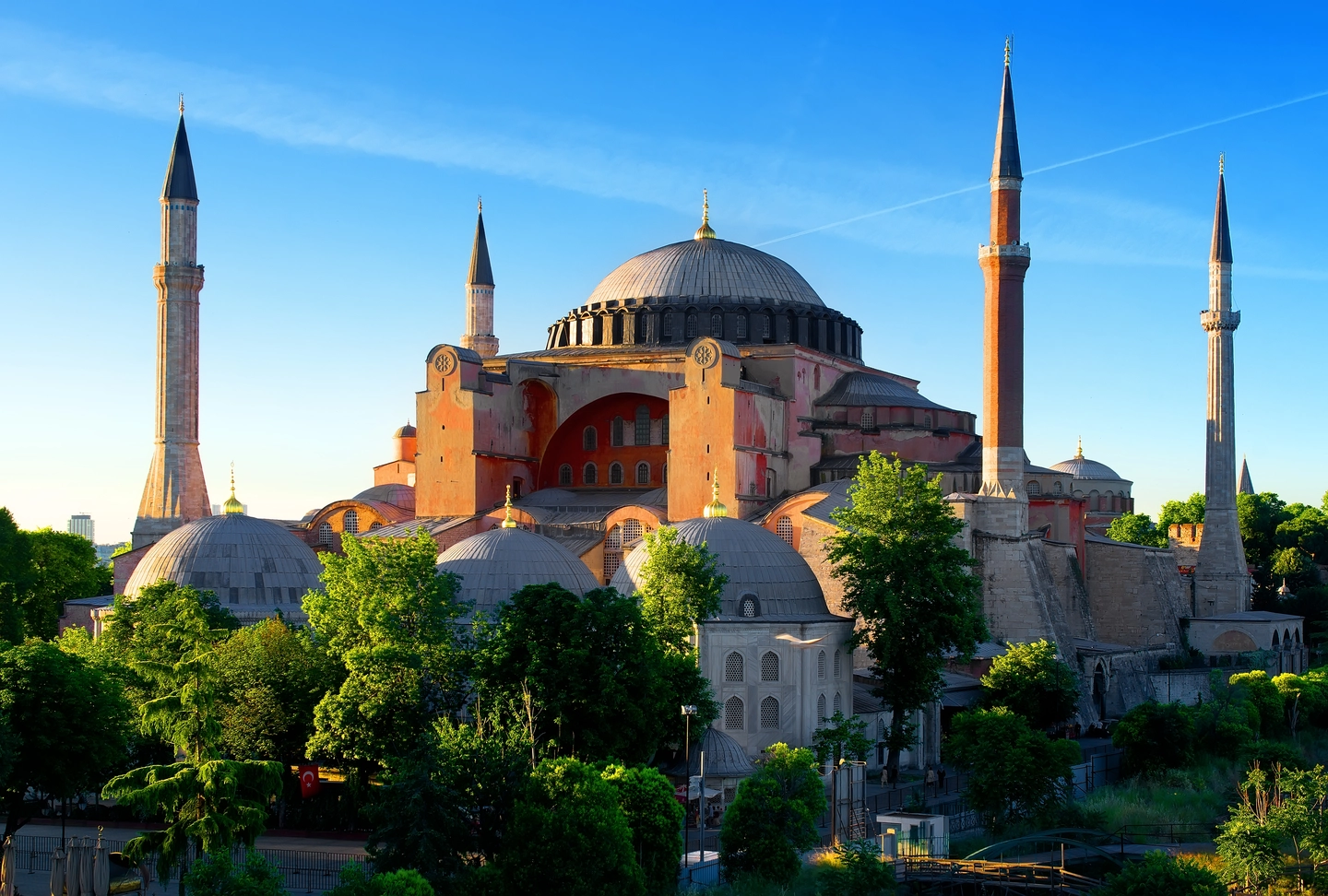
Hagia Sophia, 532-37 CE, Constantinople
rebuilt by mekanikoi (architect-engineers) Anthemius of Tralles and Isidorus of Miletus following Nika Revolt of 532; ordered by Justinian as symbol of imperial power
dedicated to Christ of Holy Wisdom
centrally-planned domed basilica combo
one of the dome first designs in history to use pendentives
porphyry columns
went through several periods of iconoclasm and changes in function (church → mosque → museum → now mosque)

narthex
an antechamber, porch, or distinct area at the western entrance of some early Christian churches, separated off by a railing and used by catechumens, penitents, etc.
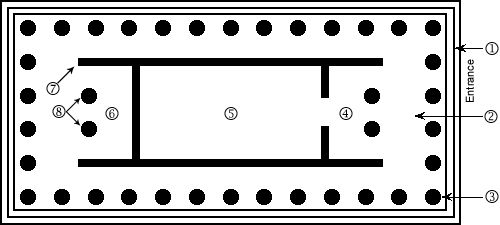
naos
the inner chamber or sanctuary of a classical temple; also known as the cella
aisle
a passage between rows of seats in a building such as a church or theater, an airplane, or a train

conch
the half dome of an apse, or a niche with a semi-dome over it

exedra
semicircular or rectangular niche with a raised seat

gallery
long, relatively narrow room or hall

central dome
a hemispherical structure that serves as a prominent feature, positioned at the center of a building; it lets in light and adds a sense of height, and in the Christian context can represent heaven

altar
facing east – covered/marked by a ciborium – often times with a relic

chancel screen / templon
a barrier surrounding the sanctuary
solea
processional passage into the nave

ambo
raised pulpit about the middle of the nave for the readings

opus sectile
omphalion “nave” of the earth; site where Byzantine emperors were crowned
iconoclasm
a theological debate, a controversy, about the nature of images and their functions, with wide-ranging political and social implications

Virgin Mary and Christ Child, Apse mosaic, After 843
over eastern apse of Hagia Sophia
overseeing activities of the altar
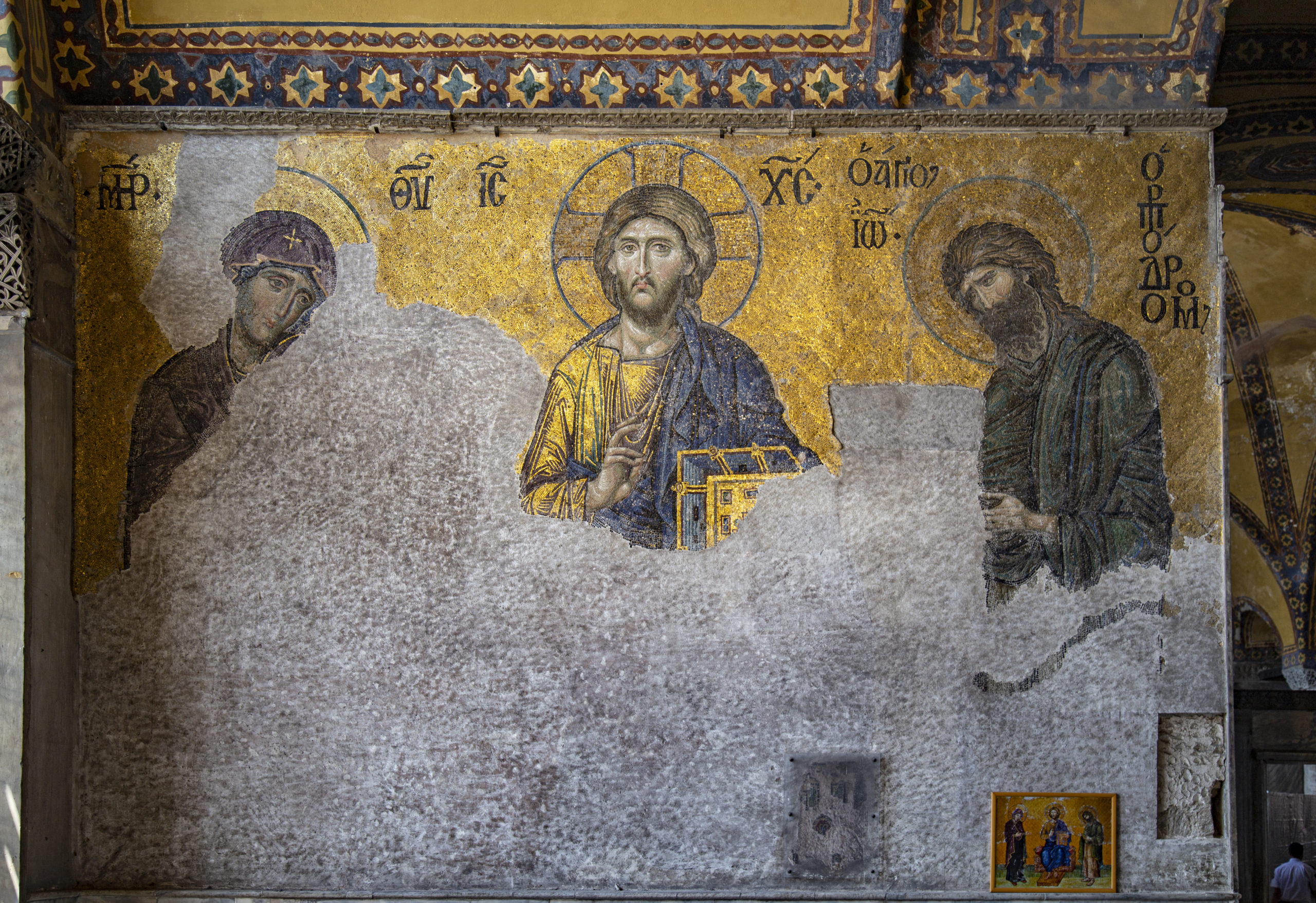
Deësis with Virgin Mary and St. John the Baptist
mosaic on south side of Hagia Sophia
Mary and John facing Christ with their hands raised in supplication on behalf of humanity

Emperor Leo IV kneeling before Christ, Imperial Gate mosaic
above western main entrance
gesture of supplication to Christ
reminder to laity to bow before entering

“Mosaic of the Donors,” Emperor Constantine and Emperor Justinian, 10th c., South entrance
over the vestibule (where the bodyguards of the emperor waited)
Mary and Christ Child in center
Justinian to the left offering model of Hagia Sophia; Constantine to the tight offering model of city of Constantinople

Cathedral of St. Sophia, Kyiv, Ukraine, c. 1037
Patron: Yaroslav the Wise (r. 1019-1054)
Kyiv was the largest kingdom of eastern Europe
modeled after Hagia Sophia - originally looked more Byzantine, became more “Rusified”

The Suleymaniye Complex, Istanbul, 1550-1557 CE, Architect: Sinan (d.1588)
contains documents concerning costs, materials, workers
multifunctional - mosque, schools, hospital, baths, shops, mausoleum, etc.
interior emulates Hagia Sophia

minaret
tower advertising the presence of a mosque; place from which to broadcast call to prayer five times a day

muqarnas
tiered niche-like ornament

arabesque
ornamental design of intertwined lines and natural forms
hajj
the Muslim pilgrimage to Mecca that takes place in the last month of the year, and that all Muslims are expected to make at least once during their lifetime.
Qur’an
the principal text of Islam, which, according to Muslim belief, was dictated to Mohammed by the Archangel Gabriel between 610 and 632

The Kaaba, rededicated by Muhammad in 631-32 CE, Mecca, Saudi Arabia
a square stone building in the center of the Great Mosque at Mecca,
the site most holy to Muslims and toward which they must face when praying
pilgrims must circumambulate seven times in counter-clockwise direction
granite masonry, covered with silk curtain and calligraphy in gold and silver-wrapped thread
qibla
direction of Muslim prayer
tawaf
circumambulation (of Kaaba)
kiswa
the black cloth covering the Kaaba (replaced annually during the hajj)
caliphs
Muhammad’s successors
Olmec Civilization, c. 1500 BCE - 100 CE
first settled civilization in Mesoamerica
formative period of art (c. 1600 BCE - 350 CE)
defined by naturalism, carving in-the-round
Pelenque, c. 400 - 700 CE
capital city-state of Maya Kingdom
classic period of art (c. 250 - 900 CE)
defined by life-like sculpture
Aztec/Mexica, 1300 - 1521 CE
Indigenous pre-conquest “empire,” overthrown by Spaniards 1521 CE
postclassic period of art (900 - 1521 CE)
defined by flat, angular, static, stylized, conventionalized art

Colossal Head, basalt stone, San Lorenzo, 1500-900 BC
Stone quarried in Zapotec and transported to San Lorenzo and La Venta
monumental
example of formative period naturalism: in the round, life-like
individualized sculptures of Olmec rulers
as seen by different headdresses, hair, earlobes, etc.

Tizoc Stone, basalt stone, Mexico City, c. 1480s CE
depiction of Aztec ruler Tizoc in warrior’s regalia taking captive the gods of conquered civilizations
example postclassic period stylization: flat, angular, static

Colossal Head, basalt stone, La Venta, c. 900 BCE
life-like and monumental while following conventional format
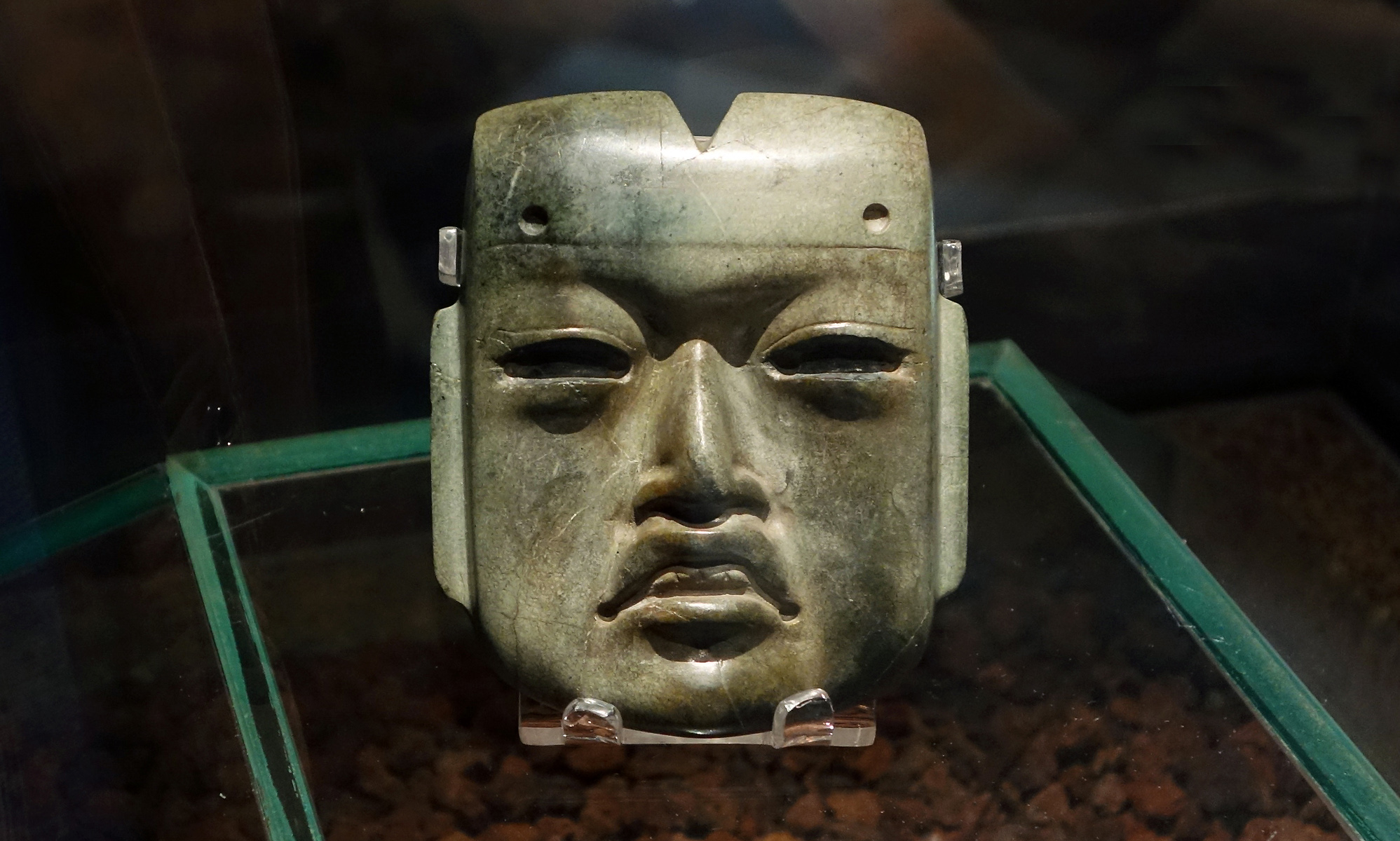
Olmec (possibly) mask, jadeite, c. 1470 CE
cleft in head - fontanelle? sign of life
found in Aztec-era burial deposit
“Olmec” is a Nahua word (language of Mexica)

Altar 5, La Venta, 900 - 400 BCE
a sense of anatomical weight
may be a deified ruler or warrior; feline mouth/cave
holding infant-like being (“kunz axe?”)

“Kunz Axe,” jadeite, c. 600 BCE
not really sure what it is - infant? jaguar? toad?
jadeite was a prized material of the Olmecs - sourced in modern day Guatemala (Olmecs based in southwestern coast of Gulf of Mexico)
holding an object that looks like itself
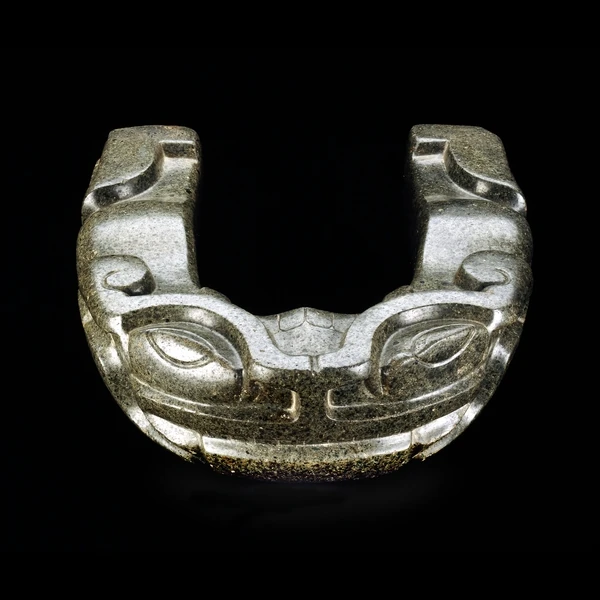
Stone “Yoke,” Olmec, c. 500 CE
used in Olmec ball game - swing balls through rings - loser/winner? sacrificed
represents the thatch belts worn by players for protection

Temple of Inscriptions, Palenque, c. 400 - 900 CE
funerary complex in King Paka’s palace-complex
cosmological significance - 9 levels = levels of Maya underworld; 365 steps = agricultural cycle
temple walls inscribed with inscription: history of city, King Pakal’s accession, lineage, and rulership

Portrait of King Pakal, Palace of the Inscriptions, c. 683, stucco
dated to his death date
dynastic - assumed kingship from mother
idealized yet life-like

King Pakal’s sarcophagus lid, c. 683
maize - source of life
king as intermediary between the heavens - symbolized by world tree, bird, jaws of the underworls

Portrait of Moctezuma II, c. 1465 - 1520 CE
ruler when Spanish landed - portrait defaced by Spainsh colonizers
carved into volcanic cliff face
fontal, full-body holding attributes of rulership (staff, shield)

Dome of the Rock, completed 691 CE, Jerusalem
First major architectural monument of Islam
Established Muslim influence in Jerusalem
Site of Adam’s burial/Ibrahim’s sacrifice/Mohammed’s mi’raj w/ Gabriel
mihrab
shallow niche facing Mecca
minbar
pulpit from which the imam conducts Friday prayers
qibla wall
wall facing Mecca
maqsura
screened space under the dome used for ceremonies, reserved for the caliph and his entourage
sahn
open courtyard of mosque
prayer hall (riwaq)
main prayer area of mosque

Old St. Peter’s, Rome, c. 324-400
demolished and rebuilt in the 16th century
Space where Charlemagne was crowned Holy Roman Emperor
Example of longitudinal church; greatest Constantinian church
Apostles’ martyrium; gave special prominence to altar through this additional significance
baldachin
canopy that designates place of honor
martyrium
building that houses sacred relics or the remains of a holy person

crossing
meeting square of transept and nave in longitudinally planned structures; sometimes emphasized with a tower
Theotokos
Mary as the birthgiver of God
Santa Maria Maggiore, Rome, c. 432-440
First church dedicated to Mary after she was declared Theotokos
Depicts events from Hebrew Bible to Jesus’ birth