ansc314 - comparative nutrition & digestion
 Call Kai
 Learn
Learn Practice Test
 Spaced Repetition
 Match
Match Flashcards
 Knowt Play
1/35

There's no tags or description
Looks like no tags are added yet.
Name | Mastery | Learn | Test | Matching | Spaced | Call with Kai | Chat |
|---|
No analytics yet
Send a link to your students to track their progress
36 Terms
comparative digestion
digestive tract is adaption to animal’s food environment
digestion
process by which foodstuffs are broken down into GI tract → absorbable units
during digestion, food nutrients (external) since GIT is hollow outside body
absorption
process of transport/transfer of digestion products through gut mucosal wall
nutrient transport
mvmt of carriage of nutrients into gut cell/blood
digestion types
mechanical
chemical
enzymatic
mechanical digestion
physical digestion
Mastication (chewing)
Peristalsis (muscular contraction) of GI tract
Grinding action of gizzard (birds)
Mvmts of rumen & reticulum (ruminants)
chemical digestion
Gastric HCl (hydrochloric acid, pH 2)
enzymes
Animal’s digestive enzymes secreted into digestive tract
Microbial digestive enzymes (rumen, cecum, colon/large intestines)
carnivore
(dog, cat, mink, some fish, etc)
Simple digestive structures
No/small cecum
Feed usually low in fiber (cellulose, hemicellulose)
Meat diet
fish have large variety of GI tracts

panda exception
carnivore gut w/ tough esophagus & stomach
slightly enlarged colon
adapted vegetarian diet for unknown reasons
only digests 10-20% of nutrients in bamboo so it eats A LOT
30-60 lbs food/day
omnivore
(human, pig, squirrel, raccoon, rat, black bear, ect)
Eat mostly plants (grains), some meat
Larger cecum/colon
Pigs have enlarged cecum
Some microbial fermentation
Microbes make protein as by-product (w/ volatile fatty acids)

herbivore
(horse, rabbit, ruminants, small herbivores)
Enlarged digestive structures (cecum) for microbial digestion (fermentation) of plant fibers
Pre-gastric fermenters (ruminants)
hind-gut fermenters
pre-gastric fermenters
organisms that break down nutrients before the GI tract (intestines)
Ruminants (cattle, sheep, goats, deer, antelope, giraffes)
Camelids (camel, llama, alpaca: 3 chambers ruminant)
Hippopotamus (not ruminant)
Kangaroo
Hamster (2 chamber)
Hoatzin (stink bird)
Hoatzin has large crop, folded in 2 chambers w/ large, multichambered lower esophagus
ruminants
Chewing cud to increase digestive efficiency
4 stomach chambers → rumen, reticulum, omasum, abomasum
Pseudo ruminants (camel, llama) have 3 chambers & chew cud
Microbes in rumen digest & ferment feed before presentation to stomach


ruminant stomach
Allows fiber fermentation & detoxification of toxins
Undeveloped GI tract gets nutrients form milk

rumen walls
Stomach increases absorption by increasing surface area

llama GI tract

hind-gut fermenters
Horses, zebras, elephants, rabbits, guinea pig, some birds
Enlarged cecum (hind-gut) & large intestine
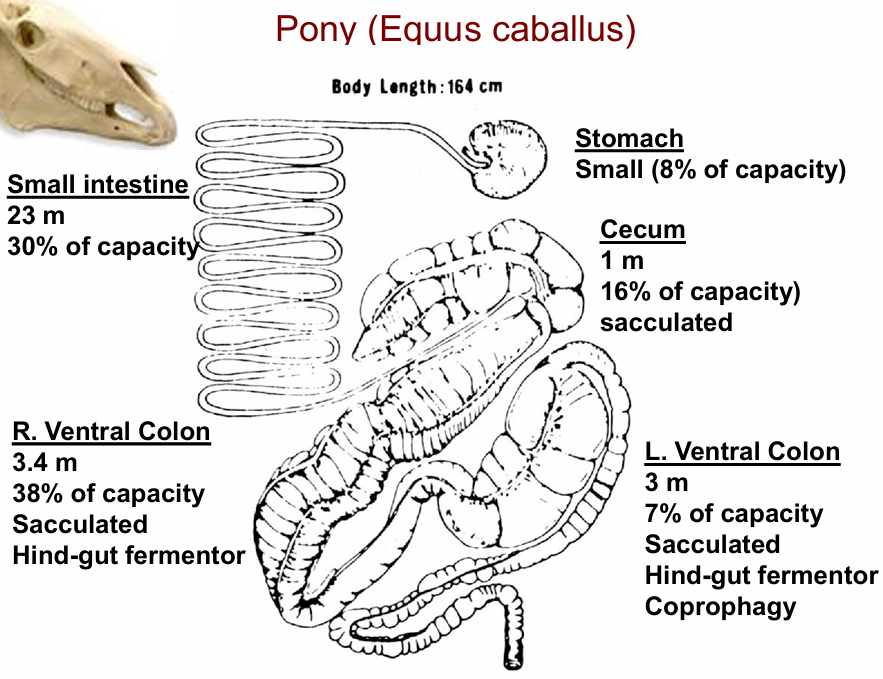
rumen digestion
volatile → gaseous
acetate, butyrate, propionate

large intestine
carbs & protein degrade → VFA, microbial protein & NH4
VFA → carbs & fats in body
NH4 & recycled or excreted
microbial protein & microbial vitamins excreted in feces
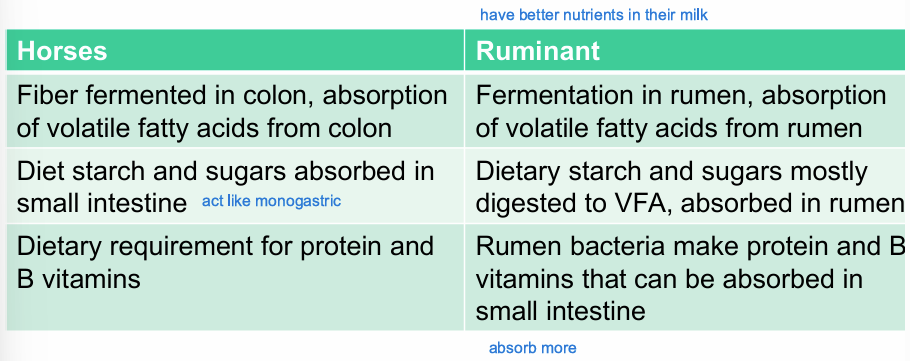
post-gastric have disadvantage b/c microbial fermentation is happening AFTER small intestine
where most nutrient absorption is happening

hindgut vs ruminants

avian
poultry, song birds, ostrich, emu
crop → storage, no digestion
proventriculus → gastric or glandular stomach
gizzard - functions as “teeth” for birds
ceca (2 cecum) → fermentation of fiber & other less digestible material

enzyme production
mouth → site of nutrient/enzymatic digestion
amylase
no proteins or fats digested in mouth

stomach
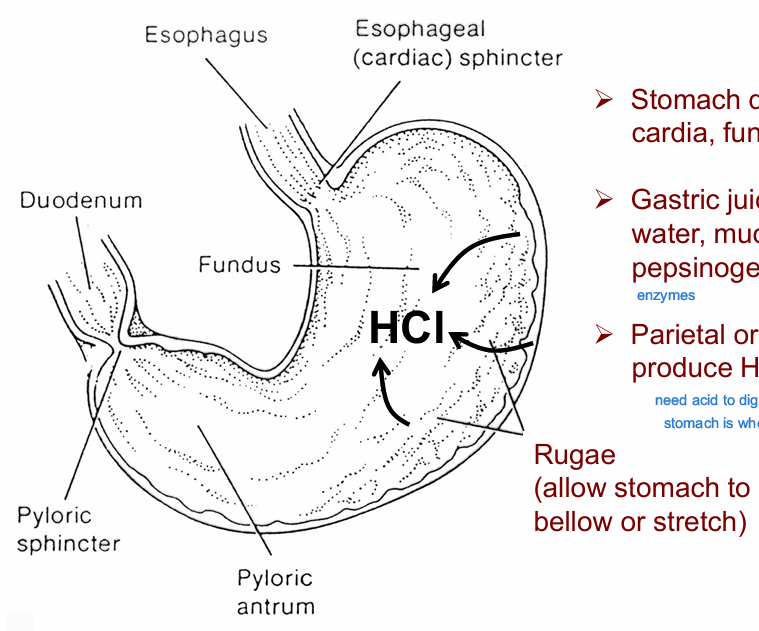
stomach divided into cardia, fundus, pylorus
gastric juice mixture of water, mucus, HCl, pepsinogen, inorganic salts
parietal (oxyntic) cells produce HCl
need acid to digest protein → amino acids
stomach where protein digestion STARTS
gastric pit
indentations in the stomach which denote entrances to the tubular shaped gastric glands
deeper in pylorus
human stomach has millions on surface of epithelium lining
surface mucous cells line puts themselves but give way to a series of other types that line glands themselves
eat something → carbohydrate digestion in mouth → stomach → acid (HCl) denatures proteins → activates pepsinogen by cleaving it → pepsin → breaks down protein

bile produced by liver, but stored by gall bladder
bile breaks down lipids
high acidic food (2 pH) moves into duodenum → pH changes w/ help of bicarbonate (more basic) from pancreas → pH 6-8 → start digestive processes
everything has to get dumped into mix w/ food to break down & absorb nutrients
sodium & potassium salts of bile acids (glycocholic & taurocholic) acids in digestion by activating pancreatic lipase & emulsifying fats
pancreatic ducts delivers pancreatic juice (insulin, digestive enzymes, water & electrolytes) into diodenum

small intestine
kerkrig valves - circular folds of mucous membrane
sphincter of Oddi - muscular valve that controls flow of digestive juices (bile & pancreatic juice) → duodenum


small intestine villi
Paneth cells line crypts of lieberkuh - secrete intestinal juice as gradually migrate along side of crypt and the villus
villi important to increase surface area
healthy gut important for survival
gut accounts for ~6% of body weight → accounts for 20-25% O2 consumption
very metabolically active


small intestine villi
nutrient absorption includes entry & exit out of enterocyte

nutrient transport mechanisms
energy from ATP from nutrients
ATP is used for active transport of nutrients in/out of cells
simple diffusion, facilitated diffusion, active transport

simple diffusion
passage of molecule or ion in membrane w/o help of another intermediate like protein
osmosis

facilitated diffusion
process in which type of transport is passive that is enabled by proteins
movements of glucose, Na & K ions

active transport
uses ATP to provide energy to proteins providing transport
unlike simple diffusion, molecules can be moved against gradient
Na-K pump
small intestine

large intestine
absorption of fluids & electrolytes in large intestine
not have villi but have small projections to increase surface area
glands in large intestine mainly mucous glands
extensive microbial activity occurs in large intestine
favor digestion of cellulose & higher polysaccharides → produce VFAs
certain species w/ extensive microbial activity, large intestine plays larger role in digestion
overview
liver’s major role → detoxification & produces bile & UREA from protein synthesis glucose
~95% glucose produced in liver
hepatic vein or hepatic portal vein transfers nutrients from gut to liver
