# 2 Bio Unit 1 test
 Call Kai
 Learn
Learn Practice Test
 Spaced Repetition
 Match
Match Flashcards
 Knowt Play
1/68

Earn XP
Description and Tags
The first one is on quizlet
Name | Mastery | Learn | Test | Matching | Spaced | Call with Kai | Chat |
|---|
No analytics yet
Send a link to your students to track their progress
69 Terms
How many cells make up the average human body?
30 trillion
Name the cell theory:
All organisms are made up of 1 or more cells
The life functions of an organism are carried out by its or its cells
All cells come from other already existing cells
What are the 2 types of cells?
Eukaryotic animal cells and plant cells
What are the differences and similarities between plant and animal cells?
Differences:
Different shapes
Plant cells have Chloroplasts while animal cells don't have them
Plant cells don’t have lysosomes, while animal cells have them
Similarities:
Both have a nucleus
Both have cell membranes
Both have Mitochondria, Cytoplasm, and ribosomes
The cell membrane: Polar
Molecules that have unequal sharing of electrons among atoms
The cell membrane: Non-polar
Molecules that have equal sharing of electrons among atoms
What’s the Fluid mosaic model
Explains how the cell membrane does its job of controlling what enters and leaves a cell.
Fluid: Membrane moves easily while staying together
Mosaic: Many different molecules that make up the cell membrane
Semi-permeable
A thin flat layer that allows some substances through but blocks others. Also called Selective permeable membranes)
What are inside the fluid mosaic model?
Cell membrane:
Phospholipid Bilayer
Proteins
Cholesterol
Carbohydrates

Phospholipid Bilayer
Structure:
Provides overall cell membrane structure
Arranged in 2 layers
Hydrophilic (water-loving) head: Arranged facing out(Polar)
Hydrophobic (water-fearing) fatty acids tail facing inwards (Non-polar)
Functions:
Acts as a barrier between the cell and its surroundings
Holds the other components of the cell membrane


Proteins
Structure:
Attached in the Phospholipid Bilayer as the
edge- peripheral proteins
Inside- Integral
Functions:
Transport substances across the cell membrane
Some control chemical reactions
Signal cells anywhere in the body
Types:
Integral Membrane Proteins: Transport larger or charged molecules (like ions and sugars) through channels
Peripheral Membrane Proteins: Assist with cell signalling


Cholesterol
Structure:
Attached to the phospholipid
A type of lipid(sterol) made of ring-shaped structures.
Functions:
Keeps the cell membrane's fluidity balanced by making it
less fluid when hot and
more fluid when cold.


Carbohydrates
Structure:
Attached to either proteins or phospholipids
Stick out from the cell.
Functions:
Allows other cells to recognize the cells belonging to the body and not as an intruder


What is cellular transport?
Movement of substances into and out of a cell.

Why does a cell need cellular transport?
To bring materials in.
To remove materials from the cell.
Cells need to do this continuously.

What is passive transport?
Movement of substances across the semi-permeable membrane without using energy.
Useful cause us It allows cells to save energy.


What is diffusion?
Movement of molecules from high concentration → low concentration.
Ex: perfume and food coloring added to water


What does concentration mean?
The amount of a substance in a certain volume.


What is a concentration gradient?
A difference in concentration between two areas. (High concentration to low concentration)

What are the three forms of passive transport?
Simple diffusion
Facilitated diffusion
Osmosis
What is simple diffusion?
The movement of substances directly through a semi-permeable membrane from high concentration → low concentration.
No energy required.
What type of membrane is involved in simple diffusion?
Semi-permeable membrane.
What is facilitated diffusion?
The movement of substances across a semi-permeable cell membrane with the help of proteins, without using cell energy.
Moves high → low concentration
What are the two types of proteins used in facilitated diffusion?
Channel proteins
Carrier proteins
What do channel proteins do?
Create a tunnel through the membrane.
Allow certain particles to pass through.
Ex of substances:
Sodium ions (Na⁺)
Chloride ions (Cl⁻)
What do carrier proteins do?
Stick to a substance.
Change shape to move it across the membrane.
Ex of a substance:
Glucose
What is osmosis?
Diffusion of water across the membrane.
Moves from high → low concentration of water.
Water moves to help balance concentrations.
Does not require energy cause its a type of passive transport
What type of substance moves during osmosis?
Water

What does penicillin do?
Blocks reactions to repair the cell wall


How can penicillin affect bacteria?
It prevents bacteria from properly repairing their cell walls.
The cell wall becomes weaker.
Water enters through osmosis.
The weakened cell cannot resist the water movement. It bursts
What protects bacteria from excessive water movement?
Their cell wall
How is osmosis involved in penicillin's effect?
A weakened cell wall cannot properly resist water entering the cell.

What is active transport?
Movement of substances from Low → high concentration across a membrane that requires energy.
Needed when substances need to move against the concentration gradient.

What energy source does active transport use?
ATP(Adenosine triphosphate)


What are protein pumps?
Proteins that use energy to move specific substances across the membrane.
Another type of protein in the cell memebrane

Why is active transport important during digestion?
Nutrients may need to move from low concentration → high concentration.
This requires energy.
What happens if a substance moves against its concentration gradient?
Active transport is required.

What is bulk transport? and what are the types?
Movement of large amounts of substances into or out of a cell.
Types:
Endocytosis: Moves large amounts of material into the cell.
Exocytosis: Moves large amounts of material out of the cell.
ENDO = ENTERS → into the cell 📥
EXO = EXITS → out of the cell 📤

What is ATP and its function?
Adenosine triphosphate
Energy for cellular processes, when the last phosphate bond is broken
Comes from Cellular respiration
A type of nucleic acid

What is ATP made of and what does it consist of?
Adenosine
Adenine
Ribose
Triphosphate
3 phosphate groups

How does ATP release energy?
By breaking a bond between its phosphate groups.

What is the ATP cycle?
ATP (Full Battery)- Stores high energy in chemical bonds. →Breaks the bond to remove the 3rd phosphate, and becomes ADP→ Energy released → ADP (Dead Battery)- Leftover low-energy molecule.→ Recharging (Storing Energy)→Cell breaks down glucose (food) for energy. → Forces a new phosphate group back onto ADP(Energy added) → Phosphorylation- Adding a phosphate group to ADP to make ATP. →ATP (Full Battery)- Recharged and ready to use again!
What happens when ATP breaks down?
ATP loses a phosphate.
Forms ADP + phosphate + energy.
What is ADP?
Adenosine diphosphate
Has 2 phosphate groups.
What is the formula that cells need energy to function?
C6H12O6(glucose) + 6O2 → 6CO2 + 6H2O + Energy (ATP)
What are two ways cells can produce ATP?
Aerobic cellular respiration
Fermentation
What is the difference between ATP and ADP?
ATP: 3 phosphate groups
ADP: 2 phosphate groups
What is the equation for ATP hydrolysis?
ATP + H2O -ADP+ phosphate+ energy

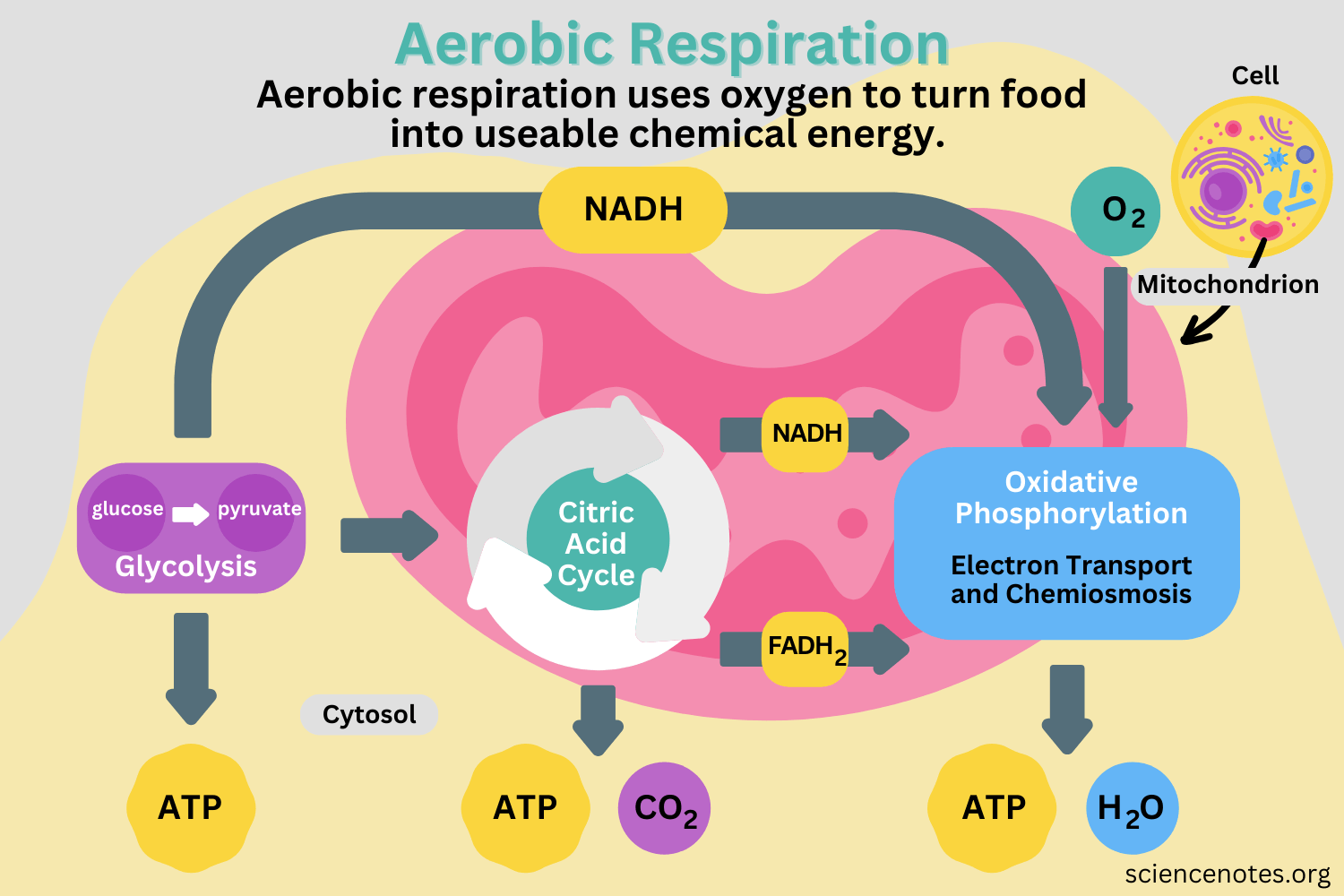
What is aerobic cellular respiration?
A process that breaks down glucose to make ATP.
Requires oxygen.

What is anaerobic cellular respiration?
The process of releasing energy(breaks down glucose to make ATP) from glucose without oxygen.
What are the two main parts of aerobic cellular respiration?
Glycolysis
Oxidative respiration
What are the stages of cellular respiration/ATP?
Glycolysis
The Krebs cycle
The electron transport chain


What is glycolysis?
The first stage of cellular respiration.
Breaks glucose into 2 pyruvate.
Occurs in the cytosol

What happens to glucose during glycolysis?
6-carbon glucose molecule splits to create 2 pyruvate, each of those is 3-carbon long.
This releases energy to generate ATP from ADP and generate NADH from NAD+.

What are NADH?
Coenzyme that can accept electrons
Able to “pick up” and transport electrons
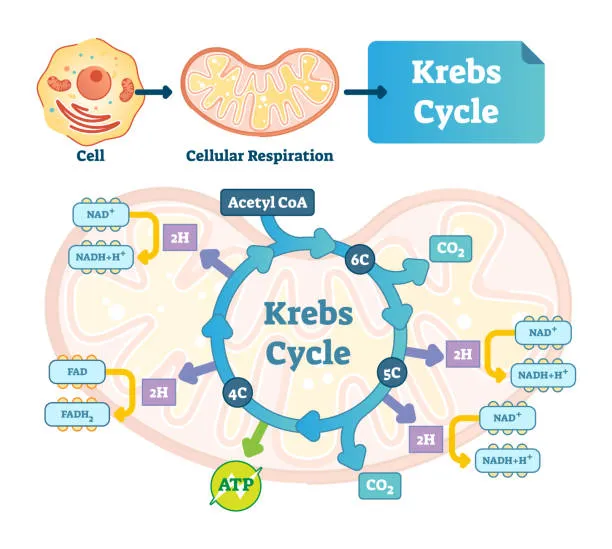
Krebs Cycle: Where does it take place?
Takes place in the mitochondrial matrix

Krebs Cycle: Explain the process:
The Krebs cycle breaks down Acetyl-CoA, producing CO₂, ATP, and electron carriers (NADH and FADH₂).
Steps:
Acetyl-CoA enters the Krebs cycle.
goes through a series of chemical reactions that release energy.
CO2 becomes a waste product and diffuses out of the mitochondria
A small amount of ATP is made for the cell to use as energy.
NADH and FADH₂ carry high-energy electrons to the next stage of cellular respiration.
Oxygen is needed for aerobic respiration to continue.
The Electron Transport Chain: Where does this occur?
Embedded in the inner mitochondrial membrane.

The Electron Transport Chain: Explain the process:
NADH and FADH₂ carry electrons to the electron transport chain in the inner mitochondrial membrane.
Energy from the electrons pumps hydrogen ions (H⁺) into the intermembrane space.
Hydrogen ions build up on one side of the membrane, creating a difference in concentration.
Hydrogen ions flow back across the membrane through a protein called ATP synthase.
ATP synthase uses the energy from the moving hydrogen ions to make ATP from ADP and phosphate.
The process of using energy from the electron transport chain and hydrogen ion flow to produce ATP.
Oxygen accepts the electrons and combines with hydrogen ions to form water. Oxygen is needed for this process.

Where does oxidative respiration occur?
Mitochondria
Oxidative Respiration: What is the process?
Pyruvate from glycolysis enters the mitochondria.
Goes through a series of reactions.
Produces ATP.
What does oxidative respiration produce/ what is the outcome?
It Creates another:
About 28 ATP
CO₂
H₂O
How much ATP is produced from one glucose molecule overall?
About 30 ATP, generated from both Glycolysis and Oxidative
Reason:
Glycolysis → 2 ATP
Oxidative respiration → ~28 ATP
Total → ~30 ATP
What two processes can occur without oxygen?
Glycolysis:
Fermentation
What is fermentation?
A process of producing ATP without oxygen.
Fermentation and glycolysis without oxidative respiration don't require oxygen (anaerobic)
Types:
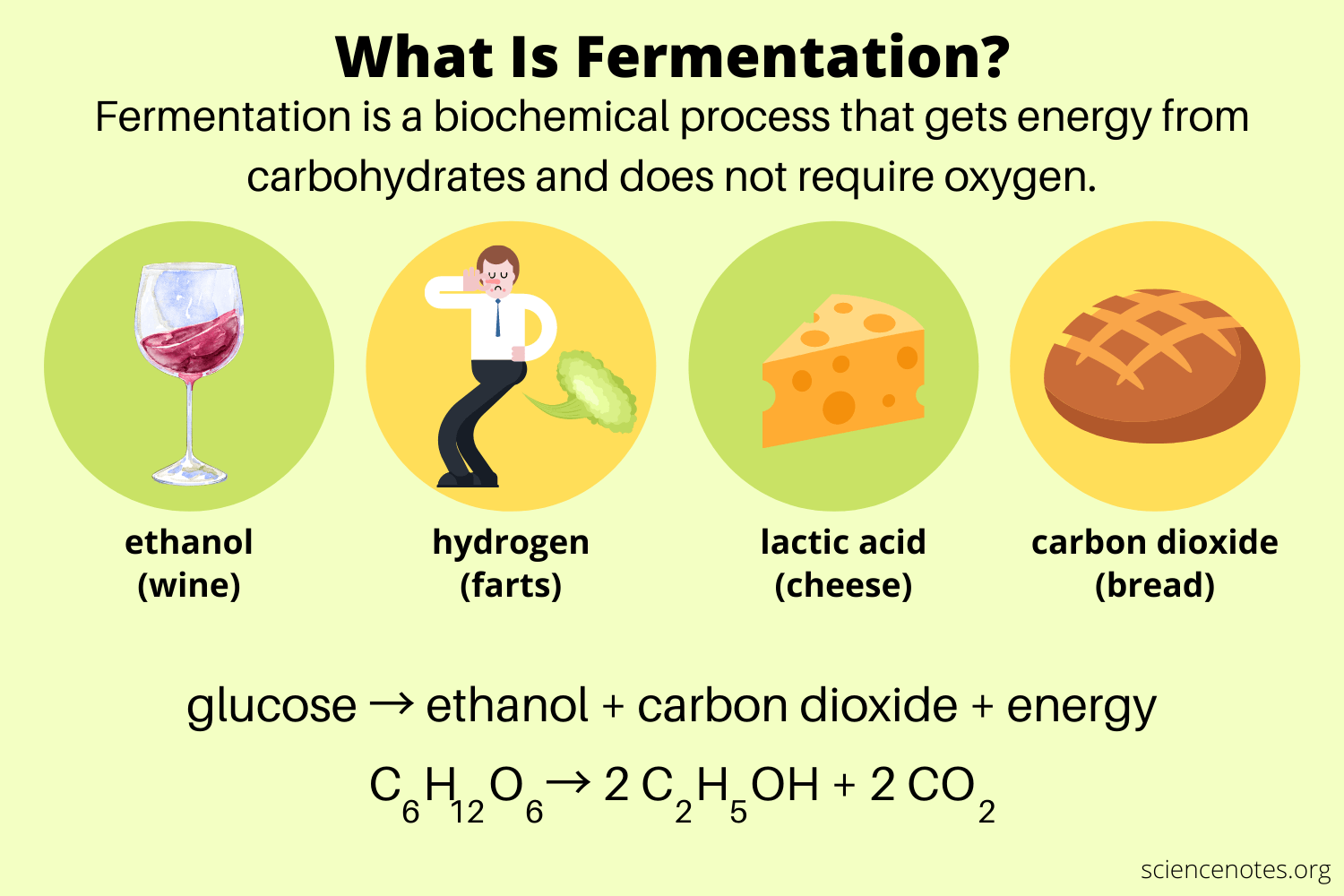
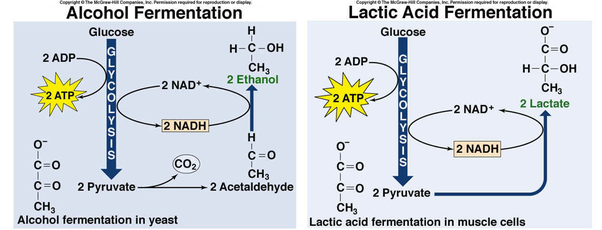
What are the two types of fermentation?
Alcoholic fermentation
Process:
Used by yeast and certain bacteria
Pyruvate(½ of glucose) converts into Ethanol(alcohol) and CO₂
Lactic acid fermentation
Process:
Pyruvate converts into lactic acid.
Happens when your cells need to make quick energy (ATP) when oxygen is low.
Ex: Feeling sore after a workout because lactic acid builds up in muscle tissue cause it used up all the oxygen it had and needs energy.
How do humans and animals obtain glucose?
By eating food./ comsuming
How do plants obtain glucose?
Plants make glucose through photosynthesis
What is the formula that cells need energy to function?
C6H12O6(glucose) + 6O2 → 6CO2 + 6H2O + Energy (ATP)