yersinia, shigella, proteus
 Call Kai
 Learn
Learn Practice Test
 Spaced Repetition
 Match
Match Flashcards
 Knowt Play
1/62

There's no tags or description
Looks like no tags are added yet.
Name | Mastery | Learn | Test | Matching | Spaced | Call with Kai | Chat |
|---|
No analytics yet
Send a link to your students to track their progress
63 Terms
Yersinia
Gram-negative rod or coccobacilli
Facultative anaerobe
Oxidase-positive
Catalase-positive
Non-spore-forming
human body temperature
Most species are flagellated at ambient temperatures, but
non-motile at
Y. pestis
Non-motile both at room and human body temp
Yersiniosis
Disease caused by Yersinia infection is called
Yersinia pestis
transmitted mainly by fleas from rodents
Human infections can occur - cuts, bites, scratches and aerosols
cats are susceptible
Y. pseudotuberculosis
Wild roderns, lagomorphs, birds and environemnt
Y. enterolitica
intestinal tract of wild and domestic animals
Pigs are carriers of strains that are pathogenic for human
Type III protein secretion system
Yersinia out proteins (yops)
Virulence factors that are common to pathogenic yersiniae:
These virulence factors disable host immune defense
Type III protein secretion system
Consists of assemblage of proteins that form a hollow tube-like structure through which effector
Yersinia outer proteins (Yops)
Blocks phagocytosis and downregulates inflammatory responses
Yersinia pestis
The Black Death killed ~60% of Europeans in the middle ages
Previously thought it originated in China in the 1300s
Introduced along silk road trade routes
Europeans brought it to North America
Sweden
First evidence human plague from 4,900 years ago in
Neolithic decline (population decline)
Spread during the ______
Large settlements may have facilitated disease emergence
Outbreaks likely started in larger communities, and spread along with trade
Local lymphadenitis (bubo) [bubonic plague]
Pneumonia (pneumonic plague)
Septicemia (septicemic plague)
Yersinia pestis ( Bubonic Plague)
plagie is manifested as:
Justinian plague
Black Death (estimated 17-28 million people in Europe died)
Third Pandemic (estimated 10 million people died)
Yersinia pestis was officially identified
Three plagues
2-6 days
Initial signs and symptoms in human plague appear ____ after contact with the organism
fever
headache
chills
Swollen tender lymph nodes (buboes)
Symptoms
Swollen tender lymph nodes (buboes)
Involve inguinal and femoral lymph nodes
This reflects lymphatic drainage of organisms originating from fleabites on the lower leg
septicemia
if untreated, plague progressed to ______
Fever,
lethargy,
seizures,
prostration
Yersinia pestis

Yersinia pestis

Y. Pestis SYLVATIC PLAGUE
occurs as a cycle between wild rodents and fleas
Prairie dogs highly susceptible
Can then serve as a source for other animals
Cats and dogs can get sick if they eat infected rodent, or bitten by flea
Bubonic
Septicemic
Pneumonic
Sylvatic Plague Three Forms
Bubonic
lymphadenomegaky, most often submandibular LN following eating infected rodents
May just look like abscess
High fever
Fever
may or may not follow bubonic form
Hematogenous dissemination
Death 1-2 days
Pneumonic
may follow haemarogenous dissemination
May be due to inhaling infectious droplets
Serious zoonotic risk
Another reason to beware the hissing cat - especially in endemic regions!
Dogs
____ less likely to develop clinical illness than cats
Streptomycin
Sylvatic plague
treatment of choice is
doxycycline
Gentamicin
Chloramphenicol
Sylvatic olague
also reasonable choice for treatment
Parenteral antibiotics
Generally, start with _____ and switch to oral with improvement
Y. Pestis

Xeniosylla cheopsis, oriental rat flea

Yersinia oseudotuberculosis
Most commonly sporadic disease, abscessation of internal organs
Found in the intestine and can cause of enteric infections in variety of species
Mammals, birds and possibly humans
Cold wet weather
Poor diet
Association with stressful manipulations (ex. handling farmed deer)
Y. pseudotuberculosis
Cause enteric disease in ruminants under stressful conditions
Cattle and sheep
In _____ can see abortion
1-9% of affected animals
Guinea pigs
Y. pseudotuberculosis is cause of “pseudotuberculosis” in
Reported to cause septicemia in wide variety of species
Septicemic form
Nodules in interrnal organs
Y. pseudotuberculosis
two forms
Y. pseudotuberculosis
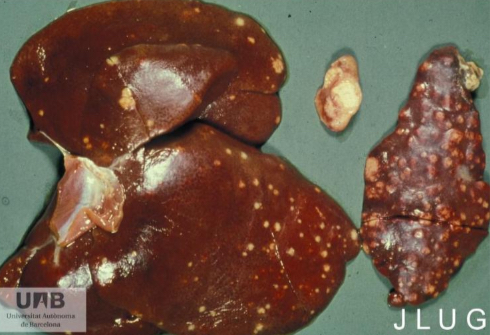
Y. enterocolitica
Primarily an enteric pathogen
Associated with eating undercooked pork
Symptoms vary with age
Rarely associated with enteric diease in ruminants
fever
Abdominal pain
Diarrhea which may b bloody
Y. enterocolitica
Young children symptoms
fever
Abdominal pain which can mimic appendicitis
Y. enterocolitica
older children symptoms
iron overload
Septicemia can occur and is associated with
Treatment: iron-chelating agents
Y. ruckeri
Rainbow trout, which are widely farmed are very susceptible
Most often affects fry and fingerling fish
Outbreaks have low, sustained mortality leads to large losses
Behavioral changes (swimming near surface, loss of appetite)
Subcutaneous hemorrhages
Post-mortem reveals septicemia
Y. yuckeri

Y. ruckeri

Lymph nodes
Edematous tissue
Nasopharyngeal swab
Transtracheal aspirates
Cerebrospinal fluid
Blood
Fecal samples (Y. enterocolitica and Y. pseudotuberculosis)
Sample collection for Yersinia
Kill any fleas
Handle sample with extreme caution
Animal, whether alive or dead, should be treated promptly to
Coccobacilli
Gram negative
Bipolar
____ (closed safety pin) staining
seen in smears from tissue specimens
Can be stained with Giemsia
Y. pestis
grows poorly on agars with desoxycholate
Y. enterocolitica and Y. pseudotuberculosis
grows well on media with desoxycholate
Cold enrichment procedure may be necessary for fecal samples
Y. enterocolitica
Yersinia selective medium (CIN agar) with cefsulodin, irgasin and novobiocin is designed for isolation from fecal sample
nutrient agar
Blood agar
MacConkey agar
Yersinia grows on
Colonies tend to be smaller and they grow slower compared to other enterobacteria
35˚C in ambient air
Yersinia
Incubation is at
Non-hemolytic
Yersinia is _____ on blood agar
Yersinia selective medium
dark red center with transparent periphery
Negative
Yersinia
lactose
Catalase
Oxidase
Glucose with production of acid
Ferments ____ but no gas
Disc Diffusion Method
For determination of antimicrobial susceptibility
Agar Dilution Technique
For MIC
Doxycycline
First line of antibiotic for this pathogen
Shigella
Habitat: Intestinal tract of humans and other primates
Causes dysentery / diarrhea in humans and other primates
Very few reports of infection in other animals
Dogs can be infected from human owners and may excrete the bacteria for short periods, without clinical signs
Proteus mirabilis and Proteus vulgaris
habitat: feces of mammals and environment
Causes uti of dogs and horses
Associated w otitis externa in dogs and cats
Causes diarrhea in young mink, lambs, calves, goats, and pups