MIDTERM REVIEW SKILLS V
 Call Kai
 Learn
Learn Practice Test
 Spaced Repetition
 Match
Match Flashcards
 Knowt Play
1/36

There's no tags or description
Looks like no tags are added yet.
Name | Mastery | Learn | Test | Matching | Spaced | Call with Kai | Chat |
|---|
No analytics yet
Send a link to your students to track their progress
37 Terms
Humanistic Domain…
Non-verbal skills
Verbal skills
Listening skills
Education and instructional skills
Empathy, respect, professionalism
HEALTH HISTORY
Patient demographics
PAST MEDICAL HISTORY
Chief complaint (CC)
HISTORY OF PRESENT ILLNESS (HPI)
Family history
Social history
REVIEW OF SYSTEMS (ROS)
Medication History
allergies/adverse drug reactions
Current prescription medications
Current NON-prescription medications
Immunizations
Medication ADHERENCE
Effectiveness
Pass medications
History of Present Illness (HPI)
= symptom analysis
More detailed description of the CC, used to narrow down and confirm cause of CC
SUBJECTIVE story given by patient
PPQRSSTA
REVIEW OF SYSTEMS
focused problem → focuses on a specific organ system
Aimged to triage a patient to appropriate level of care
“Red flag” symptoms
General, cardiac, respiratory, GI, musculoskeletal, neurologic, endocrine, peripheral vascular, skin/hair/and nails
allergies/adverse events…
→ includes drug, immunization, food, and environmental
DESCRIBE THE TYPE OF REACTION
Differentiate between allergy and adverse reaction
General Assessment
..7 elements PRIOR to checking vital signs
Level of consciousness
Nutritional status
distress/position of comfort
Comparison to stated age
Development
Skin coloration
Hygiene
Level of Consciousness
The state of arousability, behavior, and response to stimuli
Eye opening
Verbal response
Motor response → do they respond to light touch/painful stimuli
Nutritional Status
Approximation of the level of nutrition of the patient
Overnourished
Caloric intake greater than overall energy expenditure
Well nourished
Caloric intake just over overall energy expenditure
Undernourish
Less than energy expenditure
Comparison of Stated Age
Subjective measure of cumulative state of health
Appears YOUNGER than stated age
Higher state of health than others the same age
Appears stated age
Appears OLDER than stated age
Lower state of health than others the same age
Distress/Position of Comfort
Distress: state of mental or physical suffering
Position of comfort: body position employed by patient to lessen discomfort
Physical pain
Somatic (sharp/stabbing)
Cardiac (diffuse, vague, pressure)
ACUTE VISCERAL (abdominal orgain pain upon palpation)
Respiratory distress
Emotional pain
Development
Comparison of musculoskeletal symmetry in relation to sex, age, race
Heady to body proportion
Extremity length
Muscle mass
Height
Skin Coloration
Yellow discoloration (jaundice)
diffuse pallor (anemia, pale skin)
Blue discoloration (hypooxygenation, cyanosis)
Redness (erythema): infection, drug reaction, etc
BMI:
estimates of the amount of body fat someone has
Underweight < 18.5
Health weight
18.5 - 24.9
Overweight
25 - 29.9
Obesity > 30
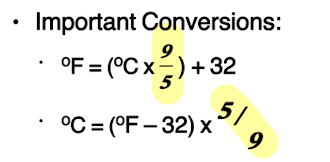
Converting between F and C
Pulse:
palpable perception of throbbing as blood moves through arterial system because of left ventricular contraction
Bradycardia pulse rate < 60 BPM
Tachycardia pulse rate > 100 BPM
Pulse Rhythm…
Regular: regular intervals between each beat → AV nodal or junctional rhythms
Regular irregular: irregular beats occur with predicted regularity → bigeminy and trigeminy
Irregularly irregular: no pattern of beats is present → classic for atrial fibrillation
Respirations
breath consisting of inspiration and expiration (rate, depth, and pattern)
Eupnea → normal respiratory rate 12 - 20 bpm
Bradypnea < 12 bpm
Tachypnea > 20 bpm (rapid breathing)
Blood Pressure:
pressure of the blood against aterial vascular system
Systolic - pressure at the peak of left ventricular contraction
Diastolic - pressure during left ventricular relaxation
Auscultatory Gap: period of silence where first beat is heart at systole, period of silence follows, then return of audible pulse + second disappearance of pulse representing diastole
Muffling Point: strength of pulse is significantly muffled but continues and disappears at lower measurement
interpreting BP

SAVED: Red flags and high risk patients…
S - severe, strange, suspicious symptoms
A - age
V - veracity
E - emotional status
D - debilitation and distance
What is triage
process of classifying patients to specific levels of care to meet their medical needs
BASED ON
Medical acuity
Available resources
Patient expectations
Medical Acuity
Severity of the chief complaint: if, when, and where patient needs to be seen
HIGH → emergent care
Medium/Low → provider care today or tomorrow
Vey low → self care
Loss of life or limb = call EMS NOW
Emergency Treatment
MI
TIA/Stroke
Severe pain
Trauma
Abdominal pain: pancreatitis, appendicitis
Bleeding
Intracranial
GI bleed
Suicidal/homicidal
Severe infection
Sepsis
Triage PROCESS…
ASK QUESTIONS - COLLECT DATA
CC, HPI, Patient HX, ROS, physical exam
WORKING HYPOTHESIS
TRIAGE - Assessment and Plan
Collecting Data
…working hypothesis occurs the whole time
Initial patient impression
Chief complaint
HPI (PPQRSSTA)
ROS
Patient History
Physical Exam
Assessment/Triage Decision
Plan of Care
Purpose of a pharmacist physical exam?
To very or elaborate on information obtained from patient history and ROS (subjective)
To screen for adverse drug events or disease conditions
Preventative health
Pharmacist Role
Health and medication history
General Survery (ROS)
Vital signs
Focused physical exam (targeted)
Triage recommendations: self care, provider care, emergency care
Exam the primary area of concern then move outward
Methods of Assessment:
Function
Inspection
Auscultation
Palpation
Percussion
Inspection
…initial impression: visualization and smell
Assess:
Age
Skin color
Facial features
Posture
Body structure
Emotional status
Auscultation
…listening to sounds of the body using stethoscope
Organ systems
Pulmonary
Abdominal
Cardiovascular
Bare skin is best for accurate assessment
Stethoscope Parts:
Diaphragm for HIGH PITCHED SOUND
Breath sounds, bowel sounds, regular heart sounds (S1, S2)
Bell for LOW PITCHED SOUND
Heart murmurs, bruits, friction rubs, abnormal heart sounds (S3, S4)

Palpation
…touching or feeling with hand
Pads of fingers > fingertips
Assess:
Heat - inflammation
Integumentary - surface lesions, rashes, vesicles
Pain
Light → medium → deep
Pads of fingers: general palpation
MCP JOINTS: vibrations
Dorsum of Hand: temperature (back of hand)
Percussion
… tapping to determine positions of organs, fluid, and air
Respiratory - loud, low, hollow, resonant
Dull - mass, fluid, pneumonia
Hyperresonant - emphysema, pneumothorax
Abdomen - hollow, resonant, air filled bowels liver (dull)
Dull - fluid collection (ascites)
Which Ellipta inhalers require post-administration mouth rinsing
Breo, Arnuity, Trelegy
asthma
arnuity ellipta
spiriva respimat
breo ellipta
pro-air
short acting insulins
lispro
aspart
glulisine
human insulin
long acting insulin
glargine
detemir
glargine
degludec
glargine-yfgn
correcting insulin dose
(current BG - goal BG)/correction factor = x units of insulin required
once daily GLP
saxenda (liraglutide) —> weight loss
victoza (liraglutide) —> T2DM
Byetta (exenatide) BID —> T2DM