py203-08 emotion
 Call Kai
 Learn
 Practice Test
 Spaced Repetition
 Match
 Flashcards
 Knowt Play
1/34

There's no tags or description
Looks like no tags are added yet.
35 Terms
Emotion
Positive-negative feelings produced by particular situations
ประกอบด้วย: patterns of physiological responses/species-typal behaviors
(ทั้งครส/พฤติกรรมที่เกิดขึ้นเพื่อsurvival/reproduction)
Behavioral responses
Muscular movement to the situation that elicits them
Autonomic responses
Sympathetic NS provide quick mobilization of energy(fight or flight)
Hormonal responses
Hormones(E/NE) หลั่งเพื่อreinforce the autonomic responses
Fearใช้สมองส่วนไหนของamygdala
Lateral nucleus(LA)/basal nucleus/central nucleus(CE): ส่วนต่างๆของamygdala
Lateral nucleus(LA)
ส่งข้อมูลไปventromedial prefrontal cortex(vmPFC)
Central nucleus(CE)
Responsible for expression of 3 emotional responses(behavioral/autonomic/hormonal responses)
The output of the CE and the emotional responses
ใจเต้นเร็ว/การตอบสนองของผืวหนังต่อกระแสไฟฟ้า(เครื่องbiofeedback)/การเปลี่ยนแปลงต่างๆเกี่ยวกับความเครียด
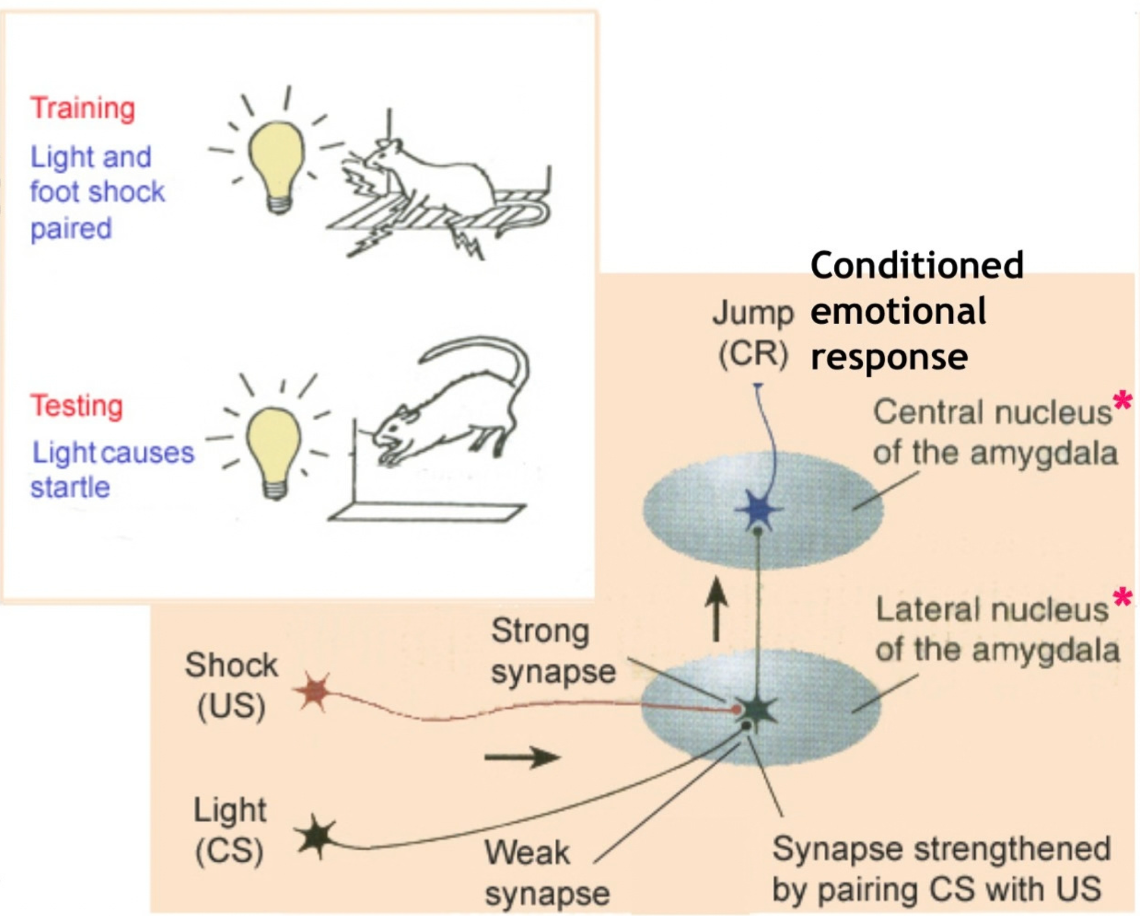
Classical conditioning and fear
Shock: ส่งAPไปตามamygdala→กลัว(strong synapse)
Light: ส่งไม่ได้/ไม่ได้เชื่อมก้บamygdala(weak synapse)
เชื่อมโยงlight-shock: APจากneuron2ตัว กระตุ้นที่amygdala พร้อมกัน
Light(CS): จากweak synapse เชื่อมต่อกับamygdalaมากขึ้น(strong synapse)=> เห็นแสง→กลัว
Extinction
vmPFCเกี่ยวกับการextinction(ไม่ใช่forgetting)
ทำงานเพิ่มขึ้นในการextinction of the conditioned response
Amygdala
ทำงานเพิ่มขึ้นในการได้มาซึ่งconditioned emotional response/การimitationเมื่อเห็นคนอื่น/formation of emotional responses(จำได้ดีเมื่อมีครสมาเกี่ยวข้อง)
ถูกกระตุ้น: autonomic responses and feel afraid
Anger/agression/impulse control
Aggressive behavior: threatening(ส่วนใหญ่)/actual attack
เกี่ยวข้องกับการreproduction/self defense
Aggressive behavior in animals
Aggressive attack-predation ถูกกระตุ้นโดย periaqeuductal gray matter(PAG): ซึ่งรับข้อมูลจากhypothalamus/amygdala
5-HT in aggressive behavior
Plays inhibitory effect in aggression
Low 5-HT:animals-ตายเร็ว/มนุษย์-antisocial(reduction of the PFC activity)
vmPFC in aggressive behavior
ควบคุมการตอบสนองทางอารมณ์/การนึกถึงmoral dilemma(formation of moral judgment)
กระตุ้น: สงบลง/ควบคุมimpulse/suppress emotional responses
การวิเคราะห์สถานการณ์ทางสังคมใช้สมองส่วนอะไร
vmPFC: orbitofrontal cortex(OFC)/segenual anterior cingulate cortex(ACC)
Dorsolateral prefrontal cortex(dlPFC) in fear
ควบคุมการตอบสนองทางพฤติกรรมและอารมณ์ที่เกิดจากการทำงานของamygdala กระตุ้นได้ด้วยmoral conflict
Moral decision making
dlPFC/ACC
Damage in PFC
vmPFC: can make social judgments but fail to act irl
PFC: insensitivity toผลลัพธ์ของการกระทำของตนเอง/able to reasonแต่ทำตามไม่ได้(damage later in life)
Amygdala/PFC on impulse control
Amygdala: กระตุ้นanger/violence emotional reaction
PFC: suppressingดดยให้เราเห็นnegative consequences (inhibit activity of the amygdala)
Genetic control of aggressive behavior
Violent criminals tend to have low activity of warrior gene
ไม่เสมอไป: low activity+PFC damage
Hormonal control of aggressive behavior
Testosterone/androgen(dominance→agression)/alcohol+social status+testosterone
Innate response of emotion
พฤติกรรมที่innate/unlearned
Facial expressionsของอารมณ์พื้นฐาน
Emotional recognition
Emotion: right hemisphere
Meaning of words: bilateral PFC(ทำความเข้าใจอารมณ์จากคำพูด)
Tone of voice: right PFC
Comprehension of words and emotions is independent: ไม่เข้าใจความหมายก้ยังสามารถเข้าใจอารมณ์จากโทนเสียงได้
Recognize facial expressions of emotion (fear)
Amygdala: fearful face produced largest response/รับข้อมูลจากsuperior colliculi/pulvinar→recogniseอารมณ์ได้
Blind with lesions of visual cortex can recognize facial expressions of emotion
Imitation in emotional recognition
We unconsciously imitated the observed facial expressions→recognition of emotion
Mirror neuronsรับข้อมูลจากSTS: กระตุ้นจากเห็นสีหน้าของผู้อื่น→ช่วยให้เราเข้าใจครส(empathy)/ทำงานเมื่อได้ยินnonverbal emotional sounds
Moebius syndrome
Facial paralysis(แสดงสีหน้าตามอารมณ์ไม่ได้)→have difficulty recognizing the emotional expression of others
Disgust
An emotion evoked by something smells bad or considered to be bad taste
The insula cortex: primary gustatory cortex: recognize facial expression of disgust
Motor facial paresis
Damage of primary motor cortex
: ask to show their teeth→ปากยกไม่เท่ากัน
Ask to smile→ยิ้มได้
Emotional facial paresis
Damage of insular cortex→trouble in happy smile
: ask to show their teeth→ปากยกขึ้นเท่ากัน
Ask to smile→ทำไม่ได้
Jokes
ACCเกี่ยวกับกล้ามเนื้อในการหัวเราะ
Damage of right vmPFC: ไม่เข้าใจมุขตลก
Funny jokes: nucleus accumbens(reward sys)/right vmPFC
Joke with violation of social norms: right amygdala/left OFC
Funny jokes
nucleus accumbens(reward sys)/right vmPFC
Joke with violation of social norms
right amygdala(กลัว)/left OFC
The James-Lange theory
เหตุการณ์กระตุ้นphysiological responses/behavior→feelings of emotion
Feedback from our expressionช่วยให้เราเข้าใจครสคนอื่น(จากการทำงานของMN system)
ex เห็นคนอื่นยิ้ม ทำมห้เรายิ้ม+มคส
Two factors theory
อารมณ์-ความคิดแยกออกจากกันไม่ได้
อารมณ์จะเกิดต้องมีสองอปก
1 การตื่นตัวทางร่างกาย(arousal) exใจเต้น/เหงื่ออก
2 การตีความ(cognition/belief): หาสาเหตุที่ทำให้เราตื่นตัว exกลัว/ชอบ/เครียด/เหนื่อย