Chemistry chapter 10
 Call Kai
 Learn
 Practice Test
 Spaced Repetition
 Match
 Flashcards
 Knowt Play
1/46

There's no tags or description
Looks like no tags are added yet.
47 Terms
Reacting molecules requirements to form products
must collide, have a minimum amount of energy, and have the proper orientation to form products
activation energies
reactions with low activation energies go faster than reaction with high activation energies
Factors that affect the rate of reaction
changes in temperature, changes in reaction concentration, and adding a catalyst
Temp effect on rate of reaction
As temp increases so does the rate of reaction and as temp decreases so does the rate of reaction.
Higher temp effect of rate of reaction
Makes molecules moves faster, collide more often, and collide with more energy
rate of reaction: concentration
when there are more reacting molecules, more collisions that form products can occur, and the reaction goes faster
Catalysts effect of rate of reaction
Adding a catalyst speeds up the rate of the reaction and provides a path with a lower activation energy

table of factors that increase the reaction rates
increasing temp, increasing reactant concentration, and adding a catalyst


A. increases
B. decreases
C. Increases
D. decreases
Chemical equilibrium equation

Where is the product in a equilibrium equation
the product is where the arrow points
reversible reaction
when a reaction can proceed in both a forward and a reverse direction

When is a reversible reaction at equilibrium
when the rate of the forward reaction becomes equal to the rate of the reverse reaction.
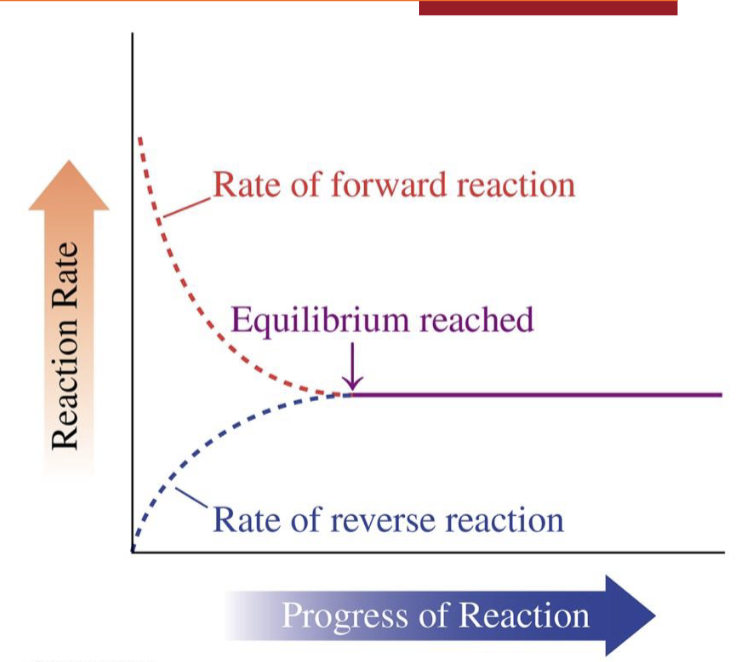
What happens to the reversible reaction once it reaches equilibrium
when equilibrium is reached there are no further changes in the concentrations of the reactant and products. The concentration are not equal.

At equilibrium what are the rates and concentrations
At equilibrium the rates should be equal but the concentrations should not be equal to one another.
What is the equilibrium constant expression
Kc

What formula do you use to find the equilibrium constant expression Kc

what do the brackets and the a,b,c, and d superscripts indicate in the Kc formula
The brakes indicate the M, moles/liter, of each substance and the a,b,c,and d superscripts are the coefficients of the reaction.

How to find Kc for both forward and reverse
Kc= [products] / [reactions]


what would be the forward reaction for the following


What would be the reverse reaction for the following
[C]c [D]d
Kc= [A]a [B]b
Writing a Kc Expression

when writing the Kc expression how do you know if it wants a forward or reverse reaction.
when it ask for the Kc expression for the following reaction at equilibrium and it does not say Reverse then the reaction is forward


Heterogeneous Equilibrium
sold and/ or liquid states may be part of a reaction
the concentration of solids and/ or liquids is constant
the Kc expression is written with only (g) or (aq)

Example of a heterogeneous equilibrium Kc expression
Kc = [CO2][H2O]
what to do first before setting up the Kc expression?
balance the reaction first, find if it is forward or reverse, and then remove all solids and liquids from the reaction.

4) [O2]3


1) 0.26
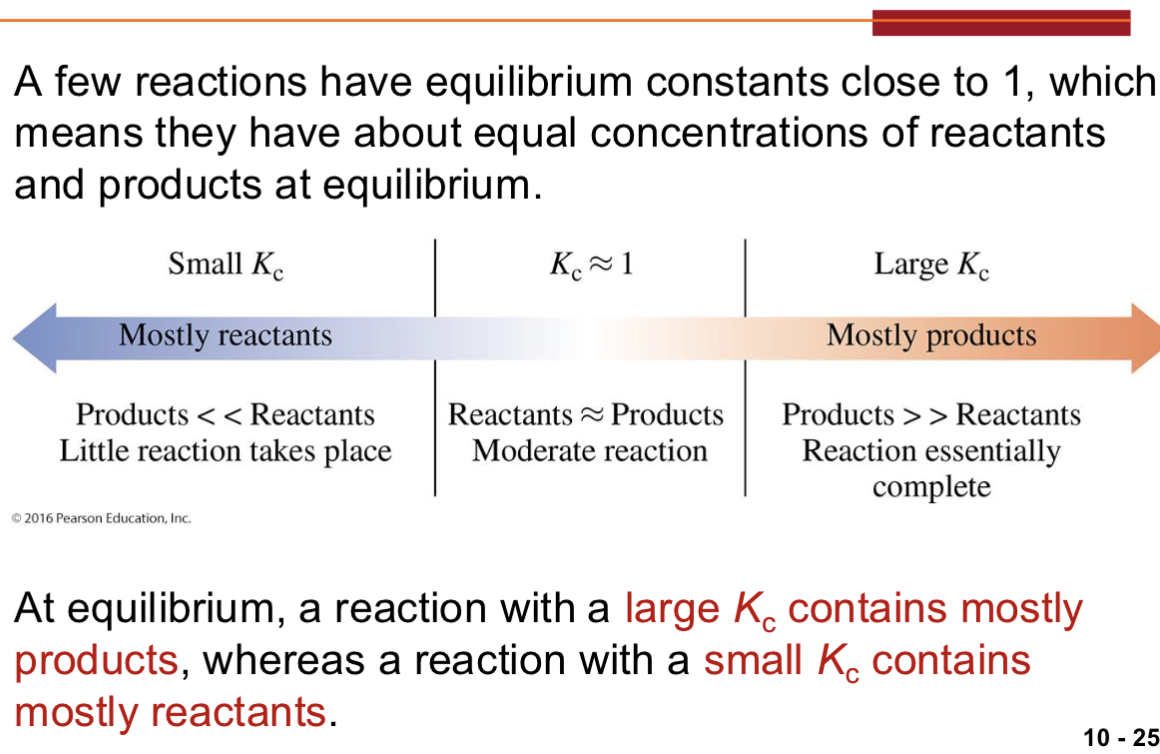
Large Kc
reactions with a large Kc have large amounts of products produced
(more products then reactants)
Small Kc
reactions with a small Kc have an equilibrium mixture with a low concentration of products and a high concentration of reactants.
(more reactant then products)
Equilibrium with a large and small Kc rules
If Kc is greater then one then the products are favored Kc>1 large
If Kc is less then one then the reactants are favored Kc > 1 Small
If Kc is greater then 1 the exponent is positive, Large
If Kc is less then 1 then the exponent is negative Ex: 2 × 10⁻⁹. Small
If Kc equals 1 then nothing is favored

A. Product
B. Reactants
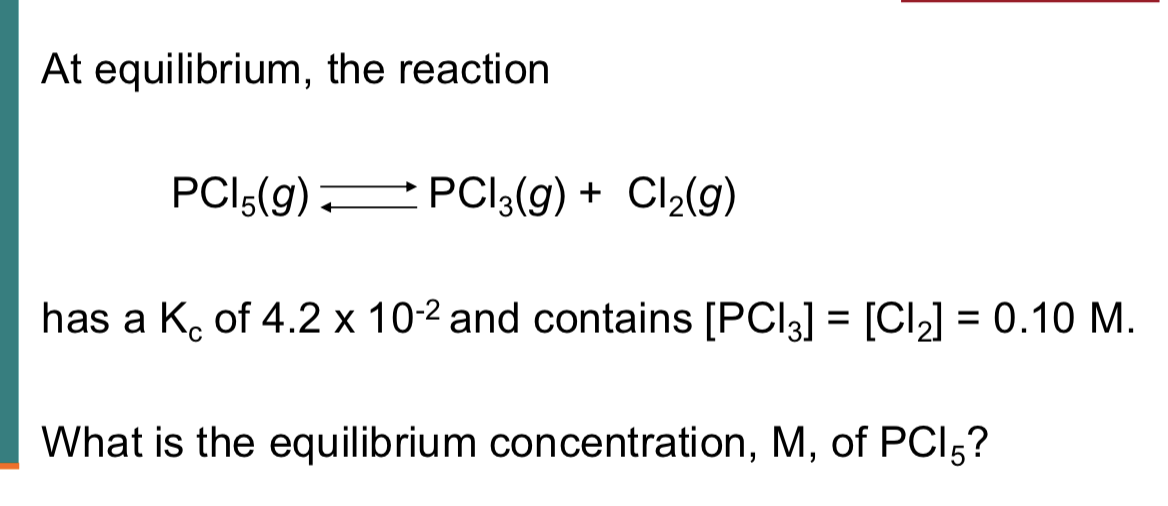
cross multiply
0.24 M PCl5

cross multiply
0.78 M Brff

What happens when you add a reactant to a equilibrium reaction
It shifts to the opposite side (product) and the rate increases forward to make more products
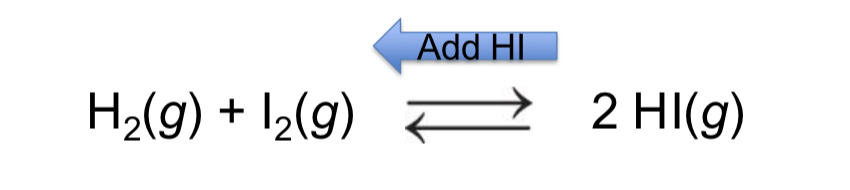
Effects of adding product
It shift to the opposite side (reactant side) and the rate of the reverse reaction increases to form more reactants.

what happens when you remove a reactant
It shift towards the reactants and increases the rate of the reverse reaction to form more reactants

What happens when you remove a product?
It shifts toward the product side and the rate of the forward reaction increases to form more product

solid does not count
A. to the reactants
B. no change
C. to products
D. to products
Effect of a catalyst on equilibrium
speeds up the reaction by lowering the activation energy, thus increasing the rate of the forward and reverse reactions. Adding a catalyst does not change the equilibrium mixture
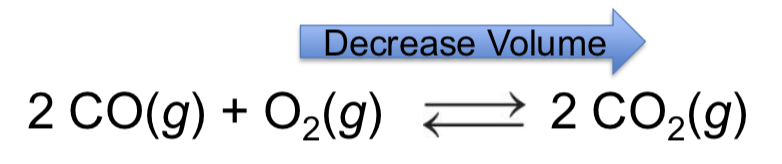
Effect of decreasing the volume
it shifts in the direction of the smaller number of moles and increases the concentration of the gases

effect of increasing the volume
it shift to the larger number of moles and decreases the concentration of the gases
Heat and endothermic reactions (heat on the left)
If you decrease temperature it shifts top the left (reactants side)
If you increase temperature It shifts to the right (product side)

Heat and Exothermic reactions (heat is on the right)
If temperature decreases then it shifts to the right (product side)
If temperature increases then it shifts to the left (reactants)


A. toward products
B. toward reactants