high yield ???
 Call Kai
 Learn
 Practice Test
 Spaced Repetition
 Match
 Flashcards
 Knowt Play
1/75

There's no tags or description
Looks like no tags are added yet.
76 Terms
ischemic complete AV block
complication most associated with inferior wall MI
papillary muscle rupture
-new holosystolic murmur 2-7 days after MI is likely due to
ventricular free wall rupture
-complication within 2-7 days of MI usually leading to cardiac tamponade
prinzmetal angina
drop in blood flow through the coronary arteries caused by a vasospasm in the artery, not by atherosclerosis
atypical angina
Patients who have diabetes, women, and the elderly are more likely to present with atypical features. Occasionally they will present with only weakness or shortness of breath on exertion. These symptoms are considered "anginal equivalents".
widened mediastinum
CXR findings of aortic dissection
mitral valve prolapse
atypical chest pain, midsystolic click with systolic murmur
similar to pericarditis but can mimic ischemia, may present like CHF. + cardiac enzyme
similar to pericarditis but can mimic ischemia, may present like CHF. + cardiac enzyme
an electrical problem occuring below the AV node
a wide complex tachycardia is an indication of
a source above the ventricles
ex: a. fib, or simple sinus tachy
a narrow complex tachycardia is generally indicative of
mitral/tricuspid regurgitation
holosystolic, high pitched blowing murmur
aortic stenosis
crescendo/decrescendo ejection murmur with ejection click; goes to carotids
aoritc regurgitation
high pitched blowing decrescendo murmur, head bobbing
mitral stenosis
-rumbling late diastolic murmur with an opening snap
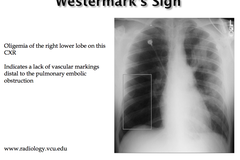
Westermark sign
Regional oligemia in lung distal to pulmonary artery thrombus
Hampton's hump
wedge shaped consolidation at lung periphery on chest x-ray with base on the pleura associated with lung tissue infarction due to pulmonary embolus

calcification of congenitally abn bicuspid aortic valve, calcification of normal valve in elderly, rheumatic fever
causes of aortic stenosis
*a drop in systolic >20, diastolic >10, or increase HR >20, or just symptomatic
define orthostatic hypotension
Na - (Cl + HCO3)
equation for anion gap
(2x Na) + (BUN/2.8) + (glucose/18)
equation for serum osmolality
Na+[(0.016 (serum glucose-100))/100]
equation to correct sodium
Blood sugar >600, usually it's >1000
Increased serum osmolality (often >300 mOsm/kg)
NO KETOSIS or anion gap (no serum or urine ketones)
diagnostic criteria of HHS
pre-renal acute failure; azotemia
kidney failure associated with DKA
HHS-Fluid is #1
DKA-insulin + fluid immediately
basic management of HHS vs DKA
1. after the patient can tolerate food by mouth
2. has received a dose of long-acting subcutaneous insulin
3. has had two successive metabolic panels showing closure of the anion gap
indications to stop insulin drip in pt with DKA
lispro, aspart
rapid acting insulin
glargine, detemir
long acting insulin
sulfonylureas, insulin, EtOH, lack of food, & alterations of metabolism assoc. w/ infection
precipitants of hypoglycemia
upper GI bleed
melena is a sign of a GI bleed where?
angiodysplasia
submucosal dilation of venules in cecum; cause of hematochezia
mesenteric ischemia
*SMA* (A fib embolus)
--> Extreme pain
= Food aversion
ischemic colitis
occurs when part of the large intestine is partially or completely deprived of blood
febrile non-hemolytic transfusion reaction
-most common transfusion reaction
- Symptoms include fever, chills, rigors, mild dyspnea, headache, and nausea. While these reactions are unpleasant, they have no serious consequences and often respond well to treatment with acetaminophen.
Acute hemolytic transfusion reaction
- *life threatening reaction*
develops within the *first 15 mins*
s/s are: *chills, feverm lower back pain, tachycardia, tachypnea, and hypotension*
distributive shock
Etiology: septic, anaphylactic, spinal shock
Sx: hypotension, warm extremities (due to vasodilation)
Amoxicillin 1 gm bid, clarithromycin 500 mg bid, omeprazole 20 mg bid for 14 days, followed by omeprazole 40 mg daily for four weeks. Metronidazole if pcn allergy
tx for H. pylori
C. diff (pseudomembranous colitis)
Crampy localized pain, low fever, foul smelling watery diarrhea, leukocytosis recent antibiotics,
Cover gut flora (gram negative rods likes e.coli) and anaerobes (Bacteroides fragilis)
Fluoroquinolone + metronidazole
TMP-SMX + metronidazole
Amoxicillin-Clavulanate
abx for diverticulitis
female, elderly, DM
population more likely to have atypical angina
beta blockers
CCBs
nitrates
anti-anginal meds
beta blockers
treatment of congenital long QT
Primary valvular dz: RF, bicuspid aortic valve, Marfans, Ehlers-Danlos, ankylosing spondylitis, SLE
b. Aortic root dz: syphilitic aortitis, OI, aortic dissection, Bechet's, Reiter's, systemic HTN
causes of aortic regurg
aortic regurgitation
i. Widened pulse pressure because of blood runoff back into LV.
iii. Waterhammer pulse (Corrigan's pulse) - rapidly increasing pulse that collapses suddenly - palpated at wrist or femoral
1. can manifest as a head-bob.
pulsus paradoxus seen in pericardial tamponade
Decrease in systolic blood pressure >10mmHg during inspiration
1. Unstable-with hemodynamic instability and/or heart failure—synchronized cardioversion then antiarrhythmic
2. Stable - amiodarone or lidocaine
treatment of v-tach
HOCM, MVP
valsalva or standing increases these murmurs
S3 🡪 in early diastole rapid ventricular filling phase. seen w/ increased filling pressures and CHF
S4 🡪 "atrial kick" in late diastole. Assoc. w/ ventricular hypertrophy
interpret S3 and S4
Corrected Na⁺ = Measured Na⁺ + ( (Glucose - 100) / 100 ) × 1.6
corrected sodium
acute viral hepatitis
AST & ALT generally >1000
toxic megacolon
Non Obstructive dilatation of transverse & descending colon. Systemic toxicity. Associated with inflammatory bowel disease and C. difficile infection
ulcerrative colitis
Continuous disease starting at rectum/colon, affects only the mucosa, crypt abscess
autoimmune
Labs: P-ANCA
Crohn's disease
Patho: Granulomas, fissures, transmural inflammation with skip lesions. Always spares rectum.
reaction to bacteria in the GI
Labs: ASCA
Hemochromatosis
AR defect on HFE gene - increased absorption of the iron
Bronze diabetes, liver disease, heart failure, hypogonadism, arthritis
Dx: transferrin saturation >45%, high ferritin
Gilbert's syndrome
disorder of bilirubin conjugation
Exacerbated by acute illness or stress
Dx: benign increase in unconjugated bilirubin, NO elevation of liver enzymes
Anti-mitochondrial antibodies
Ab associated with PBC
anti smooth muscle antibody
Ab associated with autoimmune hepatitis
Gradient >1.1: consistent w/ portal HTN
Gradient
SAAG gradient findings
ERCP
Invasive test that cannulates the ampulla of Vater & injects dyes to outline an obstruction
Pros: sample a tumor, dilate a stricture, or allow passage of a gallstone.
Cons: Requires a GI or surgery consult.
Complications: bleeding, perforated bowel, worsening pancreatitis, or death
MRCP
Non-invasive imaging test using MRI to detect obstruction of the biliary tree & pancreatic duct
Pro: less risky since its non-invasive
Con: Less sensitive & can't relieve obstructions of pancreatic duct or biliary tree
head of pancreas = painless jaundice; body and tail = pain in epigastric area
det location of pancreatic cancer based on PE findings
pre renal failure
FeNa
intrinsic renal failure
FeNa >2%
BUN/CR 10-20
Postrenal failure
FeNa >3%
AEIOU—acidemia, electrolyte derangements, ingestion of toxins, volume overload, & Uremia (AMS)
indications for dialysis
acute tubular necrosis
Granular & muddy brown casts
acute interstitial nephritis
Eosinophils & WBCs. WBC & hyaline casts
nephrotic syndrome
>3.5 mg of protein, hyperlipidemia, fatty casts, edema. Most common cause—DM
elevated d/t secondary hyperparathyroidism
PTH associated with CKD
(2 x Na) + (glucose/18) + (BUN/2.8)
osmolality
PCO2= (1.5 x HCO3) +8
winters formula
RTA Type I - problem in the distal convoluted tubule, failure of H+ secretion, urine pH> 5.5 and hypokalemia
RTA Type II - problem in the proximal tubule, failure to reabsorb HCO3 in the urine, pH
the RTAs
piperacillin/tazobactam (zosyn), clindamycin (anaerobes)f
abx for aspiration pneumonia
SIADH
cause of euvolemic hyponatemia
osmotic demyelination—confusion, quadriplegia, pseudobulbar palsy, catatonia, locked in syndrome, parkinsonism, mutism & dystonia
too rapid correction of hyponatremia results in
ethylene glycol
converted to oxalate as a metabolite in the liver 🡪precipitates w/ Ca in the urine as calcium oxalate crystals
fomepizole
tx of ethylene glycol toxicity