Biol213L: Lab 6: Nervous and Sensory Systems
 Call Kai
 Learn
Learn Practice Test
 Spaced Repetition
 Match
Match Flashcards
 Knowt Play
1/22

There's no tags or description
Looks like no tags are added yet.
Name | Mastery | Learn | Test | Matching | Spaced | Call with Kai | Chat |
|---|
No analytics yet
Send a link to your students to track their progress
23 Terms

Cerebrum
>largest part of brain, involved with higher brain function such as intelligence, memory, will, and sensory perception.
>Gyrus: Folds on the outer surface that help increase surface area; therefore maximizing surface area.

Corpus Callosum
>thick bundle of nerve fibers that connects the two cerebral hemispheres, allowing them to communicate.

Cerebellum
> muscle control, including balance and movement.
> plays a role in other cognitive functions such as language processing and memory.
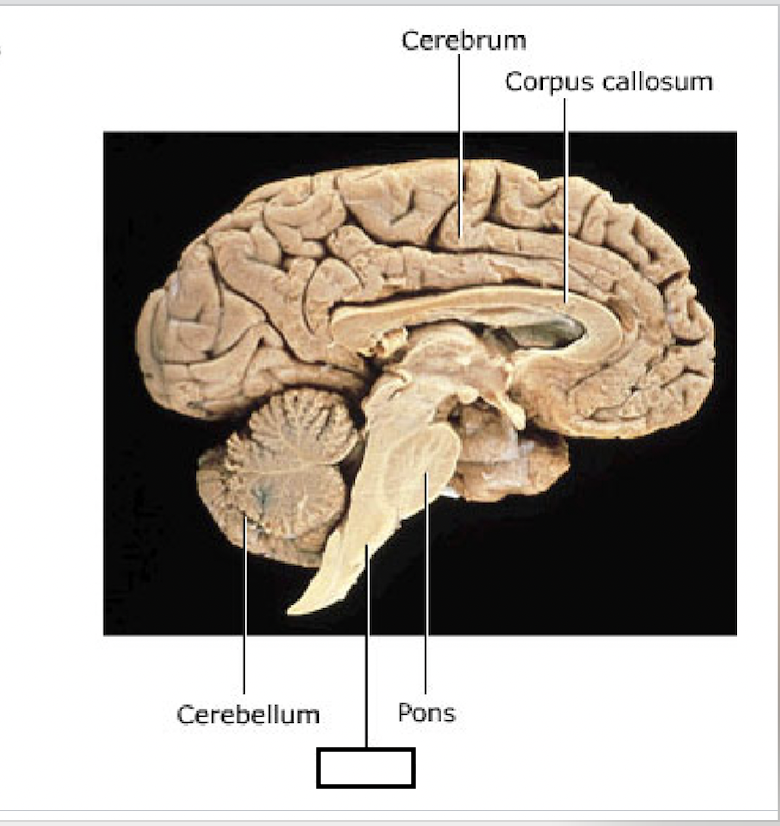
Medulla
>controls your heart rate, breathing, blood pressure and more. Manages other automatic
processes

Pons
-a part of your brainstem. Links your brain to your spinal cord. It handles unconscious processes and jobs, such as your sleep-wake cycle and breathing.


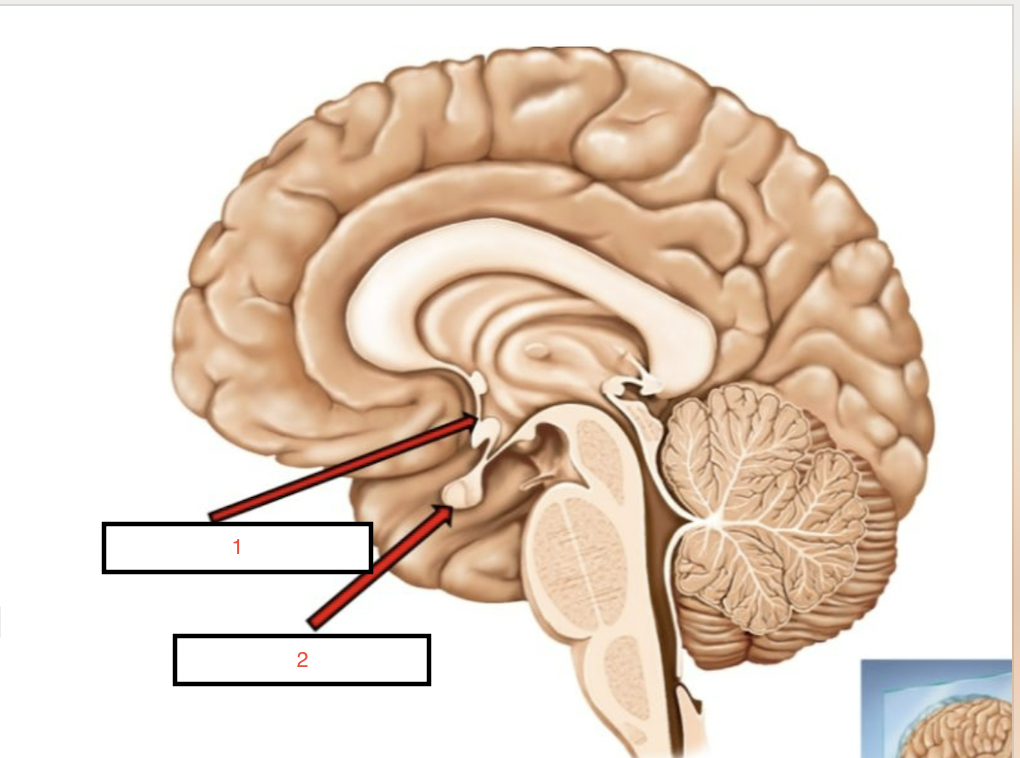
1: Hypothalamus - Link the nervous system and endocrine system together. Helps maintain homeostasis.
2:Pituitary Gland - Receives hormone signals from the hypothalamus to regulate growth and development and the functioning of other endocrine organs.

Pineal gland: secrete melatonin in the absence of light

Olfactory bulb - Process odor

Dura mater
>Thick membrane. Protects the brain and spinal cord.
>Top layer of the meninges.

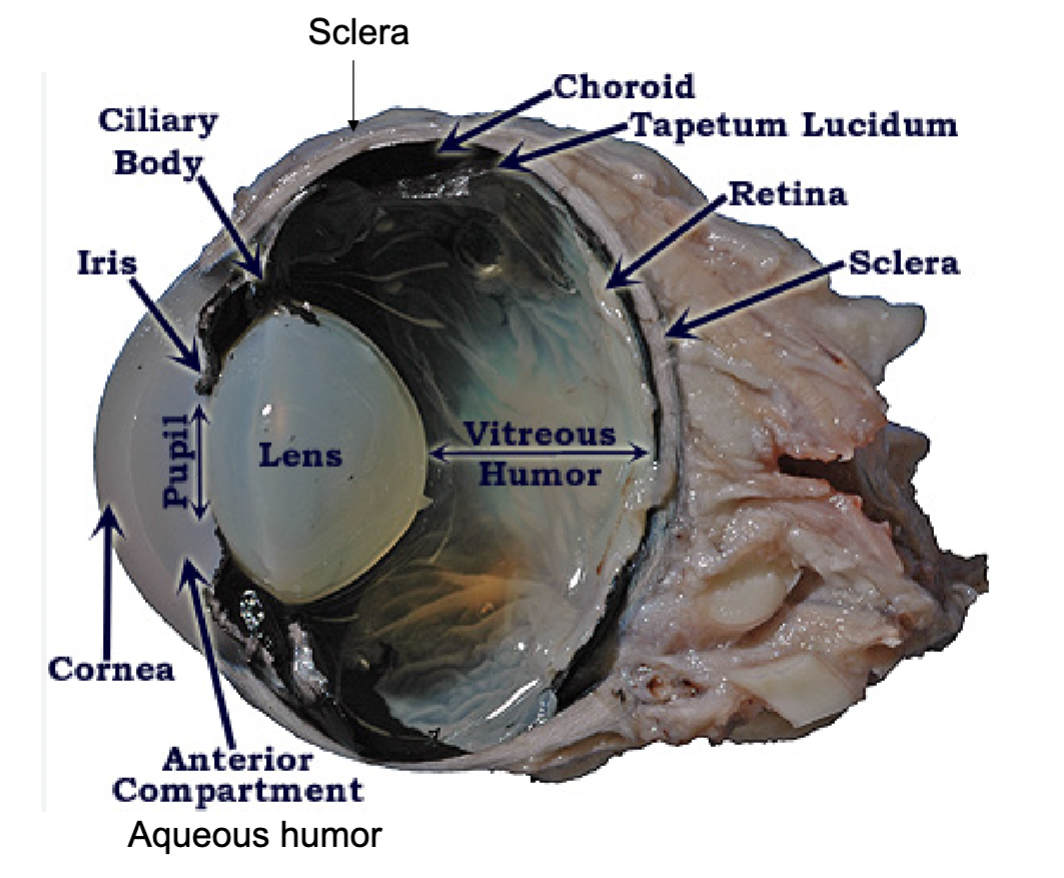
Sclera
>protective layer made up of collagen and elastic fibers.

Cornea
>protects the visual surface and lets light in initially.
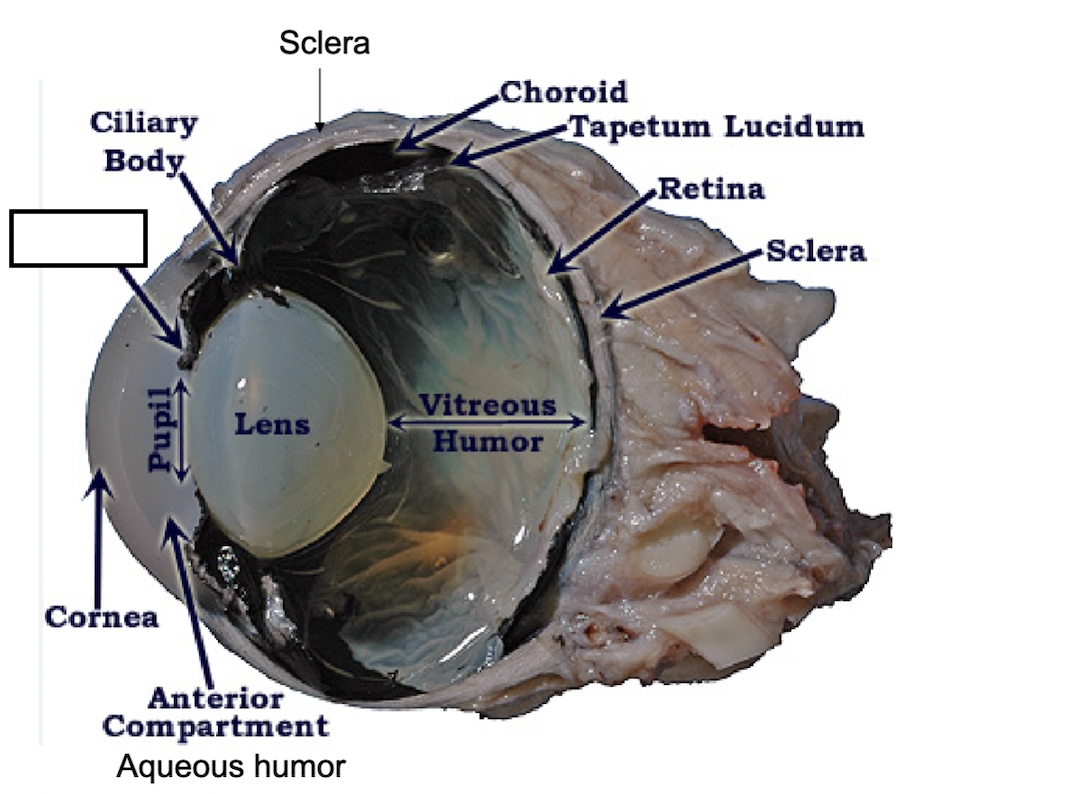
Iris
>pigmented part

Pupi
>Opening in iris where light enrers

Lens
>transmit light to retina.

Aqueous humor
>clear liquid inside the front part to nourish the eyes.
>replenishes/regenerates

Vitreous humor
> Clear liquid inside the middle part to help the eye maintain its shape.
> Produced once as a fetus and does not replenish.

Retina
-light-sensitive layer of tissue at the back of the eyeball.
Contains photoreceptor cells:
- Rods: contrasting vision
- Cones: color vision

Choroid
>middle layer of the eye filled with blood vessels that bring oxygen and nutrients to the retina.
>excess light passes through the retina and gets absorbed in the choroid

Tapetum Lucidum
>reflects incoming light back out the retina. Helps increase vision in low light condition;
important for nocturnal and marine mammals.

Optic nerve: bundle of nerve fibers that send signals to the brain