intro, ideal occlusion, and extraoral evaluation
 Call Kai
 Learn
Learn Practice Test
 Spaced Repetition
 Match
Match Flashcards
 Knowt Play
1/53

Earn XP
Description and Tags
lecture given 8/28/2026
Name | Mastery | Learn | Test | Matching | Spaced | Call with Kai | Chat |
|---|
No analytics yet
Send a link to your students to track their progress
54 Terms
orthodontics
the field within dentistry concerned wiht the prevention and correction of facial and skeletal disharmony and malocclusion
what are the goals of orthodontics?
diagnosis, prevention, interception, treatment, maintenance
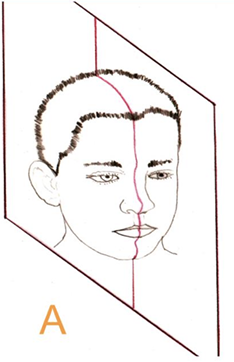
what plane is shown here?
sagittal / AP

what plane is shown here?
frontal / vertical

what plane is shown here?
horizontal / transverse
what are andrew’s 6 keys of occlusion?
correct interarch relationships
correct crown angulation (tip)
correction crown inclination (torque)
no rotations
tight contact points
level curve of spee
correct interarch relationships
the mesio-buccal cusp of the upper first premanent molar falls within the buccal groove of the lower first premanent molar
the mesio-lingual cusp of the upper first molar seats in the central fossa of the lower first
premolars have a cusp to embrasure relationship buccally and cusp to fossa relationship lingually
maxillary canine has a cusp to embrasure relationship with the mandibular canine and first premolar
maxillary incisors overlap mandibular incisors
midlines of arches match
normal occlusion
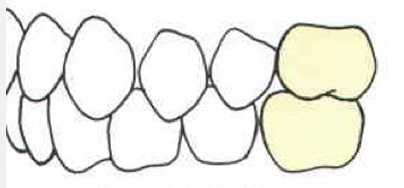
class I malocclusion

class II malocclusion
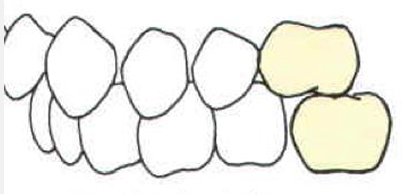
class III malocclusion

class I
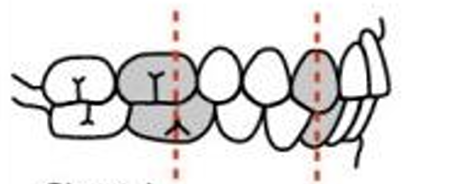
class II
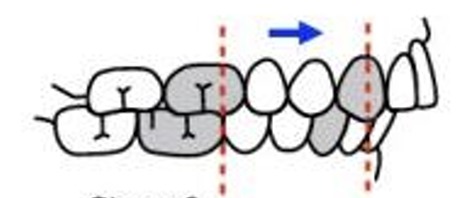
class III

in a compromised case finish, what angle’s classification should you prioritize?
class I canine
correct crown angulation (tip)
when looking from the facial, the mesio-distal angulation of the tooth
normally occluded teeth demonstrate gingival portion of crown more distal than occlusal portion of crown
correct crown inclination (torque)
crown inclination determined by angle between a line 90 to the occlusal plane and a line tangent to the middle of the labial or buccal clinical crown
torque on incisors
maxillary incisors are flared → crown has buccal inclination → buccal crown torque or lingual root torque
mandibular incisors are either upright or have a lingual crown inclination → lingual crown torque or buccal root torque
torque on posteriors
all have lingual crown inclination → lingual crown torque or buccal root torque
increases as you go more posterior
no rotations
no rotations should be present
a rotated molar occupies more mesiodistal space, creating a situation unreceptive to normal occlusion
why are tight contact points desirable?
to avoid being a food trap
level curve of spee
occlusal plane → flat or slightly concave curve of spee (0 - 2.5mm)
what is the ideal dental arch?
coordinated arches
specific mesial-distal angulation
specific buccal-lingual inclinations
no rotations
tight contact points
flat curve of spee
what makes an ideal composite (photos)?
no eyewear, no headwear, hair out of face/tucked behind ears, no distracting jewlery/makeup
as straight on as possible, include at least first molars on all photos, should be able to see gingival margins (for proof of prior recession)
when looking from AP, what should you you examine?
profile- convex/concave/flat
nasiolabial angle
upper and lower lip protrusion
upper lip length
labiomental angle
when looking from transverse, what should you you examine?
facial symmetry, horizontal 1/5ths, UDML in relation to facial midline, buccal corridors
when looking from vertical, what should you you examine?
vertical 1/3s, lip competence, smile arch, smile line, maxillary incisor display on smiling, mandibular incisor display on smiling
what are the points of reference to determine profile?
most prominent point on forehead
point where the nose meets the lip
most prominent point on chin
convex

straight
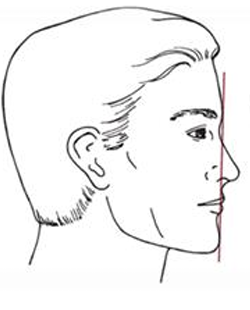
concave

nasolabial angle
formed between nose and upper lip
normal: 95 - 110
what affects nasolabial angle?
upturned/drooping nose
protruded/flat upper lip
what determines the position of the upper lip?
maxillary incisiors
lip protrusion, E plane
multiple reference planes, tip of nose to point of chin
both upper and lower lip should be behind
what determines the position of the upper lip?
upper incisors
what determines the position of the lower lip?
upper incisors
what do you need to keep in mind pertaining to E plane?
distance increases with age
important to consider today’s trends and racial norms
what is normal upper lip length?
20 - 24mm
increases with age
labiomental angle
can indicate protruded incisors
potential lip trap
transverse symmetry
evaluate facial structures
soft tissue deviations- nose, muscular pull, eyes
skeletal deviations- chin point, mandible length
horizontal fifths
eyes should be same width as inter-canthal distance
can indicate specific areas of asymmetry
upper dental midline
should be concident with facial midline (assume facial harmony)
soft tissue deviation- treat to average midline
buccal corridors
negative space between buccal surface of posterior teeth and cheeks
should have slight negative space (~8% on each side)
what happens if a patient has vertical maxillary excess?
gummy smile
lip competence
lips should naturally come together at rest
lip incompetence
inability to keep lips together at rest
non-competent lip indicates disharmony
can result in mentalis strain
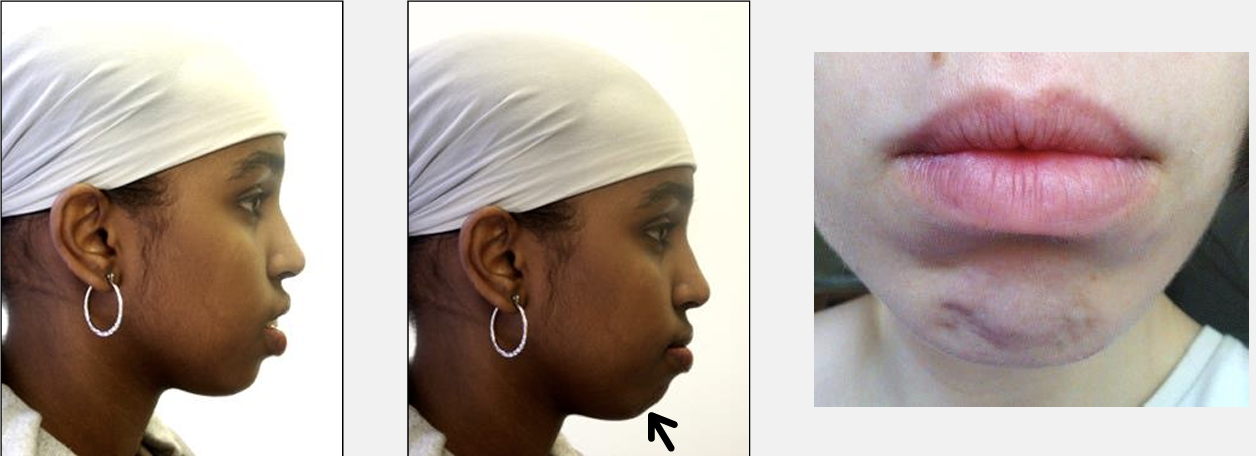
mentalis strain
lips do not meet at rest
mentalis muscles strain to keep lips sealed
visible dimpling/puckering in chin
can be seen from frontal and profile views
mentalis strain
smile arc
esthetic parameter
curvature of maxillary anterior teeth should follow curvature of lower lip
consonant / flat / exaggerated
low smile line
decreased incisor display
gets lower with age
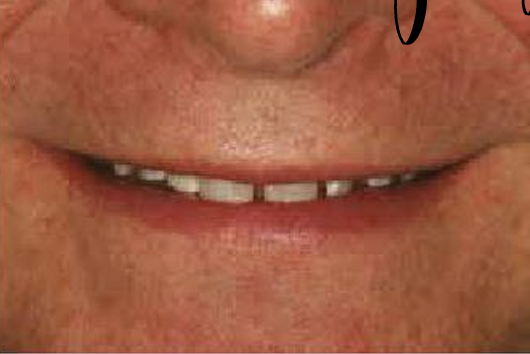
average smile line
no/slight gingiva display
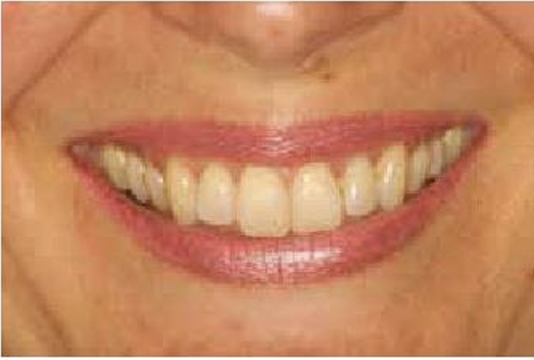
high smile line
normal in children/adolescents
100% maxillary incisor display
‘gummy smile’
can be due to overactive muscles pull or maxillary skeletal vertical excess
what is the key to facial esthetics?
lower 1/3 of the face