Diversity Exam 3
 Call Kai
 Learn
Learn Practice Test
 Spaced Repetition
 Match
Match Flashcards
 Knowt Play
1/62

Earn XP
63 Terms
What do vascular tissues allow?
transport of water and food, growth in height, competitive advantage
Root evolution
Evolved twice: in lycophytes they split from the apex, in monophytes and seed plants (euphyllophytes) they form subapically

Where did land plants evolve from
charophytes
Lycopodiophyta extant lineages
(club mosses) Lycopodiales, Selaginellales, Isoetales
What are the oldest lineage of extant vascular plants
lycopodiophyta 410 mya (devonian) losin them would such, lotsa evolutionary history. They were dominant 360 mya during carboniferous
Two forms of lycopodiophyta
Herbaceous —> 1338 spp, mostly tripcal,
Arboescent (tree like) —> has vascular cambium, wood, diameter growth EXTINCT NOW
also know lycophytes have microphylls
Monilophyta what are htey when did they origionate how many of em
Ferns, 10000 spp, 390mya (devonian) also know they have megaphylls
Did monilophyta survive a bunch of extinction? if yes what
permian, triassic, KT
Monilophyta forms and importance
herbaceous and tree forms, really good at succession and environmental remediation
Euphyllophytes contains
monilophytes and gymnosperms → close genetic relationship, same roots, both have megaphylls (evolved independently) spores vs seeds
4 subclasses of Polypodiopsida
Polypodiidae (95%, 10000 spp, has some heterospory and has leptosporangia), Marattiidae, Ophioglossidae, Equisetidae
Which ferns are we researching
Hart’s tongue (rarest in NY), Fragrant Cliff (experiences different morphology bc we are the southern edge of the range) (good indicator of climate change)
When did seed plants origionate and why
End of carboniferous (359 to 299 mya) it was cold and dry and other plants were vulnerable
When was permian and what happened
299 to 252, pangea, immense dry inland, seeds began to dominate
What happened in the third mass extinction
volcanoes, acidic warm water couldn’t hold oxygen, twas hot
Triassic
252 to 201 mya, hot and dry climate, seeds dominated and evolved, gymnosperms develop
Seed plant evolution
seed coat, food source (endosperm), pollen develops meaning fertilization can occur without water
What are the four phyla of gymnosperms
cycadophyta, ginkgophyta, Coniferophyta, Gnetophyta
Cycads
11 genera, 250 - 300 spp, dominated during jurassic (201 to 145 mya)
Ginkgo
7 genera, 50 spp, giinko biloba is lone survivor
Gnetophyta
50 spp, 3 families w/ one genus each: Ephedra, Welwitschia, Gnetum
How many conifer species are there?
546
15 genera of conifers native to North America
Abies, Calocedrus, Chamaecyparis, Cupressus, Juniperus, Larix, Picea, Pinus, Pseudotsuga, Sequoia, Sequoidendron, Taxodium, Taxus, Thuja, Tsuga
Nine genera of conifers native or naturalized in NYS
Pinaceae: Abies, Larix, Picea, Pinus, Tsuga
Cupressaceae: Chamaecyparis, Juniperus, Thuja
Taxaceae: Taxus
When did the first flowers appear and what was the context
130 mya → pangea existed and conifers and ferns dominated, it wasn’t super diverse. Conifers used pollen (wasteful) Ferns relied on water (sucks to be a fern)
What is the closest extant relative of the first flowering plant and wheres it at
Amborella trichopoda → found in New Caledonia
Advantages of being a lil pretty cute adorable flower
Reliable reproduction (pollinators), Faster reproduction (just a few months, evolution can happen FAST), evolved color to attract insects
How did pangea breaking up influence the evolution of flowering plants
vast new landscapes → many dry
How are flower seeds adjusted to dry environments
It can wait to germinate until conditions are right, double fertilization (got nutrients), hard shell (protected from all the fist fights)
How do flowers attract pollinators
color, texture (light reflects in certain way to catch attention), ultraviolet
How is plant evolution related to biodiversity in general? Why?
Plants were able to colonize places never before colonized, animals followed. Really unique and specific relationships led to greater biodiversity → unique birds/beaks to get into unique flower shapes, unique predators to eat pollinators, unique bee evolution (hairy, compound eyes)
What is buzz pollination, how does the pollinator benefit
Flapping wings at certain seeds trigger release of pollen. Caused flowers to develop relationship with certain animals (ex. carpenter bees). Polinator gets food, plants don’t lose their pollen to other flowers. Helped prosper biodiversity
What period in history had the fastest documented evolutionary rates
middle of jurassic
Effects of flowering plants on climate
Led to tropical rainforests → More veins = more transpiration, more rain = more diversity = cooler temps. Also leads to canyons, mountains, etc
How did flowering plants survive the mass extinction that wiped out dinos
Many didn’t but nectar and brightly colored petals attracted remaining pollinators and helped them to survive
What are the linkages between the evolution of flowering plants and humans
Post dinos mammals evolved and helped flowers distribute their seeds → fruit developed. Primates relied on fruit for survival. Where fruit was led to long limbs. Primates used to pick fruit too early before seeds were developed → led to fruit needing to ripen to taste good → led to more complex vision to allow primate to see the red.
How many species and families of angiosperms exist
250000 spp, 400 families
Titan arum
“convection flower” - gigantic, pulses of heat and odor produced by respiration to attract flies
Angiosperm with the widest stem
African baobab (Adansoinia digitata)
How old is the oldest angiosperm and what is it
10000 years (clones), Creosote bush, quaking aspen (massive forests consist of one organism allowing it to live really really long)
What angiosperms eat animals?
Dionaea (venus fly trap) - Droseracea; Ultricularia (Bladderwort) - Lentibulariacea; Sarracenia (pitcher plant) - sarraceniaceae
What angiosperms parasite other plants?
Beechdrops (Epifagus virginiana) parasite beech family (fagus), American mistletoe (Phoradendron serotinium), Wichweed (Striga astiatica), Ghost pipe (monotropa uniflora) is parasitic to ascomycetes
True or false, some angiosperms don’t need soil
T, grow on other plants (Tillandsia), doesn’t usually harm host
Nitrogen fixing in angiosperms
Red clover, Acacia, Red alder → all have symbiotic relationship with smth else, good for soil
True or false: Most world biomes are dominated by angiosperms
T, well adapted can live anywhere
True or false most major crops are angiosperms
T: Grains, rice, potatoes
What purposes do angiosperms serve economically?
Food, construction material (bamboo and teak), medicinal purposes (weed)
What are most plant species?
angiosperms
Angiosperm apomorphies
flowers, ovules enclosed in a carpel, double fertilization makes endosperm, sieve tubes transport photosynthetic products, vessels transport water

im serious its not that hard just study
How is a closed carpel beneficial
Ovules are protected from outside world, protects against self fertilization too. Also the fertilized ovary develops into a fruit
Dry fruit vs fleshy fruit, Dehiscent vs Indehiscent fruits
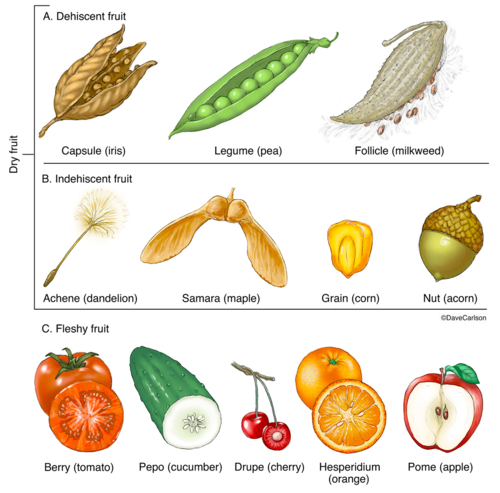 Indehiscent → dry fruits that rely on decay or predation to open
Dehiscent→ dry fruits that open at maturity
Modern angiosperm adaptations
High gas exchange, comes from smaller stomatal size and larger stomatal and leaf vein densities
Most common angiosperm family
Asteraceae (a core eudicot), 23000 spp, artichoke, sunflower, lettuce
Second biggest angiosperm family
Orchidaceae (monocot), 19500 spp
Third biggest angiosperm family
Fabaceae (legumes), 18000 spp, 2nd most economically important, contains peanuts, soybeans, lentils, peas, tamarind, alfalfa, beans
What is the most economically important angiosperm family? How much of earth’s vegetation, how much of calories, how much of farmland, important crops?
Poaceae (grasses), 10000 spp, 24% of earth’s vegetation, 50% of human calories; 70% of farmland; important crops include wheat, rice, corn, sugarcane
How is poaceae pollinated and what does its fruit look like?
It’s pollinated by wind, it has plumose stigmas and reduced perianth (don’t advertise to pollinators), it has large anthers. Has caryopsis, indehiscent dry fruit, is self-planting with awns.
What families use CAM metabolism
Crassulaceae (stonecrop), Cactaceae (cactus), Euphorbiaceae (spurge) → all three are core eudicots
Legume flowers
diadelphous stamens (grouped into two bundles). Have 10 fused stamens or 9 fused stamens and one free stem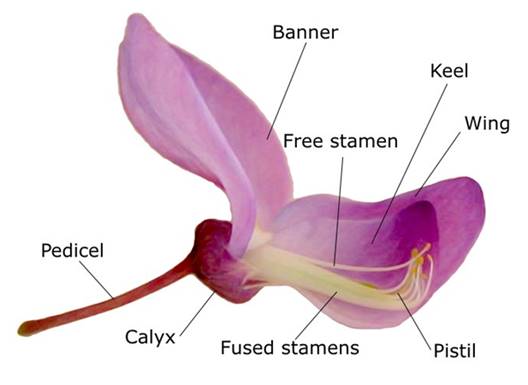 * know banner, keel and 2 wings*
Structure of a fleshy fruit
Pericarp = wall of ripened ovary, made up of exocarp, mesocarp, and endocarp. Has locules which are chambers inside the ovary containing ovules/seeds.
Magnoliids
Simple flowers: plicate fused carples, bisexual flowers, tepas are free and undifferentiated, has free carpels, has undifferentiated stamens
Simple fruits: Aggregate of follicles, aggregate of samaras
ANA angiosperms
have flowers, carpels, double fertilization and sieve tubes, undifferentiated. Include amborellales, nymphaeales (water lillies),