Unit 2, Lesson 14
 Call Kai
 Learn
 Practice Test
 Spaced Repetition
 Match
 Flashcards
 Knowt Play
1/13

Earn XP
Description and Tags
Chips
14 Terms
Definitions
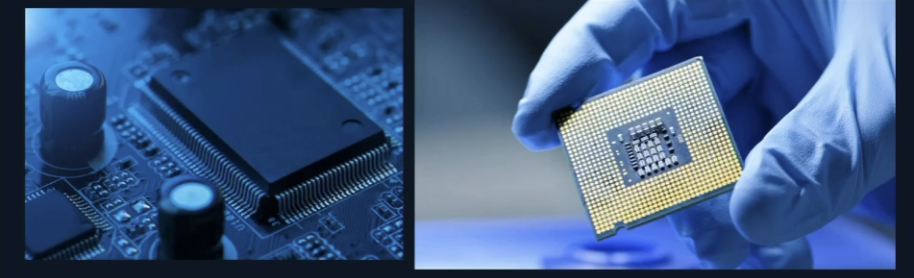
transistor: a tiny electric “switch” that turns on (creating a 1) or off (0), producing the 1s and 0s that undergird all digital computing
Chip (also “integrated circuit” or “semiconductor”): a small piece of semiconducting material, usually silicon, with millions or billions of microscopic transistors carved into it
a chip is a grid of millions or billions of transistors, tiny electrical switches that flip on and off to process these digits, to remember them and convert real world sensations like images/sounds and radio waves into millions 1s and 0s
CPU: central processing unit. a type of “general-purpose” chip that is the workhorse of computing in PCs, phones and data centers
GPU: graphic processing unit, a chip capable of parallel processing making it useful for graphics and AI applications
Transistors

Semiconductors
very complex printed parts and potentially millions of individual transistors
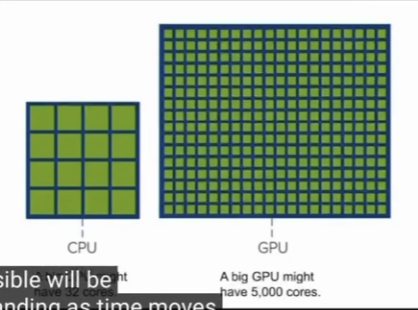
GPUs are really good for parallel processing
potential to accelerate ML tasks
computer processors are the hardware that allow computers to do mathematical operations. this either takes the form of CPUs or GPUs.
a core is a piece of hardware in a computer and receives instructions to process a thread.
a core can really only do one thing at a time but can switch between multiple tasks
difference between CPU and GPU
many more cores in GPUs, different types of cores, different architecture, etc
a GPU is slower, worse at handling more complex instructions, less able to access memory cache and supported by fewer libraries and frameworks. but one huge reason is there can be more cores in a GPU than CPU this means you can do more tasks in parallel even if the tasks are somewhat limited.
GPU Costs part 1
R&D for chips and fab module constriction costs are soaring
because so much of AI comes down to tiny calculations that come together, GPUs are very amenable as the primary hardware
GPUs are expensive to design and use
the actual construction of the chip is one of the hardest parts. how to cram so many things in such a small size?

GPU Costs part 2
“Nvidia’s next-generation graphics processor for artificial intelligence, called Blackwell chip, will cost between $30,000 and $40,000 per unit”
“We had to invest some new technology to make it possible” Jensen Huang said. He estimated that about $10 billion in R&D costs.
The price suggests the chip, likely to be in hot demand for training and deploying AI softwares, will be priced in a range similar to that of its predecessor (between 25k and 40k per chip).
Stock price of Nvidia
stock price has increased significantly in the past few years
Nvidia stock started out quite low and early 2023 real spike

Nvidia market power and valuation
Nvidia controls more than 80% of the market for semiconductor chips used for building AI systems
Nvidia investors have watched profits multiply, in a meteoric rise surging from 330 billion before OpenAI’s launch to 3.3 trillion last fall
everyone is building on top of Nvidia’s system and chips
AI Supply Chains