Death and Fossilization
 Call Kai
 Learn
Learn Practice Test
 Spaced Repetition
 Match
Match Flashcards
 Knowt Play
1/66

There's no tags or description
Looks like no tags are added yet.
Name | Mastery | Learn | Test | Matching | Spaced | Call with Kai | Chat |
|---|
No analytics yet
Send a link to your students to track their progress
67 Terms
Taphonomy
Study of how organisms decay and become fossilized. Includes how it breaks down, scavenged by others, becomes fossilized and erodes.
How is taphonomy helpful?
Informs paleontologists about what happened b/w time of death, time of burial and eventually dug up. May also provide information regarding cause of death and environment of the dinosaur.
Are dinosaur carcasses stuck where the dinosaur died?
No. Predators and scavengers may move the carcass when feeding from it.
Bloat-and-float
Shortly after death, the decay of the body may cause swelling due to putrid gasses, potentially causing the carcass to float and be moved by flowing water.
Are fossils found as complete skeletons or partial parts?
Complete dinosaur skeletons are rare, more often they are found as single bones.
Disarticulate
A skeleton that is separated into its various components
Reasons disarticulation may occur
Partial consumption by carnivores
Rotted carcasses broken in/by rivers or flood waters
Water may carry different parts of the skeleton to different locations dependent on weight and shape of the bone
Sunlight may disintegrate the bone
Partially buried skeletons will lose their exposed portions
Parts of the skeleton are trampled by animals
Mineral content of skeleton leached away by roots of plants etc.

Skeleton of Argali sheep undergoing modern taphonomic processes in the Gobi Desert. Skeleton is partially disarticulated and most flesh is stripped from the bone.
Why may we not find a complete articulated skeleton? Pick all that are correct: Skeleton is in a flowing river, carcass is scavenged, dinosaur dies in a forest, bones scattered by other animals

Once skeletons are buried are they left untouched?
Taphonomic factors can still modify buried skeletons. The weight of rock layers above it can flatten the bone. Susceptible to plastic deformation
Plastic deformation
Occurs after fossilization. Pressure causes the shape of a buried fossil to be permanently changed.
Dinosaur Provincial Park is a great place to look for dinosaur bones. Why? Pick the correct answers: The region was once covered by massive glaciers, The dry climate limits plant growth, The rock exposures date back 100,000 years, During the age of dinosaurs, the region was a forested mountain range.
Glaciers: land sculpting revealing fossil troves. Giant bulldozers scraping around top (younger) layers of sediment. revealing older sediment with dinosaur fossils. Melted glaciers further eroded the park
Sparse vegetation allows for rapid rate of modern erosion.
100,000 years is not close to old enough (needs to be ~70 million)
Mountains are not good environments to preserve fossils

4 Conditions/Requirements that are favourable for looking for dinosaur bones
Rock exposure. There are low chances of finding bones covered by soil or in cities
Rocks must represent the right age. Cretaceous period.
Right environment. Dinosaurs only lived on land
Helps if dinosaur bones have been found in the area previously
Cretaceous period
Longest period in the Mesozoic era in which dinosaurs dominated.
WOuld the Dinosaur provincial park be a good place for bones to be fossilized now?
No. It’s very dry thus sand and mud don’t build up over carcasses.
75 millions years ago there were big rivers running through carrying lots of sand and mud = can bury animals and have high chance of being fossilized.
Now - bones disperse over bad lands and get turned to dust. No burial = No chance of being fossilized
What is absolutely required for fossilization
Bones must be buried. Could occur through dying in own burrow, falling in sinkhole, buried by predator. Typically water washes sand or mud over the carcass.
What is the process of fossils
Death → burial → fossilization → erosion → excavation
What is the best environment for Fossilization
Wet environments and low elevation. Fossils are often found in ancient body of water deposists.
Why is low elevation preferable for fossilization?
Low elevation is where sand and mud are carried by water and are thus able to build up. Vs. high elevation where sand and mud are carried away by erosion, preventing it from building up permanently.
Are forests good places for fossilization?
Forests are bad places as the plant roots and microbes can decompose the skeleton before it has a chance to fossilize
Ancient climate and ecosystem: what would the terrain and climate have been like when dinosaurs were alive?
Wet, flat, rivers and wetlands
Flat - flat and swampy
Fluvial deposits
River and stream deposit
Lacustrine deposits
Animals that died and were preserved in lakes.
Lacustrine deposits preservation chances
Better chance at preserving soft tissue (hair, feathers) in fossil due to little water movements in lakes that would disrupt the skeleton. The sediments in the lake are fine-grained = easier to preserve impressions of feathers in mud.
Marine Environments and Fossils
No marine dinosaurs, but some fossils are found in ancient coastal environments ( and deep water - rare) if the dinosaur was washed out (storm or tsunami) and can be found in marine sediments.
Ancient desserts and fossils
Rarely found in sediments from ancient deserts (aeolian or wind-based deposits) as there were insufficient sediments being deposited to preserve the skeleton.
What are the possible ways that fossils COULD be found in ancient dessert environments
Environment during the Cretaceous era found in the rocks (modern day Mongolia) had a river (like the Okavango River in Africa) went through the desert that formed large deltaic plains that made a large oasis. Allowing burial by sediments deposited by the river.
Sand dunes collapse during heavy rainstorm (or some other method). Thus many dinosaurs from Mongolia are often preserved in a crouching position w/ neck reaching up for air.
What are the 3 types of rocks
Sedimentary Rocks
Igneous Rocks
Metamorphic rocks
Sedimentary rocks
Rocks that form when mineral and organic particles (breakdown of other rocks from water/wind) accumulate and are redeposited → compacted together, forming layers. All fossils are found in sedimentary rock (few exceptions).
Igneous rocks
Form from cooled magma or lava. Not good place for fossilization. Most primitive rock.
Fine grain vs. coarse grain Igneous rock
Magma cools (Solid → liquid )due to intense heat and pressure.
Quick cooling at surface crystalizes magma back into a solid (fine-grained texture).
If slowly cooled( in the earth), we get coarse-grained rocks like granites (have large crystals within the rock)
Metamorphic rock
Forms from sedimentary or igneous rocks that are changed by heat and pressure (:p metamorphic -> metamorphosis).
More pressure added = more able to deform different rocks and due to the heat the more that they will “mutate”, disfigure and fold themselves into something different
Sedimentology
Science of how sedimentary rocks form. Type of sedimentary rock depends on environment
Mudstone/shale
Sedimentary rocks that form from mud and silt. Fine-grained rock (soft and crushable) that forms in slow moving water; typical of lake or floodplain deposit (marshes or swamps).
Large deposits of mudstone/shale indicate former lake bottom environment

Sandstone
Sedimentary rock formed from sand. Has sand-sized grains (coarse-grained = more energy in water required to move sand); typically forms in fast moving water like rivers or alluvial fans, lakes, deserts, beaches or tidal flats.
Indicative of former beach, river channel or ocean floor environment. Most skeletons found in this type of sedimentary rock. When dinosaur ends up in bottom of river, it can be buried rapidly by sand.
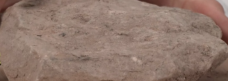
Coal
Combustible sedimentary rock formed from fossilized (buried, heated and pressurized) compressed remains of plants (typically from wetland forests) Indicative of former swampy environment.
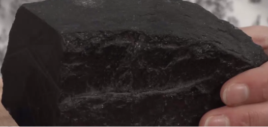
Limestone
Sedimentary rock formed from accumulation of shells and exoskeletons of small marine invertebrates. Indicative of shallow marine environment.
Preservation styles
Ways that an organism can be preserved as a fossil. 2 main methods: Permineralization and Replacement.
Permineralization
Fossilization process in which minerals carried by water into internal spaces (tissues or bone) of organisms and then solidify.
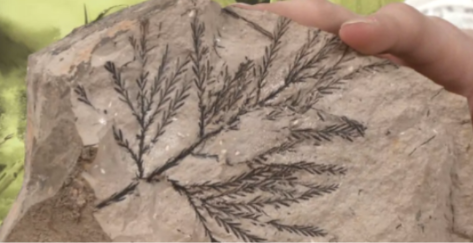
Replacement
Bone gradually decays and minerals fill space that bone once occupied. Cast or impression of original.

Undiscovered fossils
Most dinosaur fossils have either been destroyed (melted or metamorphosed deep in earth, or eroded away due to dust on surface) or are too deep for current excavation technology to reach/detect.
Why is burial essential for fossilization?
To prevent erosian
Erosain and finding fossils
Dinosaur fossils are typically found where there is a lot of recent erosion.
Vegetation and fossilization
Areas with lots of vegetation are bad places to look for fossils as they prevent erosion by holding together the topsoil.
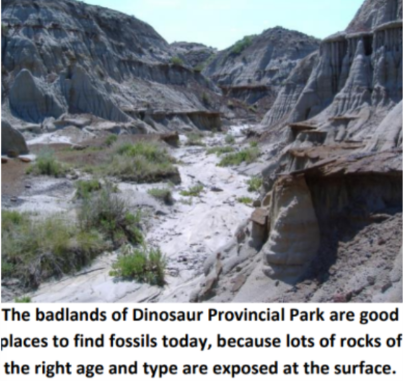
Badlands
Arid environment with little vegetation and high erosion rates. Location of large expanses of ancient sedimentary rocks are exposed. Best place to look for fossils.
Recording information - Specimen card
marking field number, identification, age of formation(e.g. Dinosaur park formation), location, GPS, (latitude, longitude, altitude)
How do paleontologists begin to look for dinosaur fossils
Geologic maps can be used to find locations where the exposures of sedimentary rocks are the right age to contain dinosaur fossils. Sites where dinosaurs were found previously are also good places to look
At a site how do paleontologists find dinosaur skeletons?
Ideal skeleton is freshly/barely exposed above ground. Ones that aren’t exposed aren’t detectable and ones that are completely exposed for a long time may be badly weathered

Overburden
Earthen debris that overlays a bone bed.
Bone bed
Accumulations of bones of many dinosaurs. Could be from river channel.
Steps of Excavation
Remove overburden. When further from specimen use large indelicate tools, when close use hand picks and brushes. Excavation of large dinosaur may take multiple field expeditions.
Map the bones using 1 square meter grid to help in reconstructing and giving taphonomic clues. Tracks orientation and distance relative to each other
Although fossils are mineralized they are still brittle thus to when removing the bones from the site they are first wrapped in a protective material (cloth, paper towel aluminum foil) then covered in strips of burlap or gypsona soaked in plaster forming a strong jacket. The plaster is labeled with a number the corresponds to it’s number on the map
In the lab excess rock are removed and broken bones are put back together. Special glues are applied to the fossil (process is longer than excavation)
Each specimen receives official record number in catalog of fossils and is stored in collections for people to study

Long bone orientation in a bone bed
If all the long limb bones have similar orientation it may suggest that they were carried by a strong river and the orientation of the river’s current coincides with the orientation of the bones
Airscribe
Tiny jack hammer used to remove rock when picks are unable to
Dannick site - Edmonton
Bone bed where all the bones belonged to the Edmontosaurs (giant duck-billed dinosaurs). Based on the bone bed, speculated that they likely died together at the same time and buried shortly after. Quiet water burial. Has lots of albertosaurus and edmontosaurs.
Teeth are the 2nd most common thing found in the bone bed. Make up ~5% of bones found here. Albertosaurus teeth found here don’t have roots indicating that the teeth were in the process of being shed. Often lost when eating
Evidence suggest that after Edmontosaurus died, the albertosaurus would scavange on them

15 as there are 15 left femurs (animals only have 1 left femur). Use unique element when trying to count number of specimens.
How are fragments useful
They can provide insight into what happened. E.g. bone fragment has a clean spiral fracture - something that happen when bone is still fresh (old dried bones don’t break that way.)
Tooth marks can also be traced back to other species. Often teeth penetrate bones and leave spiral fractures.
Dinosaur park
saw that there were bone sticking out and realized it was a dinosaur skeleton. Noticed it had already been dug up and skull was missing. Turned out that skull was already in their collection. Ended up being a Type Specimen
Type specimen
Specimen that bears the name for a new species
Teeth in the Dinosaur Provincial Park
as dinosaurs shed their teeth throughout their life (similar to sharks). Teeth have good chance of fossilization as the enamel makes them hard.
WHat do abrasion marks suggest on bones?
Amount of abrasion suggests how far the bone was transported through water. More worn down = further traveled in water
What do tooth marks (scratches no puncture) suggest on bone?
Indicate the carnivores fed on the carcass (doesn’t mean it was killed by the same carnivore).
Ankylosaur Reef
Bodies of some dinosaurs floated out to sea (even heavily armoured ones like the ankylosaurs) creating temporary reefs. Bodies would settle to the bottom and scavengers glommed onto (latch on) the dinosaurs to form short-lived communities
Ankylosaur discovered in the oilsands in Alberta
Shells of marine bivalves and shark teeth were found embedded on an ankylosaur specimen’s bones.
Ankylosaur of Nodosaurid
Found an ankylosaur that appeared to be a nodosaurid
Nodosaurid: group of ankylosaurs that have the large shoulder spikes but lack a tail club
However, the armour showed it was an ankylosaurid (armored dinosaur subgroup that had boney tail clubs) although the club wasn’t found but the rest of the anatomy suggested it was an ankylosaurid. Thus new name → Aletopelta coombsi meaning wandering shield.
Believed to have died along the coast and was washed out to sea. Settled belly up = food source for many organisms. Various encrusting invertebrates settled on the skeleton.
Gabi dessert - dinosaur grave
Area is important time period - when dinos started to radiate and become big.
Special raptor - guan long (crested dragon). Multiple are found stacked atop each other. Several graves discovered where fossils are found in these “columns of death” - suggesting prehistoric catastrophe
Skeleton shows signs of struggle - broken bones and contorted poses = fight for life. Theory: animals struggled in the mud - something was churning the mud up. Found that volcanic ash was present. Volcanos exploded nearby.
Guan long stomping grouds were marshlands where falling ash would fall into the wetlands = dino death traps
Ash has lots of glass particles - settle into wetlands = wet, soupy, viscous mud.
1 animal gets trapped, making the environment active predator traps.
MOnumental Murder Muster - Douglass
Discovered vast Jurassic boneyard now known as the DInosaur National Monument. Quarry wall with lots of different isolated bones.
Bones that peak out from the quarry were deposited by a Jurassic river system. Evident by the composition of sandstone, freshwater mollusks etc. Parts were tumbled together by water.
Primarily thought to be a drought that killed all these dinosaurs
Dinosaur National Monument Site Historical Environment
Based on geological and geochemical evidence - believed that the site was a seasonal floodplain affected by distinct wet and dry seasons.
Herbivores suffered in times when watercourses shrunk back and plats would dry up
Carnivores may have died due to scarcity of water or disease (e.g. allosaurus)
Water would wash all their bodies into lakes and rivers, eventually having their bodies buried beneath sediment. Cycle continued through wet and dry seasons. Thus resulting in the quarry found in modern times
In some cases dinosaurs helped create the quarry. Large carcasses could divert water flow altering the way the bodies would be scattered.
When large dinosaurs fall apart the skulls and lower limbs leave first. Vertebrae and heavier limbs stick together by ligament connections or sheer weight.
Wildebeest Crossing
Friend dreamt of 2000 wildebeests drowning and narrator check the river. The friend later got a call that 1000 had died in a crossing that morning. Immediately went down to the river. Counted ~1500 carcasses within a certain stretch. Over 2000 likely died in the crossing the day before. Today (September 26 2013) another ~2000 wildebeest died at the same crossing.
Abnormal death rate attributed to higher than average flows of water and wildebeest choosing a bad crossing point. After drowning, bodies float until they get hung up on rocky outcroppings
Drownings are natural part of the system
Next day
More wildebeests died making it ~5200 wildebeests dead within 3 days. Flood through the Mara pushing carcasses further downstream.
3 crossings
In the morning ~1500 wildebeests tried to cross and all drowned. Better location but water was too high and fast (water was at it’s highest point)
Afternoon had several hundred try to cross in another location, only 4 drowned
Early evening at the same spot all wildebeests survived