lab pro protozoa and rickettsia
 Call Kai
 Learn
 Practice Test
 Spaced Repetition
 Match
 Flashcards
 Knowt Play
1/59

There's no tags or description
Looks like no tags are added yet.
60 Terms
what 3 phylums can protozoa be found
sarcomastigophora, apicomplexa, and ciliophora
what does protozoa usually infect
blood (hemoprotozoa) and fecal matter (intestinal protozoa)
who are usually the intermediate hosts of protozoa and how do they transmit
ticks, transmit RBCs containing hemoprotozoa from one animal to the next
true or false? protozoa life cycle can be simple and complex
true
true or false? protozoa have neither sexual or asexual reproduction
false, they may have sexual or asexual reproduction
describe flagella
long, whiplike, helps entire cell move (long, helps entire thing move)
describe cilia
short flagella, move mucus and trapped dust out of the airways (small, move small things)
what is pseudopodia
temporary, foot-like extensions of a cell that help it move and capture food (pseudo=fake=temporary, pod=foot, fake food that extends and helps grab things)
what are undulatory ridges
small snakelike waves that form in the cell and move posteriorly (und=under water, help parasite swim)
what do locomotor organelles do
help us identify the type of protozoa (different protozoa have certain movements so these organelles help us see the movement and identify what protozoa is prevent)(motor=moving)
what is a trophozoite
the motile feeding stage of the protozoal parasite (troph=nourishment= getting bigger)
what are some facts about the trophozite phase
it is too fragile to survive transfer to a new host and is usually not infective
since the trophozoite stage is too fragile to transfer to a new host when can it transfer and why
it can transfer when its in the cyst stage because the cyst have a protective barrier that helps them survive outside of the host
what happens when a trophozoite is in cyst stage
metabolic functions are suspended and the cyst wall prevents desiccation (drying)
what conditions can the cyst stage of trophozoites survive
lack of nutrients, oxygen, water, low pH, accumulation of waste, and overcrowding
what are the 2 main groups in phylum sarczmastigophora
amoebas and flagelllates
how do amoebas move
using pseudopods (false feet)
when do flagellates possess flagella
during the trophozoite stage (trophozoite=active, flagella move and are also active)
what are the most important sarcomastigophora
trypanosoma, lesihmania, guardia, trichomonas, histomonas (all are flagellas) and entamoeba (amoeba)
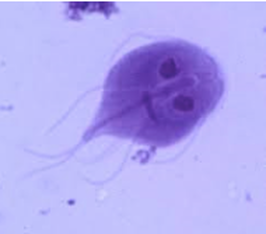
what is this called
giardia
what type of parasite is Giardia
a flagellated protozoan (think of the flagella you see hanging from it)
where is Giardia found
in feces of dogs and cats or in diarrhea
true or false? Giardia is zoonotic
true
what are the 2 morphologic forms of Giardia
trophozoite and cyst
describe Giardia during the trophozoite stage
pear shaped, dorsoventrally flattened (flat on both sides), four pairs of flagella, two nuclei that look like eyes (think of little smily face swimming, if it is moving it in trophozoite stage)
what does Giardia look like during the cyst stage
oval shaped
what are the clinical signs of Giardia
dogs may have diarrhea as early as 5 days after exposure, cysts can appear in feces at 1 week
how can you diagnose Giardia
with a standard fecal floatation (zinc sulfate is the best solution for recovering cysts in fecal floats)(cysts may have semilunar appearance),trophozoites can be found on direct smears of feces with saline, fecal immunodiagnostic tests are also used (SNAP tests)
how can you treat Giardia
treatment typically done on outpt basis unless the dog has become sick and weak, prescription drugs along with bathing, repeated fecal exams to make sure infection has been removed, fenbandozolo (panacur), metronidazole (flagyl)
how can you prevent Giardia
observe for signs of dehydration especially in younger animals, give prescribed medicine for successful recovery, try to keep pet away from other pet kennels because alot of infection spread comes from contaminated kennels, keep animals from drinking still water
what are trypanosomes
hemoprotozoans in southern US (hem=blood), extracellular (not in blood cells)
what is trypanosome cruzi
a hemoprotozoan that infects humans and dogs (cruz=crusar for la Sanger de humanos y animales)
what does trypanosome cruzi cause
chagas disease
what is typomastigote stage
the swimming stage
what is the amastigote stage
cyst stage
what are leishmania sp
hemoprotozoans that can infect several mammal species including humans
how is leishmania sp transmitted
by flies of the genus phlebotomies and lutzomyia (sand flies)
what are the two main forms of leishmania
mucocutaneous form and visceral form
describe the mucocutaneous form of leishmania
affects the skin and mucous membranes, characterized by skin sores, caused by leishmania brazilense (in Brazil they show alot of SKIN)
describe the visceral form of leishmania
affects internal organs, can affect the spleen, liver, and bone marrow, caused by leishmania donovania and leishmania infantum
what is the lifecycle of leishmania
infected sand fly bites host and injects promastigotes (flagellated form), macrophages engulf promastigotes, promastigotes turn into amastigotes (non flagellated form), amastigotes multiple inside macrophages, host cell ruptures releasing amastigotes, other macrophages engulf the released amastigotes, sand fly takes a blood meal and picks up amastigotes, inside the sand fly amastigotes turn back into promastigotes to complete the life cycle
how can you diagnose and treat leishmania
can be diagnosed with fluorescent antibody testing or molecular diagnostics, treatment with antibiotics like amphotericin B
what are entamoeba
protozoan parasite that live in the intestines of humans and animals (ent=entestines)
what is entamoeba histolytic
parasite of humans in tropical regions (ent=entestines, h=hot=hot places)
where can trophozoites and cysts of entamoeba be found
on fecal smears an fecal floatations of animals
true or false? entamoeba may produce acute or chronic diarrhea in dogs
true