SA approach to cancer case
 Call Kai
 Learn
 Practice Test
 Spaced Repetition
 Match
 Flashcards
 Knowt Play
1/64

There's no tags or description
Looks like no tags are added yet.
65 Terms
Define cancer
uncontrolled proliferation of abnormal cells
impaired cellular differentiation
Why do patients die of cancer
delayed dx
lack of tx
primary disease
metastatic spread
ineffective tx
owners decision to no tx
List principles of oncology
cancer won't self self
specific dx is important for tx
Understanding and management of owner's expectations
early tx =best chance for cure
good tx plan
mal-management = poorer prognosis
List AVMAs signs of cancer
abnormal swelling that persists or continually grows
sores that don't heal
unexplained weight loss
loss of appetite
bleeding or discharge from any body opening
bad odour, esp. from mouth
dysphagia
reluctance to exercise or loss of stamina
dyspnoea
difficulty urinating or defaecating
behavioural changes
List tests for biopsy sampling
cytology
Histology
grading
List advanced/ molecular diagnostics for cancer
immunochemistry
cytochemistry and histochemistry
PCR
Flow cytometry
PCR
Antigen receptor rearrangement
KIT mutation
electrophoresis
List basic diagnostics for cancer
hx
physical exam
biopsy
cytology/ histology
imaging
Outline important hx for a suspected cancer case
general
diet, meds. travel
tumour (/s)
duration
size- growth
appearance
location- invasiveness/ attachments
other clinical signs
Outline important clinical exam for a suspected cancer case
whole body palpation
assess for other lumps
LNs
for signs of pain
CVS and resp assessment
mentation and neuro assessment
BCS + musculature
Outline uses of blood tests in cancer patients
haematology
needed prior to chemo
concurrent disease
paraneoplastic syndromes
infectious diseases
What are the preliminary diagnostics done on a suspicious lump?
fine needle aspirates
cytology
What sampling is needed for cytology
fine needle aspirate
What sampling is needed for histopathology
tissue biopsy
Outline the pros and cons of cytology
relatively non-invasive
only physical restraint needed
rapid and cheaper
no architectural detail
small sample of cells
limited assessment of tumour type and grade
Outline the pros and cons of histology
invasive
GA or sedation
time consuming sampling and results
expensive
architecture apparent with larger sample size
more accurate tumour type and grade
What are the uses of cytology?
initial dx
guiding diagnostics
guiding tx planning
What are the uses of histopath?
definitive dx
guiding adjuvant tx
When may FNA and biopsy be needed?
tumours needed high morbidity surgery
cytology doesn't align with clinical picture
When to use the needle off approach for a fine needle aspirate
(fine needle biopsy)
LNs
suspected round cell tumours
When to use the needle on approach for a fine needle aspirate
(fine needle aspirate biopsy)
Suspected solid tumours
List complications for fine needle aspirates
bleeding
risk of fluid leakage after sampling hollow organs
risk of tumour transplantation deeper into tissue
do not go through lesions
Outline the different cytology techniques
smear
expel FNA contents and smear using clean slides
Impression smear
blot cut surface of sample to remove debris and blood
dab surface against clean slide
Outline problems with FNAs
1 in 5 have no diagnostic value
None representative samples
take several samples to reduce issues
List types of tissue biopsy techniques
needle core biopsy
incisional biopsy
surface and pinch biopsies
punch biopsy
excisional biopsy
List the risks of biopsy
haemorrhage
internal organs>>
transplantation of tumour cells
compromises future surgeries
damage to adjacent structures
Outline the types of needles used in a needle core biopsy
trucut needle
2 handed
cook's/ Arnolds biopsy needles
semi automated
both can be cold sterilised
What is this
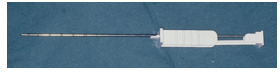
Tru cut needle for a needle biopsy
What is this
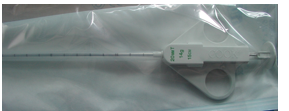
Cook's/ Arnolds biopsy needle for a needle core biopsy
List advantages of needle core biopsies
larger sample than a FNA
some evaluation of architecture
inaccessible tissues are accessed percutaneously
only sedation and local anaesthesia for superficial lesion
List the disadvantages of needle core biopsies
smallest sample size compared to other biopsies
increased complication risk compared to FNA
not good for LNs
Summarise the technique for a needle core biopsy
restraint, asepsis, immobilise mass
can be US guided by person with reasonable skill
stab incision and introduce needle
advance central obturator
rotate 90 degrees
advance outer cannula
remove from mass
retract outer cannula
biopsy in notch
flush with saline or gently use needle to remove
Outline a bone core biopsy
jamshidi needle
risk of pathological fracture if bone damaged
don't penetrate far cortex
multiple samples needed
What is this
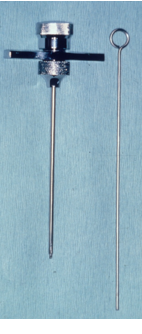
Jamshidi needle used in bone core biopsies
Define an incisional biopsy
Surgical removal of a segment of solid tissue
inverted wedge technique most common
easy closure
List the advantages of incisional biopsies
good evaluation of architecture
histopathological grading
surgical approach allows selection of biopsy site
controls risks to neighbouring structures
more tissue to carry out stains
List the disadvantages of incisional biopsies
GA needed
increased time
higher cost
slower answer vs cytology
Outline the rules of an incisional biopsy
plan you site
avoid major structures
avoid necrotic, haemorrhagic or infected areas
Position biopsy so whole biopsy tract can be removed in subsequent surgery
Incision to be large enough for sample but without excessive tissue manipulation
Do not include normal tissue
ensure adequate fixation
Outline surface pinch and grab biopsies
How do you determine depth of surface pinch and grab biopsies for nasal tumours
radiographs
do not insert further than medial canthus
Outline endoscopic surface pinch and grab biopsies
superficial biopsies: mucosal
very small biopsies
take multiple
full thickness biopsies for GI tract
Outline uses of punch biopsies
cutaneous and other superficial lesions
not LNs
Sedation +/- local
rotate punch in same direction to prevent shearing of layers
What is an excisional biopsy
surgical removal of a lesion followed by
removal of biopsies from it for histopathological evaluation
or whole sample submitted
Outline uses of excisional biopsy
haemorrhaging splenic masses
mammary tumours
pulmonary tumours
Outline contraindications for excisional biopsies
rapidly growing mass
ill-defined or poorly demarcated lesion
peritumoural oedema
skin ulceration
mass fixed to underlying tissue
When is monitoring appropriate
Active monitoring
for benign lesions or after surgery with low chance of recurrence
may need nurse checks if owner not confident
What factors of a tumour affect treatment decision making
tumour type
grade
stage
signalment
co-morbidities
Summarise the TNM staging system
For solid Malignant tumours
T- TUMOUR
primary tumour
N- NODES
metastatic disease in local and regional LNs
M- METASTASES
Distant metastatic disease
Outline the limitations of the TNM system
animals do not always resent with primary disease
paraneoplastic syndromes
Outline the T stage of the TNM classification system
clinical exam
location and palpation
demarcation, fixation, ulceration
imaging
plain/ contrast radiograph
US
Direct visualisation
-scopy / ex lap
Take biopsies at same time
Advanced imaging
CT, MRI
good for Surgical planning
Can there still be bone involvement if not seen on radiograph
Yes
lysis is not seen until 60% loss in bone mineralisation
Traditionally how would you classify tumour metastasis
By their metastatic patterns
Haematogenous
Lymphatic
Outline haematogenous tumour metastasis
dissemination via the circulatory system
sarcomas
malignant melanoma
Outline lymphatic tumour metastasis
dissemination via the lymphatic system
local and regional lymph node spread
mast cell tumours
carcinomas
malignant melanomas
Outline the route of metastases through the lymphatics
spread by lymphatic route to the nearest node towards the centre of the body i.e. towards the thoracic duct
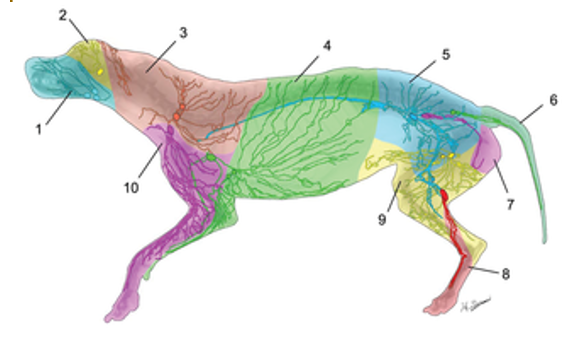
What role do lymph nodes have in preventing metastases
healthy LNs act as barrier
Outline the regional staging during the N stage of the TNM system
palpation
size, texture, fixation
imaging
radiographs
US
Lymphangiography
cytology/histology
FNA
Biopsy
What LNs can be detected in thoracic radiography
moderate to marked enlargement of nodes
lateral
suprasternal
cranial mediastinal
tracheobronchial
DV
increases sensitivity
What LNs can be detected in abdominal radiography
medial iliac (sublumbar)
unlikely to detect enlargement of mesenteric nodes unless massively enlarged
What LNs can be detected in abdominal US
subtle enlargements
iliac (sublumbar)
mesenteric
Outline lymphangiography
Contrast is injected into a tumour and a CT is taken to see which LNs it drains into to
detects sentinel LNs
Doesn't detect metastases only draining nodes
What cancer in considered disseminated by fault
Lymphoma
What are common sites for metastases
lung
parenchymatous organs
liver, spleen, kidney
bone
skin
CNS
distant nodes
What are the best modes for identifying metastasis
inflated x-rays x 3 views
+/- US
preferred for parenchymal organs
good interpreter
What should you provide when giving a prognosis
Range rather than median
compare cases to literature
List some highly metastatic