AP Bio Midterms Flashcards
 Call Kai
 Learn
 Practice Test
 Spaced Repetition
 Match
 Flashcards
 Knowt Play
1/98

Earn XP
Description and Tags
wowie
99 Terms
hypothesis
always includes
prediction of the outcome
independent and dependent variables
independent variable
you physically change this variable in an experiment
dependent variable
the variable in an experiment that changes based on the other variable
null hypothesis
says the variables are unrelated and do not impact each other (H0)
alternate hypothesis
a regular hypothesis (Ha)
mean
main average
add all numbers together then divide by the number of variables
median
the value in the middle
mode
value that is the most common
histogram
x axis has numerical data but grouped together
normally screwed histogram (bell curve, unimodal)
symmetric
mean, median and mode are all the same

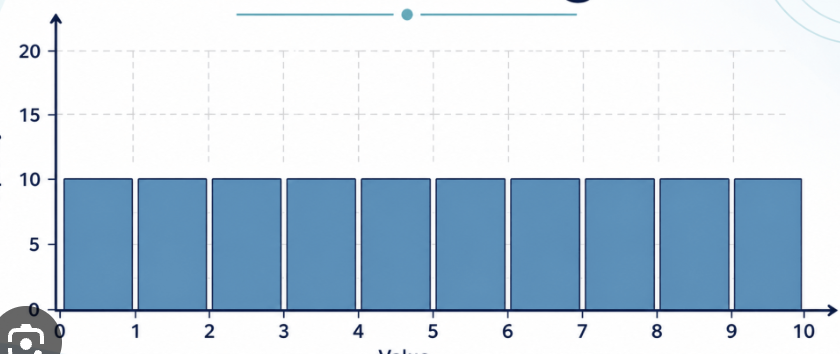
uniform histogram
all outcomes equally likely, symmetric
bimodal
symmetric, 2 modes

positively skewed histogram (right skewed)
mode < median < mean
tail is to the right

negatively skewed histogram (left skewed)
mean < median < mode
tail to the left

standard deviation
measures the spread that data differs from the mean
± 1 SD = 68% of the data
± 2 SD = 95% of the data
± 3 SD = 99.7 % of the data
the larger, the more spread the data, and vice versa
standard deviation formula

standard error of the mean (SEM)
shown through error bars
shows how well the calculator represents the whole population
SEM formula
SD / root n
subatomic particles
protons, electrons, neutrons
protons (p+)
positively charged
mass of the atom (with neutrons)
found in the nucleus
charge +1
electrons (e-)
negatively charged
volume of the atom
found in the electron cloud
charge -1
neutrons (n0)
no / neutral charge
mass of the atom (with protons)
found in the nucleus
charge = 0
octet rule
atom is most stable when this is fulfilled
8 electrons in the outer ring
except when the ring is the first ring, then its 2
covalent bonds
2 atoms share an electron
generally stronger than ionic / hydrogen bonds
ionic bonds
stronger atom (anion) takes an electron from the weaker atom (cation)
weak when wet, strong when dry
cation
the atom that gets an electron taken from it in an ionic bond
positively charged (CAT=paws)
anion
the atom that takes an electron from the other atom in an ionic bond
negatively charged