lifes complexity
 Call Kai
 Learn
Learn Practice Test
 Spaced Repetition
 Match
Match Flashcards
 Knowt Play
1/363

There's no tags or description
Looks like no tags are added yet.
Name | Mastery | Learn | Test | Matching | Spaced | Call with Kai | Chat |
|---|
No analytics yet
Send a link to your students to track their progress
364 Terms
Biodiversity =, and what is involved/measures of biodiversity
diversity of life "The diversity of important ecological entities that span multiple spatial scales, from genes to populations to species to communities"
genetic diversity, species diversity and ecosystem diversity
Genetic diversity includes
Nucleotide diversity - he average number of nucleotide differences per site between two randomly chosen DNA sequences., Allelic diversity - amount of variation in alleles, Heterozygosity - relates to the two copies of the alleles that you get and whether they are the same or different. NAH
Species diversity involves
Species richness (species count) vs Species evenness
Shannon index
Accounts for species evenness and species abundance/richness
Larger H value indicates greater diversity

Factors that increase biodiversity
Immigration (move out of pop bring new alleles), Speciation
warm Temperature and good water availability > plants have ^ productivity and energy - latitude, more diversity closer to equator
Factors that decrease biodiversity
Local extinction, Emigration (move out, remove alleles)
Speciation -
when 2 populations diverge to become separate enough to become different specie
Classification of living things is.. and what is classifying
Grouping of organisms based on similarity & evolutionary relationships, human trait to make sense of diversity
convergent evolution on traits
Convergent evolution is when unrelated species independently evolve similar traits because they live in similar environments or face similar challenges. - this can lead some traits to be misleading. DNA sequencing/molecular data improves understanding
But can also provide conflicting information
traits that may be used to classify organisms
Morphology - e.g. similarities in skeleton structure
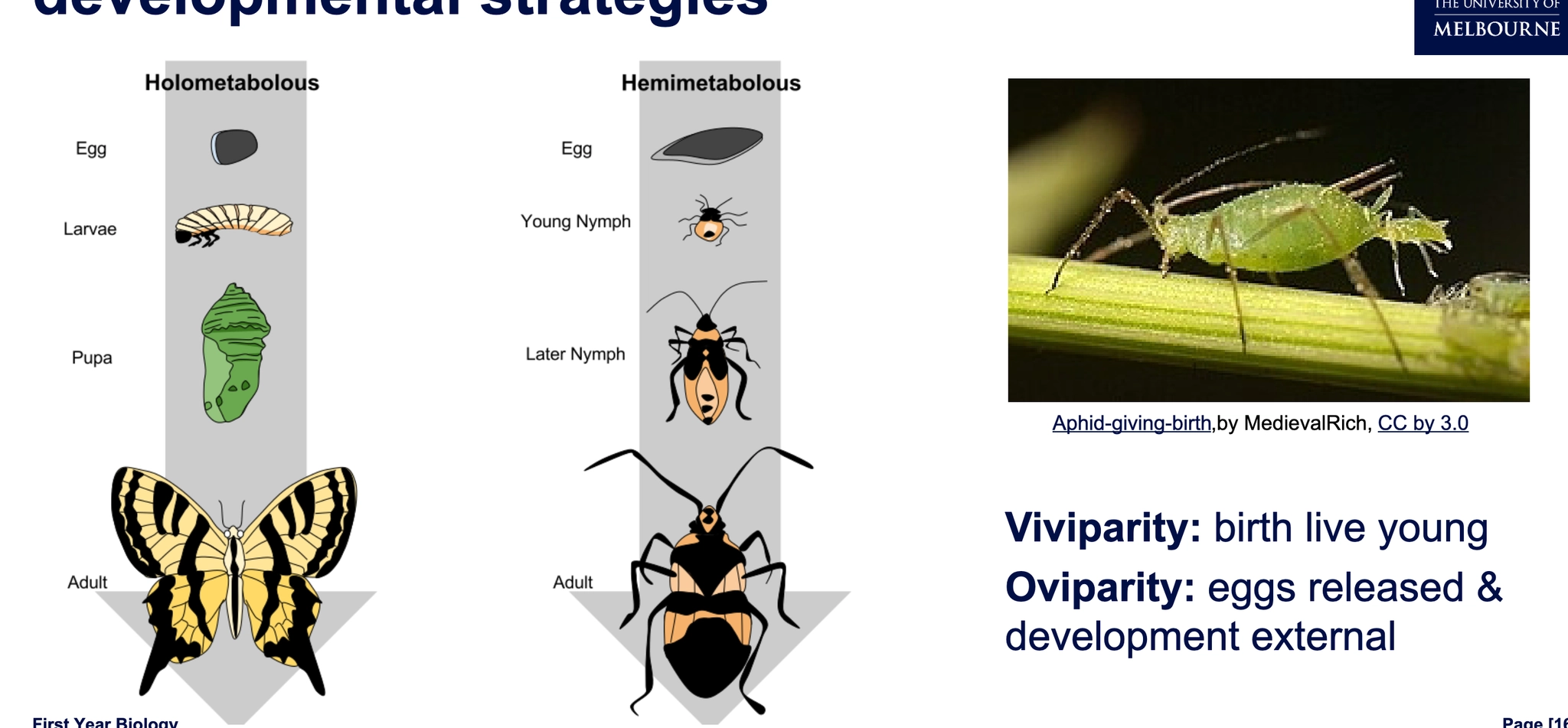
Development - e.g. whether insects come from egg to larvae or have live births
Paleontology - e.g. fossil records to determine evolutionary relationships
Phenotypic variation
Behaviour
Monophyly, Polyphyly & Paraphyly
Paraphyletic group includes common ancestor but not all its descendants
Monophyletic group includes common ancestor and all its descendants. i.e. a clade
Polyphyletic group does not include common ancestor

Taxon should be
monophyletic, Modern taxonomists favour cladistic groupings
domains
Bacteria
Prokaryotes
Unicellular organisms
Metabolically diverse
Archaea
Prokaryote - as no membrane bound organelles (but molecularly distinct from bacteria)
Evolutionarily closer to eukaryotes
Found in soil, aquatic env. -> extreme env.
Eukarya
Membrane-bound nucleus & organelles
Unicellular & multicellular
Cells divide by mitosis and meiosis
Nomenclature importance, and how to use it for a species
Allows scientists to refer to organisms by the same name
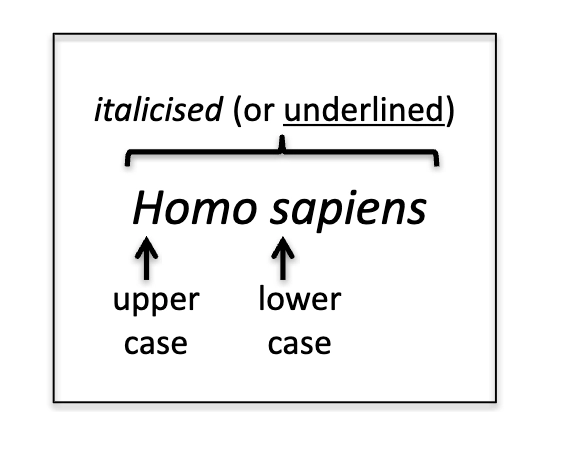
use the genus and the species, italicised both and you have an uppercase on the genus name and a lowercase on the species name.
domain, kingdom, phylum, class, order, family, genus, species, (danny killed peter cuz ollie forgot gretas song)
eukaryote types
Protists
Plants
Multicellular
Autotrophic (i.e. photosynthesis)
Animals
Multicellular
Heterotrophic
Internal digestion
Usually motile
Fungi
Fungi features
Usually multicellular
Heterotrophic
External digestion - so they actually digest where they are and they digest outward. e
Non-motile
Protists features
Mostly unicellular eukaryotes
Some "animal-like" (must ingest other things to get nutrition), some "plant-like” (autotrophic)
Why are insects so successful?
High reproductive rates
High genetic diversity (as they reproduce so fast) > adaptability for a range environments
Exoskeleton > body armour - protect from extreme cold
Small size > large populations in small areas - can have multiple populations of different insect species in one place
Resource diversification -diverse ways of gaining their nutrients and energy
Wide variety nutrient acquisition mechanisms
Metamorphosis > use of different resources at different life stages
Evolved soon after the first land plants
Evolution of wings
Insects: the most diverse animal group, list features of diversity
Diversity of:
Colours, Shapes and Size
Body plans and limbs
Environments
Life cycle
Reproductive and developmental strategies
Source of nutrients and ecological niches
Insect diversity: colour
colour can be for warning, thermoregulation. e.g. butterflies have reflecting sections like the yellow parts of the wings, and they can position their wings a certain way to reflect the light from their body.

Insect diversity: Body plan
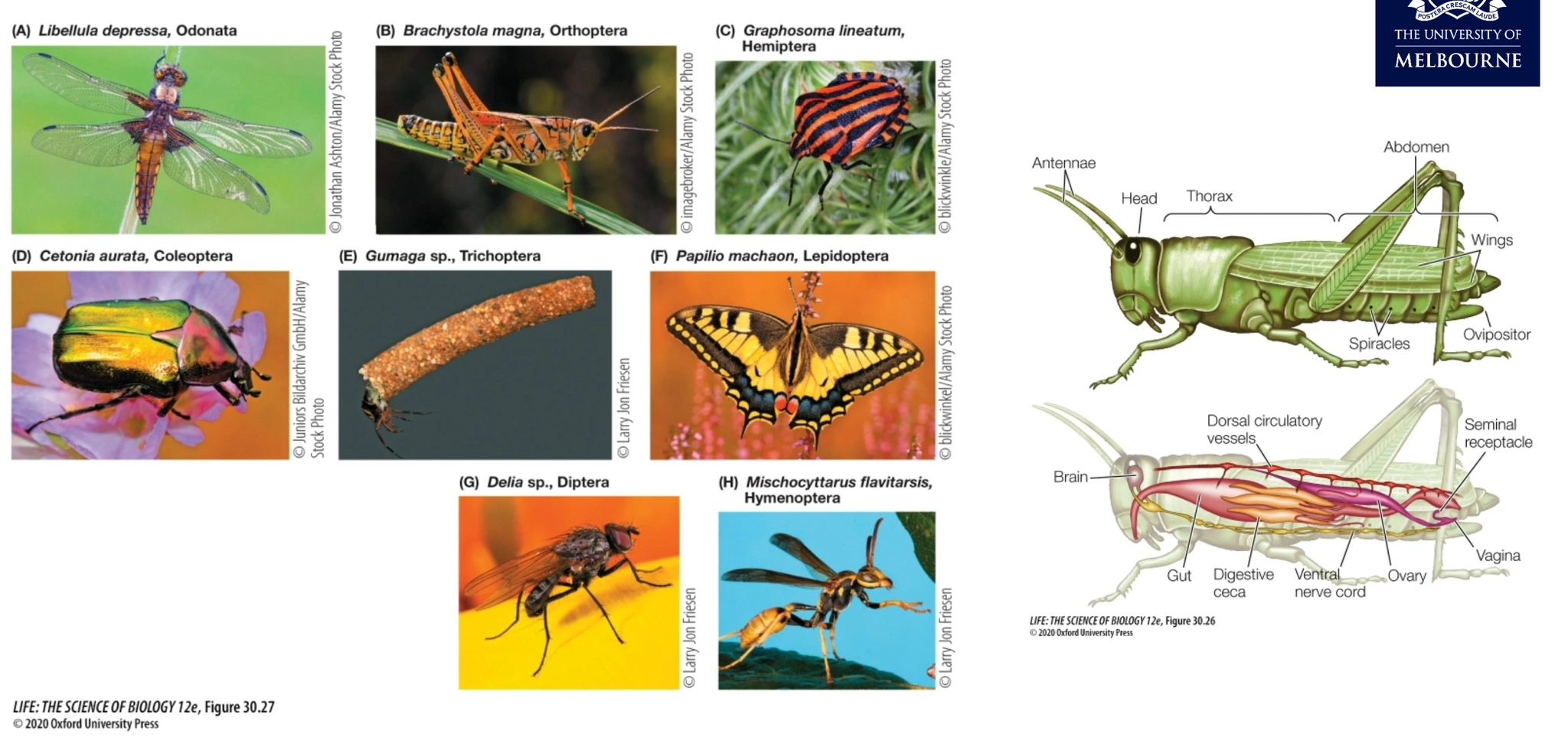
the generic insect body plan is a head, a thorax, and an abdomen with 3 pairs of limbs coming off the thorax, so that's 6 limbs in total. None coming off the abdomen, which is one of the things that differentiate them from other arthropods.
various versions of sensory antennae.spiracles for respiration
general body plan somehow has been adapted to create all these different types of insects, and you can see wings are used for different purposes on each of them e.g. everyday, migration, or hardly ever used
general body plan gives rise to so much variation.
Insect diversity: Aquatic species
Water striders - walk on the surface using hydrophobic legs and exploit surface tension
Great diving beetles - Adapted legs for swimming “Scuba tank” – air stores
Insect diversity: Reproductive and developmental strategies
Viviparity: birth live young
Oviparity: eggs released & development external
Insect diversity: dietary niches
collaborative feeding
poo, blood
external mouths - caterpillar, butterfly (prosibus suck pollen)
Biomass is
renewable organic material from plants and animals that is used to make energy, wood and crop waste
plants and animals biomass significance
plants provide by far the most biomass on Earth and insects provide a lot

insects biomass significance
insects because they are one of the most known and very large numbers in very small areas are some of the highest. → important in biomass and food webs

Importance of small organisms
Decomposition & Nutrient recycling (insect, protist, fungi, prokaryo)
Soil health and plant nutrition (bacteria, fungi, decomposers)
Pollinators and pests - insects
Human health (+/- impacts) - bacteria/microbiome
Decomposition & Nutrient recycling: Prokaryotes
Many prokaryotes are decomposers
Release tremendous amount of C as CO2 (carbon cycle)
Denitrifiers (nitrogen cycle): Convert nitrate ions to nitrogen gas
Nitrogen fixers: atmosphere nitrogen gas into ammonia
Required to build proteins, nucleic acid etc
Only carried out be archaea and bacteria
Cyanobacteria: split H2O, generating O2 as a waste resource
Oxygenation of earth’s atmosphere 2.5 bya
Deep sea hydrothermal vents: prokaryotes (sulfur cycle)
Nutrient recycling: Insect + Protist
Many insect decomposers
Termites + symbiotic protists
Quickly break down plant material > soil
Symbiotic relationship = use of abundant but poor quality food source
Termites + gut protists → cellulose breakdown → access to abundant plant material → nutrient release/recycling in the ecosystem.

Fungi networks significance nutrients
Earth’s garbage disposal
Key role in recycling nutrients
Without fungi earth’s carbon cycle would fail
Soil health and plant nutrition
Nitrogen-fixing bacteria e.g. with legumes - help fix the nitrogen in a form that the legumes can use.
Mycorrhizal fungi provide plants with phosphorus + other nutrients
Decomposer roles release nutrients into soil
Insects as pollinators
Ecosystem services
66-75% of wild species use insects as pollinators.
Agricultural production
70% of the main crops (124) used directly for human consumption in the world* require insect pollinators
Insects as pests
Less than 0.5% of known species are pests
Damage 18% of world agricultural production
Management of insects is problematic
Insecticide use
Kill many valuable insects including pollinators and those same crop crops are relying on pollinators.
Human health + impacts
Symbiotic relationship with normal flora or microbiome
Aiding digestion
Synthesising essential vitamins
Protecting against pathogenic infections
Gut-brain axis - microbiome important for mental health via gba connection
Bacteria in your intestinal tract > all the humans who have ever lived
Human health - impacts
) Pathogenic (disease-causing)
Relatively few species compared to the overall diversity
Small organisms including insects are very diverse and very important as
Provide many important ecosystem services
We are reliant on small organisms - imp for our health too
Describe the essential nutritional requirements of organisms
Energy and growth requirements
Macronutrients (C, H, O, N, P, S)
Amino acids (proteins) - muscle, eggs, hormones
Lipids - cell membrane, echolocation (concentration of lipids in the front of the skull used)
Carbohydrates
Micronutrients
Minerals - inorganic elements
Vitamins (animals and some bacteria and fungi)- not required for energy function but imp for body function.
Water
Essential nutrients

Vitamins
Only obtained from food
Species-specific requirements
Needed in trace amounts for normal functioning
Fat-soluble: A, D, E, K - we can store them for a lil in fat deposits
Water-soluble: B group (e.g. niacin, folic acid), C - eat regularly! dissolve in water excess excreted in urine.
autotrophs vs heterotrophs
autotrophs are capable of producing the majority of the nutrients required from abiotic sources (plants, algae, photosynthetic bacteria)
Heterotrophs are organisms that obtain the majority of their nutrients from other organisms - consumers or decomposers, can feed on autotrophs or heterotrophs,
Discuss and compare some key adaptations related to autotrophic nutrient acquisition (feeding)
Photosynthesis
Chemosynthesis
take inorganic elements like sulfur and undergo cellular respiration
roots (long and thin) and leaves have - high sa:v, ability to capture sun e.g. seedlings move and folow sunlight which passes above them. both auto and hetero have high sa:v to maximise nutrient acquisition
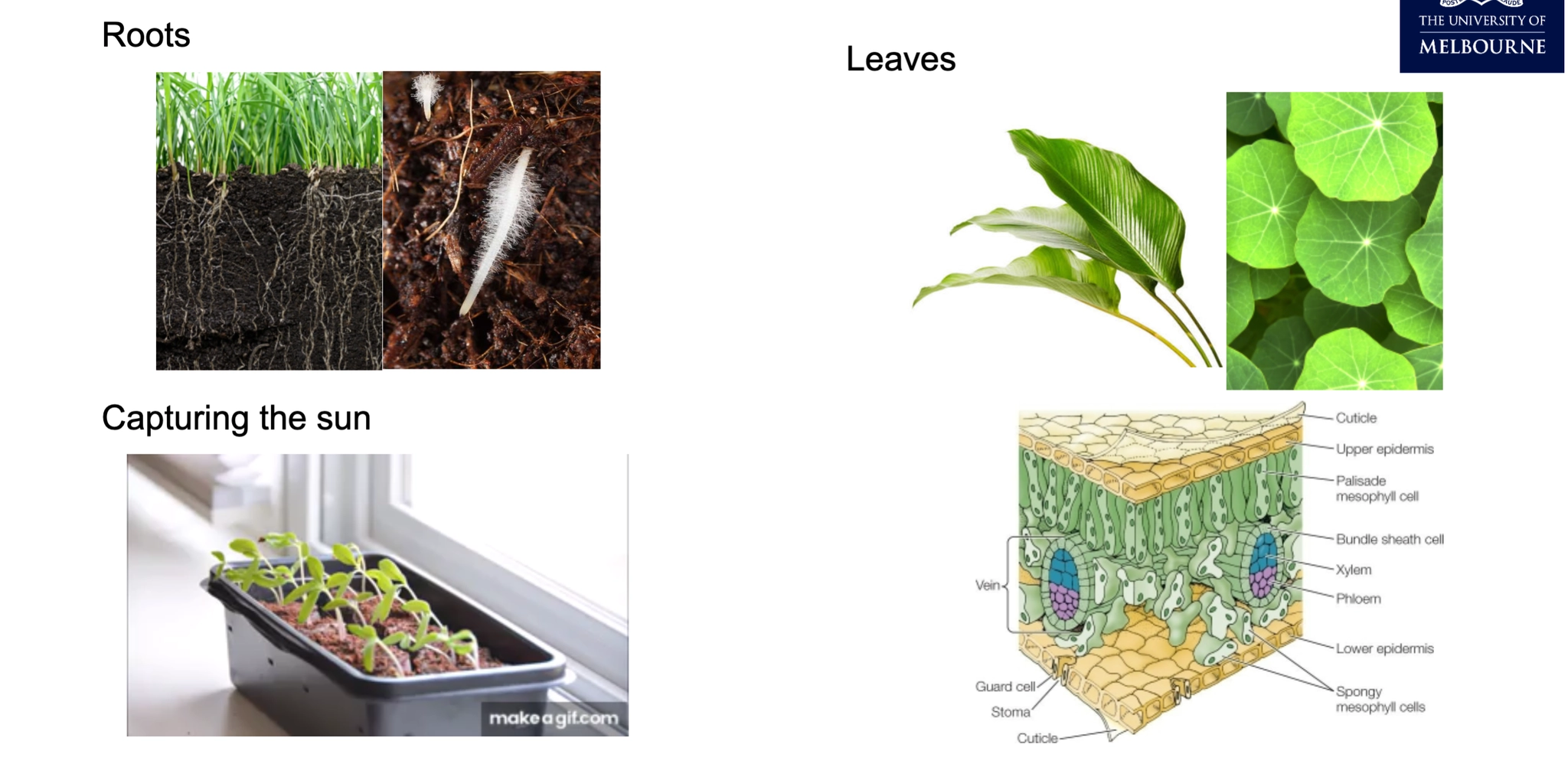
Discuss and compare some key adaptations related to heterotrophic nutrient acquisition (feeding)
Collect/Capture food
Mechanical digestion, Chemical digestion
Absorption

Chemical digestion heterotrophs examples
some plants and fungi rely partially/solely on organic matter e.g. adapted for chem digestion like fungus on tree stump and plants which are parasites can invade stem of host plant and take up nutrients, carnivorous plant create nectar like substance attract flies and produces diegestive enzyme to break it down
morphological adapations heterotrophs examples
(mouth parts - animals and invertebrates, modifications of limbs, claws and feet, digestive tract (digestion of diff food))

Ingestion and digestion of nutrients
Autotrophic ‘digestion’ and absorption
photosynthesis creates sugars
phloem transports sgars down the plant
xylem transports nutrients up the plant from roots which accumulate micronutrients from soil
Chemosynthesis
take inorganic elements like sulfur and undergo cellular respiration
Other adaptations
roots can sometimes have hairs which are long and thin so they have increased sa:v so more availability to take things up
leaves have flat wide surfaces, high sa:v to capture sunlight
tomato seedlings can move and follow the sunlight which passes above it to maximise the photon energy they can take up
Fungi digestion
Absorptive nutrition - whatever has been digested is taken up across the cell wall
Hyphae grow over food e.g. dead leaves: increasing SA for digestion and direct absorption
Fungal exudate – contain digestive enzymes breakdown complex molecules → taken up easier across cell wall
Mutualists e.g. mycorrhizal fungi - fungi work with plant roots and produce nutrients the other needs
Steps in ingestive digestion
Ingestion – eating / taking in food
Digestion – mechanical, chemical and microbial breakdown of food
Absorption/assimilation – uptake of nutrients from the digestive tract
Egestion/elimination – release of undigested food
Incomplete digestive systems
sponge is open to the environment and as food particles flush in here, the cells will take them in.
some organisms have gastrovascular cavities, one opening (mouth+anus), food goes in the cavity, glandular cells break it down, absorbed across body wall e.g. jellyfish, anemones, flatworms but they crawl on top of food, take it up around the body and release leftovers from pharynx

Complete digestive systems
found in most bilateral animals with a separate mouth and anus, generally divided into three sections, the fore gut, the mid-gut, and the hind gut.
Mouth/buccal cavity - Initial chamber where food may be captured, manipulated, or mechanically processed. Enzymatic digestion may begin.
Oesophagus - Conducts food from the mouth to the digestive region.
Crop (if present) - Temporary storage chamber that holds food before digestion.
Gizzard (if present) - Muscular chamber that grinds food, often with ingested grit.
Stomach - Stores food and continues mechanical and chemical digestion using enzymes and digestive fluids.
Rumen (if present) - Houses symbiotic bacteria and protists which assist in the breakdown of cellulose
Small intestine - Primary site of enzymatic digestion and nutrient absorption.
Caecum (if present) - Blind-ended pouch that increase digestive SA or aid enzyme secretion and absorption. May contain symbiotic bacteria and protists to assist with cellulose breakdown
Large intestine - Reabsorbs water and salts
Anus or cloaca - Opening through which undigested waste is expelled.

Sites of mechanical digestion
mouth, stomach - churning grinding squeezing
Sites of chemical digestion
mouth - saliva (amylase) lingual lipase, stomach (gastric lipase,HCL, pepsin), small intestine (amylae, lipase, trypsin)
sites of microbial digestion
stomach (foregut fermenters - specalised chambers containing bacteria and protists with cellulase
small intestine (species dependent, minor)
caecum (anaerobic bacterial digestion of mostly cellulase, also carbs, proteins
large intestine (bacterial microbiome use fibre as fuel to make vitamins and produce fatty acid, fibre also helps create stable microenv)
Digestive Tract gut components
Fore gut is mostly intake and storage, but we can get initial stages of chemical and mechanical digestion,
mid-gut and hind gut digestion and absorption
length and structure of these regions do differ depending on what food is consumed by the animal. carnivore and omnivore simple, herbivore complex lots of intestines huge stomach,
Herbivore Adaptations and processes of converting nutrients into a useable form
number of mouth parts specialisations to eat certain food
long digestive tracts. chemical and mechanical digestion that takes place.
some have gut fermenters e.g. ruminants :cows and sheep regurgiate re chew food send it back down and repeat. koala is a hindgut fermenter, has a cecum where bacteria and protists breaking down the cellulose further down the digestive tract,
Carnivore Adaptations and processes of converting nutrients into a useable form
mouth adapations for CATCHING, breaking down FOOD
hunting and capture behaviour e.g. ocras work together to capture food
Relate the impact of environment and energy cost to excretion of different forms of nitrogenous waste
Articulate key processes involved in regulating water balance and excretion systems across organisms and identify how these systems are adapted to different environments
excretion controls cell/body water content
What is excretion? and the 3 main ways in which it regulates the env
Excretion: removal of waste products (may be liquids, gases or solids)
i) controls cell/body water content
ii) maintenance of solute composition
iii) excretion of metabolic waste and other unwanted products
What is metabolic rate?
• Uptake of chemical energy from the environment > chemical transformation > metabolic work
• Sum of all chemical reactions in the body
J/hr
Basal metabolic rate- endotherms/warm blooded and what is Thermoneutral temperature
animal must be Resting, Post-absorbative (not feeding or digesting), must be Non-reproductive (huge metabollic load),
Thermoneutral temperature - temperature where the energy, thermal gain and thermal loss is equal
Basal metabolic rate-ectotherms/cold-blooded/affected by external temp
must be Resting
Post-absorbative
Non-reproductive
dont have Thermoneutral temperature
comparing endotherm and ecototherm bmr
Let's say the thermal neutral temperature for a mouse is about 22 and then you would compare it to an ectotherm at the same temperature.
Factors exerting smaller effects on MR
digestion
body size
age
gender
hormonal status
time of day
environmental o2 levels
water salinity
Factors exerting large effects on MR
physical activity
environmental temperature
Analyse how body size affects whole-organism and mass-specific metabolic rates
MR increases with increasing body size, but it is not proportional
Suggests increasing efficiency with size, as in larger animal can maintain each gram of its body tissue with less energy expenditure.
Allometric scaling of MR
M is metabolic rate
Non-proportional, allometric relationship (→ MR per gram decreases as body size increases)
a is a species-specific constant and varies greatly
b is consistent amongst many phylogenetic groups/slope of line = 0.75

Rubners surface area law
suggests
Larger animals have a lower SA:V ratio
Proportionally less heat loss
hence why as body weight increases the metabollic rate decreases per gram, so it is more efficient
but b = 0.67 not 0.75, so this cant be main reason for metabolic scaling also
b = 0.75 also applies to animals who dont regulate their temp like crabs
But crabs don't actively maintain a constant body temperature through metabolic heat production, yet they can still show the ~0.75 metabolic scaling.
Explaining allometric metabolic-size relationships
Why does metabolic rate scale at ~0.75?/ b = 0.75
1. Delivery-system hypothesis
Metabolism requires delivering oxygen and nutrients around the body.
Many animals have branching delivery systems (e.g., cardiovascular systems).
The branching pattern has fractal geometry, which could potentially explain the ~0.75 scaling.
Problem: Some animals showing ~0.75 scaling don't even have a cardiovascular system.
→ So this cannot be the complete explanation.
2. Energy-reserve / Dynamic Energy Budget hypothesis
Energy taken in isn't necessarily used immediately.
Some can be stored as fat/lipids → stored energy that can be used later.
Once stored, maintaining the energy reserve has little/no ongoing metabolic cost.
Larger animals may have proportionally larger energy reserves.
Temperature Homeostasis- Acclimation/Adaptation
Acclimation is the short-term process where a living thing adjusts to a new environment, temperature, or climate
If you're an organism like some of these single-cell organisms or mushrooms or plants and you can't move, you have, you either start by acclimatising and either adapt or you die. So acclimatisation might happen first over longer periods of time, you might get adaptation those that survive, have adapted and had biochemical changes and they get passed on.

how is MR measured
directly (heat), indirectly (gas) or in the field (water) involved in metabolic processes
increasing body size impact mr and why this happens
Increasing body size produces an increase in overall MR but a reduction in mass- specific MR(MR ÷ body mass). There is likely an interaction between the SA:V ratio and the fractal geometry of delivery systems and/or the impact of budgetary reserves.
temp change impact animals
Temperature directly affects biochemical reactions. Organisms may be able to respond in the short or long term to adjust or risk negative impacts if the temperature veers too far from optimum
Metabolic rate – direct calorimetry
based on how metabolism produces heat because the chemical reactions involved are not 100% efficient.
A guinea pig was placed inside an insulated chamber surrounded by ice.
The guinea pig’s metabolic heat melted some of the ice.
Researchers measured how much ice melted → calculated the amount of heat energy produced → determined the animal’s metabolic rate (MR).
outer layer of ice acted as insulation, preventing environmental temperature changes from affecting the inner ice.
indirect measure

Metabolic rate – indirect calorimetry
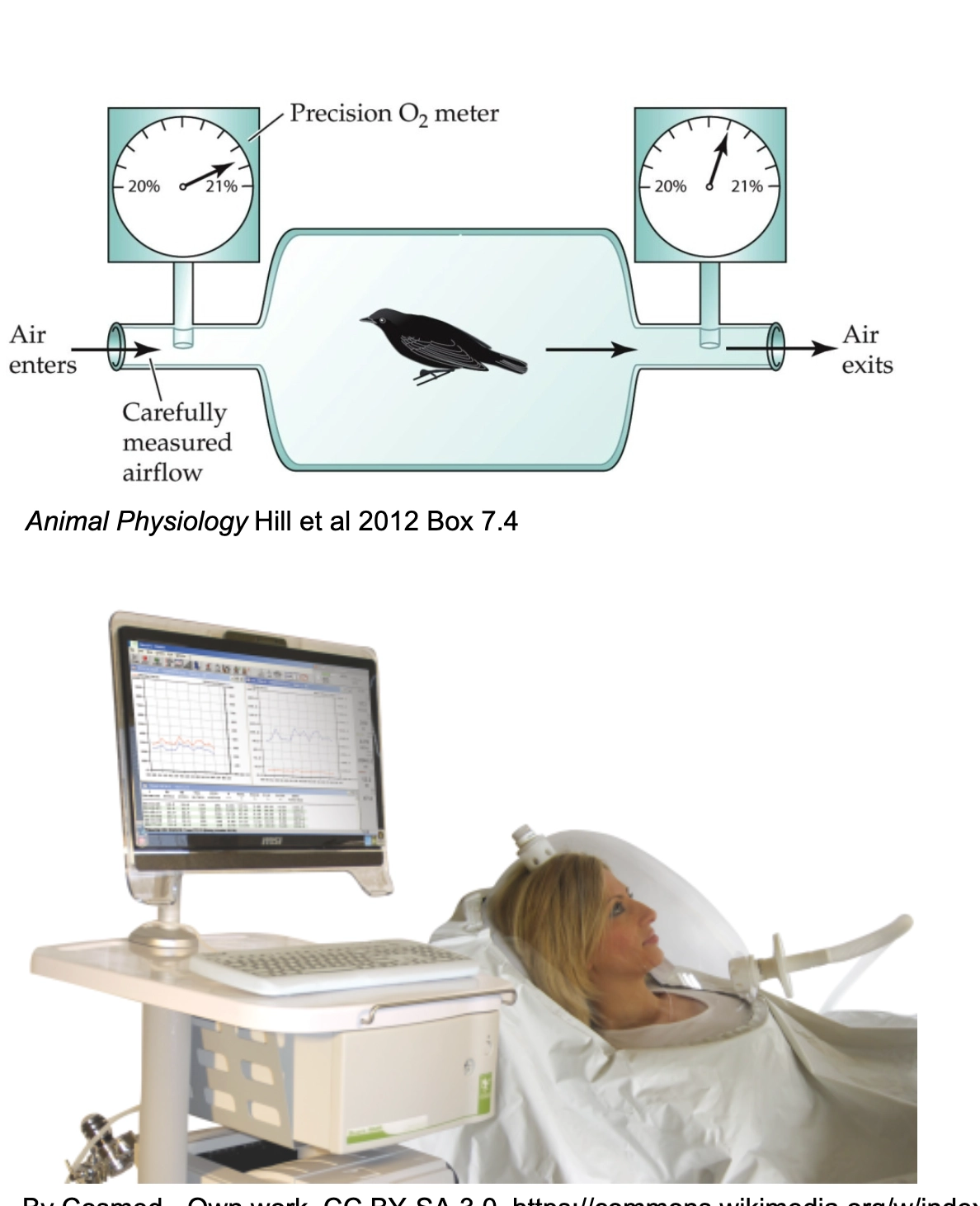
Indirect calorimetry measures gases instead of directly measuring heat.
It uses O₂ consumption and/or CO₂ production to estimate cellular respiration and metabolic rate.
O₂ method:
Measure how much O₂ enters the chamber.
Measure how much O₂ leaves.
Difference = O₂ consumed by the organism.
CO₂ method:
Measure how much CO₂ is produced and released.
tells us about the products of cellular respiration.
Because gas exchange is closely related to cellular respiration, we can use it to calculate energy expenditure/metabolic rate.
It is used in many settings:
🐦 Animals
🌱 Plants
🧑⚕ Human physiology
🏃 Athletes
🚀 Astronauts
Metabolic rate – field calorimetry
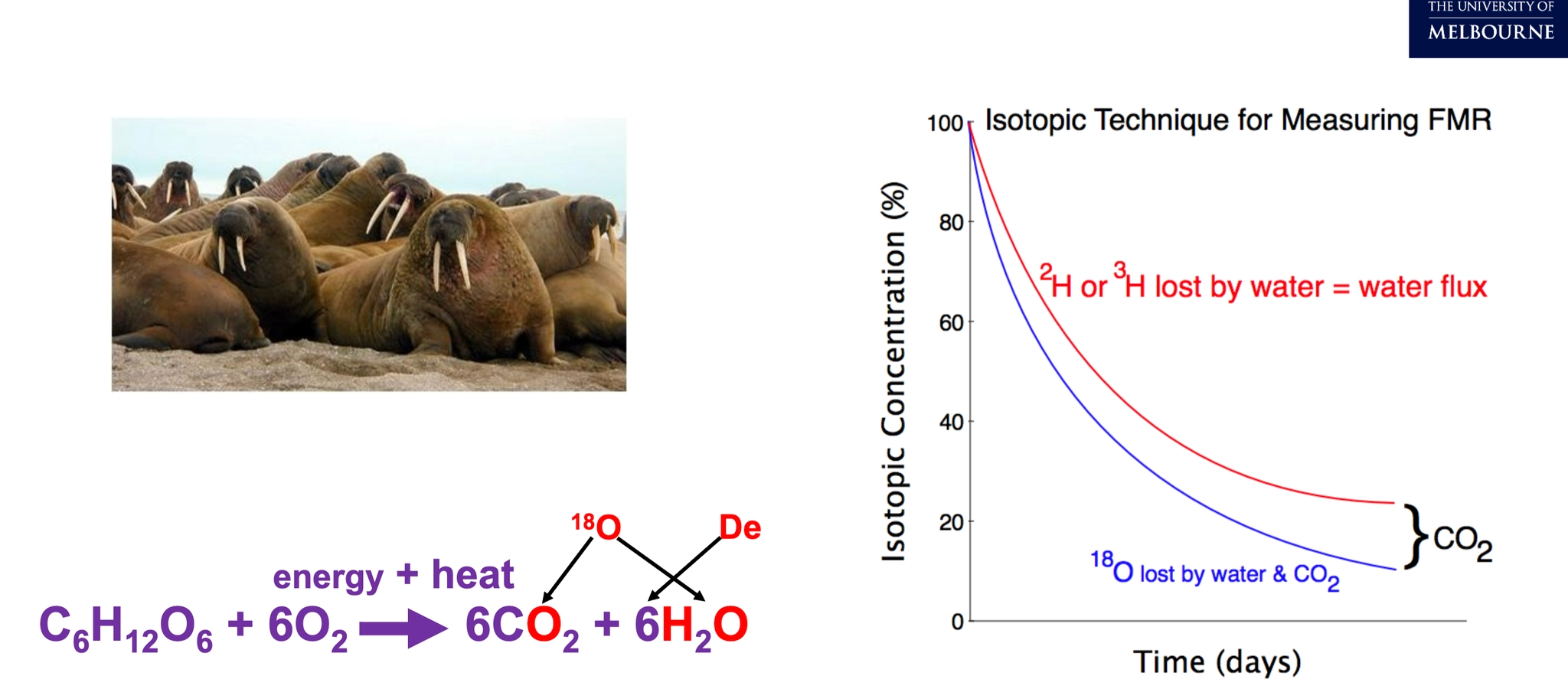
When animals are in the wild, you can't easily put them in a metabolic chamber. Instead, you can use doubly labelled water.
Give the animal water containing radioisotope-labelled hydrogen and oxygen.
Take a blood sample to measure the initial isotope levels.
Let the animal go about its normal activities in the wild.
Later, take a second blood sample and measure how much of each isotope has been lost.
The key is:
Hydrogen is lost mainly through water.
Oxygen is lost through both water and CO₂.
Therefore, subtracting the hydrogen loss from oxygen loss tells you the amount of CO₂ produced.
Oxygen loss − hydrogen loss → CO₂ production → estimate metabolic rate
expensive tho, needs 2 blood samples,
Osmoregulators and osmoconformers
osmoconformers - conform to env/similar to env
osmoregulators - actively regulate their internal solute/ion concentration so it stays relatively stable, even when the environment changes.
Highly dependent on consistency of environment
All terrestrial, freshwater and most marine organisms are osmoregulators
Managing internal ionic composition regulates water - osmoregulation

All terrestrial, freshwater and most marine organisms are they osmoconformer or osmoregulator
are osmoregulators, most or many marine invertebrates are osmoconformers
Osmoregulation - achieving a balance
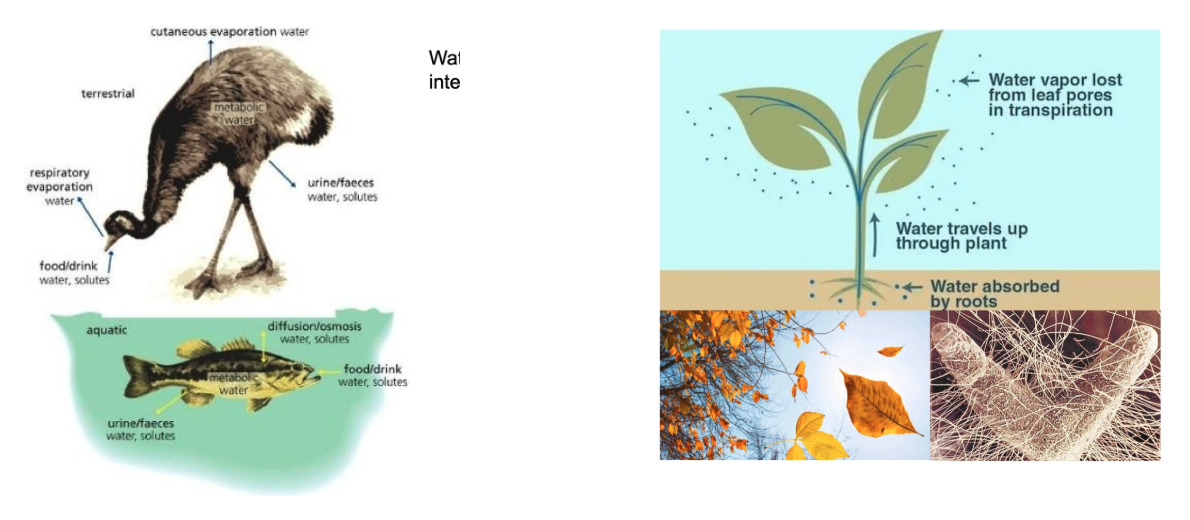
Water and ions are gained and lost through interactions with the environment
Water/ions gained:
Drinking + food → water and ions
Aquatic animals → ions and water can move across the body surface
Plants → water enters through roots/root hairs
Water/ions lost:
Breathing → water loss
Evaporation/transpiration → water loss
Faeces, urine → water + ions lost
Plants → N can be lost through leaf shedding and guttation (lots of water root pressure. water released, often have excess nitrogen in them in droplets on leaf.)
Regulating ion concentrations requires .. and what excretory organs do this
purposeful moving of ions across membranes
kidney and Malpigian tubule
salt gland and gills
way of Preventing water loss
skin, Dermal layers and structures
Living in water challenge
Freshwater/hypotonic
The organism is more concentrated inside than the surrounding water.
Therefore:
Water constantly enters through the skin and gills.
Ions tend to diffuse out.
The organism takes up ions through its gills.
It produces lots of dilute urine to get rid of excess water while conserving ions.
Goal: Get rid of excess water and retain/gain ions.
Saltwater/hypertonic
The organism is less concentrated inside than the surrounding seawater.
Therefore:
Water tends to leave the body.
Ions tend to enter.
The organism actively removes excess ions, particularly through the gills.
It produces small amounts of concentrated urine to conserve water while getting rid of ions.
Goal: Retain water and get rid of excess ions.

Living on land regulating water balance
On land, water conservation is essential and nutritional intake determines whether salts must be conserved or excreted
Living on land plants regulating water balance
in plants must be balance between transpiration and evaporation thru stomata and water, ions, coming in from roots

Living on land animals regulating water balance
lose water from evaporation, breathing, excretion
water and food, some metabolic processes release water
try balance ions and water via diet
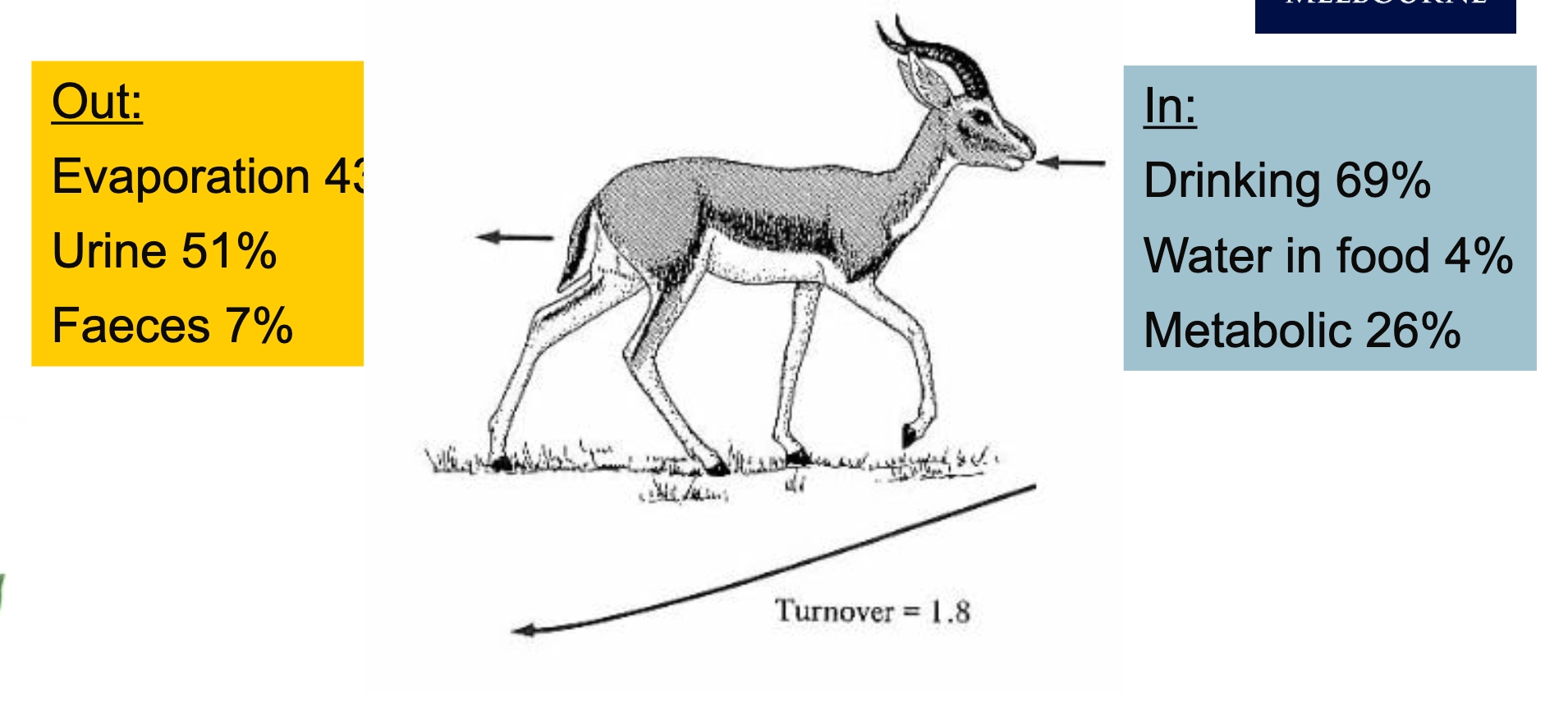
Deserts – preventing water loss
Nocturnal activity and CAM photosynthesis
aestivation - a state of animal and plant dormancy characterized by inactivity and a lowered metabolic rate e.g. burrowing frog during dry season
Thick keratinised or waxy cuticle, with a high lipid content - stops water from coming out
Efficient kidneys - long loops of Henle -
Reduced exchange points - cactus, big body for water storage and spines (leaves)

Excreting nitrogenous waste
Excess ions are managed and removed to help osmoregulate
Metabolic waste products can be toxic and also need to be excreted
nitrogenous waste comes from the breakdown of proteins and nucleic acids → end up with NH2 groups → released as ammonia, urea, uric acid, and guanine
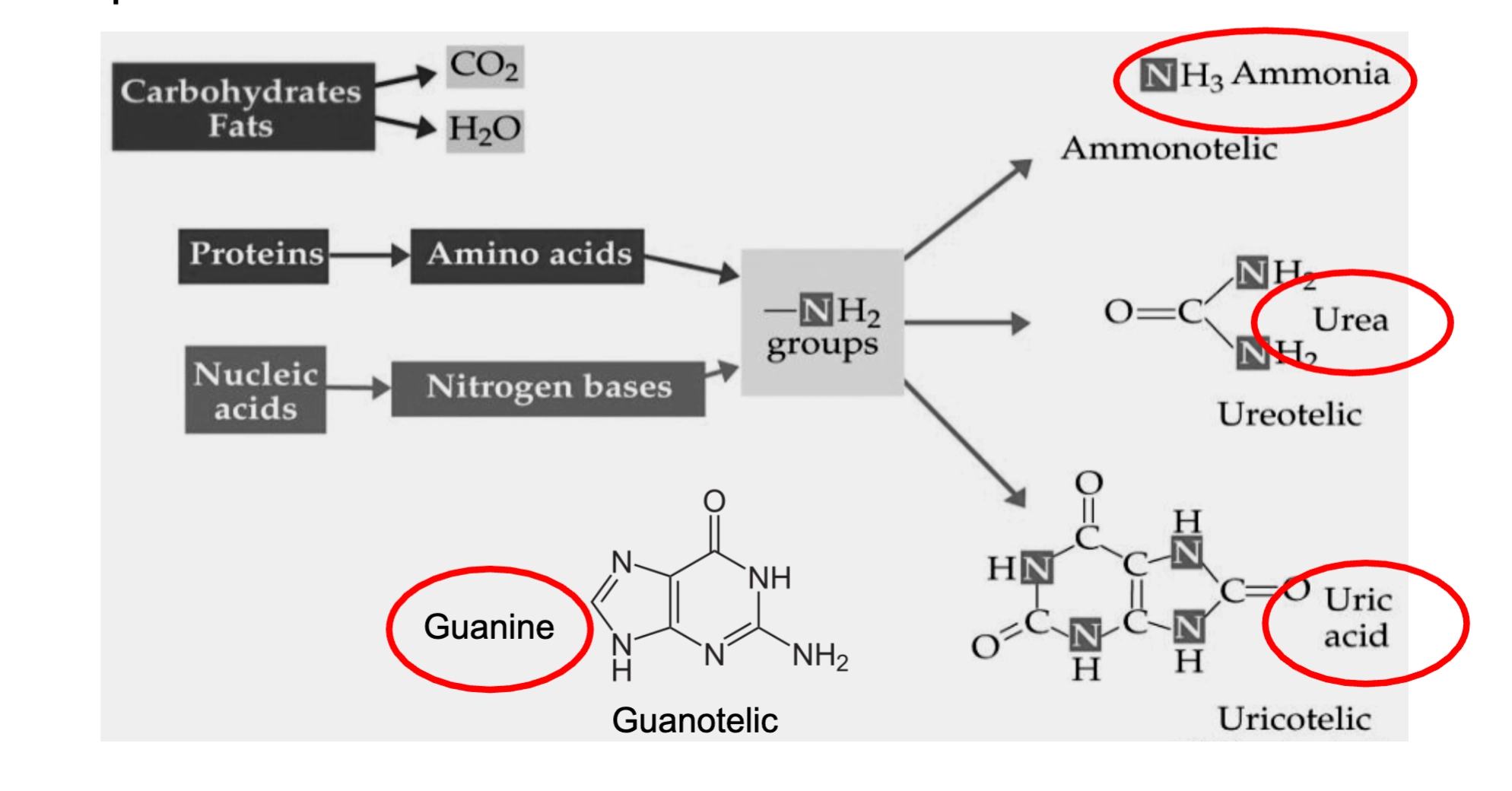
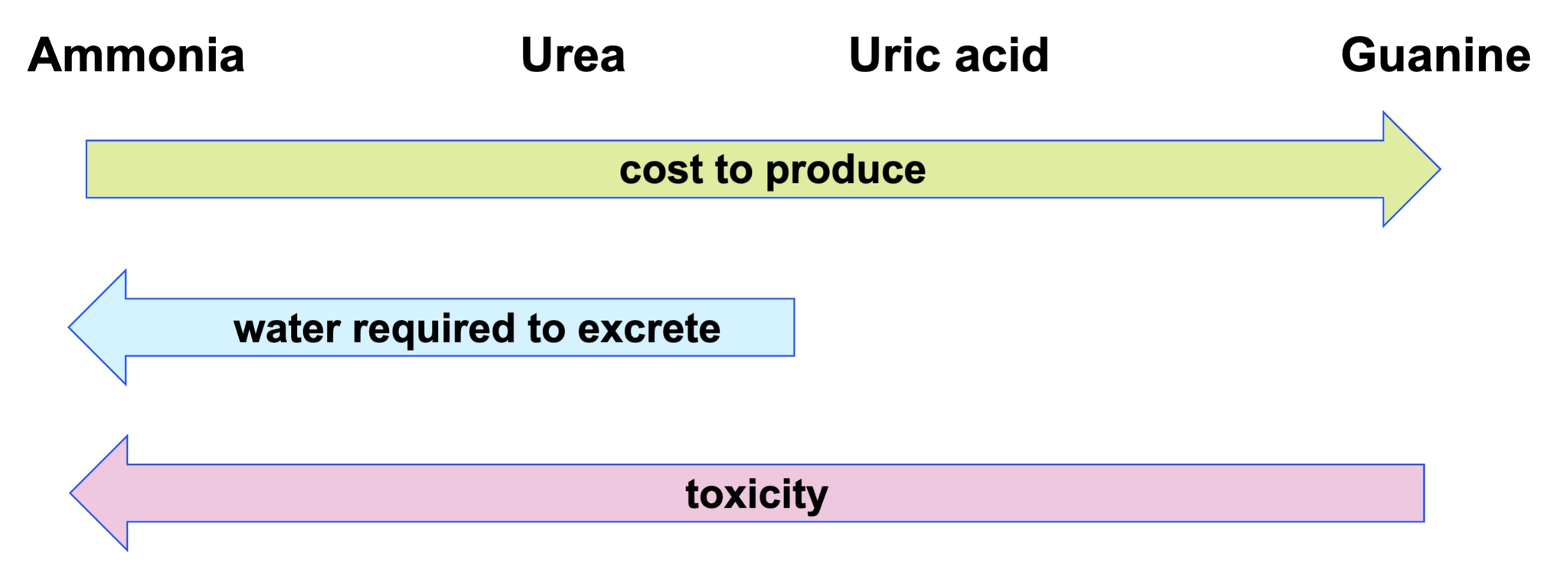
Now Which nitrogenous waste you release depends on a number of things such as and what types of nitrogenous waste and toxicity, water needed, cost
cost it takes to produce
ammonia (first), prodct of protein breakdown, really toxic, very soluble so need lot of water to remove. good for those who live in waer,
urea (second), less toxic, still needs fair amount of water,not that much energy in converting
uric acid - non soluble, dont require much water to remove, had to put energy to produce
guanine - crystal, dont need water, very non-toxic, lots of effort
Nitrogenous excretion in animal groups
Aquatic invertebrate and most bony fish - release ammonia, they are ammonotelic
Mammals, most amphibians, sharks and rays produce urea - ureotelic
Birds, insects, non- avian reptiles -uricotelic produce uric acid
Spiders and scorpions -guanotelic produce guanine

Excretory systems use filtration, secretion & reabsorption e.g. flatworm and annelids
1. Filter → 2. Reabsorb useful substances → 3. Excrete waste
Flatworms:
Body fluid enters the flame cell through filtration slits.
Cilia beat and draw/filter the fluid into the excretory system.
Useful solutes are reabsorbed back into the body.
Water follows solutes by osmosis.
Remaining unwanted substances are excreted.
Annelids:
Body fluid enters the nephrostome with the help of beating cilia.
Fluid is filtered into the metanephridium.
Useful solutes are reabsorbed.
Water follows by osmosis.
Remaining waste is excreted.
Malpighian tubules use active transport
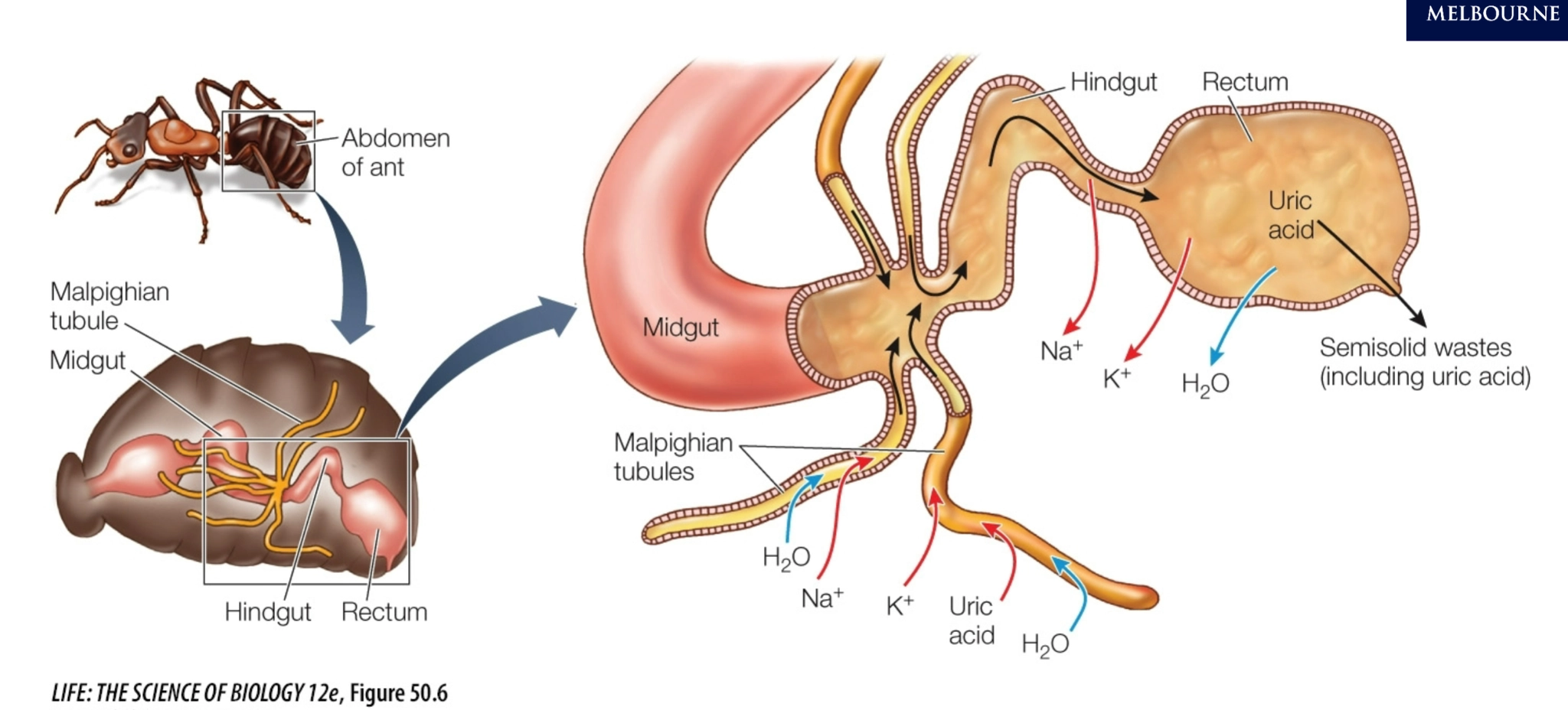
Malpighian tubules in insects
Insects conserve water using Malpighian tubules, which are finger-like projections connected to the gut.
Secretion into tubules
Na⁺, K⁺ and uric acid are actively transported from the body fluid into the Malpighian tubules.
Water follows these solutes by osmosis.
Reabsorption
As the fluid moves through the tubules/gut, Na⁺ and K⁺ are actively reabsorbed because the insect wants to keep them.
Water follows the reabsorbed ions back into the body.
Uric acid remains
Most water is removed, leaving concentrated uric acid.
Uric acid crystallises, allowing it to be eliminated with very little water.
Excretion
paste containing uric acid and faecal material.
Secrete ions + uric acid → water follows → reabsorb useful ions + water → uric acid remains → excrete with very little water.
Nephrons and gills
Gills excrete the majority of nitrogenous waste
Organisms with kidneys use urine to expel unwanted ions and nitrogenous waste
Only birds and mammals can produce urine which is more concentrated than the blood - loop of henle
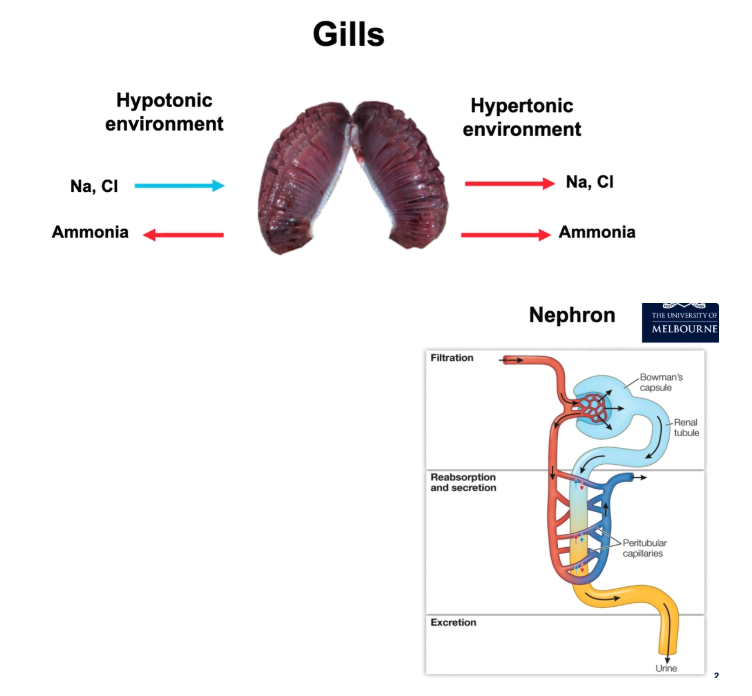
Excretion by the kidney
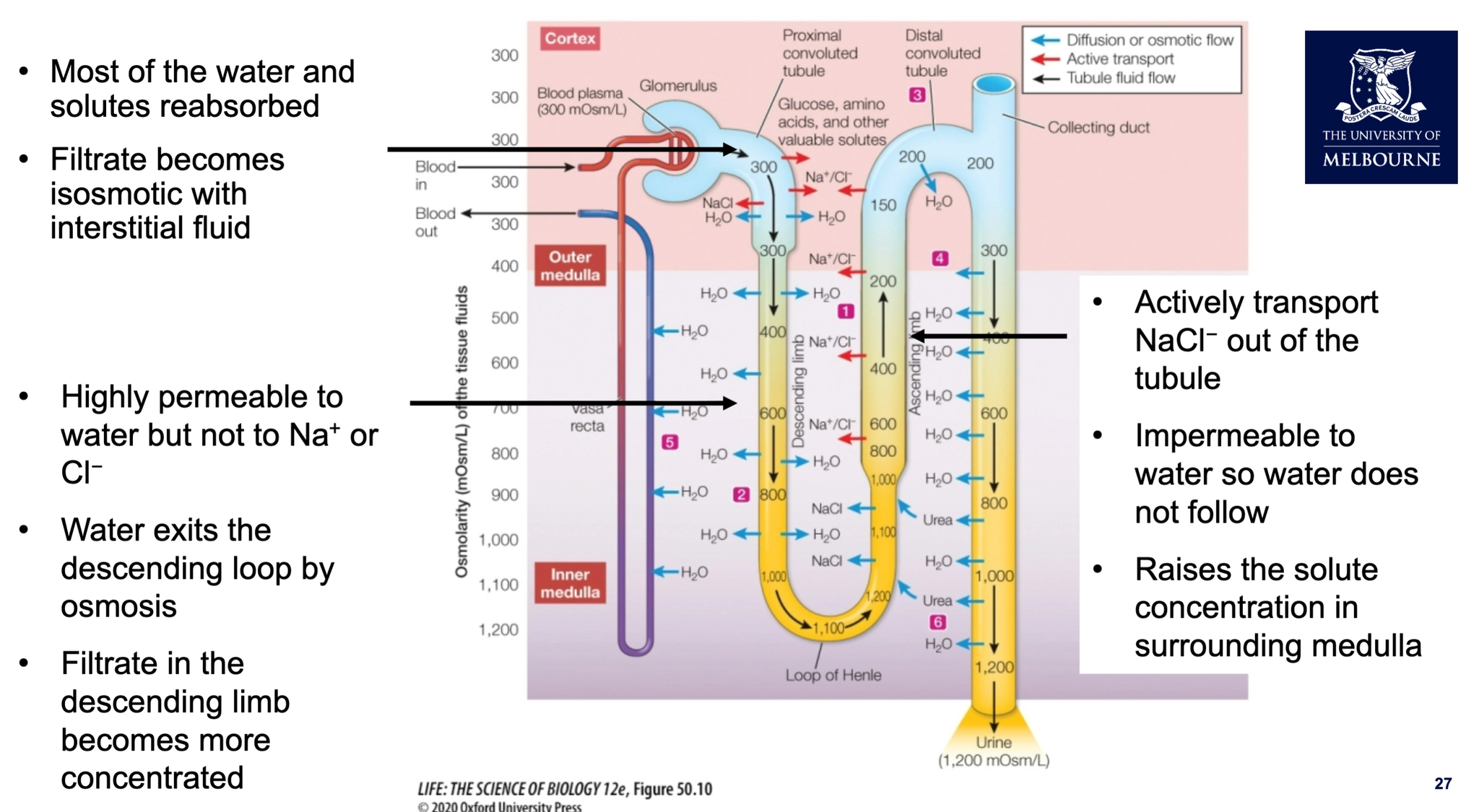
Loop of Henle permits production of very concentrated urine - present in mammals and birds
Urine osmolarity ∝ length of loop - the longer the loop of henle the more you can concentrate urine

glomerulus of kidney
where filtration is occurring.
just like in all those other organisms, in the glomerulus, we filter our blood, lots of stuff comes out and lots of water comes out. So, once we get to the proximal convoluted tubule. The body pulls out lots of stuff that it wants, and water follows it as if we pull solutes out it becomes mo
Excretion by the kidney steps
filtration is occurring in the glomerulus, we filter our blood
• Most of the water and solutes reabsorbed
• Filtrate becomes isosmotic with interstitial fluid (same total solute concentration)
the fluid is coming down from the glomerulus encounters area of the medulla where theres high osmolarity.
• Highly permeable to water but not to Na+ or Cl−
• Water exits the descending loop by osmosis
• Filtrate in the descending limb becomes more concentrated
at the thick ascending limb of loop of henle, the thick part actively transports sodium chloride (NaCl-) out of the tubule
• Impermeable to water so water does not follow/come out
• Raises the solute concentration in surrounding medulla → very high in osmolarityRenal fluid moving down the collecting duct becomes highly concentrated as water is drawn out due to the high concentration gradient in the interstitial fluid of the medulla (as more salty outside)
Urea is the major solute in the collecting duct (most other solutes have been removed)
Some urea leaks out of the renal fluid adding to increased osmotic concentration in renal medulla
Urea diffuses back into ascending limb and returned to the collecting duct
N excretion in plants
plants are generally better able to retain, recycle, store, and redistribute nitrogen,Atmospheric (N2) or other forms of nitrogen are transformed into NH4+ by bacteria or fungi in the soil, (converted into ammonium)
Nitrogen recycling (moved and reused elsewhere rather than excreted)
Shedding - causes them to lose some N
Guttation - liquid water + excess N comes out of tips of leaves, driven mainly by root pressure.
The type of nitrogenous waste excreted by an organism depends
on species, environment, water availability and the cost of transforming the compound
Many organisms maintain their internal water balance by
osmoregulation and excretion of excess solutes including nitrogenous waste which is toxic
Environmental challenges determine whether
organisms need to uptake or excrete solutes and water
Excretory systems use combinations of
filtration, diffusion, secretion, osmosis, reabsorption and active transport to regulate excretion
examples of osmoregulation
taking in more or less ions from gills
nutritional intake determines whether salts must be conserved or excreted
Nocturnal activity and CAM photosynthesis
Aestivation - a period of dormancy during hot and/or dry conditions, usually to conserve water and energy.
Thick keratinised or waxy cuticle, with a high lipid content
Efficient kidneys - long loops of Henle
Reduced exchange points
Water storage
how can We measure the temperature response curves or changes in temperature response curves
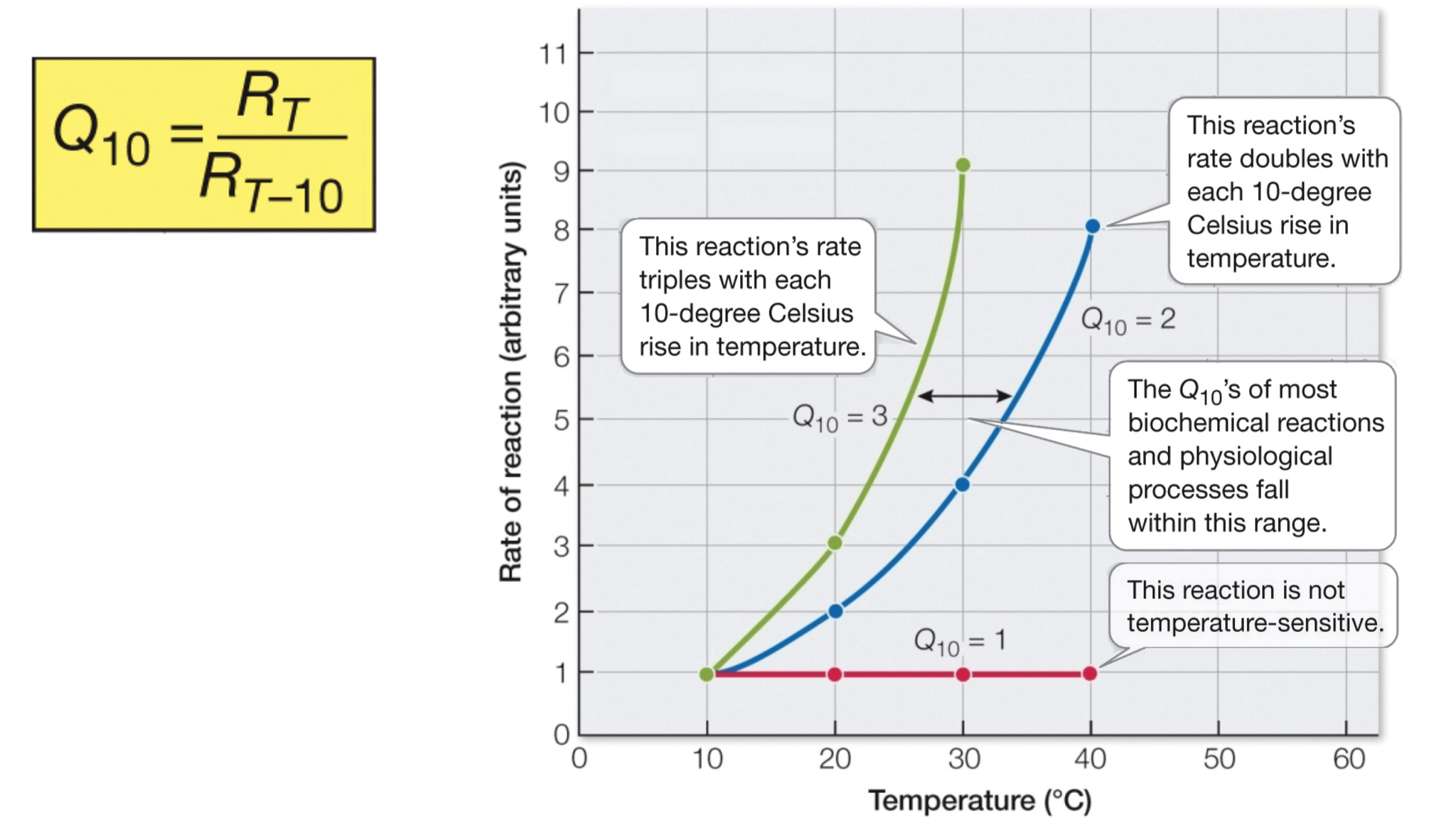
Q10 - variable which denotes the rate of change of a reaction over a 10 degree change in temperature.
if we take the rate of reaction at a particular point and then we see what it was at 10 degrees cooler, by dividing the particular point by 10 degrees
If we have no change in our Q10, it's not temperature sensitive.
Most biological reactions sit somewhere between Q10 = 2 (reaction rate doubles with each 10 degree C rise in temp) and 3, (reaction rate triples with each 10 degree C rise in temp) but some are down around the 1 (reaction is not temp sensitive)