Lipids 1
 Call Kai
 Learn
 Practice Test
 Spaced Repetition
 Match
 Flashcards
 Knowt Play
1/70

There's no tags or description
Looks like no tags are added yet.
71 Terms
what is the definition of a lipid
A soluble in organic solvents
what are 3 examples of a lipid
Ether, Benzene, Chloroform
what are 3 major classes of lipids that are inportant in nutrition
-Fatty acids
-Mono-di- and triacylglycerols
-sterols
what are some other examples of lipids
-waxes
-Resins
-Essential oils
what is a Fatty acid
Carboxylic acid with hydrocarbon chains between 4- 36 carbons
what is a saturated Fatty acid
No double bonds
What is a Unsaturated Fatty Acid
it has one or more double bonds
Palmitic acid
(16:0)
16 carbons
0 double bonds
Oleic acid
(18:1 cis-9)
18 carbons
1 double bond in cis cinfiguration at c9

palmitic acid

Oleic acid
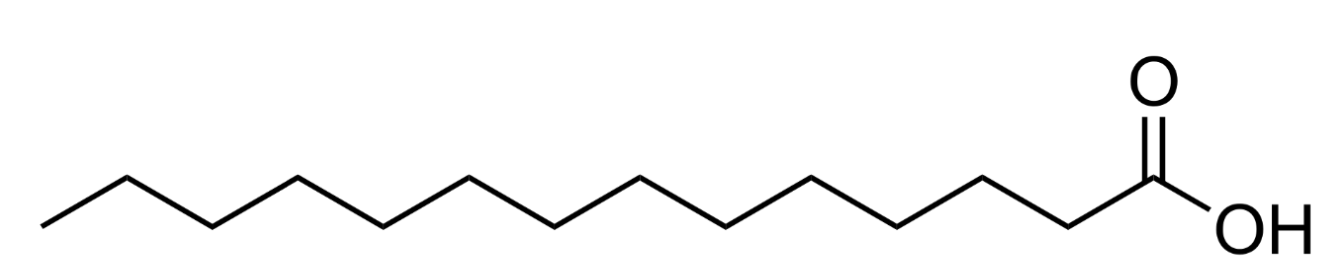
what is the lipid number
14:0

what is the lipid number
16:1 cis-9
stearic acid
C18:0
Linoleic Acid
C18:2
Linolenic Acid
C18:3
Omega-3
Double bond at 3rd carbon from end of chain
What is an example of a omega-3
a-linolenic acid
(18:3 (n-3)) OR 18:3 all cis 9,12,15

what is this
a-Linolenic acid 18:3 (n-3)
what is a conjugated linoleic acid
family of 28 isomers of linoleic acids
-has alternating double bonds and single bonds
-can be cis or trans
what are intermediates of biohydrogenation in the rumen
conjugated linoleic acid

Rumenic acid
18:2 cis-9, tans-11
what is a monoacylglycerol
1FA
what is a diacylglycerol
2FA
what is a triacylglycerol
3FA
what are majior forma of fat storage in animals (in adipocyted and seeds)
Mono-di- and triacylglycerols
what do sterols contain
a fused carbon ring
what is the most abundant sterol in animal tissue
Cholesterol
what is cholesterol a component of
cell membranes
what are some other examples of sterols
-bile acid
-progesterone
-estrogen
What is the function of Lipids
Great source of energy
what are some chracteristics of lipids
-calorically dense
-High digestible (>80%)
Are a-linolenic and linoleic acid essential explain
Yes they are essential
cannot be synthesized, animals lack desaturase enzymes to form unsaturated bonds
what happens with deficiency in a-linolenic and linoleic acid
can cause dermatitis, skin lesions, poor growth, reproductive failure
what do a-linolenic and linoleic serve as
as precursor for longer and more unsaturated polyunsaturated fatty acids (PUFA)
what is conditionally essential if not enough a-linolenic and linoleic acid for synthesis
EPA, DHA, AA( arachidonic acid)
what is the most abundant n-3 PUFA in brain and retina
DHA
Which ones are precursours of the signaling molecules eicosanoids
EPA & AA
what is specially about cats
AA is non-conditionally essential (need AA in diet)
canot be synthesized from linoleic acid
is conjugated linoleic acid essential
not really
why is conjugated linoleic acid (CLA) not essentail but important
in animals it is protective benefit against cancer, diabetes,obesity
In humans, benefits are smaller or inconclusive
where does digestion begin
in small intestine
where does bile enter and what it do
enters duodenum from gallbladder and emulsifies lipids
decreases lipid droplet size
increases SA for enzymatic digestion
-These solve problem that enzymes are soluble in water but lipid is not
how does digestion continue
with hydrolysis of triacylglycerols
involves lipases released by pancrease and small intestine
What does digestion and absorption of lipids yield
Free FA
Glycerol
Monoacylglycerols
what happens with micells in digestion and absorption of lipids
Free FA and monoacylglycerols packed into miclells
what other lipids do micells include
-Cholesterol
-Fat soluble vitamins
-Bile salts
where does absorbtion of lipids happen
In Jejunum and ileum
what happens during absorption of lipids
FA and monoacyglycerol move out of micelles
-Then absorbed by diffusion (can cross through membrane without transporter)
where does transport and depsition of lipids take place
in small intestine (enterocytes)
What is formed in small intestine in Transport and deposition
Triacylglycerols are reformed
( FA re-esterify to glycerol or monocylglycerols)
-Lipoproteins (chylomicrons) are formed
(triacylglycerols, cholesterols and phospholipids are combined with apolipoproteins)
What is the lymphatic system and what is it part of
it is part of transport and deposition
and is when chylomicrons move from enterocytes into lymphatic systems
after the lymphatic system where do chylomicrons go and what happens
into bloodstream
where lipoprotein lipase converts triacylglycerols to FA and glycerol which occurs on endothelial surface of capillaries
what is peripheral tissue
part of tranport and depostition of lipids
-FA enters and oxidized/re esterified for storage
what are the main recipients of Peripheral tissues
skeletal muscle, adipose tissue, and mammary gland main recipients
what does the liver do in terms of Transport and deposition of lipids
takes up remnants of chylomicrons
-Mostly depleted of FA but still contain cholesterol and apolipoprotein
what is a summary of how lipids are transported and deposition
1) small intestine
2) lymphatic system
3) bloodstream
4) peripheral tissue
5) liver
what is the carrier of lipids
chylomicrons (lipo protein)
what pathway is the transport and depostion of lipids an example of
Exogenous pathway (coming from diet than absorbed)
what is the first step in the Endogenous pathway
Liver
-excess FA re-esterifies into triacylglycerols(excess when to much for oxidation or ketone formation
-Triacylglycerold packed with apolipoproteins into very low density lipoprotein (VLDL)
-VLDL exported into blood
what is teh second step of the endogenous pathway
Blood
VLDL enters the blood from liver
FA released by lipoprotein lipase (same as chylomicrons)
what is the 3rd step of endogenous pathway of lipids
Peripheral tissues
FA taken up(especially by adipose tissue)
what is the 4th step of the endogenous pathway
Blood(again)
-Low density lipoproetein (LDL) formed from VLDL (afetr loss FA)
-LDL releases cholesterol
what is the 5th step of the endogenous pathway of lipids
Peripheral tissue (again)
-Cholesterol taken up
what is the reverse cholesterol pathway
high density lipoprotein(HDL) export lipid from peripheral tissue back to liver
what is LDL
low density lipoprotein
-”bad cholesterol” because correlated with high rates of atherosclerosis
-Related to export of cholesterol from liver to peripheral tissues
what is HDL
high density lipoprotein
-”good cholesterol” correlated eith low rates of atherosclerosis
-related to export of lipid from peripheral tissues to liver
how much triglycerides do chylomicrons have
85-95%
how much triglycerides do HDL have
2-7%
how much triglycerides do LDL have
4-8%
what are the 3 diffrent pathways FA are absorbed through the intestine and tranposted to tissues
Exogenous pathway
-Endogenous pathway
-reverse cholesterol transport