Lecture 17th
 Call Kai
 Learn
 Practice Test
 Spaced Repetition
 Match
 Flashcards
 Knowt Play
1/51

There's no tags or description
Looks like no tags are added yet.
52 Terms
DNA
the double-stranded biomolecule that is the unit of heredity for all cellular life
Gene
discrete until of DNA that influences hereditary traits
chromosomes
very long DNA molecules
genome
the full genetic code of an organism (contained in each nucleus)
sister chromatids
2 chromosomes attached at the centromere called “sister chromatids”
What type cells go through mitosis
asexual eukaryotes; our somatic cells
germ cells
meiosis
germ cells - gametes. Sperm and Egg
Haploid (1N) - 2 copies of each chromosome
somatic cells- everything else
Diploid, (2N) - 2 copies of each chromosome
Alleles
Homologous chromosomes contain the same genes
what happens before meiosis
all chromosomes replicate
Prophase I
Homologous chromosomes form pairs
Special proteins ‘glue’ pairs together

what is this
prophase I
Metaphase I
Homologous chromosomes line up and are attached to the spindle
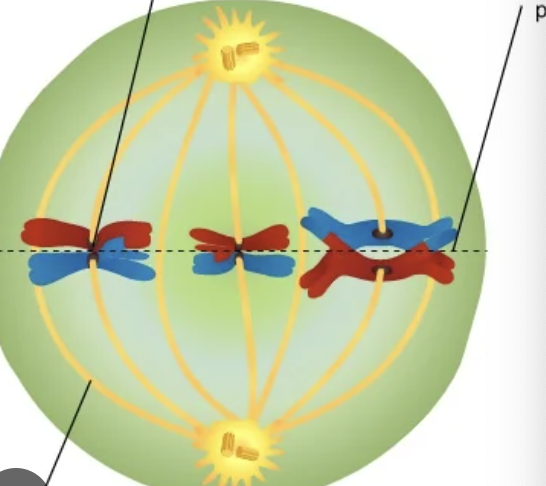
what is this?
metaphase I
Anaphase I
Homologous chromosomes are seperated

what is this?
anaphase I
Telophase I
2 haploid (1n) cells
Each chromosome is still duplicated
are these genetically identical

what is this
telophase I
Meiosis II
separation of the sister chromatid which leads to 4 daughter cells
Meiosis II end result
four haploid cells that are not genetically identical
meiosis consists of two nuclear divisions DNA is only replicated once true or false
true
the haploid cells produced by meiosis are genetically different from one another and from the parent cell
true
meiosis in females
meiosis begins during fetal development
after puberty meiosis in females
1 egg each month enters meiosis II
creates 4 products, but 3 disintegrate
a single egg is released
Meiosis in males
meiosis doesn’t begin until puberty
spermatogenesis
is biological process by which germ cells transform into mature, haploid spermatoza (sperm cells) inside the male testes.
Fertilization
haploid products of meiosis (usually sperm and eggs) fuse
Form a single diploid cell
zygote
two important ways in which meiosis generates genetic diversity
independent assortment
crossing over
independent assortment
the way in which chromosomes line up on the metaphase plane in meiosis I is random
when does crossing over occur
prophase I
when does genetic exchange occurs
between non-sister chromatids
chiasmata
chroatids breaks and rejoin to non-sister homologous
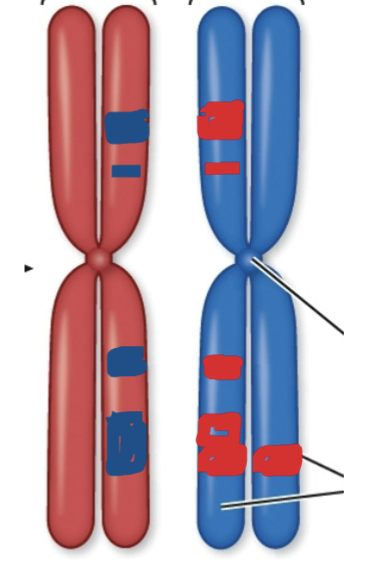
what is this
crossing over results in recombinant chromatids and increases genetic variability
Diploid cells of the fruit fly Drosophila have eight chromosomes. How many chromosomes does a Drosophila gamete have?
4
sexual reproduction increases genetic variability through:
crossing over, independent assortment, and random fertilization
when does crossing over occur?
prophase of meiosis I, when homologous chromosomes pair
the chromosome number of each daughter cell is reduced by half during meiosis beacuse
homologous chromosomes separate during anaphase of meiosis I
mutation
the original source of all variation
how many stages does the cell cycle have
four stages
G1
cells carry out normal functions. G1 is an arrested state. Cells remain in the state until receiving cell division signal
S phase
DNA is replicated
G2
cell prepares for mitosis
M phase:
mitosis and cytokinesis
Prokaryotes
usually reproduce by binary fission
single-celled eukaryotes reproduce by
mitosis
n=
number of distinct types of chromosomes
haploid
individuals have 1 version of each chromosome
diploid
individuals have 2 versions of each chromosome
2n=
2 complete sets
what are pairs called
homologous chromosomes