Units 3 and 4 AP WORLD MATCHING TEST FULL QUIZLET
 Call Kai
 Learn
 Practice Test
 Spaced Repetition
 Match
 Flashcards
 Knowt Play
1/132

There's no tags or description
Looks like no tags are added yet.
133 Terms
Atlantic Slave Trade

Aztec Empire
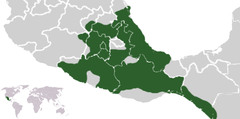
British Empire

Dutch

Fur Trade

Inca Empire

Portugese

Safavid Map

Songhay

Spanish empire

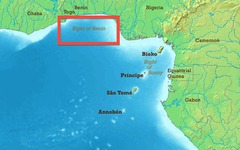
bight of benin
Cape Horn

Cape of Good Hope

Cuba

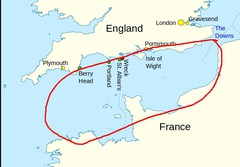
English Channel
Mozambique Channel

Philippine Islands

Strait of Hormuz

North America

Central America

Caribbean

South America
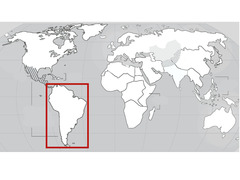
The Americas

Western Europe

Mediterranean
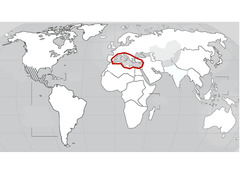
Eastern Europe

Central Asia

Middle East

South Asia

East Asia

Southeast Asia

Oceania

North Africa

West Africa

Central Africa

South Africa

East Africa

Africa

Pacific Ocean
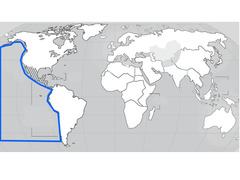
Atlantic Ocean

Indian Ocean

Pacific Ocean

Acapulco

Amsterdam

Beijing

Calicut

Canton
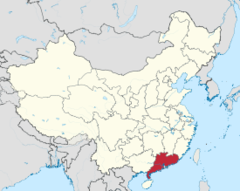
Delhi

Goa

Isfahan

Istanbul

Kyoto
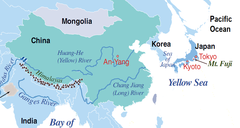
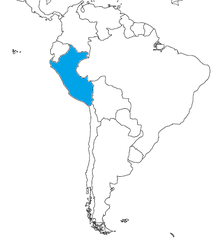
Lima
London

Macao
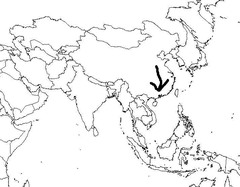
Malacca

Manila

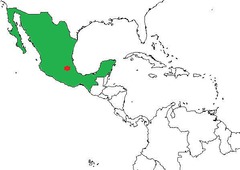
Mexico City
Mombasa

Moscow

Paris

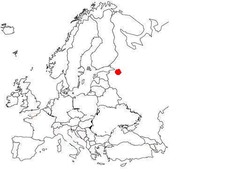
St. Petersburg
Venice

Vienna

Songhai Empire

Kongo

Ottoman Empire
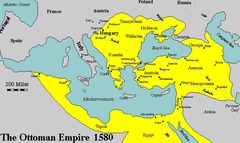
Mughal Empire

Russia

Dahomey
West African kingdom that became strong through its rulers' exploitation of the slave trade.
Ming dynasty

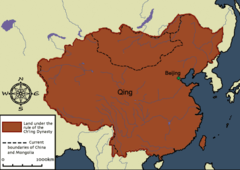
Qing dynasty
Tokugawa shogunate

African Diaspora
Name given to the spread of African peoples across the Atlantic via the slave trade.
Akbar
The most famous emperor of India's Mughal Empire (r. 1556-1605); his policies are noted for their efforts at religious tolerance and inclusion.
Aurangzeb
Mughal emperor (r. 1658-1707) who reversed his predecessors' policies of religious tolerance and attempted to impose Islamic supremacy.
Benin
West African kingdom (in what is now Nigeria) whose strong kings sharply limited engagement with the slave trade.
Bhakti
Hindu devotional movement that flourished in the early modern era, emphasizing music, dance, poetry, and rituals as means by which to achieve direct union with the divine.
cartaz
A pass that the Portuguese required of all merchant vessels attempting to trade in the Indian Ocean.
Catholic Counter-Reformation
An internal reform of the Catholic Church in the sixteenth century; thanks especially to the work of the Council of Trent (1545-1563), Catholic leaders clarified doctrine, corrected abuses and corruption, and put a new emphasis on education and accountability.
Columbian exchange
The massive transatlantic interaction and exchange between the Americas and Afro-Eurasia that began in the period of European exploration and colonization.
conquistadores
Spanish conquerors of the Native American lands, most notably the Aztec and Inca empires.
Council of Trent
The main instrument of the Catholic Counter- Reformation (1545-1563), at which the Catholic Church clarified doctrine and corrected abuses
creoles
Spaniards born in the Americas.
Dahomey
West African kingdom that became strong through its rulers' exploitation of the slave trade.
Daimyo
Feudal lords of Japan who ruled with virtual independence thanks to their bands of samurai warriors.
Darwin, Charles
Highly influential English biologist (1809-1882) whose theory of natural selection continues to be seen by many as a threat to revealed religious truth.
deism
Belief in a divine being who created the cosmos but who does not intervene directly in human affairs.
devshirme
The tribute of boy children that the Ottoman Turks levied from their Christian subjects in the Balkans; the Ottomans raised the boys for service in the civil administration or in the elite Janissary infantry corps.
Edict of Nantes
Issued by French king Henry IV that granted considerable religious toleration to French Protestants and ended the French Wars of Religion.
European Enlightenment
European intellectual movement of the eighteenth century that applied the lessons of the Scientific Revolution to human affairs and was noted for its commitment to open-mindedness and inquiry and the belief that knowledge could transform human society.
Freud, Sigmund
Austrian doctor and the father of modern psychoanalysis (1856-1939); his theories about the operation of the human mind and emotions remain influential today
Galilei, Galileo
Italian astronomer (1564-1642) who further developed the ideas of Copernicus and whose work was eventually suppressed by the Catholic Church.
Huguenots
The Protestant minority in France.
Jesuits in China
Series of missionaries in the late sixteenth and seventeenth centuries who, inspired by the work of Matteo Ricci, made extraordinary efforts to understand and become a part of Chinese culture in their efforts to convert the Chinese elite, although with limited success.
Little Ice Age
A period of cooling temperatures and harsh winters that lasted for much of the early modern era.
Luther, Martin
German priest and theologian (1483-1546) who inaugurated the Protestant Reformation movement in Europe
Manila
Capital of the Spanish Philippines and a major multicultural trade city that already had a population of more than 40,000 by 1600.
Marx, Karl
German philosopher (1818-1883) whose view of human history as a class struggle formed the basis of socialism.
mestizo
Literally, "mixed"; a term used to describe the mixed-race population of Spanish colonial societies in the Americas.