History of Glass
 Call Kai
 Learn
 Practice Test
 Spaced Repetition
 Match
 Flashcards
 Knowt Play
1/158

There's no tags or description
Looks like no tags are added yet.
159 Terms

Object: Bottle
Maker: Pietro Bigaglia
Date: c. 1846
Technique: Polychrome filigree.
Context: Made during the revival of Murano blown glass in the nineteenth century. Bigaglia was among the craftsmen who helped revive traditional glassmaking.
Textbook: PDF p. 154 · Printed p. 172

Object: Bowl
Maker: Pietro Bigaglia
Date: c. 1846
Technique: Polychrome filigree.
Context: Part of the nineteenth-century revival of Murano glassmaking, when craftsmen began revisiting and reproducing historic glass traditions.
Textbook: PDF p. 155 · Printed p. 172


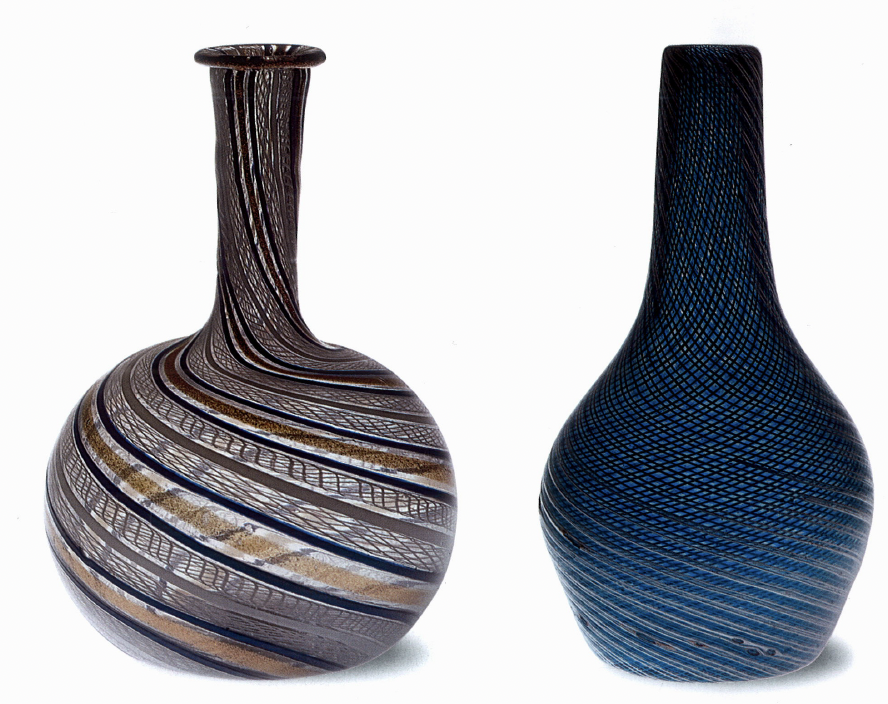
Pietro Bigaglia — bottles in different polychrome filigrees
Maker: Pietro Bigaglia
Date: c. 1846
Technique: Reticulate retortoli filigree and twisted glass threads; some examples incorporate aventurine.
Context / visual clues: Bigaglia helped revive historic Murano techniques after antique dealer Antonio Sanquirico brought old retortoli pieces to Murano to be copied. The forms are relatively solid and restrained, reflecting Biedermeier taste in Venice.
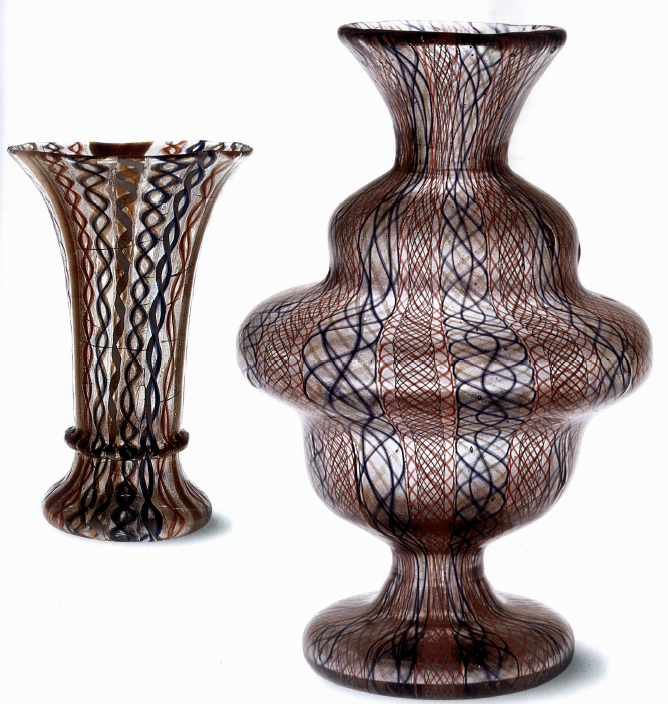
Pietro Bigaglia — vases and bottle in reticulate
Maker: Pietro Bigaglia
Date: c. 1846
Technique: Reticulate or retortoli filigree incorporating aventurine.

Maker: Pietro Bigaglia
Date: c. 1846
Technique: Polychrome filigree.
Context: The candlestick clearly demonstrates the use of aventurine in the filigree. Bigaglia helped revive traditional Murano blown glass.
Textbook: PDF p. 161 · Printed p. 179

Maker: Pietro Bigaglia
Date: c. 1846
Technique: Polychrome filigree.
Context: Part of Bigaglia's experiments with coloured glass filaments and the revival of traditional Murano glassmaking.
Textbook: PDF p. 161 · Printed p. 179

Lorenzo Graziati
bowl in reticulate and retortoli filigree
c. 1850
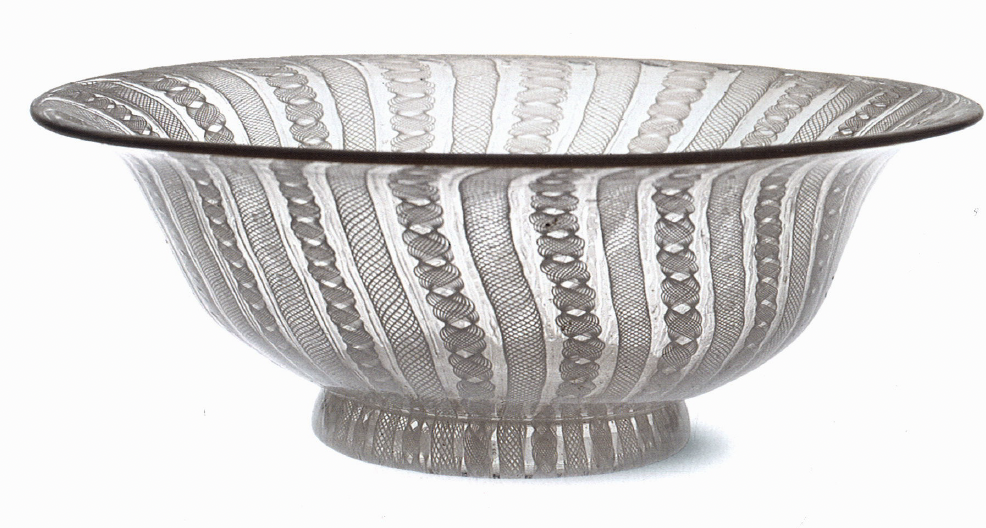
Maker: Lorenzo Graziati
Date: c. 1850
Technique: Reticulate and retortoli filigree.
Context: Graziati's work was technically accomplished, although its design was relatively linear and solid.
Textbook: PDF p. 163 · Printed p. 181
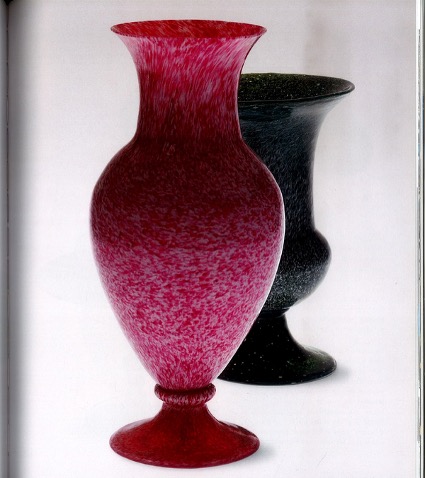
Maker: Pietro Bigaglia
Textbook: PDF p. 163 · Printed p. 181 |
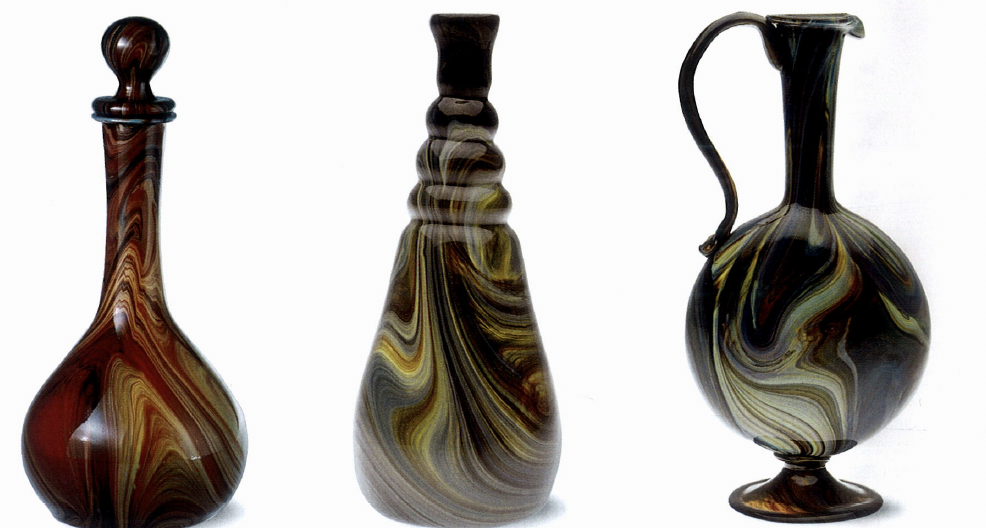
Maker: Lorenzo Radi
Date: 1856
Technique: Calcedonio glass.
Context: The glass has veining that varies from red to green. Radi helped rediscover the lost formula for fifteenth-century calcedonio glass.
Textbook: PDF p. 164 · Printed p. 182

Maker: Lorenzo Radi
Date: 1856
Technique: Calcedonio glass.
Context: The glass has veining that varies from red to green. Radi helped rediscover the lost formula for fifteenth-century calcedonio glass.
Textbook: PDF p. 164 · Printed p. 182

Maker: Lorenzo Radi
Date: 1856
Technique: Calcedonio glass.
Context:The glass has veining that varies from red to green. Radi helped rediscover the lost formula for fifteenth-century calcedonio glass.
Textbook: PDF p. 164 · Printed p. 182

Maker: Lorenzo Radi
Date: 1856
Technique: Calcedonio glass.
Context: Radi received recognition for his experiments with glass pastes and the reproduction of glassware imitating agate chalcedony.
Textbook: PDF p. 169 · Printed p. 187

Toso Brothers Glassworks
large goblet with lid
c. 1864
stem is decorated with a large and elaborate medallion.
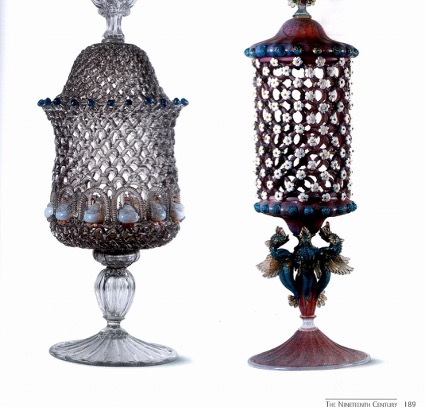
Maker: Toso Brothers Glassworks
Date: c. 1867
Technique: Reticulate filigree; opaline glass decoration.
Context: Small geese in opaline glass are enclosed within niches in the reticulate structure. The filaments were freely worked by hand.
Textbook: PDF p. 171 · Printed p. 189
Maker: Toso Brothers Glassworks
Date: c. 1867
Technique: Reticulate filigree with lattimo decoration.
Context: Small lattimo flowers are applied at every junction of the reticulate weave.

Maker: Toso Brothers Glassworks
Date: 1867
Technique: Blown glass with elaborate applied decoration.
Context: Barley-twist columns decorate both the stem and the top of the lid.
Textbook: PDF p. 173 · Printed p. 191

Maker: Salviati & Co.
Date: Not specified in the caption.
Technique: Reticulate filigree in lattimo and aventurine, with blue glass.
Context: Salviati aimed to revive fifteenth- and sixteenth-century Venetian glassmaking while retaining distinctly Venetian features.
Textbook: PDF p. 173 · Printed p. 191

Maker: Salviati & Co.
Date: c. 1867
Technique: Turquoise glass paste with a lattimo flower handle.
Context: The white and yellow flower contrasts with the brilliant turquoise surface. Salviati's workshop used repeated experimentation to improve workmanship.
Textbook: PDF p. 175 · Printed p. 193
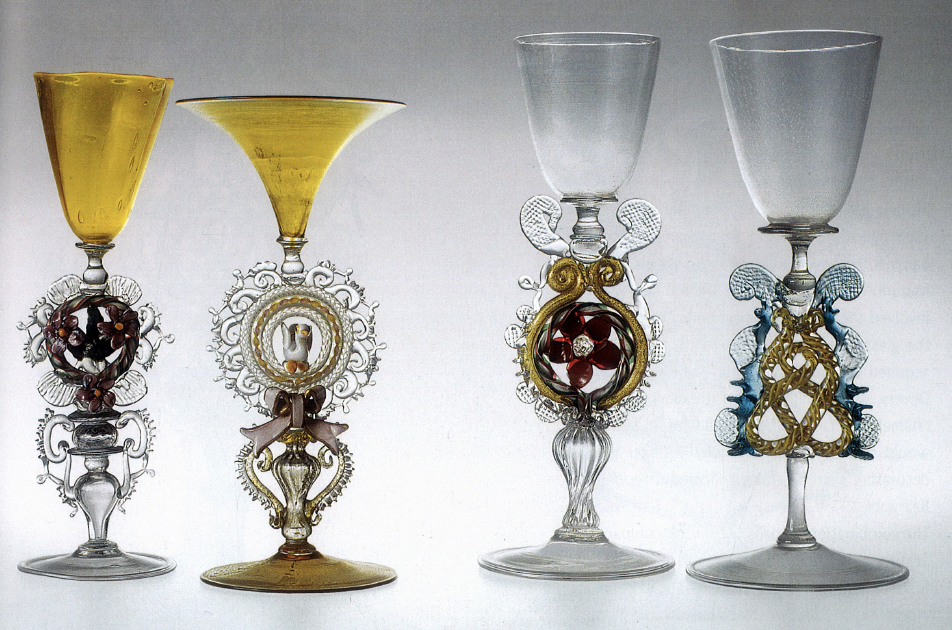
Maker: Salviati & Co.
Date: c. 1867
Technique: Elaborately worked stem decoration.
Context: Some stem medallions feature flowers and animals, while others are enveloped in serpentine glass threads.
Textbook: PDF p. 175 · Printed p. 193

Salviati and C
Drinking glasses
c. 1877
cups are established with filagree work
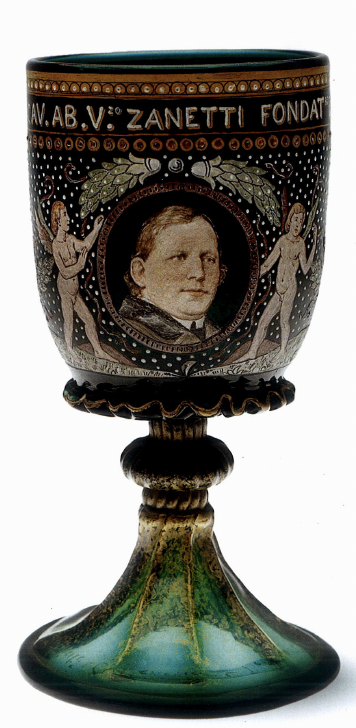
The venice and Murano Glass and Mosaic Company (salviati and co)
c.1873
resaissance style green glass goblet bearing portrait of Abbot Vincenzo Zanetti

Salviati & Co. — Mosque lamp
Maker: Salviati & Co.
Date: c. 1869
mosque lamp decorated n gold and polychrome enamels by Leopoldo Berzotti
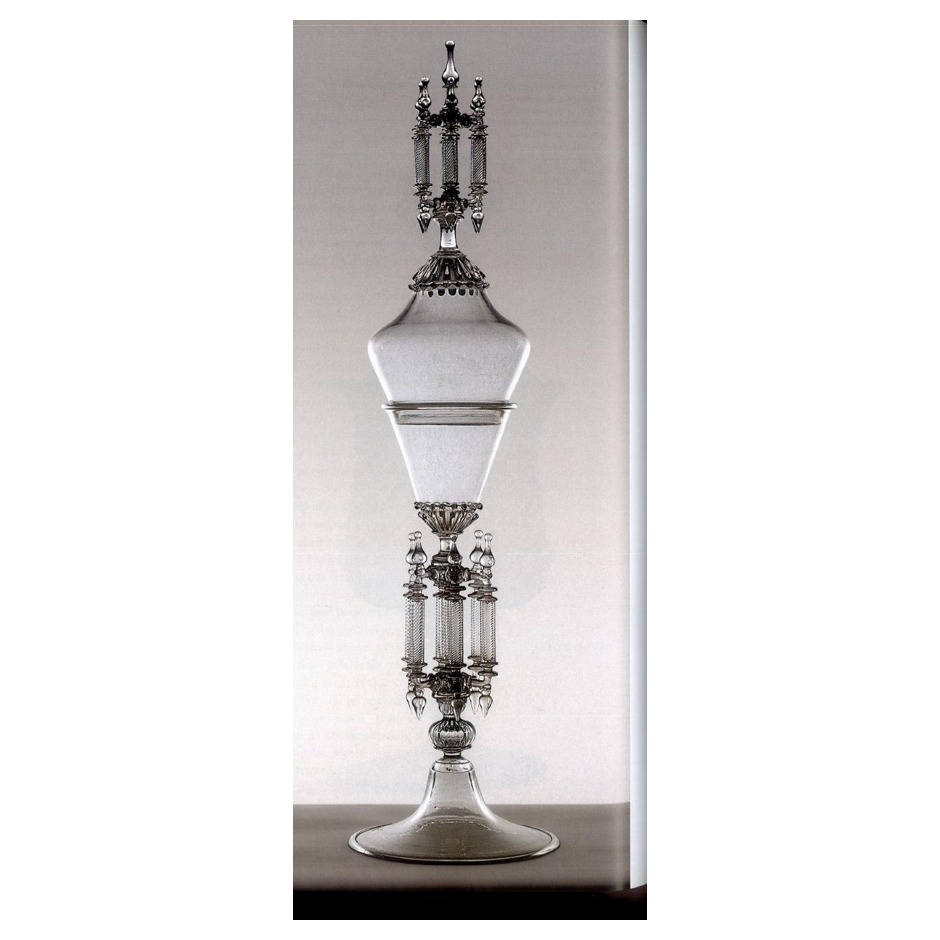
Maker: Toso Brothers Glassworks
Date: 1867
Technique: Blown glass with elaborate applied decoration.
Context: Barley-twist columns decorate both the stem and the top of the lid.
Textbook: PDF p. 173 · Printed p. 191

Maker: Toso Brothers Glassworks
Date: 1875–1880
Technique: Hot-applied blue glass filaments.
Context: A variation of the Guggenheim Cup. The complicated chainwork of the original was replaced by equally challenging decoration made with blue glass filaments.
Textbook: PDF p. 181 · Printed p. 199
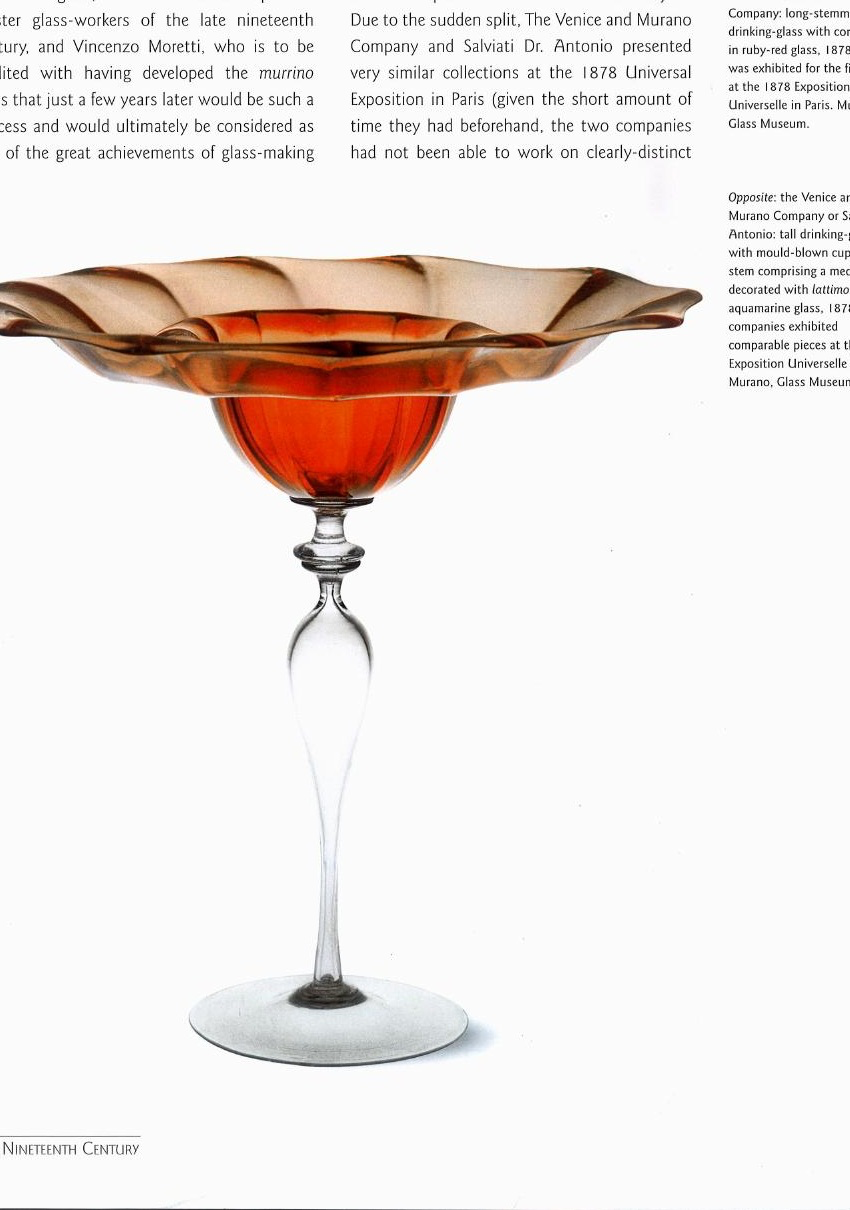
Maker: The Venice and Murano Company
Date: 1878
Technique: Blown glass; ruby-red corolla-shaped cup.
Context: Exhibited for the first time at the 1878 Exposition Universelle in Paris. Noted for its refined colour and elegant proportions.
Textbook: PDF p. 182 · Printed p. 200
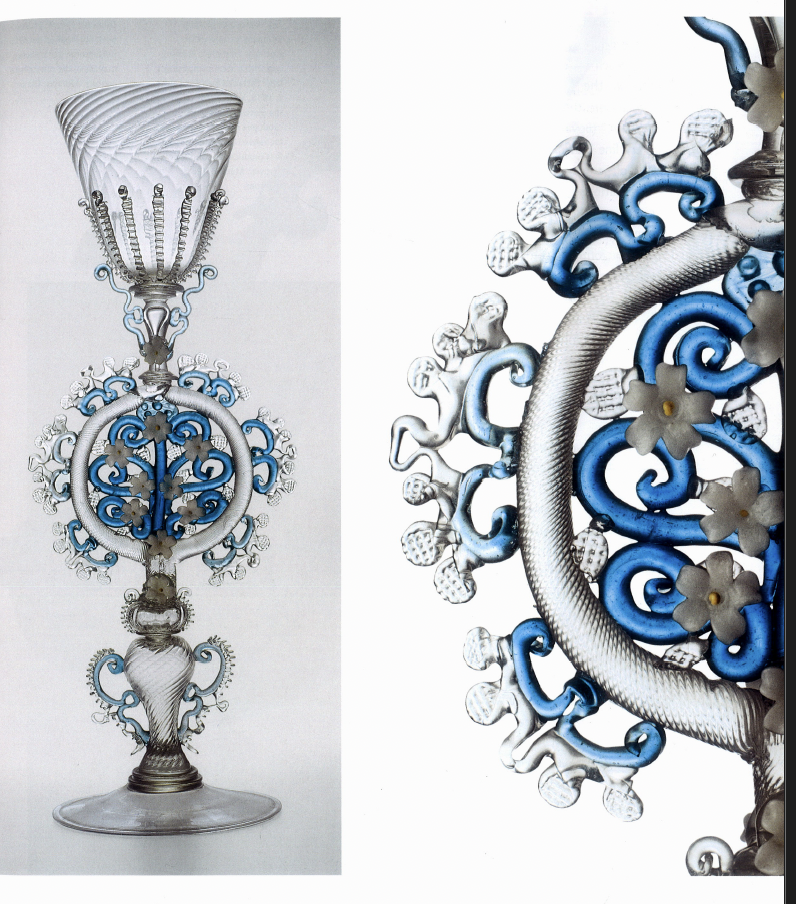
Salviati Dr. Antonio
c.1878
Tall drinking glass with mould blown cup on a stem. decorated with latimo and acquamarine glass
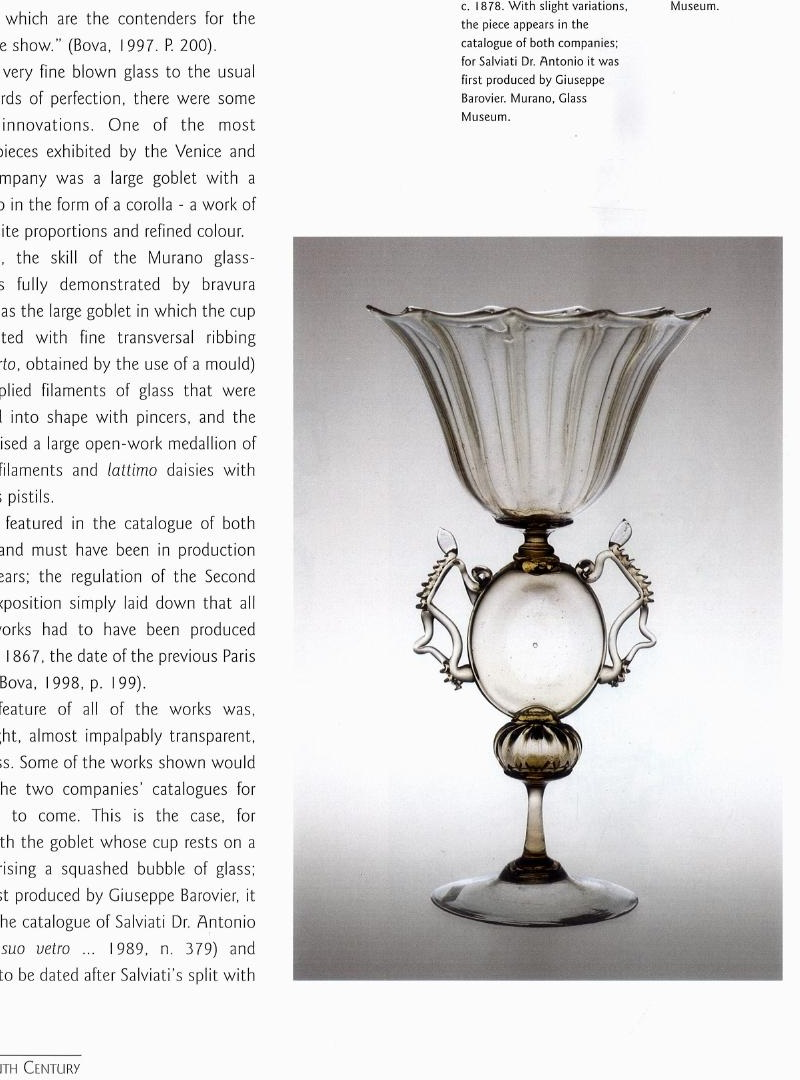
Maker: The Venice and Murano Company or Salviati Dr. Antonio
Date: c. 1878
Technique: Very thin blown glass; stem formed from a large flattened bubble of glass.
Context: The design was probably first produced by Giuseppe Barovier and appeared in the catalogues of both companies, with slight variations.
Textbook: PDF p. 184 · Printed p. 202

Girasol Glassware with hot applied decoration in polychrome glass pastes.
c. last quarter of 19th century
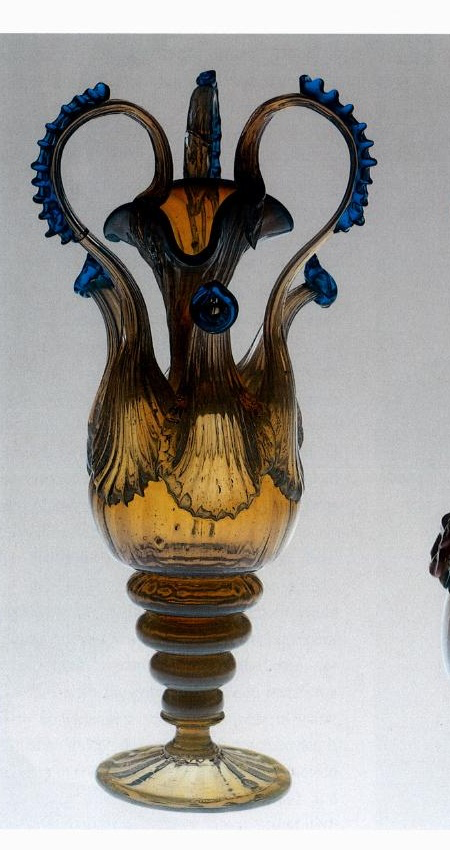
Maker: Murano glassworks; individual maker not specified.
Date: Last quarter of the nineteenth century.
Technique: Girasol glass with hot-applied decoration in polychrome glass pastes.
Context: Girasol glass was popular across the island's glassworks. Its shifting light and tones were combined with colourful applied decoration.
Textbook: PDF p. 186–187 · Printed p. 204–205

Maker: The Venice and Murano Company or Salviati Dr. Antonio
Date: Last quarter of the nineteenth century.
Technique: Very fine glass; a range of different stem designs.
Context: Both companies produced numerous variations of the flute wine-glass, with an apparently endless variety of stems.
Textbook: PDF p. 187 · Printed p. 205
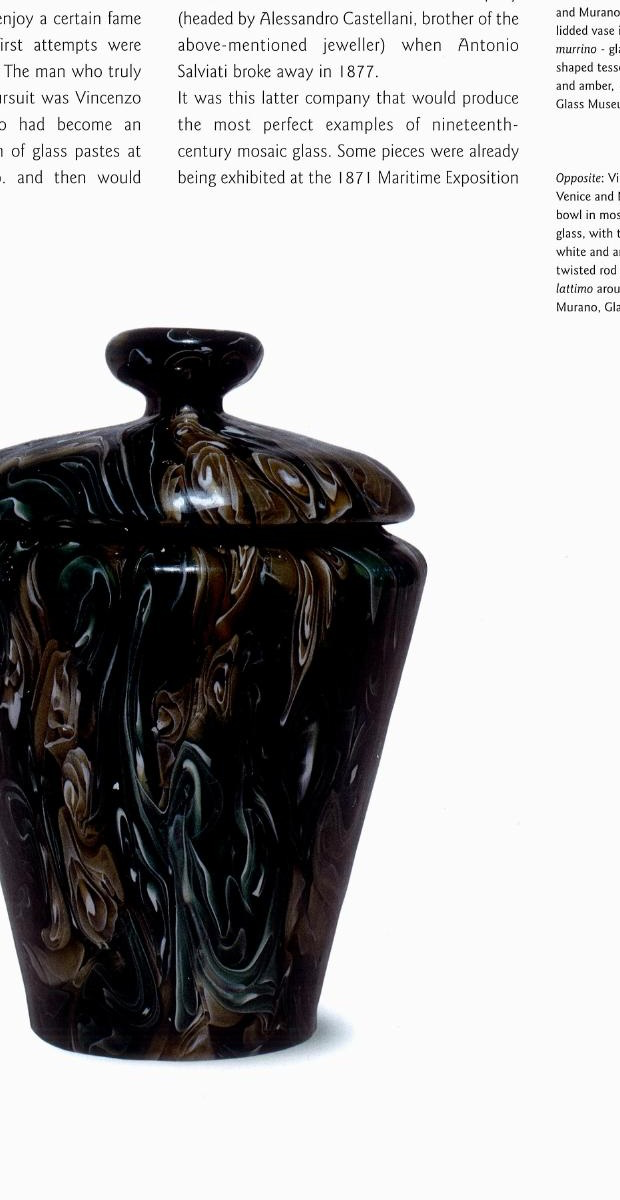
Maker: Vincenzo Moretti / The Venice and Murano Company
Date: 1878
Technique: Mosaic or murrino glass, with spiral-shaped tesserae in white, green and amber.
Context: Moretti was responsible for developing the nineteenth-century revival of murrino glass. The company produced some of the finest examples.
Textbook: PDF p. 189 · Printed p. 207

Maker: Vincenzo Moretti / The Venice and Murano Company
Date: 1878
Technique: Murrino glass with tesserae in blue, white and amethyst; twisted amethyst and lattimo rod around the rim.
Context: Part of the revival of ancient mosaic glass techniques during the nineteenth century.
Textbook: PDF p. 189 · Printed p. 207

Maker: Vincenzo Moretti / The Venice and Murano Company
Date: c. 1880
Technique: Murrino glass with decorative floral and animal motifs.
Context: Moretti used different-coloured tesserae to create flowers, birds and butterflies. His work demonstrated the range of patterns possible with mosaic glass.
Textbook: PDF p. 191 · Printed p. 209

Maker: Vincenzo Moretti / The Venice and Murano Company
Date: c. 1880
Technique: Turquoise mosaic or murrino glass, decorated with floral motifs.
Context: The plate demonstrates Moretti's ability to combine different-coloured tesserae into complex decorative patterns.
Textbook: PDF p. 191 · Printed p. 209
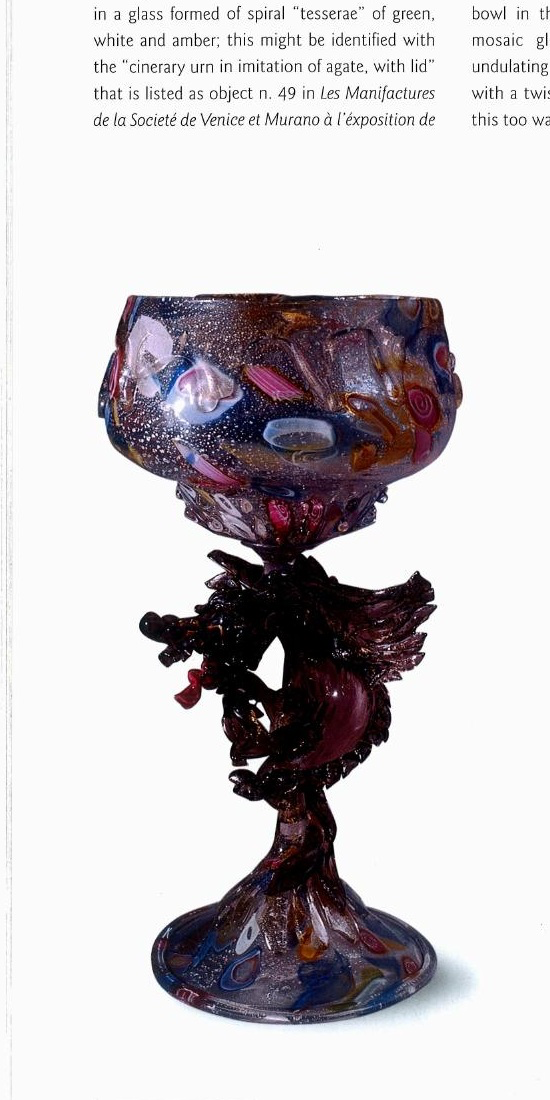
Maker: Toso Brothers Glassworks
Date: 1880
Technique: Polychrome murrino glass.
Context: Large goblet with a dragon forming the stem. The cup and foot are also made from polychrome murrino glass.
Textbook: PDF p. 192 · Printed p. 210
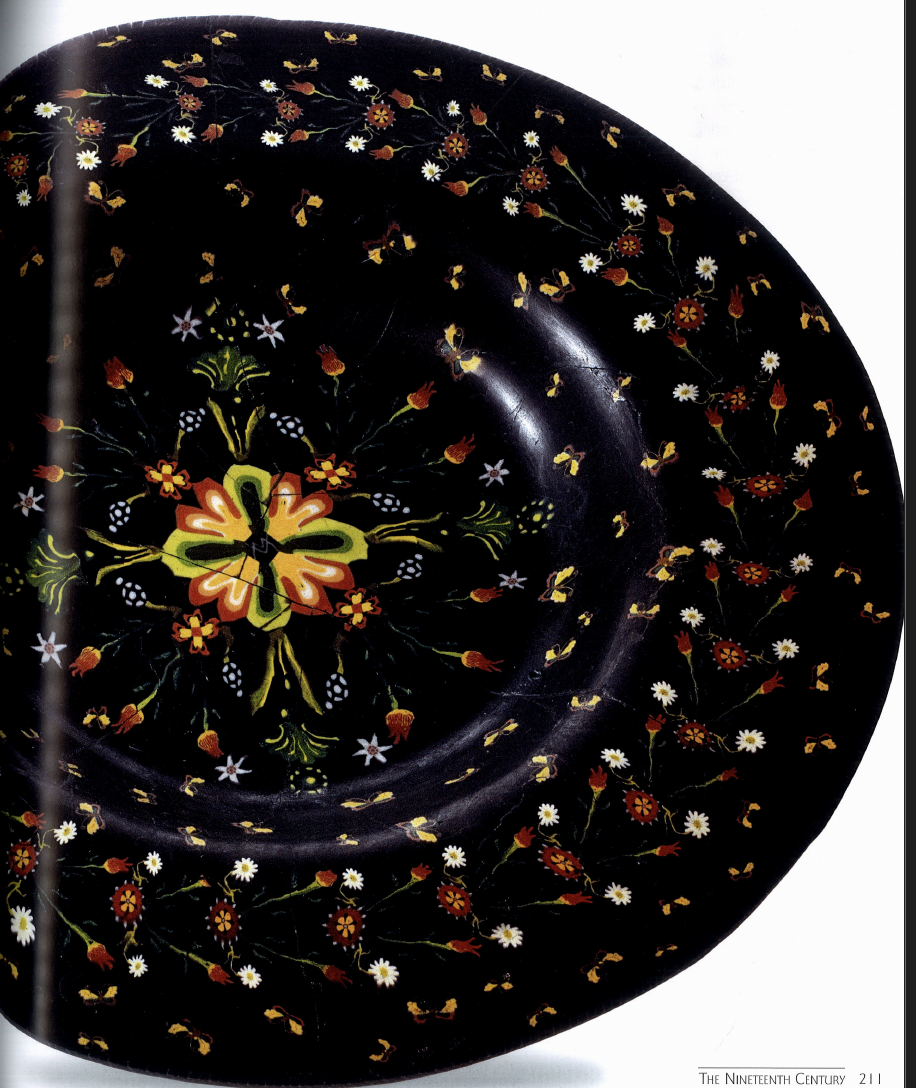
Vincenzo Moretti
large plate in mosaic glass decorated with floral motifs
c. 1879-83

Maker: The Venice and Murano Company
Date: 1878
Technique: Reticulate decoration using hot-applied interlocking glass threads.
Context: Inspired by a Roman cage cup from the time of Maximianus Augustus, found at Strasbourg. Unlike the original Roman diatreta, which used undercut openwork, the Murano version achieved its effect with applied glass threads.
Textbook: PDF p. 194–195 · Printed p. 212–213

Maker: Giovanni Barovier / Salviati Dr. Antonio
Date: 1881
Technique: Blue mosaic or murrino glass with floral motifs.
Context: The geometric and abstract patterns were inspired by the work of glassmakers from ancient Alexandria.
Textbook: PDF p. 195 · Printed p. 213

Maker: Francesco Fetro & Figlio
Date: c. 1880
Technique: Vetro Corinto, with polychrome variegations.
Context: The shapes and finishes imitated glassware recovered from archaeological sites.
Textbook: PDF p. 196–197 · Printed p. 214–215


Maker: Francesco Fetro & Figlio
Date: c. 1880
Technique: Vetro Corinto, with polychrome variegations.
Context: Part of a group of glassware inspired by ancient glass discovered at archaeological sites.
Textbook: PDF p. 197 · Printed p. 215

Maker: Attilio Spaccarelli
Date: c. 1888
Technique: bowl and glass in two-layer cameo glass
Notes: based on the Giulio Romano work “The batle of constantine” - dhows dance of satyrs and bacchanti

Maker: Francesco Toso Borella
Date: c. 1890-1900
Technique: decoration in engraved gold leaf and polychrome enamels
Notes: goblets in purple glass with classical style decoration
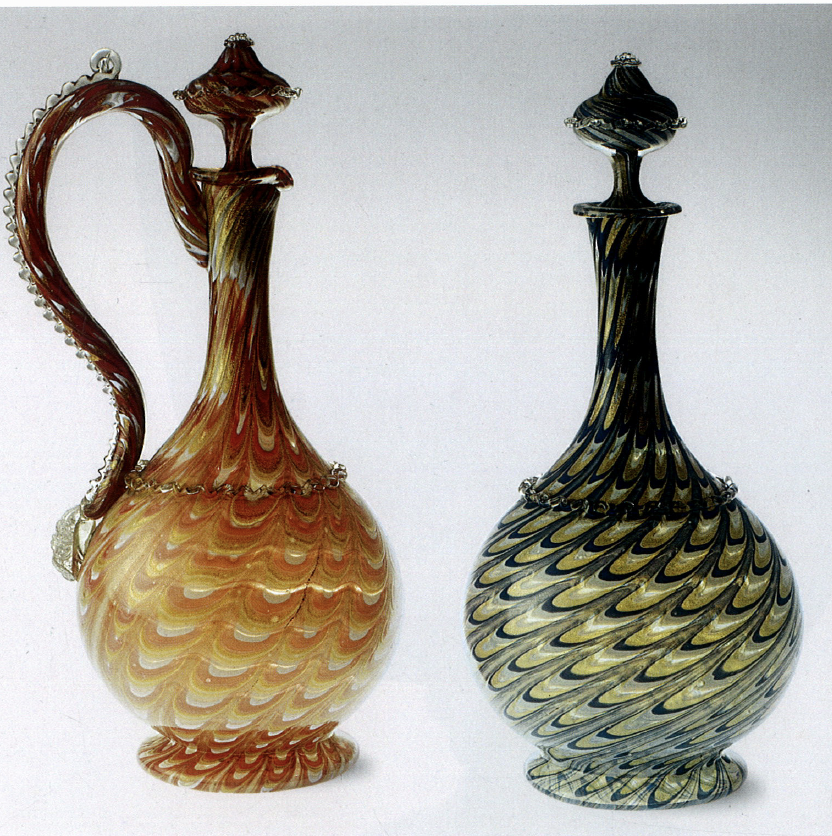
Maker: Giuseppe Barovier / Salviati Dr. Antonio
Date: c. 1883-1890
Technique: bottle and jug with combed “festoon” filaments
Notes : motif referred to at the time as “vetro fenicio or vetro graffito”

Maker: Testolini Brothers Glassworks
Date: c. 1880?
Technique: raised plate in reticulate fume glass

Maker: Salviati Dr. Antonio
Date: c. 1883-1890
Technique: cup and saucer in retortoli filigree of lattimo

Maker: Toso Brothers
Date: c. 1900
Technique: Drinking glass in thje form of a flower

Maker: Barovier
Date: c. 1895
Technique: spiral stemmed cup.

Maker: Toso Brothers Glassworks
Date: c. end of 19th beginning of 20th century
Technique: amphora and bowl in vetro fenicio

Maker: Vittorio Zuffi
Date: c. 1895
Technique: vase with vertical bands of murrine and aventurine

Maker: Toso Brothers Glassworks
Date: c. 1910
Technique: small jug with floral murrine

Maker: Toso Brothers Glassworks
Date: c. 1910
Technique: small vase with alternate vertical bands of murrine with floral motifs and sprigs of flowers
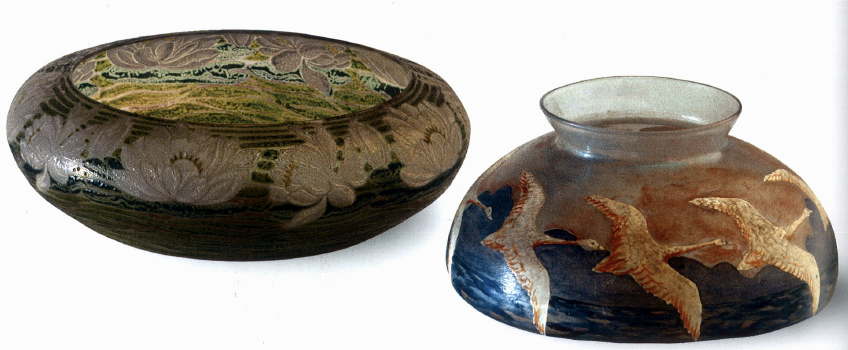
Maker: Vittorio Toso Borella
Date: c. 1909
Technique: bowl and vase deorated in opaque transparent enamels with vaterlillies and herons

Maker: Toso Brothers Glassworks
Date: c. 1910
Technique: black vase with composition of flow3rs and parrot in murrine

Maker: Vittorio Zecchin / Artisti Barrovier
Date: c. 1914
Technique: the “barbarian” plaque in mosaic glass with polychrome tesserae
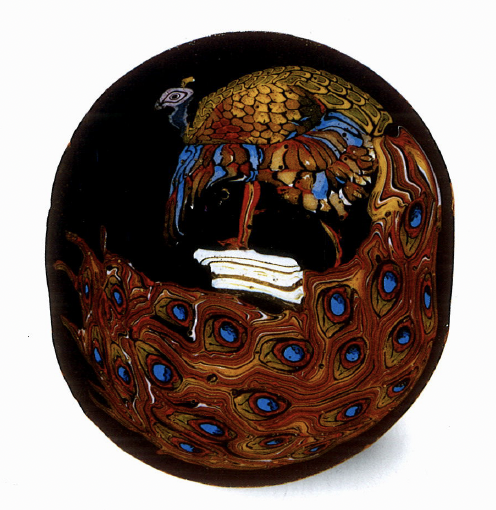
Maker: Giuseppe Barovier
Date: c. 1913
Technique: The Peacock murrina
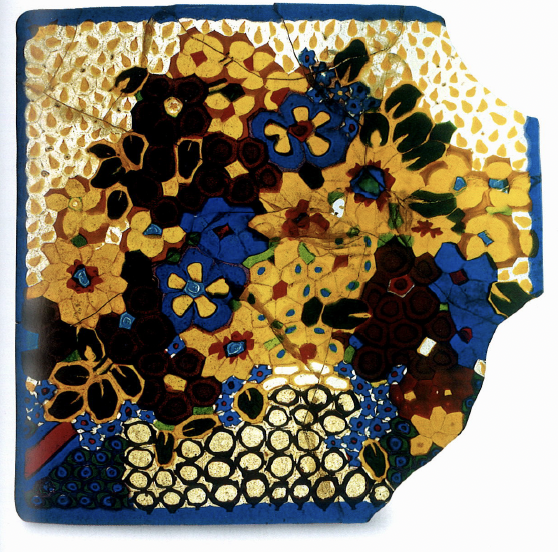
Maker: Teodoro Wolf Ferrari / Artisti Barovier
Date: c. 1914
Technique: tile in polychrome mosaic glass with basket of flowers
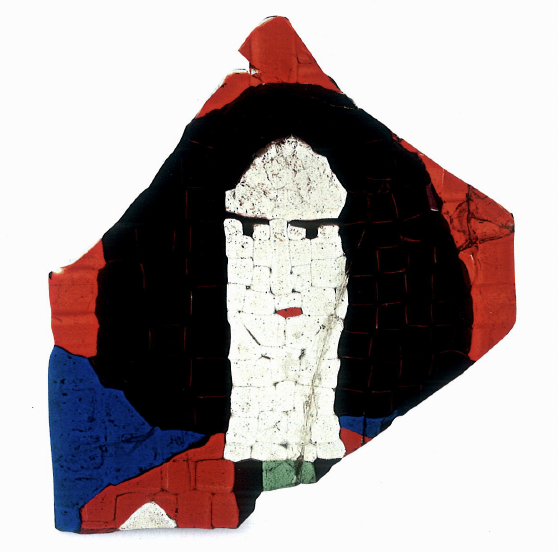
Maker: Vittorio Zecchin / Artisti Barovier
Date: c. 1914
Technique: fragment of tile in mosaic glass bearing a female face formed of polychrome tesserae

Maker: Artisti Barovier
Date: c. 1914
Technique: small vases in mosaic - or murrino - glass, decorated with floral compositions
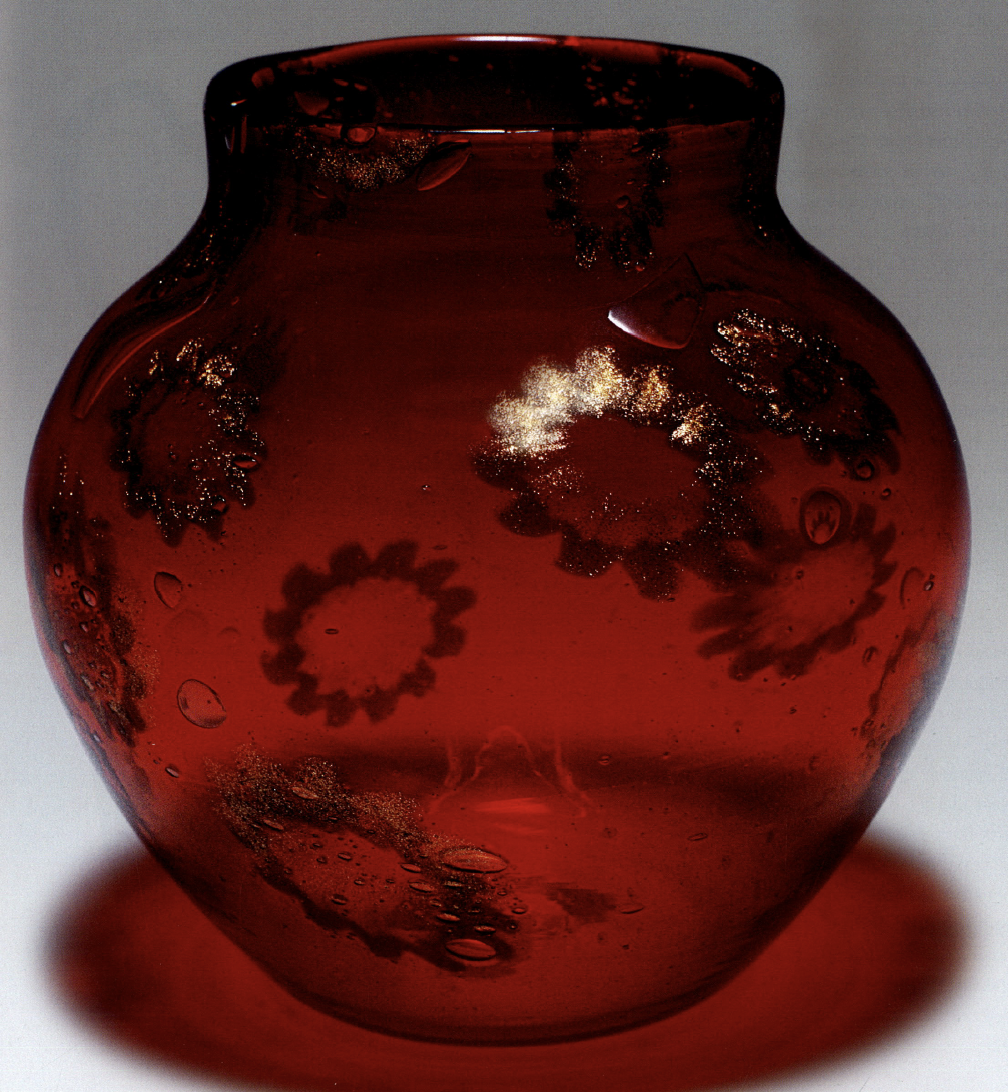
Maker: Artisti Barovier
Date: c. 1910
Technique: vase in ruby red glass with adventurine murrine

Maker: Toso Brothers Glassworks
Date: c. 1920
Technique: small amphora in amethyst glass with alpine daisies in mosaic glass

Maker: Toso Brothers Glassworks
Date: c. 1915
Technique: vase in iridescent blue glass with floral decoration in mosaic glass

Maker: Vetreria Artistica Barovier
Date: c. 1920
Technique: vase with floral decoration, created using powdered glass and glass inlays. other vase in mosaic glass with tree motif
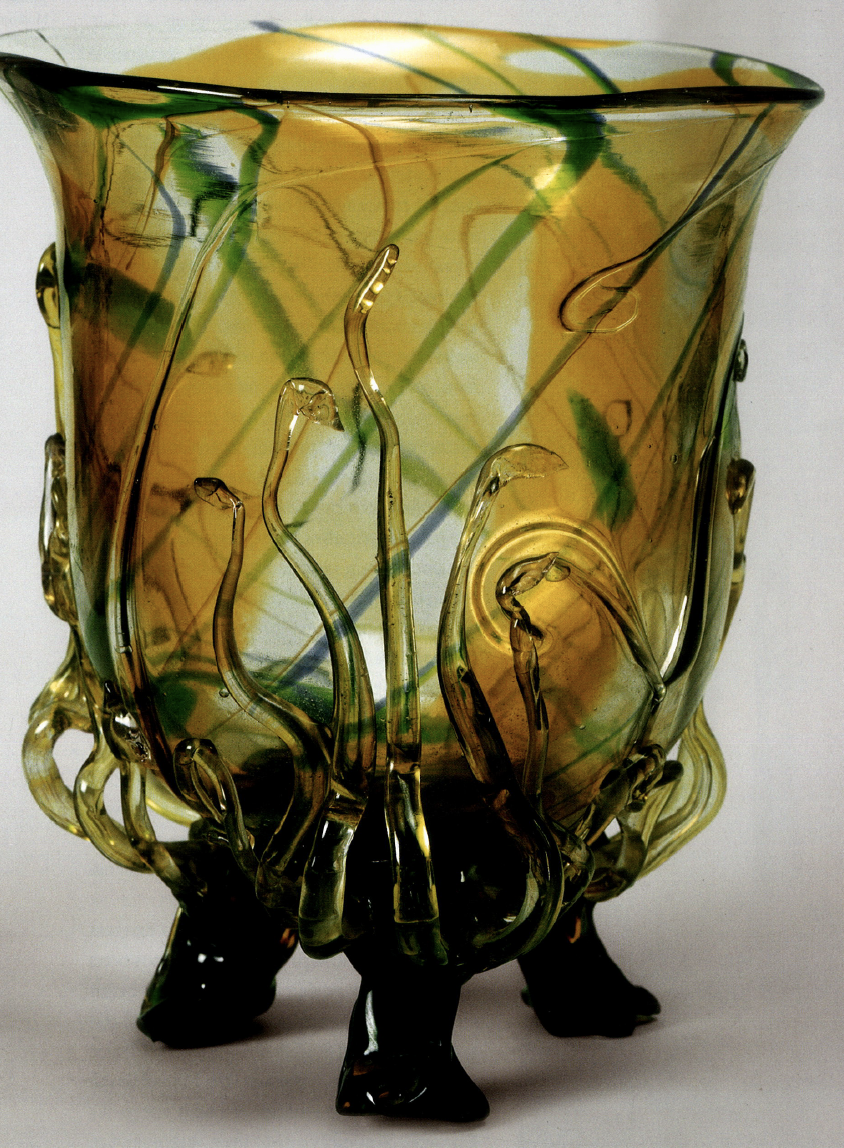
Maker: Hans Stoltenberg Lerche / Toso Brothers Glassworks
Date: c. 1911
Technique: vase with decoration of applied glass filaments
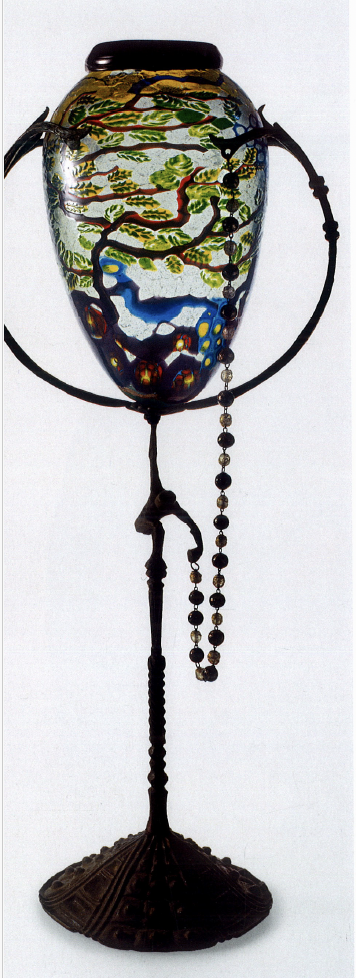
Maker: Vittorio Zecchini / Umberto Bellotto
Date: c. 1920-1924
Technique: peacock vase in mosaic glass, held within wrought iron stand
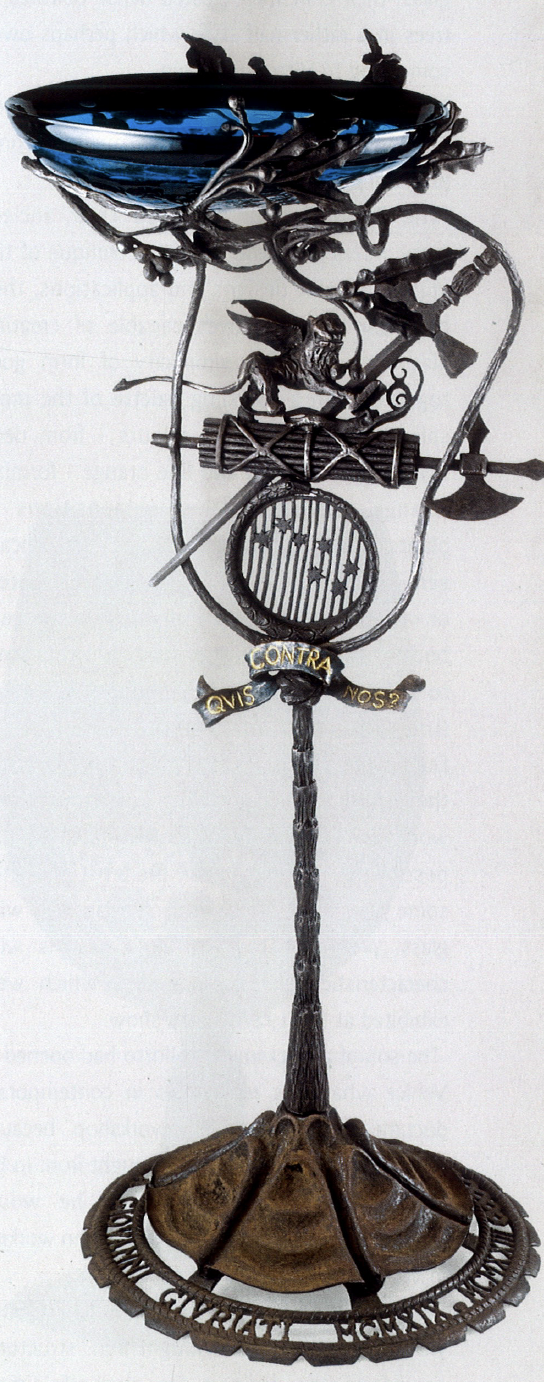
Maker: Umberto Bellotto / Vetreria Artistica Barovier (?)
Date: c. (?)
Technique: Giuriati Cup in mosaic glass with floral decoration. held within a wrought-iron stand comprising various symbolic motifs

Maker: Vittorio Zecchin / Vetreria Artistica Barrovier
Date: c. 1922
Technique: vase and drinking class with decoration in incised gold leaf

Maker: Vittorio Zecchin / VSM Cappellin Venini
Date: c. 1921
Technique: The Libellula (dragonfly bowl)
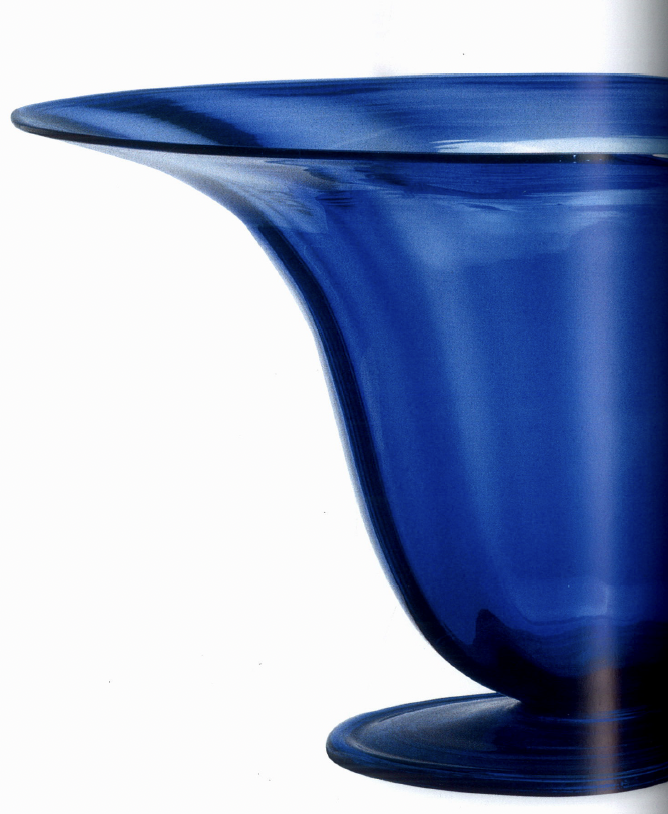
Maker: Vittorio Zecchin / VSM Cappellin Venini
Date: c. 1921-1923
Technique: bowls in extremely light. blown glass
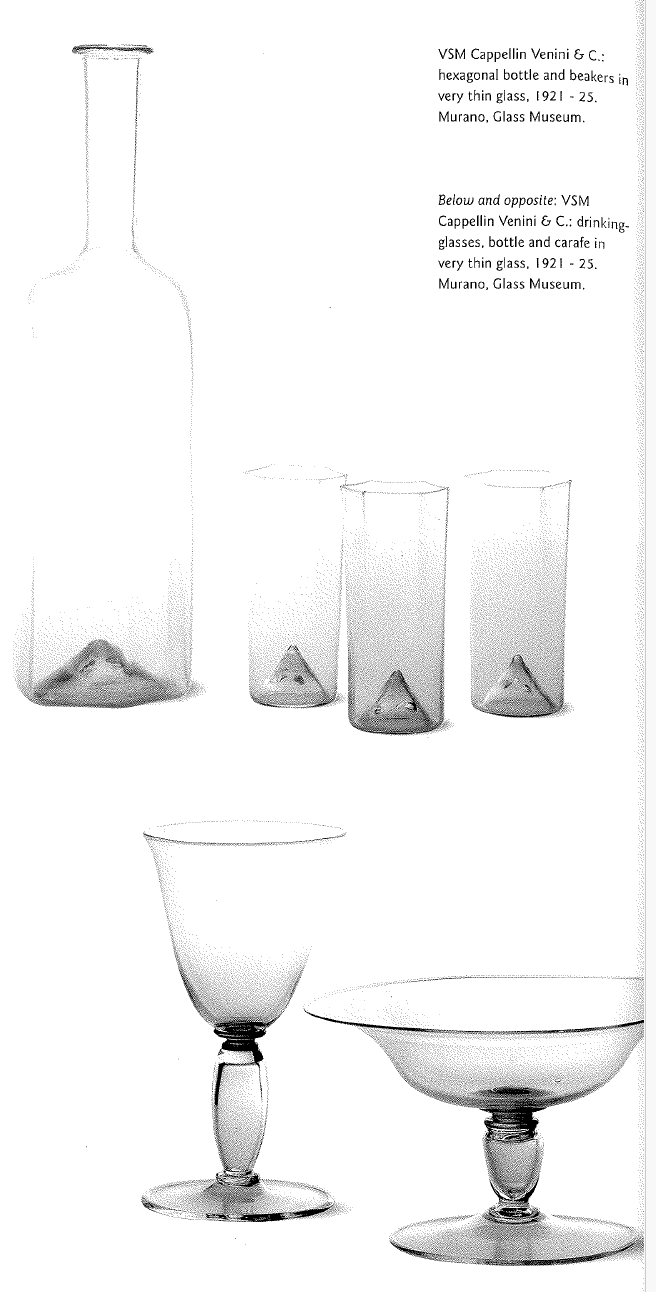
Maker: VSM Cappellin Venini & C.
Date: c. 1921 - 1925
Technique: hexagonal bottle and beakers in very thin glass
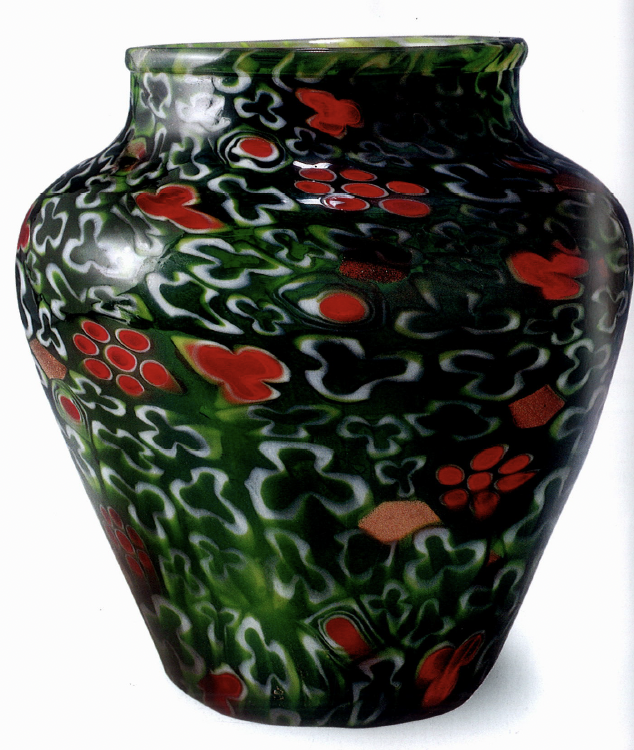
Maker: Vetreria Artistica Barovier
Date: c. 1920-1922
Technique: vase in mosaic glass with floral decoration in tesserae of different- coloured glass and aventurine

Maker: Ercole and Nicolo Barovier / Verreria Artistica Barovier
Date: c. 1924-1925
Technique: Vase in mosaic glas with cherries

Maker: Guido Cadorin / Toso Brothers Glassworks
Date: c. 1923
Technique: bottle with crested decoration and compotier with lid
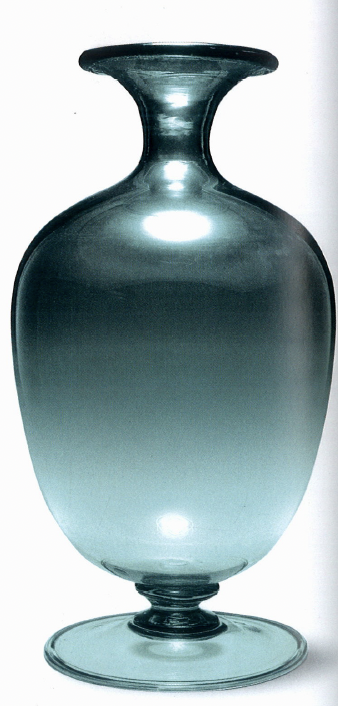
Maker: Vittorio Zecchin / MVM Cappelin & C
Date: c. 1925-1932
Technique: vases in green glass
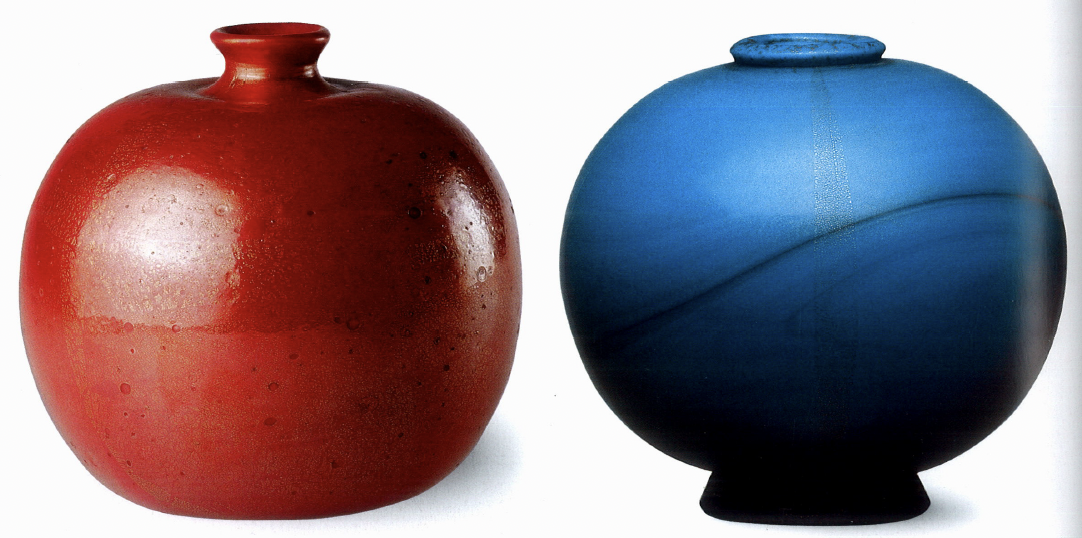
Maker: Carlo Scarpa / MVM Cappellin & C
Date: c. 1930
Technique: carafes in red glass paste with gold leaf and in turquoise glass paste

Maker: Vittorio Zecchin / MVM Cappelin & C
Date: c. 1925 - 1926
Technique: Spherical vase in straw - coloured blown glass with horizontal bands formed of hot-applied filaments of glass

Maker: Carlo Scarpa / MVM Cappelin & C
Date: c. 1930-1931
Technique: carafe in black glass with gold lead blown using a baloton mould
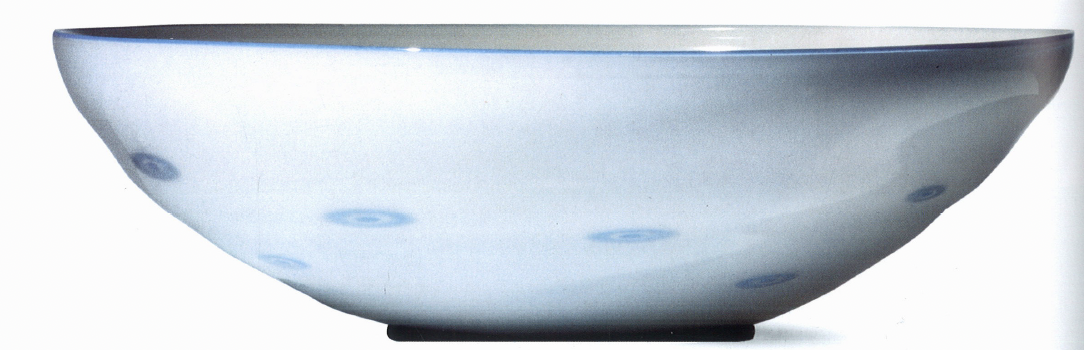
Maker: Carlo Scarpa / MVM Cappelin & C
Date: c. 1930-1931
Technique: bowl in coated lattimo decorated with concetric pale - blue circles (the sections of a glass rod)

Maker: Carlo Scarpa / MVM Cappelin & C
Date: c. 1928-1929
Technique: vase in red glass paste with vetro fenicio decoration in black glass and gold leaf
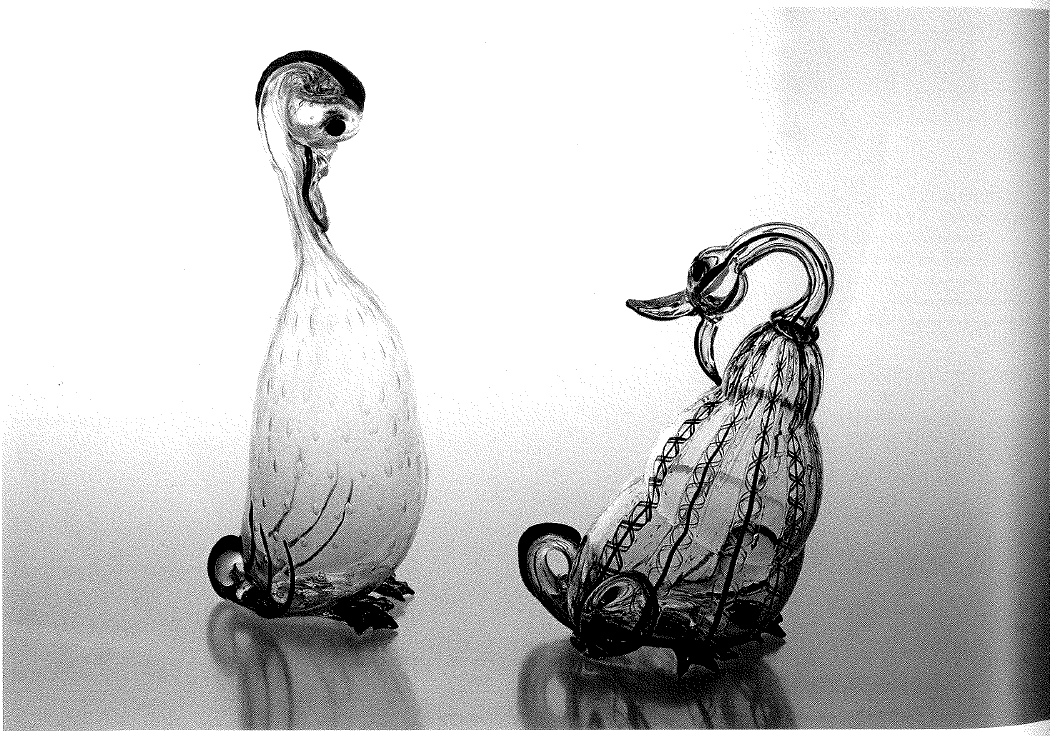
Maker: Napoleone Martinuzzi / VSM Venini & C
Date: c. 1926-1928
Technique: ducks in filigree glass and bubled glass

Maker: Napoleone Martinuzzi / MVM Cappelin & C
Date: c. 1926
Technique: bottles with threads of lattimo

Maker: Napoleone Martinuzzi / MVM Cappelin & C
Date: c. 1926-1930
Technique:cactus in green vetro pulegoso

Maker: Napoleone Martinuzzi / MVM Cappelin & C
Date: c. 1930
Technique: vase with applied fillets

Maker: Napoleone Martinuzzi / MVM Cappelin & C
Date: c. 1926-1930
Technique:case with nine openings (green vetro pulegoso)

Maker: Napoleone Martinuzzi / MVM Cappelin & C
Date: c. 1930
Technique: veiled vase of lattimo coated in red glass with crested handles
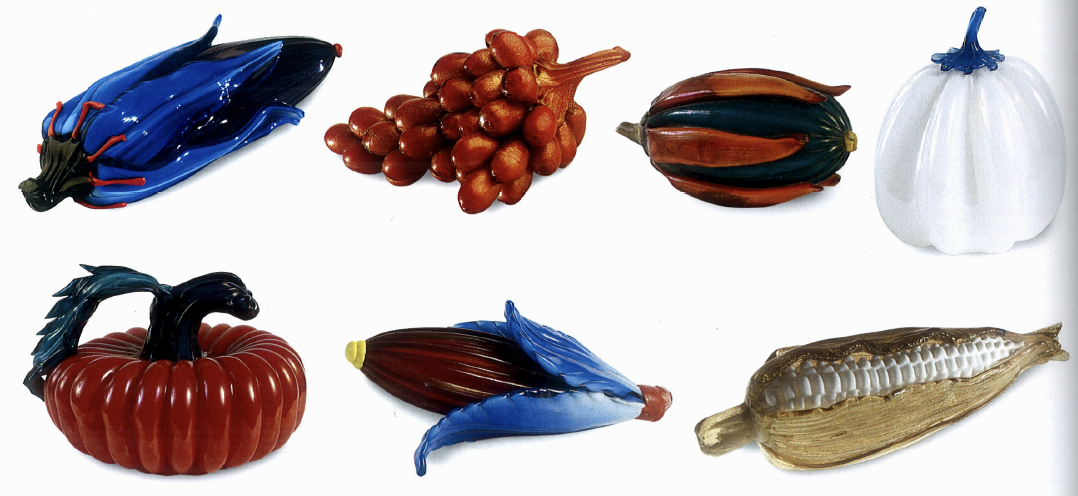
Maker: Napoleone Martinuzzi / MVM Cappelin & C
Date: c. 1930-1934
Technique: fruit and vegetables in polychrome glass paste

Maker: Napoleone Martinuzzi / MVM Cappelin & C
Date: c. 1929
Technique: elephants in blue and red glass paste

Maker: Napoleone Martinuzzi / MVM Cappelin & C
Date: c. 1929
Technique: small elephant in red glass paste

Maker: Napoleone Martinuzzi / MVM Cappelin & C
Date: c. 1930
Technique: unicorn in white vetro pulegoso

Maker: Carlo Scarpa / MVM Cappellin & C
Date: c. 1930-1931
Technique: octopus in green glass with two murrine as eyes
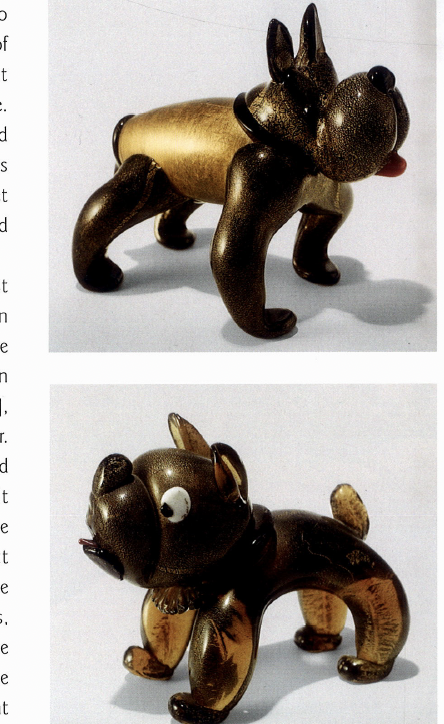
Maker: Ercole Barovier / Vetreria Artistica Barovier
Date: c. 1934
Technique:bulldogs
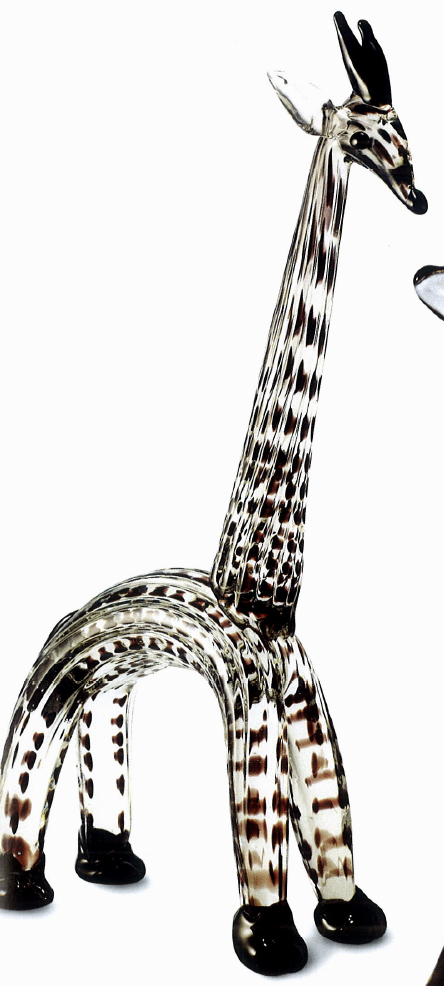
Maker: Ercole Barovier / Vetreria Artistica Barovier
Date: c. 1930
Technique: giraffe with markings in amethyst glass
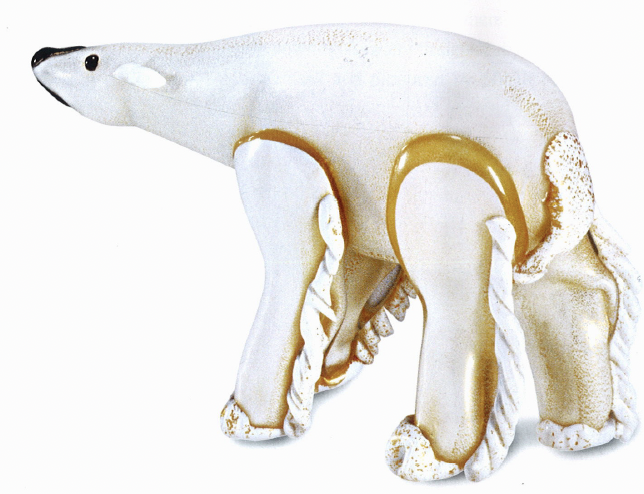
Maker: Ercole Barovier / Vetreria Artistica Barovier
Date: c. 1933
Technique: polar bear in lattimo

Maker: Ercole Barovier / Vetreria Artistica Barovier
Date: c. 1928
Technique: tiger in blown glass

Maker: Ercole Barovier / Vetreria Artistica Barovier
Date: c. 1929 - 1930
Technique: vase and bowl in vetro primavera
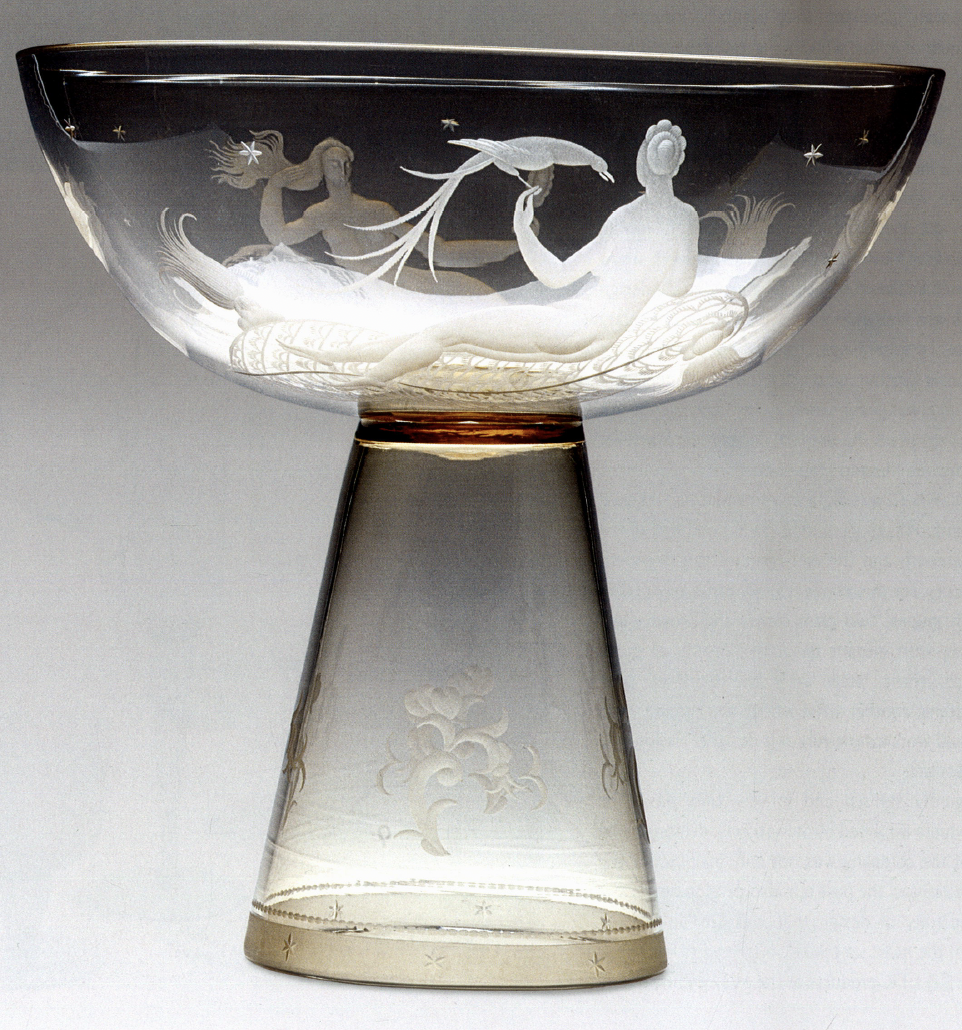
Maker: Guido Balsamo Stella
Date: c. 1930
Technique: large raised bowl with copper-wheel engravings of mythological figures
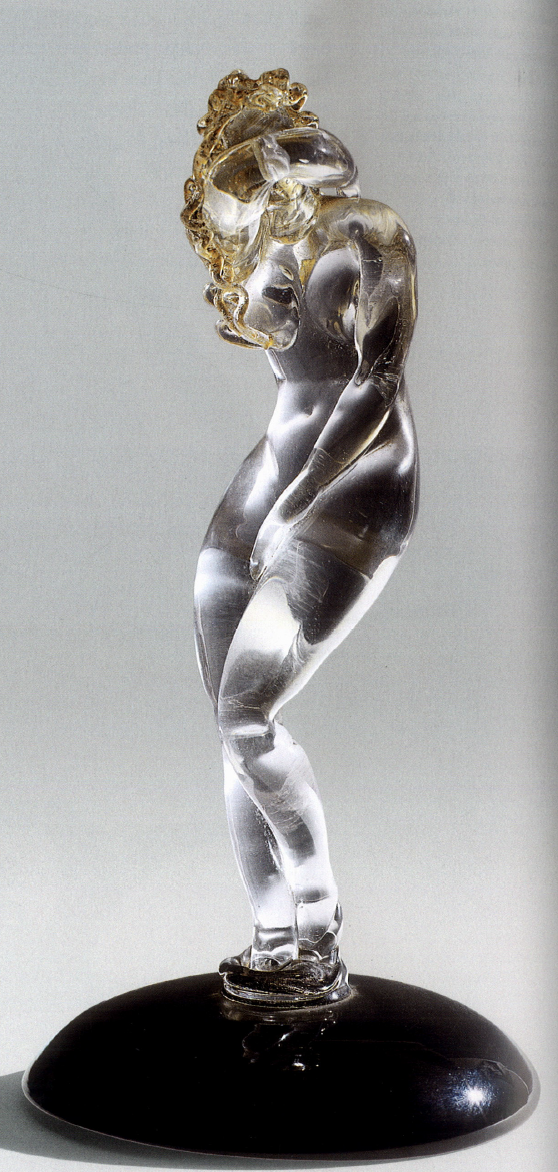
Maker: Giovita Vitali / IVAM
Date: c. 1930
Technique: the Pudic Venus
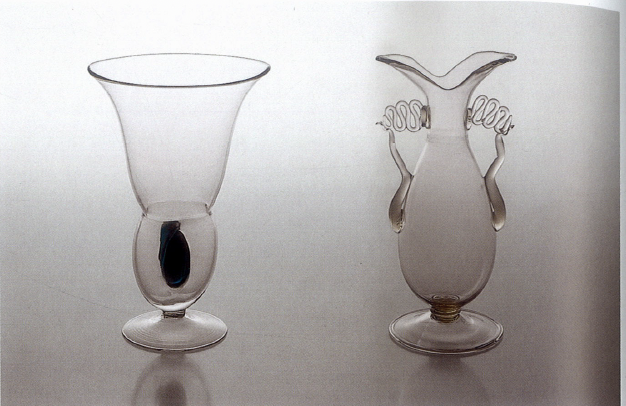
Maker: Dino Martens / Salviati & C
Date: c. 1932
Technique: vase and amphora in very light blown glass vaso

Maker: Ercole Barovier / Vetreria Artistica Barovier
Date: c. 1932
Technique: drinking - glasses in crystal and fume glass with blown glass stem
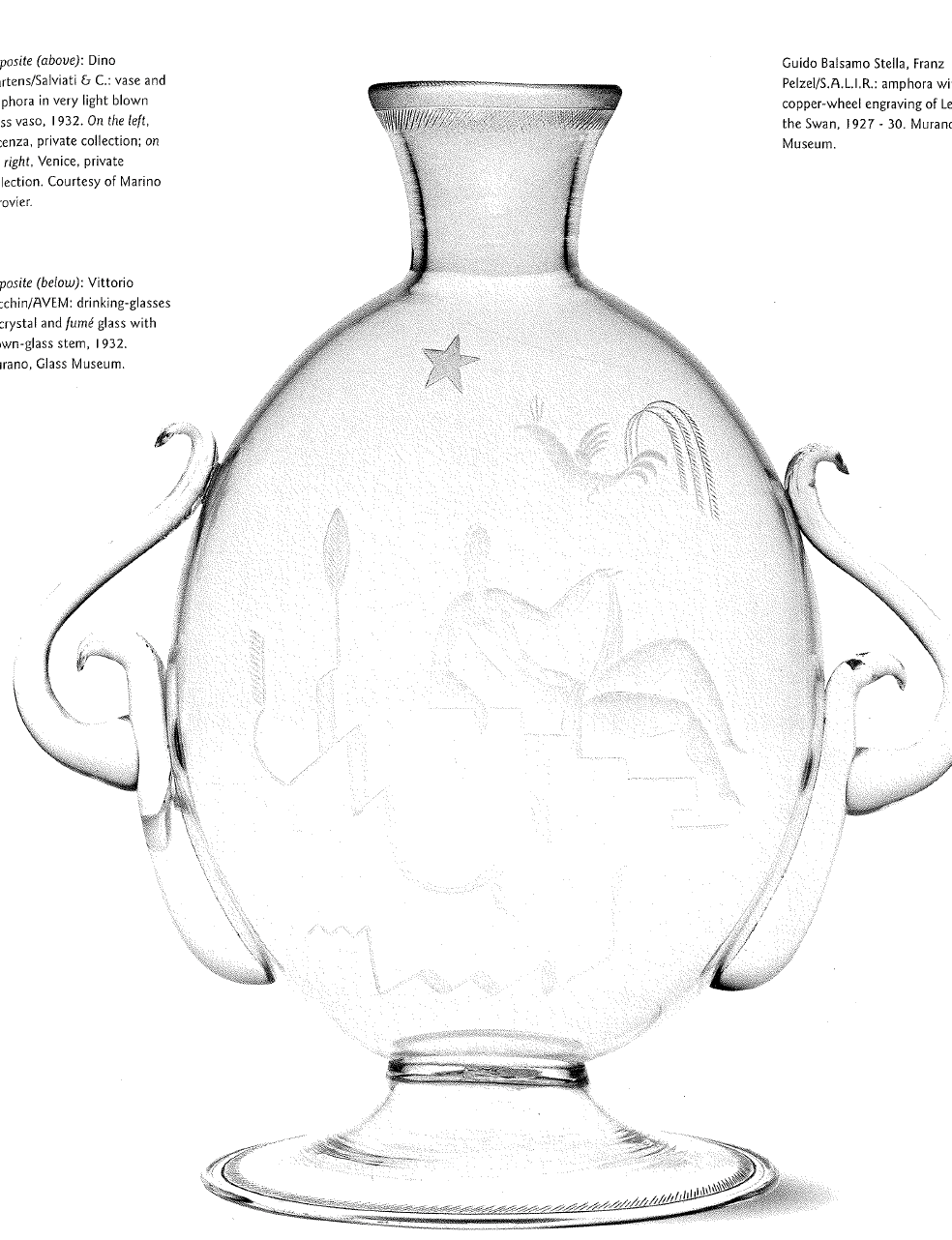
Maker: Ercole Barovier / Vetreria Artistica Barovier
Date: c. 1927-30
Technique: amphora with copper-wheel engraving of Leda and the Swan

Maker: Napoleone Martinuzzi / Zecchin Martinuzzi Vestri Artistici e Mosaici
Date: c. 1933-1936
Technique: vase in red glass plate with outlining in nipped black filaments