The Urinary System & Male Reproductive Organs
 Call Kai
 Learn
 Practice Test
 Spaced Repetition
 Match
 Flashcards
 Knowt Play
1/54

There's no tags or description
Looks like no tags are added yet.
55 Terms
Urology
Specialty for urinary care
Nephrology
Specialty for kidney-specific care
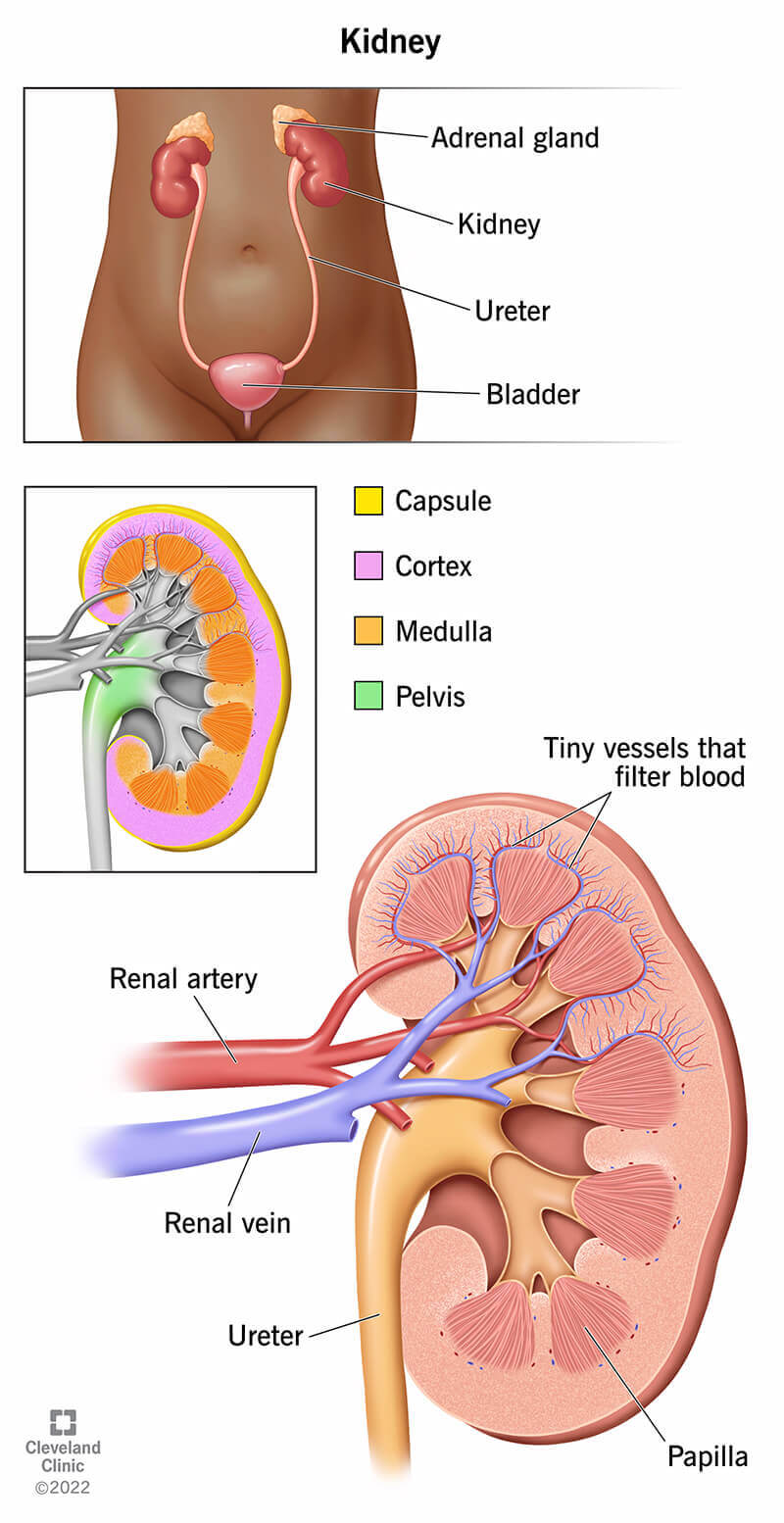
3 Main functions of urinary system:
Removing waste products from the blood
Regulating water & electrolyte balance
Maintaining stable internal conditions
Inside each kidney: Cortex
Outer region where filtration begins

Inside each kidney: Medulla
inner section with filtering stuctures
Normal urine should be:
Odorless
Volume: 750-2,000mL every 24 hours
Color: Pale yellow to deep amber
Inside each kidney: blood vessels
Red arteries bring blood in, blue veins carry it out

Balanitis
‘Balan’ means glans penis & ‘itis’ means inflammation. Balanitis refers to inflammation of the glans penis, often due to poor hygiene, infections, or irritants.
Vasectomy
‘Vas’ refers to the vas deferens, & ‘ectomy’ means surgical removal. In a vasectomy, a small section of the vas deferens is cut or sealed to prevent sperm from entering the semen (a permanent form of male birth control).
Pyuria
‘Py’ means pus & ‘uria’ relates to urine. Pyuria means the presence of pus in the urine, indicating a possible infection like a urinary tract infection (UTI).
Nephrolithiasis
‘Nephro’ relates to the kidney & ‘lithiasis’ means stone formation. Nephrolithiasis is the development of kidney stones – hard deposits that form inside the kidneys.
Cryptorchism
‘Crypto’ means hidden & ‘orchid’ refers to the testes. Cryptorchism is a condition where one or both testicles fail to descend into the scrotum before birth.
Cystoscopy
‘Cysto’ refers to the bladder & ‘scopy’ means to view. A cystoscopy is a procedure where a thin tube with a camera is inserted through the urethra to view the inside of the bladder.
BUN (Blood Urea Nitrogen Test)
Measures the amount of nitrogen in blood that comes from urea, a waste product. Elevated BUN levels can indicate kidney dysfunction, dehydration, or other serious conditions.
Frequency
Refers to the need to urinate more often than usual, often seen in infections, diabetes, or prostate issues. It can be disruptive & indicate an underlying problem that needs evaluation.
Renal Failure
When kidneys lose their ability to effectively filter waste from blood, leads to dangerous build-up of toxin. Acute renal failure can happen suddenly, while chronic kidney disease develops over time.
Sterility
In males, sterility often results from low sperm count or poor sperm function, making it difficult or impossible to father children. It can be due to genetic factors, health conditions, or previous surgeries.
Urgency
A sudden, strong urge to urinate that’s difficult to delay. It’s a hallmark symptom of urinary tract infections or an overactive bladder.
Urinary Catheterization
A medical procedure where a tube (catheter) is inserted into the bladder through the urethra to drain urine. It is often used in patients who cannot urinate naturally due to surgery, injury, or illness.
Kidney Stones
Hard mineral crystals that from inside the kidneys or ureters. Passing them can be extremely painful, often causing sharp back pain & blood in the urine. Some stones pass naturally, while others require medical interventions such as shockwave therapy or surgery.
Erectile Dysfunction (ED)
This is the consistent inability to achieve or maintain an erection firm enough for sexual intercourse. It may be caused by blood flow problems, nerve damage, stress, or underlying health conditions like diabetes & hypertension.
Polycystic Kidney Disease (PKD)
An inherited disorder where clusters of cysts develop primarily within the kidneys, enlarging them & impairing their function over time. PKD can lead to kidney failure & often requires dialysis or transplant.
Prostate Cancer
A common cancer in older men, affecting the prostate gland. It grows slowly but can become aggressive. Regular PSA (Prostate-Specific Antigen) screenings are vital for early detection & better treatment outcomes.
Urinary Tract Infection (UTI)
UTIs occur when bacteria enter the urinary tract. Symptoms include painful urination, urgency, & cloudy urine. While more common in women, men can also suffer from UTIs, especially those with prostate enlargement or urinary retentions.
Chlamydia
Bacterial infection affecting urethra or cervix; must be reported to public health agencies.
Genital Herpes
Viral infection causing painful blisters; highly contagious
Syphilis
Bacterial infection starting with ulcers & potentially damaging the nervous system if untreated
Uterus
the “nursery” where a baby grows
Ovaries
The “managers” producing eggs & hormones like estrogen
Vagina
The “hallway” for childbirth & menstrual flow
Breasts
Supporting team members that provide milk after birth
Alveoli
Tiny factories that produce milk
Ducts
Carry the milk to the nipple.
The rest of the breast is made of fatty tissue, which helps give it shape
This setup supports a newborn’s first food source: breast milk
Pregnancy lasts about 40 weeks. Split into 3 stages called trimesters. First Trimester:
Major organs start to form.
Pregnancy lasts about 40 weeks. Split into 3 stages called trimesters. Second Trimester:
Baby grows stronger & starts moving
Pregnancy lasts about 40 weeks. Split into 3 stages called trimesters. Third trimester:
Baby gets ready for life outside the womb. Begins when a sperm meets an egg & forms tiny embryo
Abortion
Ending a pregnancy before 20 weeks. This can happen naturally (miscarriage) or medically.
Dilation & Curettage (D&C)
A minor surgery to open the cervix & remove tissue from the uterus
Infertility
When a couple can’t get pregnant after one year of trying
Premature birth
A baby born before 37 weeks. These babies often need extra care.
Premenstrual Syndrome (PMS)
Mood swings, cramps, & other symptoms right before a period
Prolapsed Uterus
When the uterus sags into the vagina — often after childbirth or with age
Oophoropexy
(Ovary) + (Fixation) Surgery to hold an ovary in place.
Colposcopy
(Vagina) + (Viewing). Using a microscope to look inside the vagina & cervix.
Carcinoma
(Cancer) + (Tumor) a malignant growth
Intrauterine
(inside) + (uterus) Happening inside the womb
Embryonic
Related to the embryo’s earliest growth stages
Oocyte
(egg) + (cell) another name for an egg cell
Pelvic Inflammatory Disease (PID)
A bacterial infection that travels up from the vagina or cervix into the uterus & fallopian tubes. PID can cause chronic pelvic pain, ectopic pregnancy, & even infertility if left untreated. It’s often linked to sexually transmitted infections like chlamydia & gonorrhea
Fibroids
These are non-cancerous tumors of the uterus. Many women have fibroids at some point, but symptoms vary. Some women experience heavy menstrual bleeding, pelvic pain, & pressure on the bladder or bowl. Treatment options range from medication to surgical removal.
Breast Cancer
Cancerous cells that form in the breast tissue, often starting in the milk ducts or lobules. Early signs include a lump int he breast, changes in breast shape, or nipple discharge. Early detection through mammograms & self-exams is crucial.
Cervical Cancer
Begins in the cells lining the cervix. It is most often caused by persistent infection with high-risk types of human papillomavirus (HPV). Regular Pap tests can catch cervical changes early, allowing for highly successful treatment.
Endometriosis
A condition where tissue similar to the uterine lining grows outside the uterus. It can cause severe cramps, heavy periods, pain during intercourse, & fertility problems. Treatments include pain management, hormone therapy, & surgery.
Menopause
Marks the end of a woman’s reproductive years, usually between ages 45-55. Common symptoms include hot flashes, night sweats, mood swings, & sleep difficulties. Lifestyle changes, hormone replacement therapy, & other treatments can ease symptoms.
During menopause, women may experience:
irregular periods
vaginal dryness
hot flashes & chills
night sweats
mood swings
sleep trouble
weight gain
hair thinning