O chem memorization
 Call Kai
 Learn
Learn Practice Test
 Spaced Repetition
 Match
Match Flashcards
 Knowt Play
1/35

There's no tags or description
Looks like no tags are added yet.
Name | Mastery | Learn | Test | Matching | Spaced | Call with Kai | Chat |
|---|
No analytics yet
Send a link to your students to track their progress
36 Terms
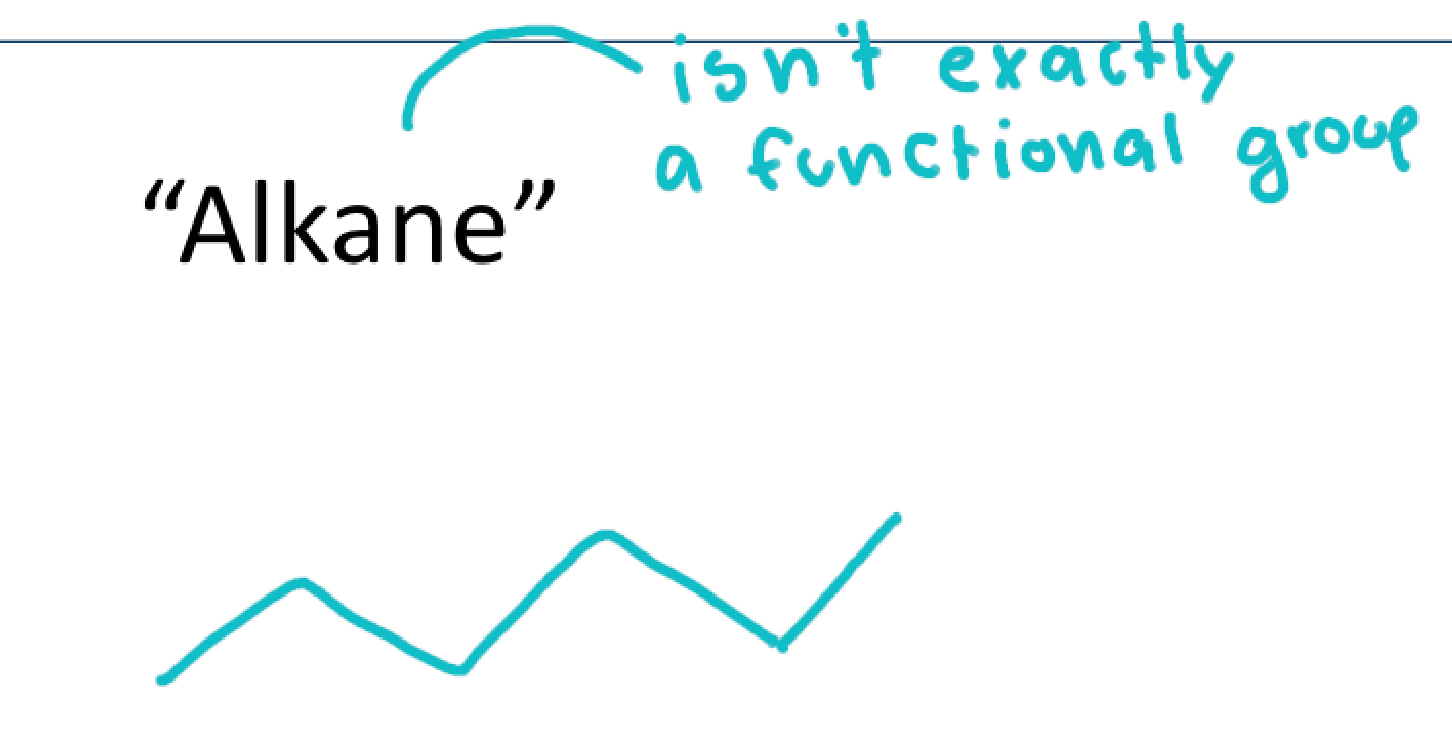
Alkane
chain of Hydrogens and Carbons, has to be sp³ hybridized
with only single bonds between the carbon atoms
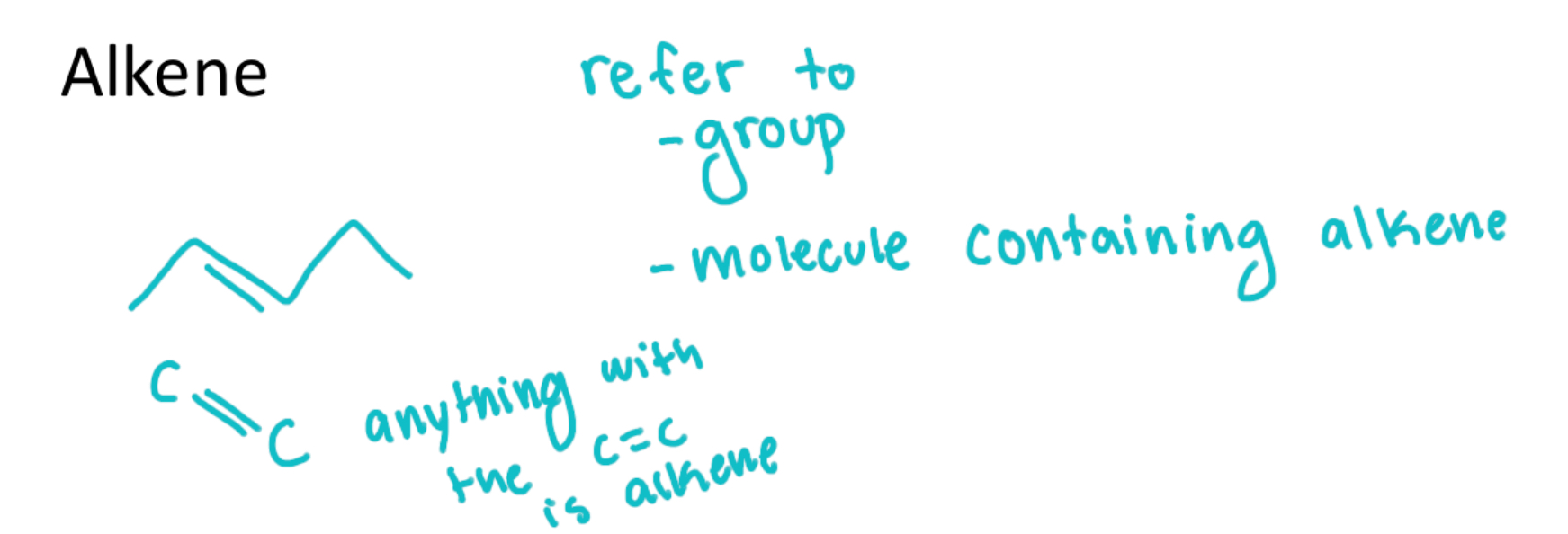
Alkene
any of the series of unsaturated hydrocarbons containing a double bond
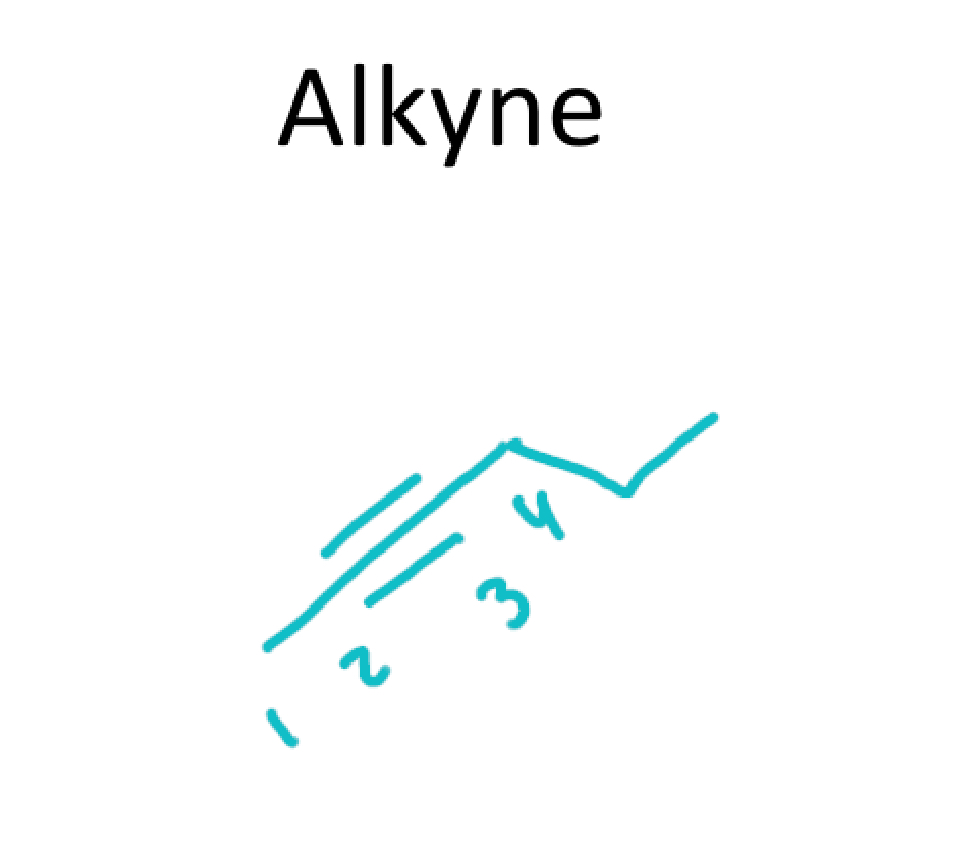
Alkyne
an organic compound containing a carbon-carbon triple bond
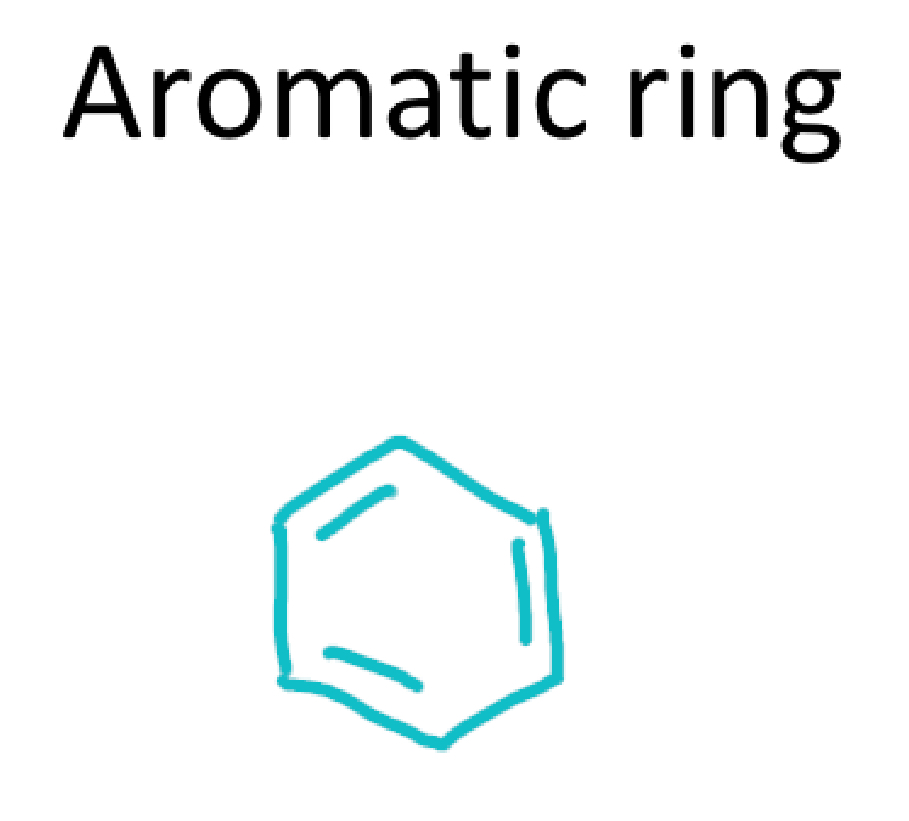
Aromatic ring
the bonds have to overlap for it to be aromatic
Alcohol
has to have an OH
alcohols are organic compounds containing a hydroxyl OH functional group
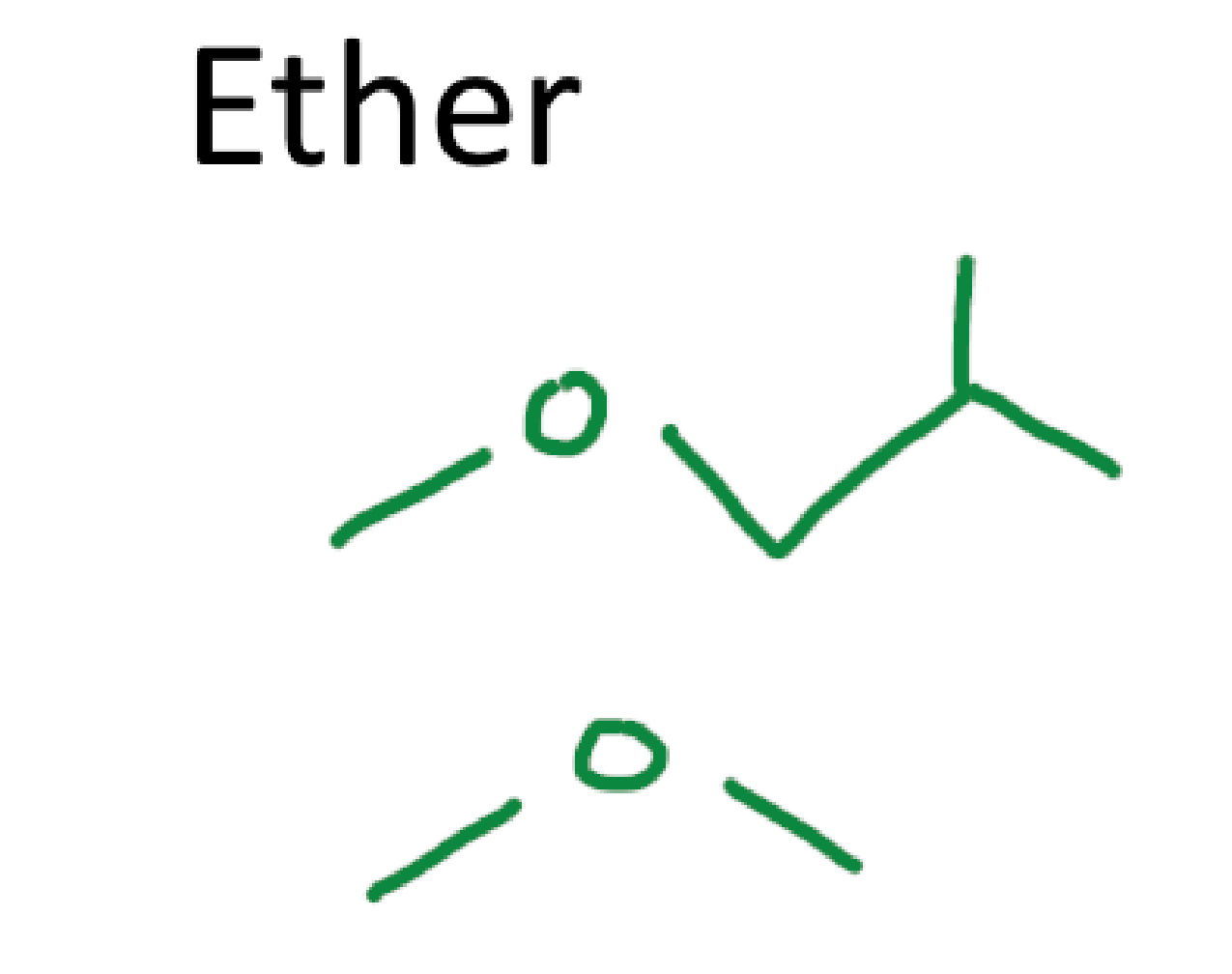
Ether
An ether is an organic compound that consists of an oxygen atom bonded to two alkyl or aryl groups
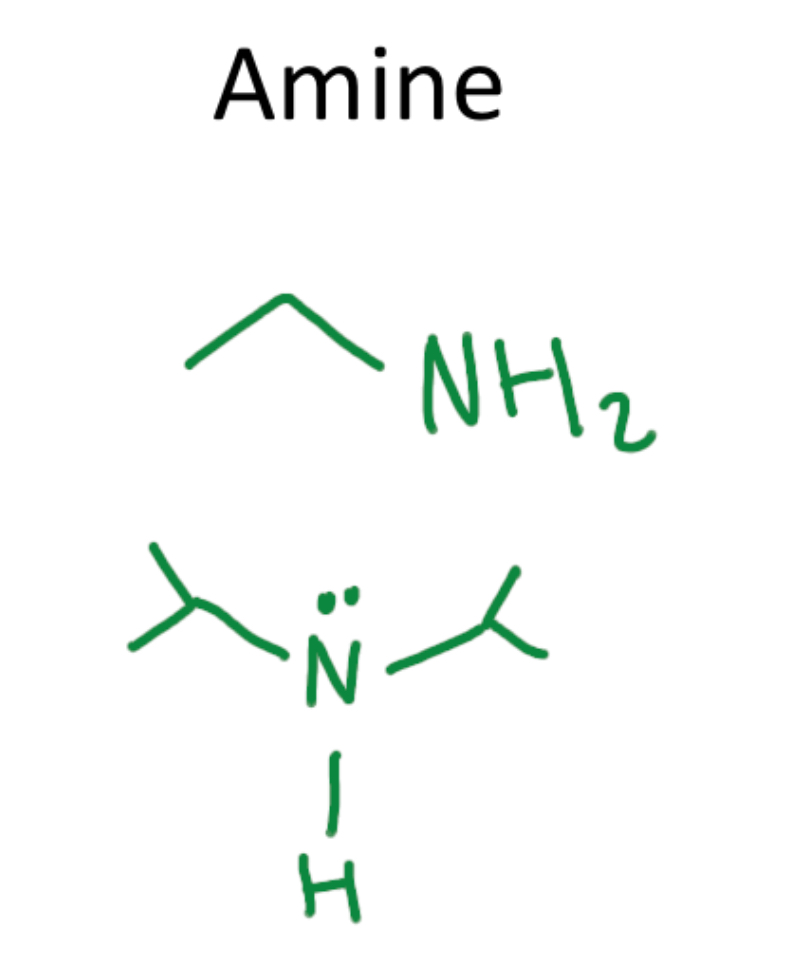
Amine
an organic compound with a nitrogen atom bonded to one or more alkyl or aryl groups
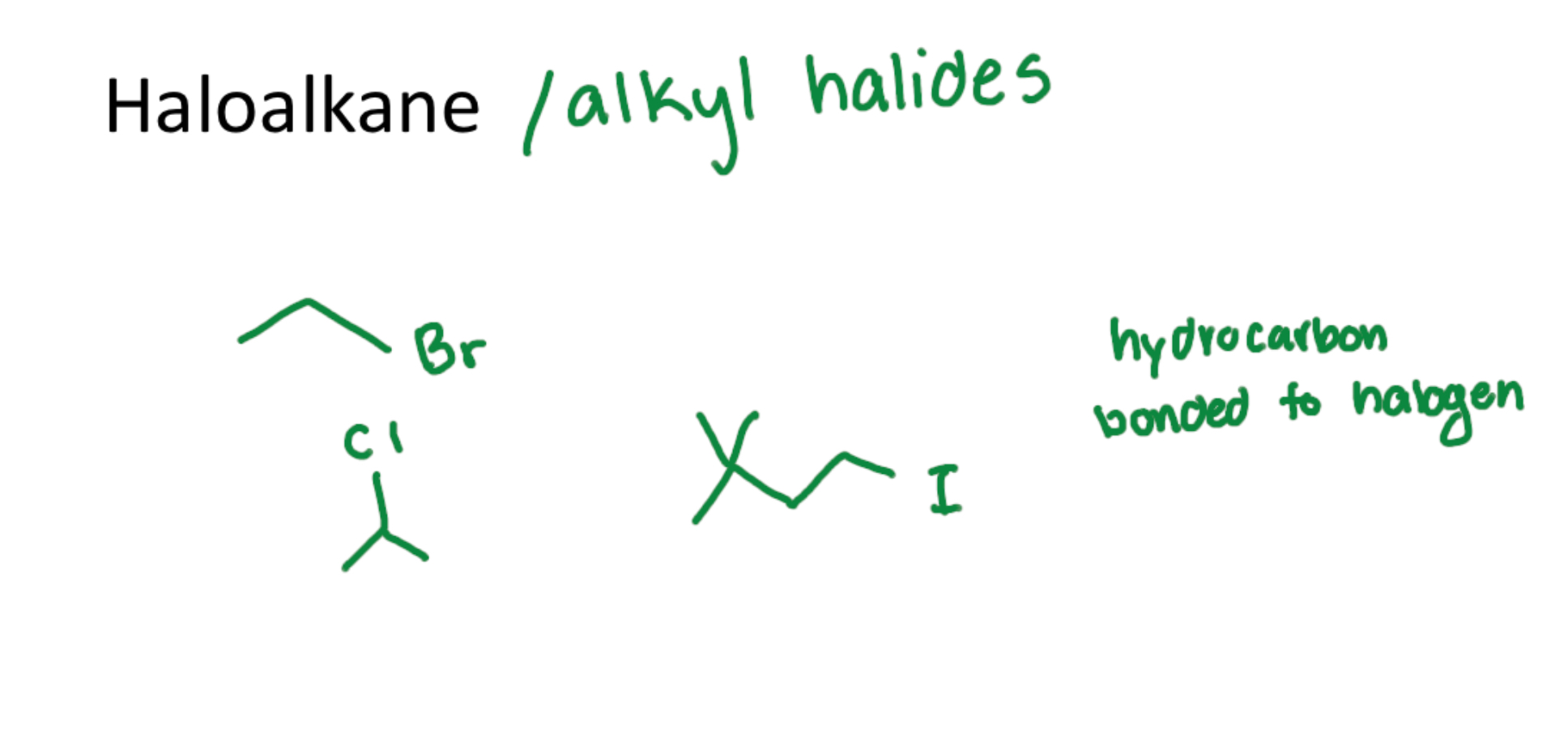
Haloalkane/alkyl halides
hydrocarbon bonded to halogen
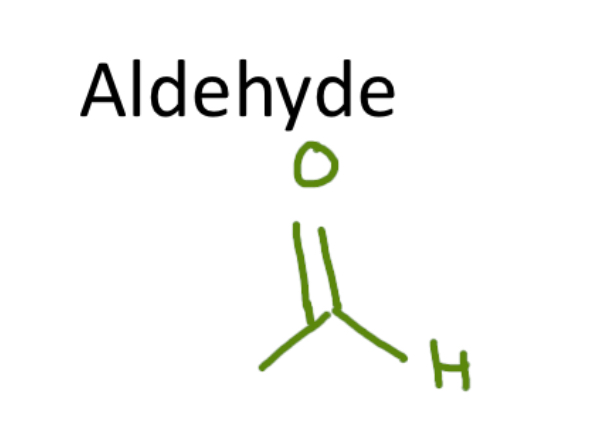
Aldehyde
carbon with double bond with an Oxygen
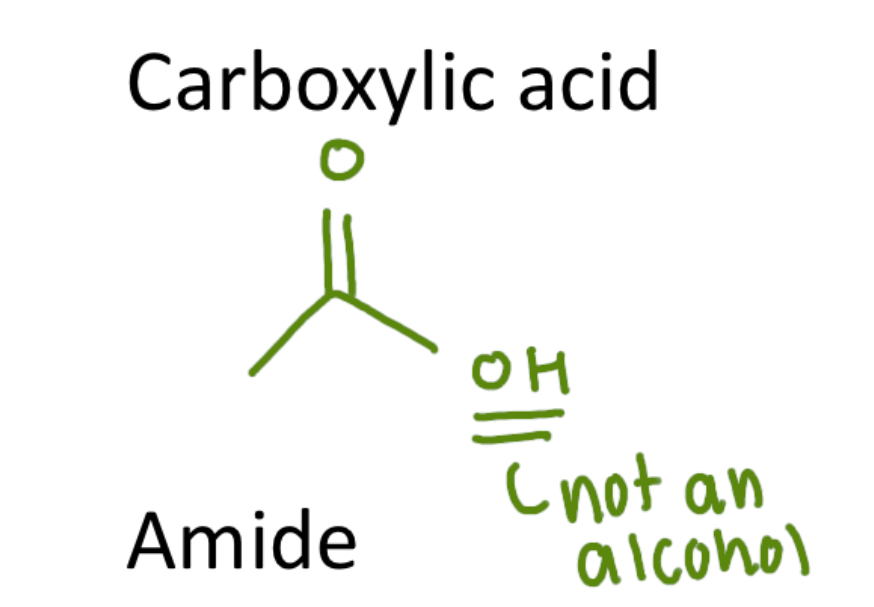
Carboxylic acid
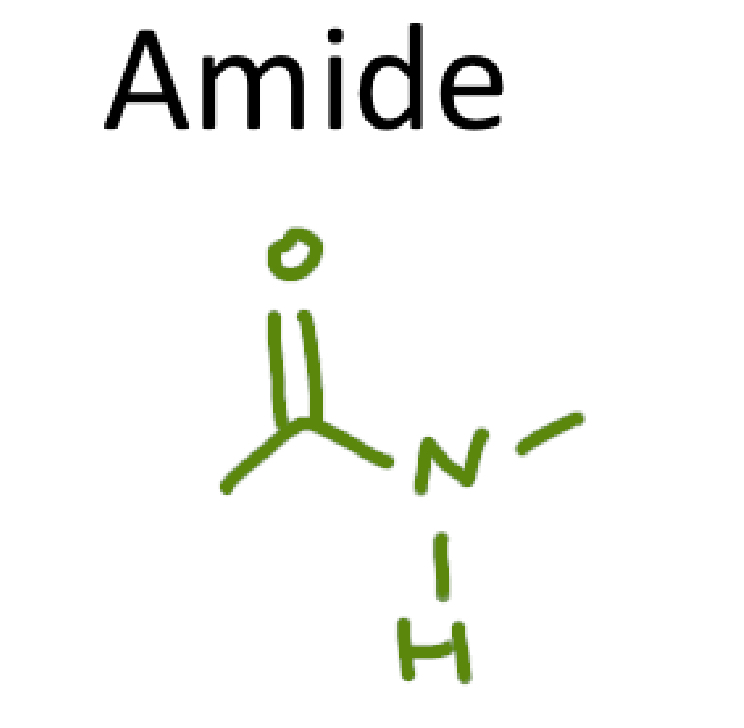
Amide
its the O double bonded to the C bonded to the N, the hydrogen aren’t important
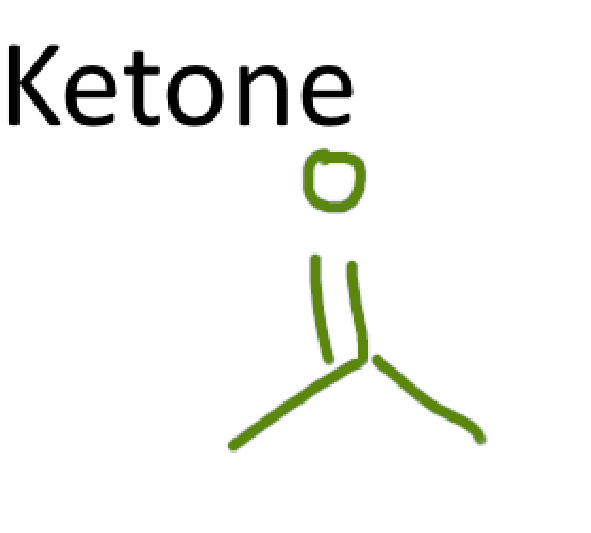
Ketone
giving the general structure R-CO-R’
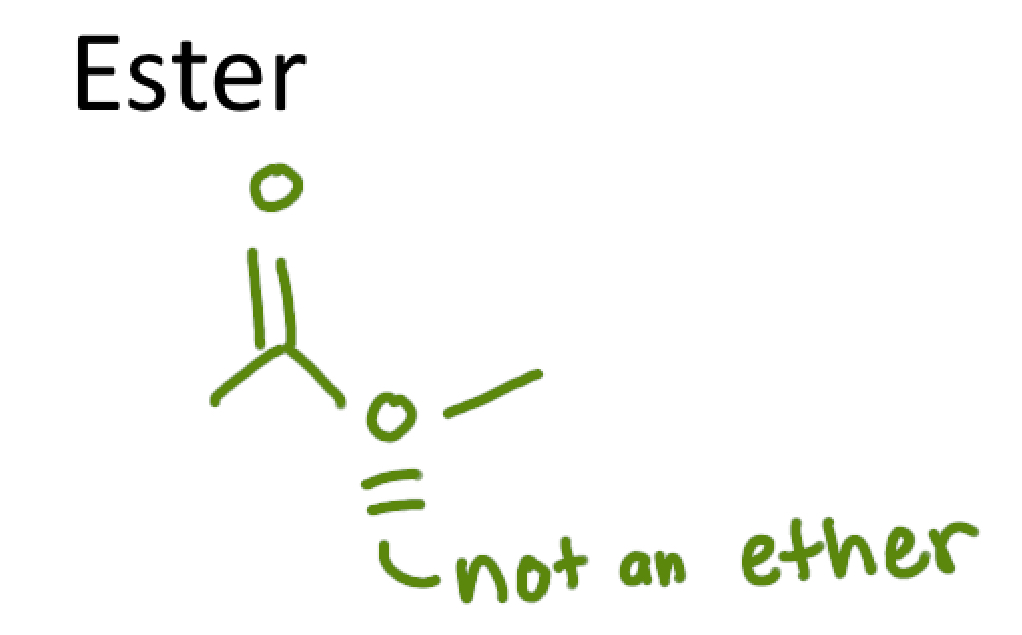
Ester
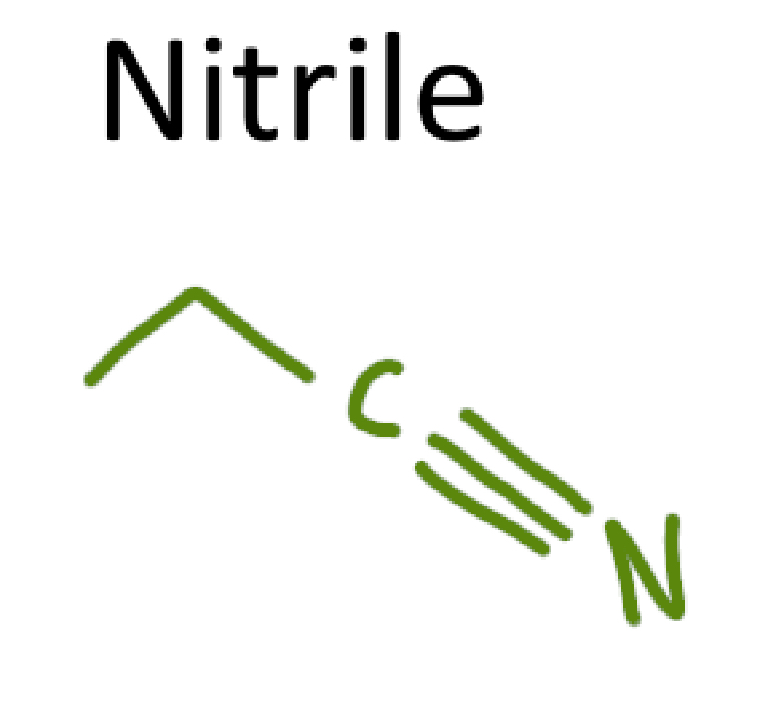
Nitrile
One carbon
Methane
Two carbons
Ethane
Three carbons
Propane
Four carbons
Butane
Five carbons
Pentane
Six carbons
Hexane
Seven carbons
Heptane
Eight carbons
Octane
Nine carbons
Nonane
Ten carbons
Decane
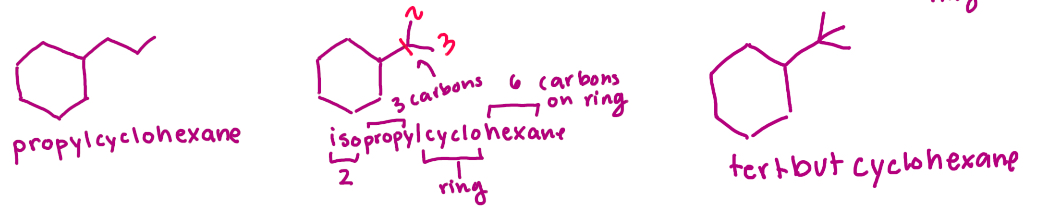
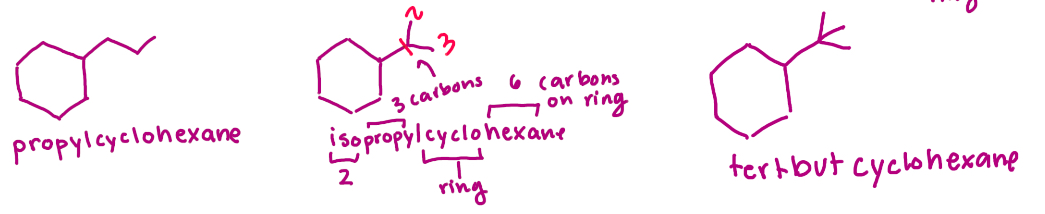
Right one is propylcyclohexane:
Prop because propane:three carbons on the substituent chain
Middle is Isopropylcyclohexane:
Iso: referring to the split into two branching carbons and then
Prop: referring to the fact that there are three total carbons on the extending chain
Left is Tertbutylcyclohexane:
Tert: referring to the three branching carbons
Butyl: referring to the four carbons on the substiuent
Numbering the branches
find the longest chain
Lower numbers are favored
Substiuents in alphabetical order
Double bond have priority
Naming halogens for numbering chain
Fluoro
Chloro
Bromo
Iodo
Isomers
Same molecular formula, different arrangement of atoms
constitutional isomers-different connection between atoms
Stereoisomers- same connections, different relative orientations
Stereocenters/ Asymmetric Centers
an atom (generally carbon) bonded to 4 different groups
Chiral objects
nonsuperimposable with its mirror image
Not the same as its mirror image
molecules with exactly one stereocenter are always chiral
Achiral objects
An archival object is the same as its mirror image
Achiral molecules with stereocenters are also referred to as “meso”
Given two structures we say they are
unrelated
Constitutional isomers
Stereoisomers
Enantiomers (mirror images)
Diasteromers (not mirror images)
Identical
“Conformational isomers”
There is free rotation around single bonds, not double bonds
Properties of Enantiomers
enantiomers have nearly identical physical and chemical properties
They interact differently with other chiral objects
Racemic Mixtures: a mixture that contains equal amounts of 2 enantiomers
Newman projections
the bottom left is dashed and the right is wedged
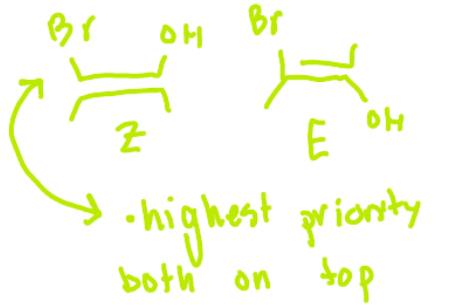
Z and E stereochemistry
if the two highest priority are both on top then its Z
If ones on top and ones on bottom it’s E
R and S stereochemistry
if it ends on a wedge: clockwise is S and Counterclockwise is R
if it ends on a dash: Clockwise is R and counterclockwise is S