UE limb loss - lecture
 Call Kai
 Learn
 Practice Test
 Spaced Repetition
 Match
 Flashcards
 Knowt Play
1/40

There's no tags or description
Looks like no tags are added yet.
41 Terms
reasons for UE amputation
most common: trauma, tumor, vascular compromise
less common: infection, congenital, disease progression
types of UE amputations
- hand, partial hand and digits
- wrist disarticulation
- trans-radial
- elbow disarticulation
- trans-humeral
- shoulder disarticulation
- fore quarter amputation
hand, partial hand, and digits amputations
- trans-phalangeal
- trans-metacarpal
- trans-carpal
*most commonly seen UE amputations
trans-radial amputation
- elbow flexors and extensors preserved
- excellent prosthetic potential

elbow disarticulation
- humeral leverage preserved
- good suspension


Trans-humeral amputation
- limited elbow control preserved
- complex prosthetic
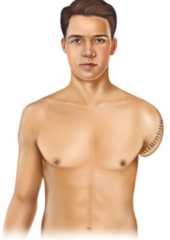
shoulder disarticulation
significant functional challenge
what is the "golden period" of fitting for an UE prosthesis?
30 days (93% success rate)
types of UE prosthetics
- passive functional/cosmetic (low function and effort)
- body-powered/conventional (high function and effort)
- myoelectric/external power (high function, low effort)
- hybrid (highest function, moderate effort)
advantages of passive functional/cosmetic
- lightweight, simple
- little maintenance
- inexpensive
- improved appearance
disadvantages of passive functional/cosmetic
- limited grasping function
- decreased durability
- unreal expectations for cosmesis
reasons people choose to not use a prosthesis
- poor initial fitting (discomfort, poor socket fit, early frustration)
- limited benefit (difficulty with fine motor, prosthetic isn't better than compensatory strategies)
- insufficient education and training (lack of training, limited follow-up with rehab)
- cost and maintenance (device replacement, insurance limitations)
- cosmetic concerns (unnatural appearance, personal preferences)
rehab goals after amputation
- skin integrity
- ROM and contracture prevention (positioning, stretch)
- strength and endurance
- function and future function
- prosthetic readiness
- participation and QoL
complications in UE limb loss
- RLP (contracture; prosthetic acceptance)
- phantom sensation (body asymmetry; PTSD)
- phantom pain (overuse syndromes; body image concerns)
- neuroma
- HO
- skin breakdown
- edema
phantom pain/sensation is (more/less) likely to occur with a prosthetic
less
levels of partial hand amputation
1. transphalangeal: thumb spared
2. thenar partial or complete
3. transmetacarpal, distal: thumb spared or involved
4. transmetacarpal, proximal: thumb spared of involved

thumb gives --% of function of the hand
60
at the least, how many fingers do they preserve during partial hand amputations?
2 - able to oppose each other, will allow some prehension (the abilility to approach, grasp, and release objects with the hand)
during a partial hand amputations, salvage of a third digit allows for
more stable terminal pinch, improving precision motions
what do surgeons want to eliminate during partial hand amputations?
eliminate a gap between adjacent fingers (objects fall through the hand)
most common mid-level amputation surgery
trans-radial
osseointegration is (more/less) common in UE
more (also heals better than LE)

terminal devices: voluntary opening
- opens when user exerts tension on the cable
- when tension is released, spring/rubber band closes the hand
- pinch force can be adjusted by spring/rubber band
*reliable and durable but constant spring force

terminal devices: voluntary closing
- closes when user exerts tension on the cable
- pinch force is determined by wearer (strong/light)
**variable grip force but greater training needed
prosthetic components
- harness
- socket
- terminal device / manipulators
a harness can add -- lbs
8-10
prosthetic hand vs split hook
- prosthetic hand: heavier in weight, more difficult to see objects being grasped, more complex mechanically, cannot get into pockets, less versatile as a tool, better cosmesis
- split hook: lighter in weight, easier to see objects being grasped, simpler mechanically, will fit into pockets, versatile as a tool, not cosmetic
for a body powered/conventional prosthesis, the components of it are operated by
a harness system
- elbow
- terminal device (hand) (VO or VC)
for a body powered/conventional prosthesis, the harness system is controlled by gross body movement:
- scap abduction
- chest expansion
- shoulder depression
for a body powered/conventional prosthesis: single-control harness operates
the terminal device (hand)
for a body powered/conventional prosthesis: double-control harness
- 2 control cables are used
- activation of terminal device and elbow/forearm flexion
- elbow joint lock/release
shoulder disarticulation - how do they control:
- elbow flexion
- terminal device
- elbow lock
- elbow flexion & terminal device: biscapular abduction & lats activation
- elbow lock: scapular elevation
transhumeral amputation - how do they control:
- elbow flexion
- terminal device
- elbow lock
- elbow flexion & terminal device: biscapular abduction and humeral flexion
- elbow lock: shoulder depression and humeral abduction & extension
transradial amputation - how do they control:
- elbow flexion
- terminal device
- elbow lock
- elbow flexion & lock: intact
- terminal device: biscapular abduction and humeral flexion
which is less expensive: body powered/conventional, myoelectric/external power, or hybrid
body powered/conventional
which has greater grip force: body powered/conventional, myoelectric/external power, or hybrid
myoelectric/external power and hybrid
which has reduced need for harness: body powered/conventional, myoelectric/external power, or hybrid
myoelectric/external power and hybrid
which has increased weight: body powered/conventional, myoelectric/external power, or hybrid
myoelectric/external power
which may have possible overuse/nerve entrapment: body powered/conventional, myoelectric/external power, or hybrid
body powered/conventional
targeted muscle reinnervation
- nerve transfer/rerouting
- decreases neuroma pain and amputation pain
- assists with myoelectric prosthetic control
targeted sensory reinnervation (TSR)
when combined with a special prosthetic device, the amputee can recieve sensory feedback from the prosthesis which can improve balance and gait