Notable Philosophers (& their Most Famous Works and Philosophies), and their Notable Biographical Information & Philosophical Movements (& their Associative Philosophers and Characteristics) (OLD SET)
 Call Kai
 Learn
 Practice Test
 Spaced Repetition
 Match
 Flashcards
 Knowt Play
1/554

There's no tags or description
Looks like no tags are added yet.
555 Terms
1641- Rene Descartes: Meditations on First Philosophy (Fact 2)
Argued that he doubted the existence of his physical body, but could not doubt the existence of his mind, which is because the very process of doubting involves a mind that can doubt
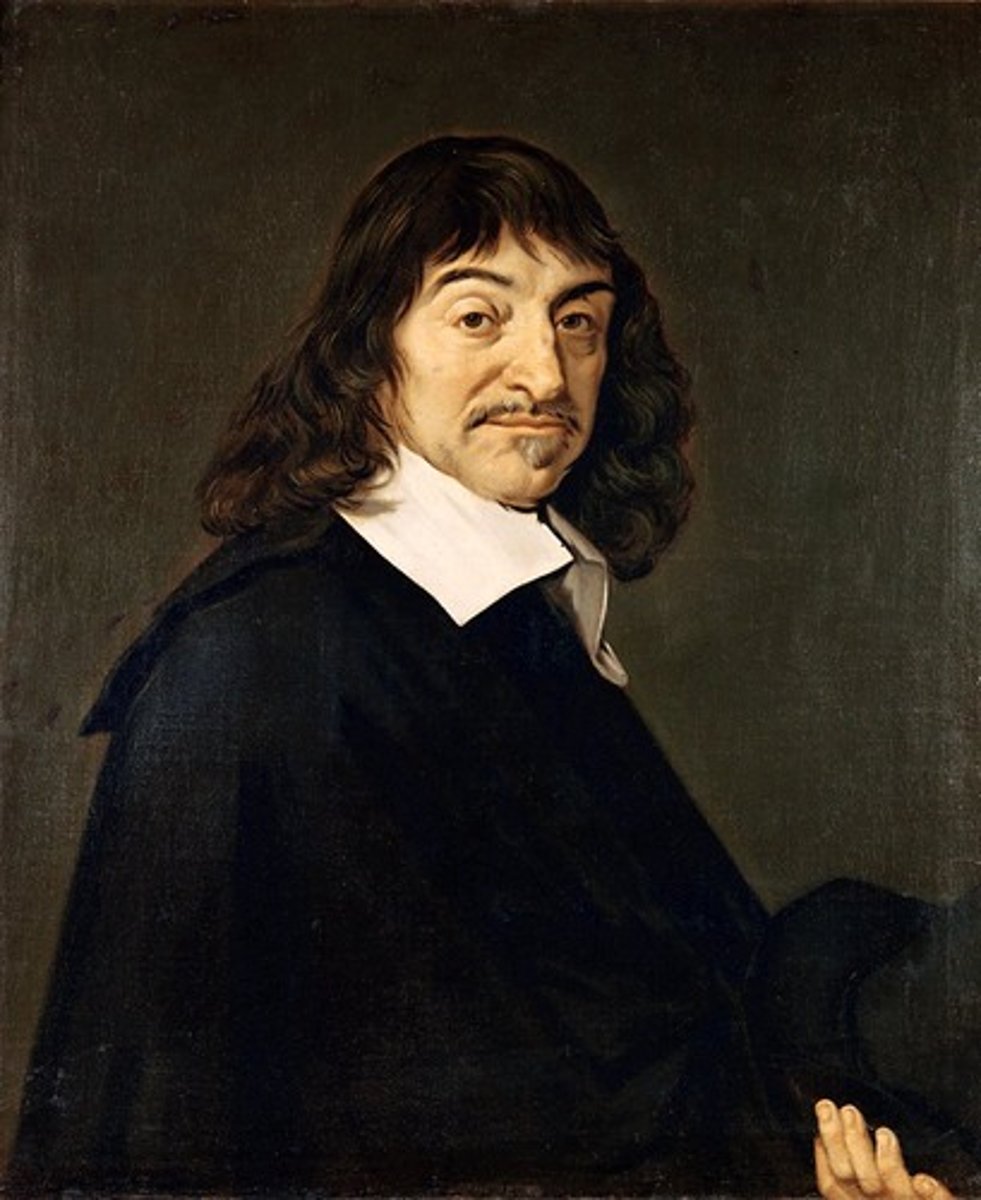
1637- Rene Descartes: Discourse on Method (Fact 1)
Advocated for Deductive Reasoning, which is moving from general principles to more particular cases by steps of reason
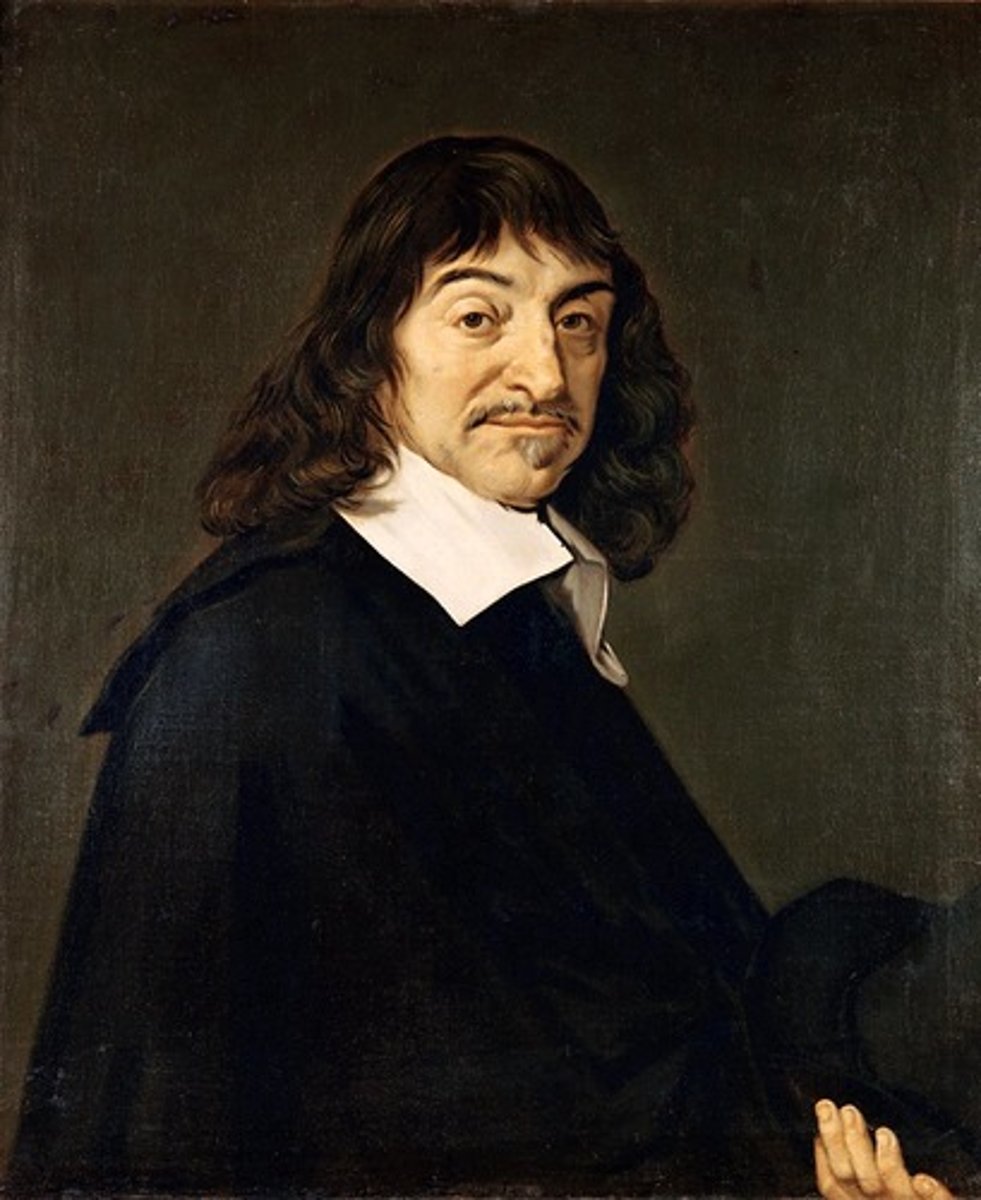
Francis Bacon (Fact 1)
16th-17th Century English Enlightenment Philosopher
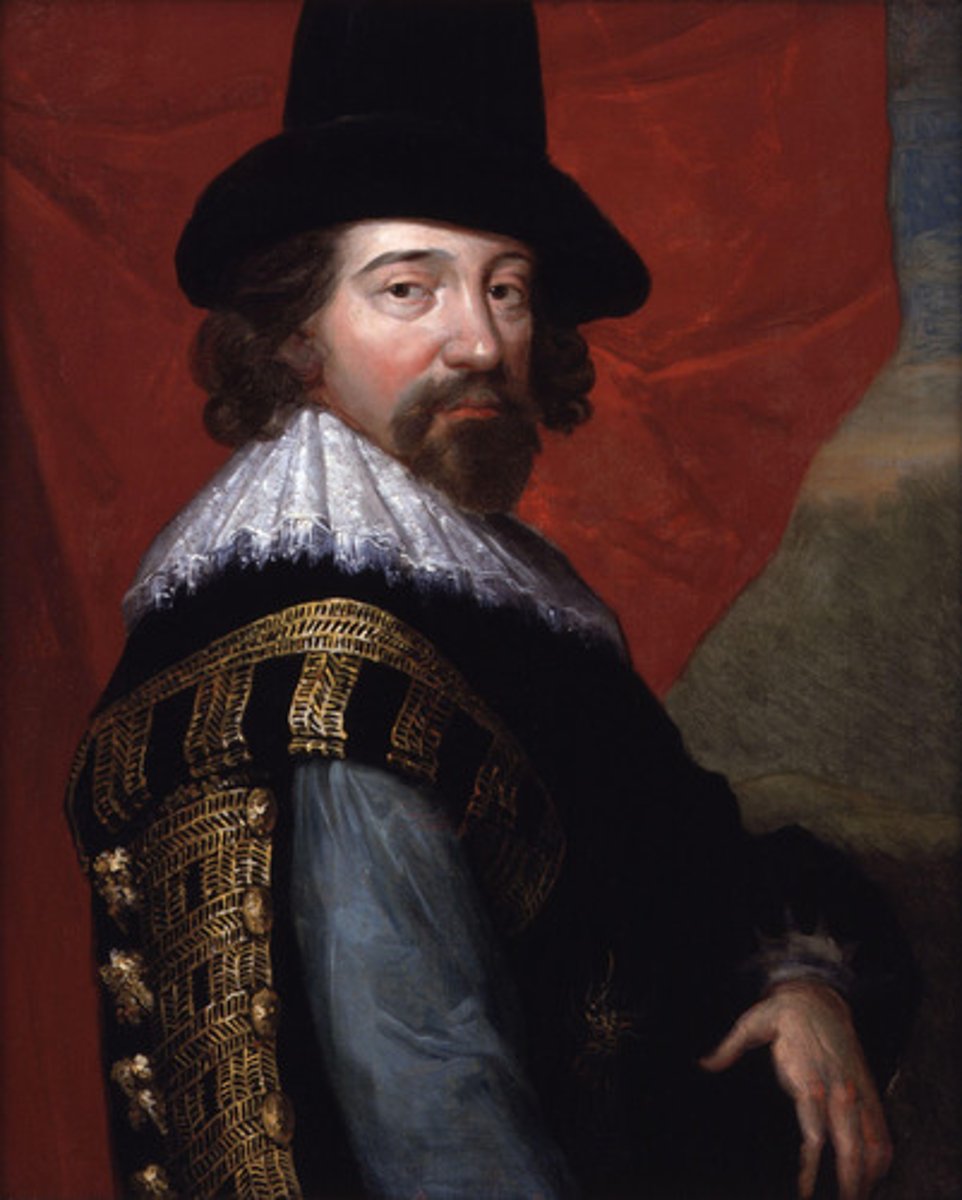
Francis Bacon (Fact 2)
Father of Empiricism, Rejected Scholasticism, Advocated for Inductive Reasoning, Created the Scientific Method
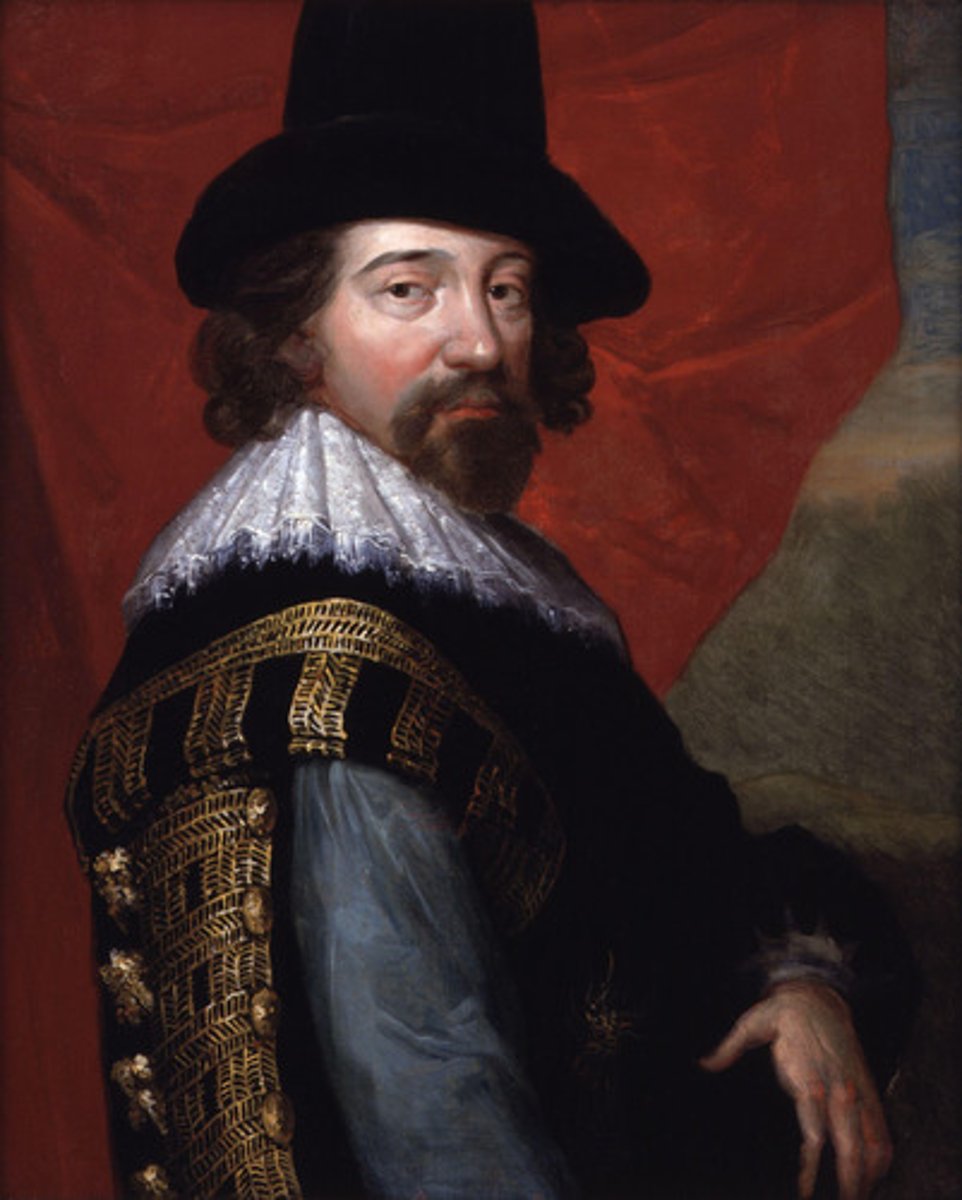
Francis Bacon: Instauratio Magna {The Great Renewal} (Fact 1)
Explains humans must look with fresh eyes again at nature, that humans must ignore ancient preconceptions and prejudices about nature, and it expresses that science should be useful to humans, making us live longer, securer, and more comfortable than ever before
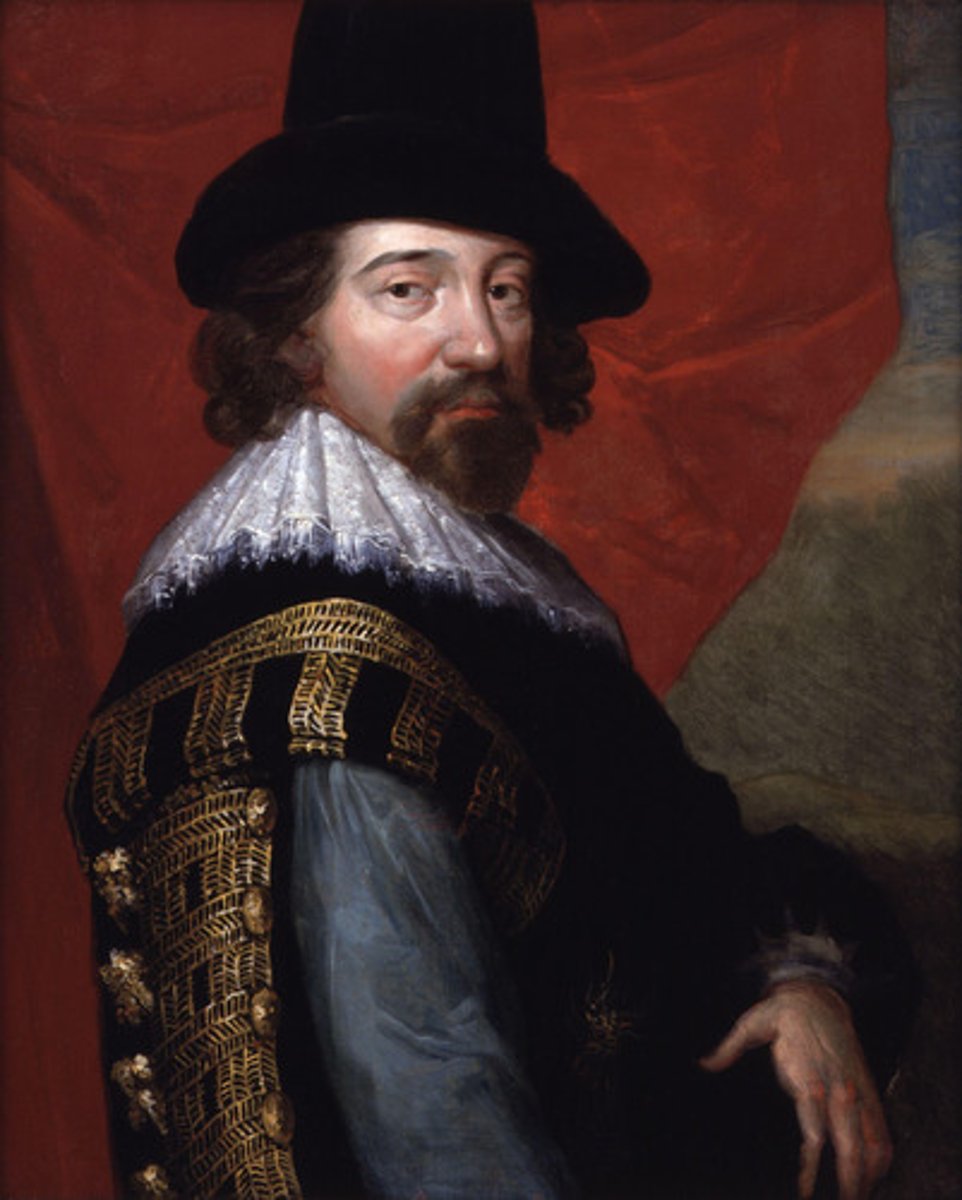
Francis Bacon: Novum Organum {New Atlantis} (Fact 1)
Portrays a scientific utopia and is known for preconceiving many modern technological developments
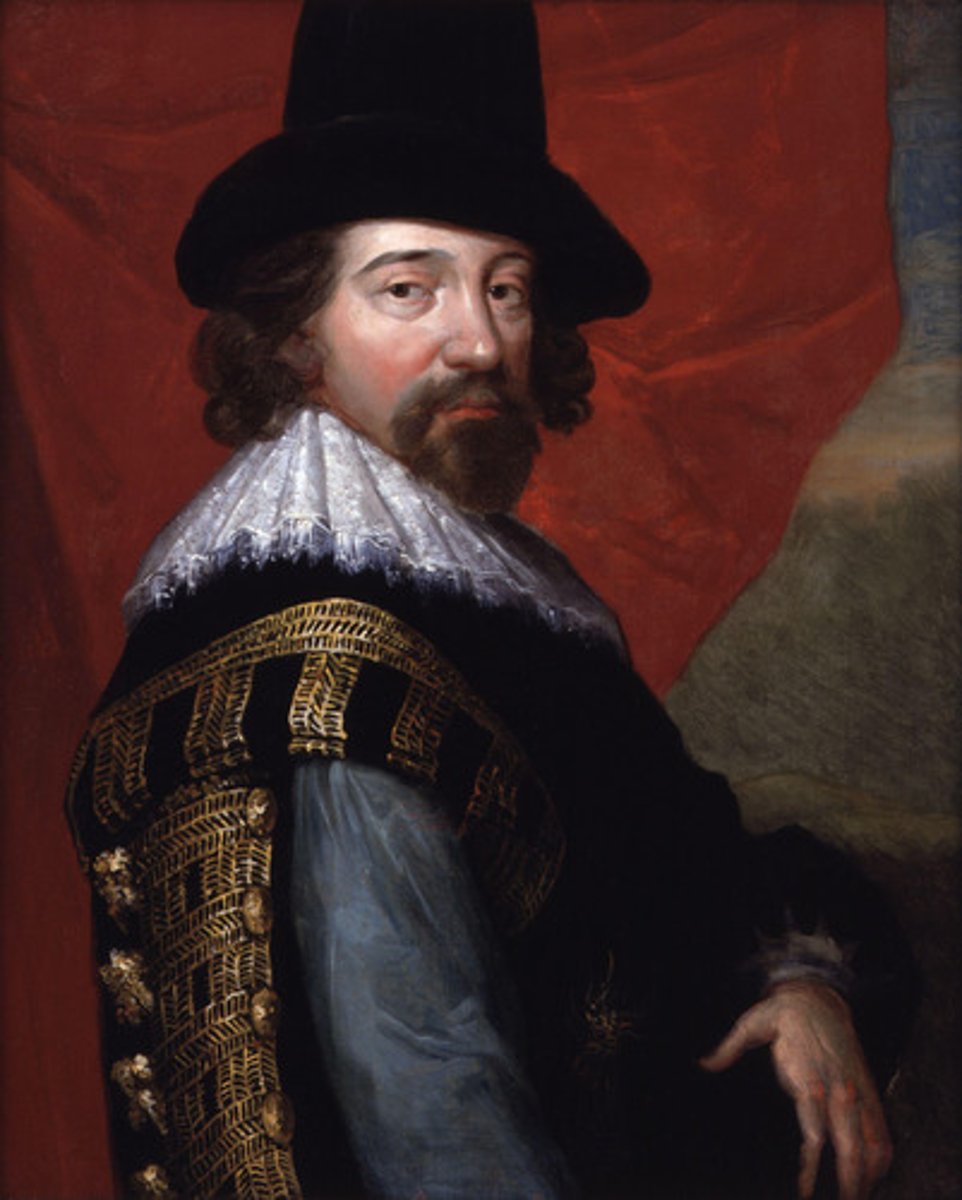
Francis Bacon: Novum Organum {New Atlantis} (Fact 2)
Criticizes Aristotle's "Syllogism" and Pioneers Inductive Reasoning or the "Scientific Method"
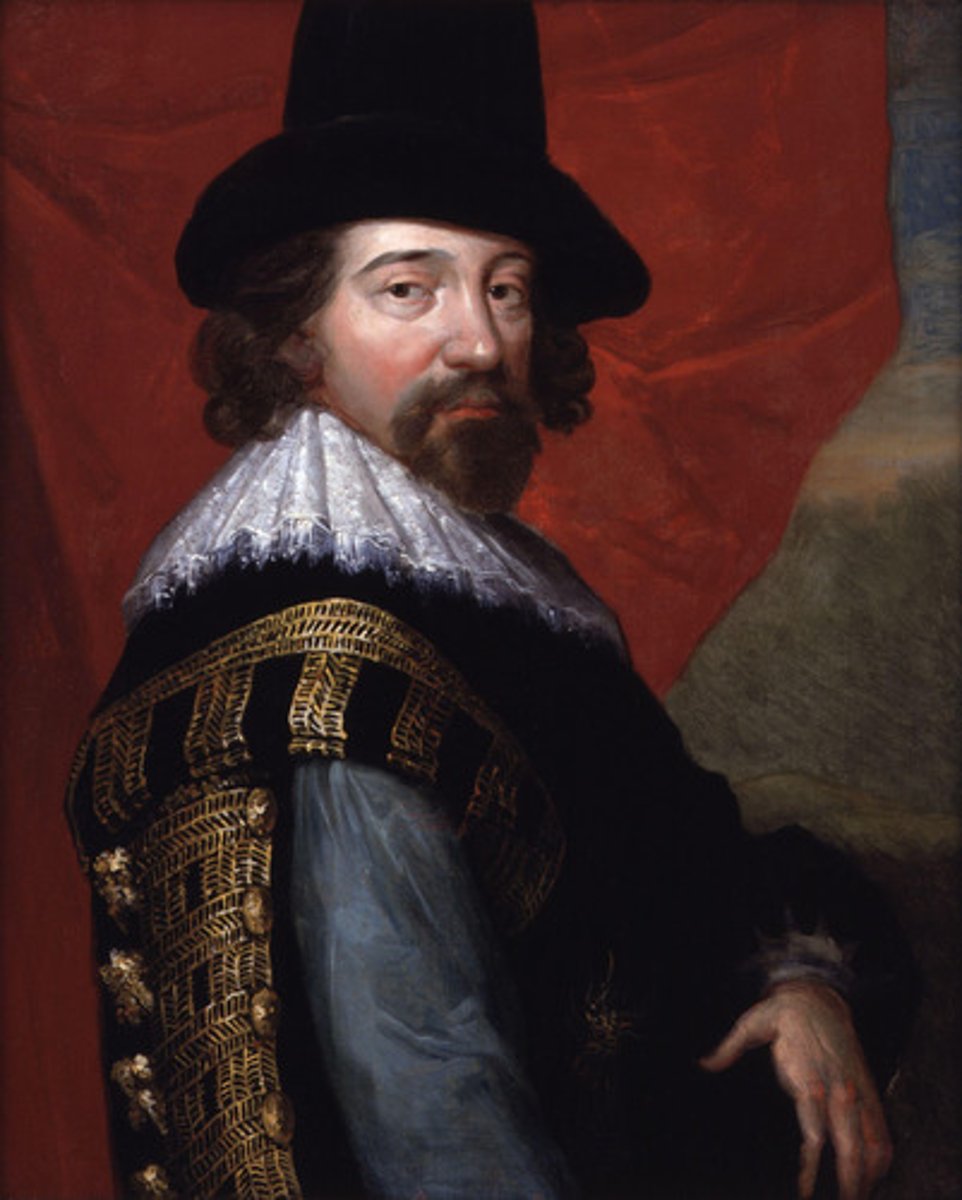
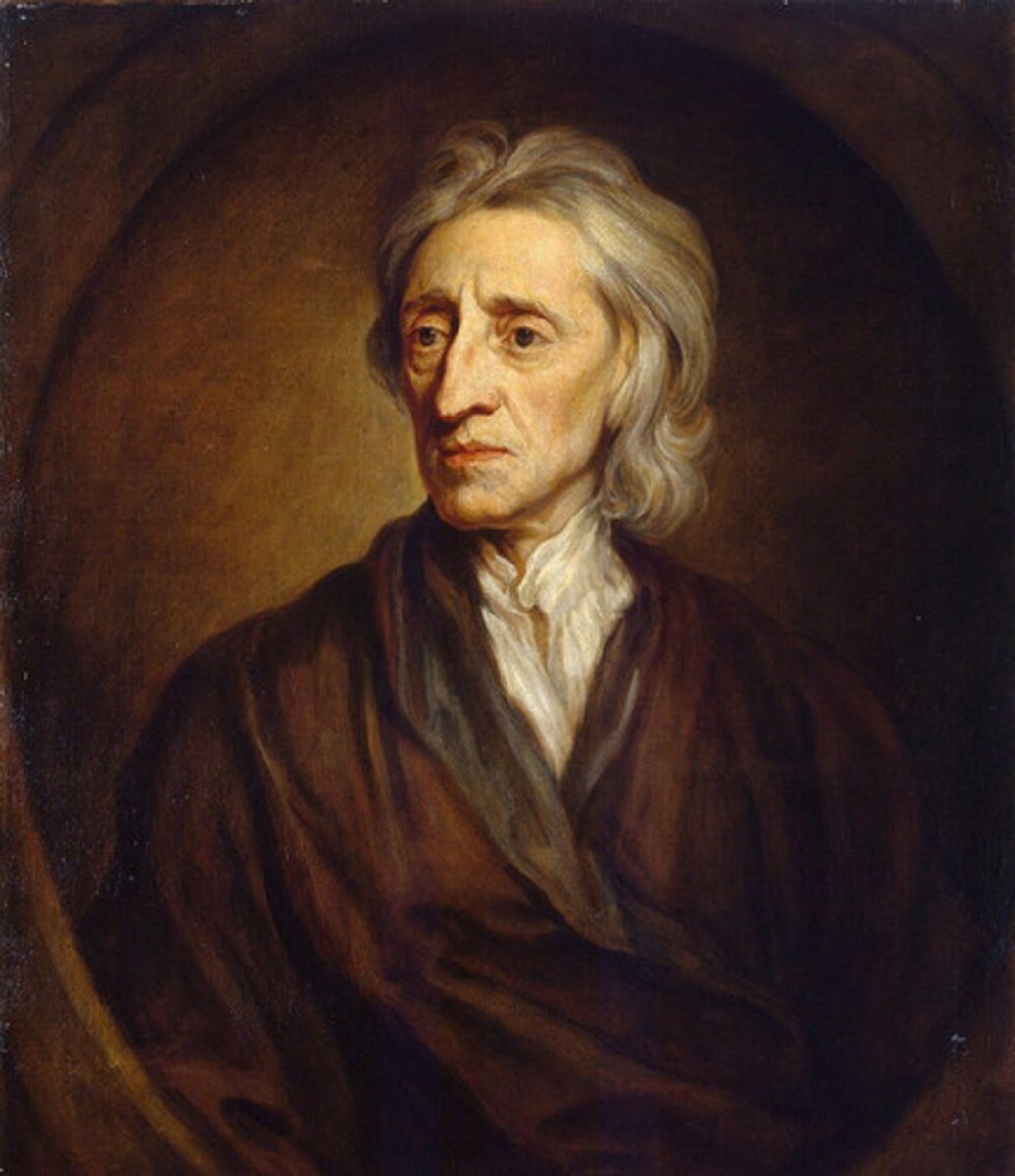
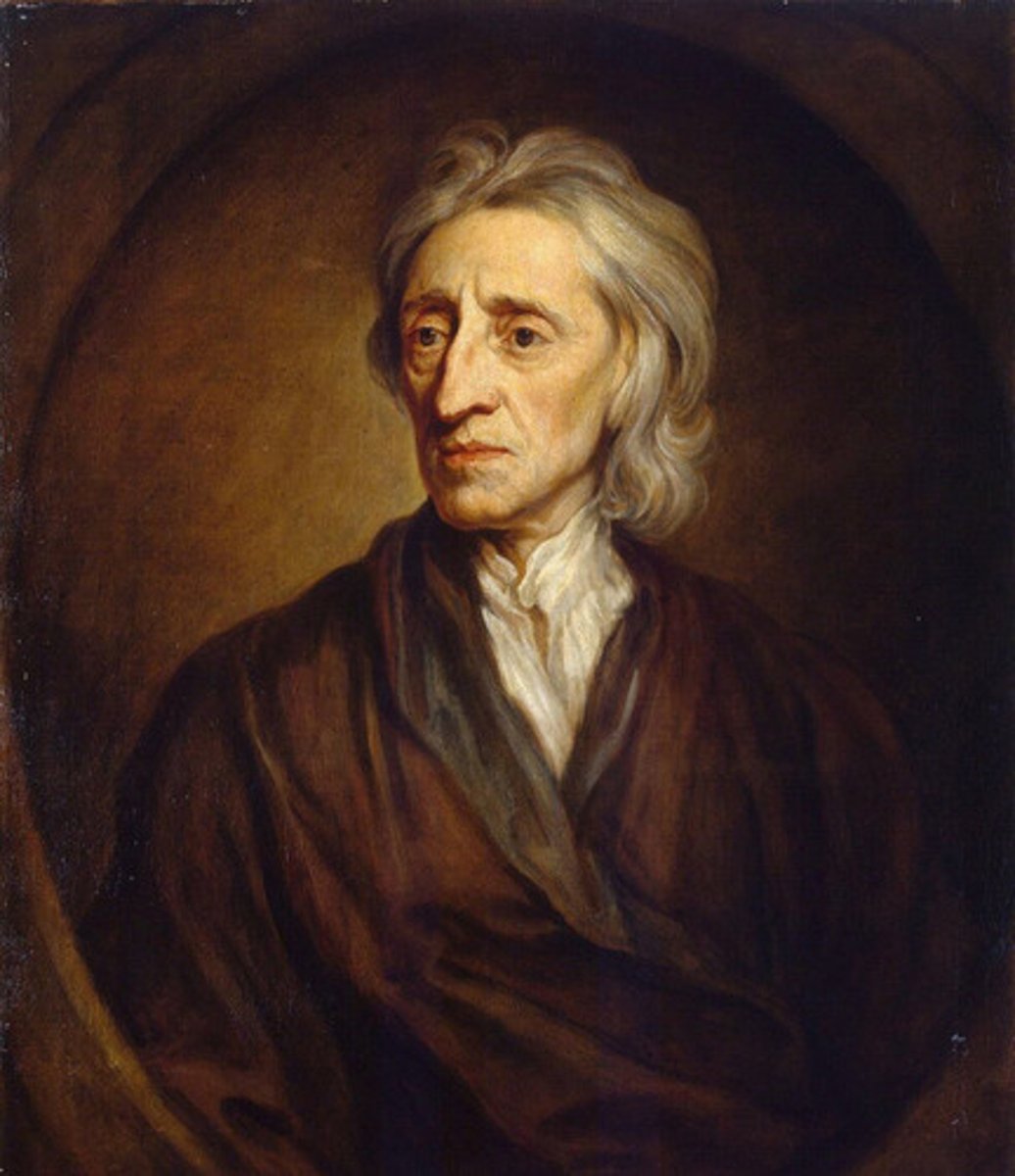
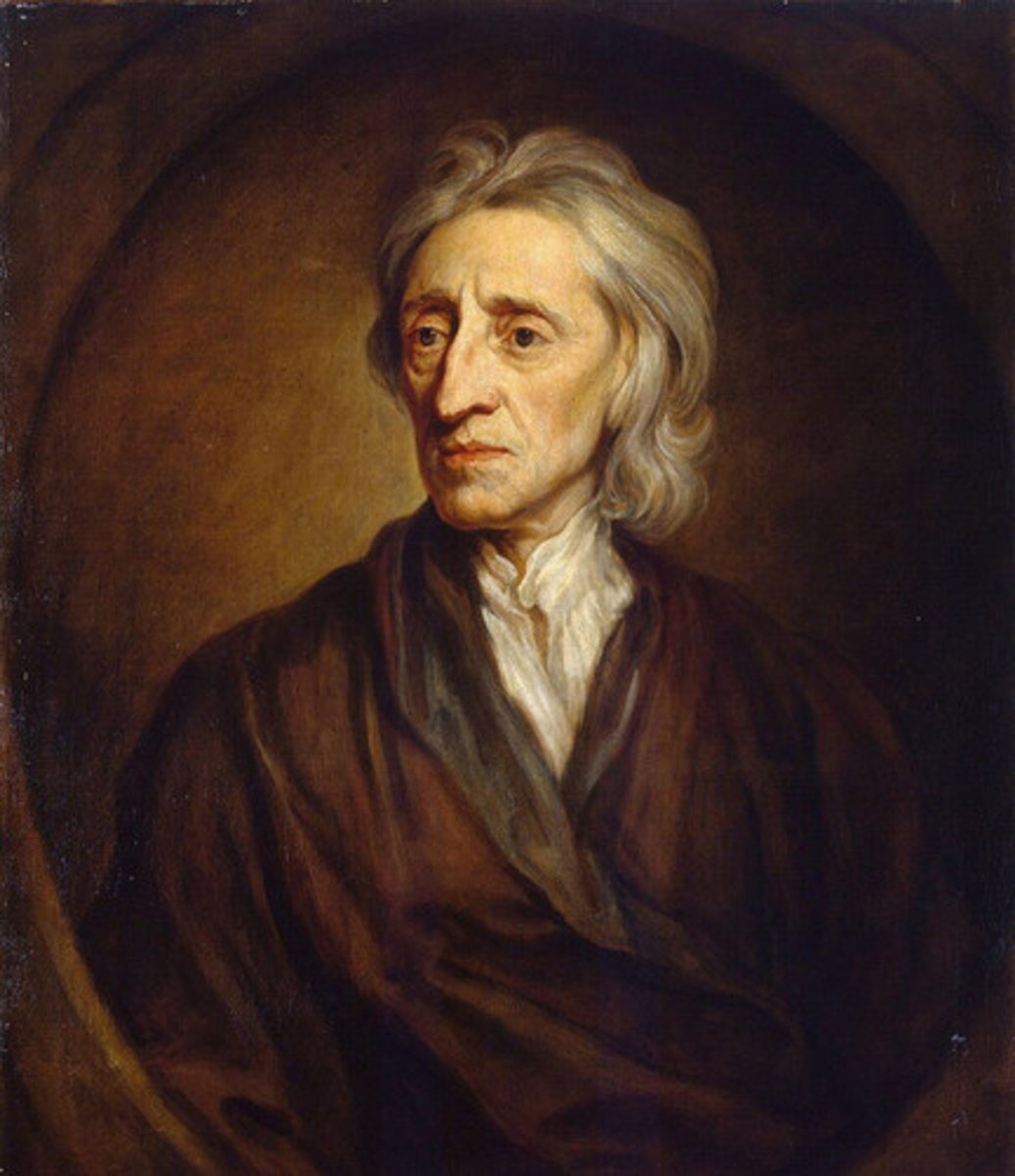
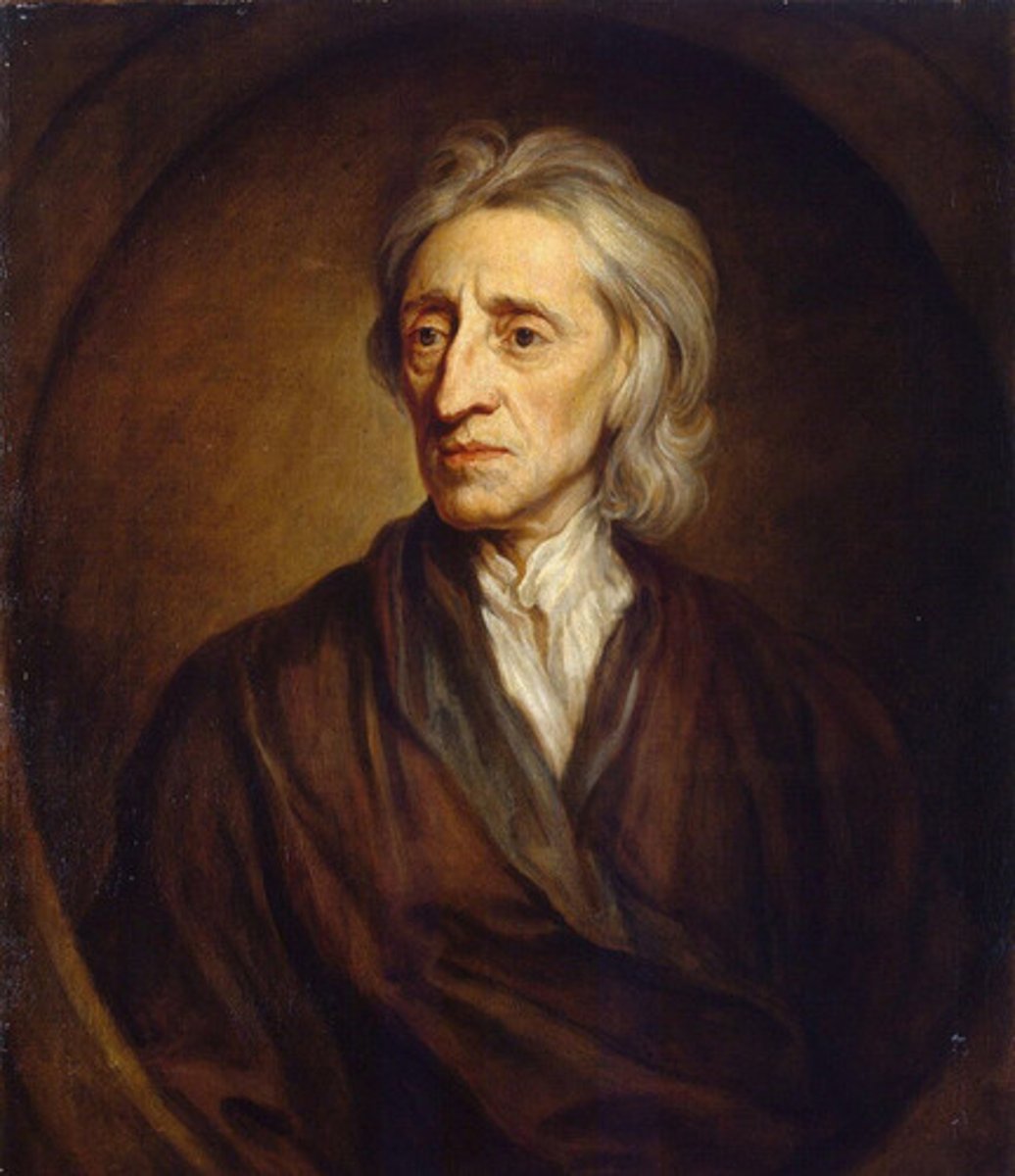
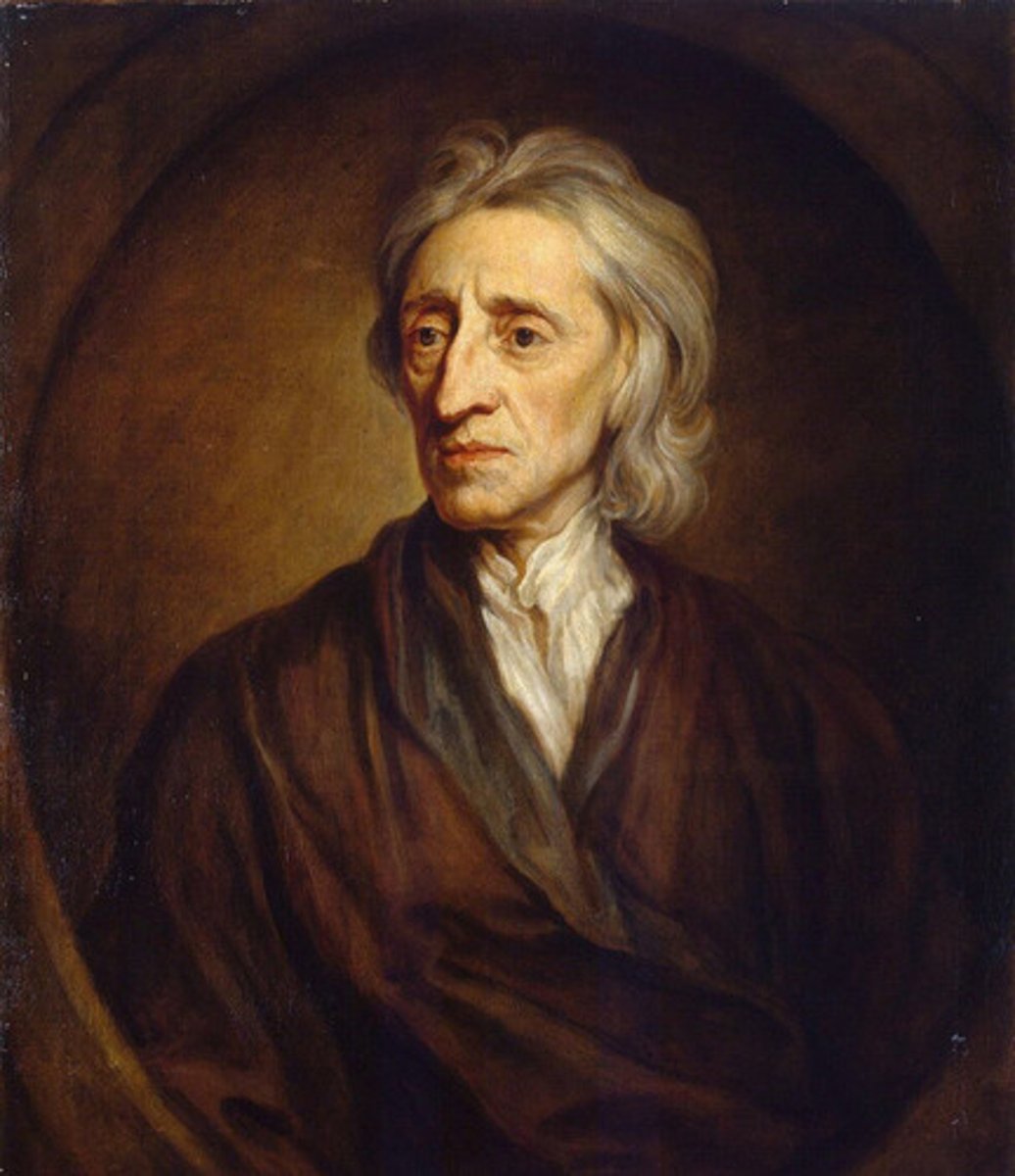
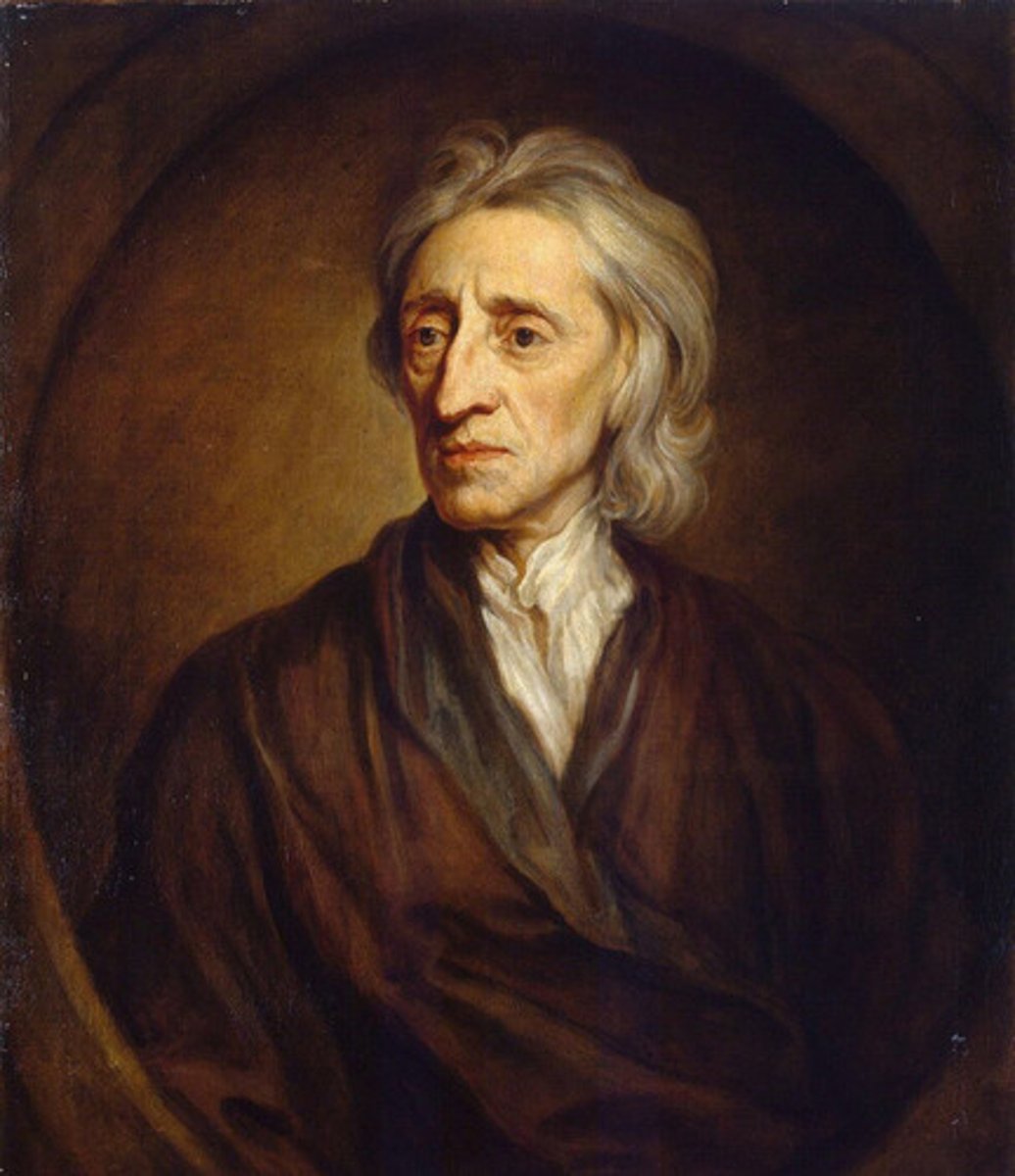
John Locke (Fact 1)
17th Century English Enlightenment Philosopher, Empiricist
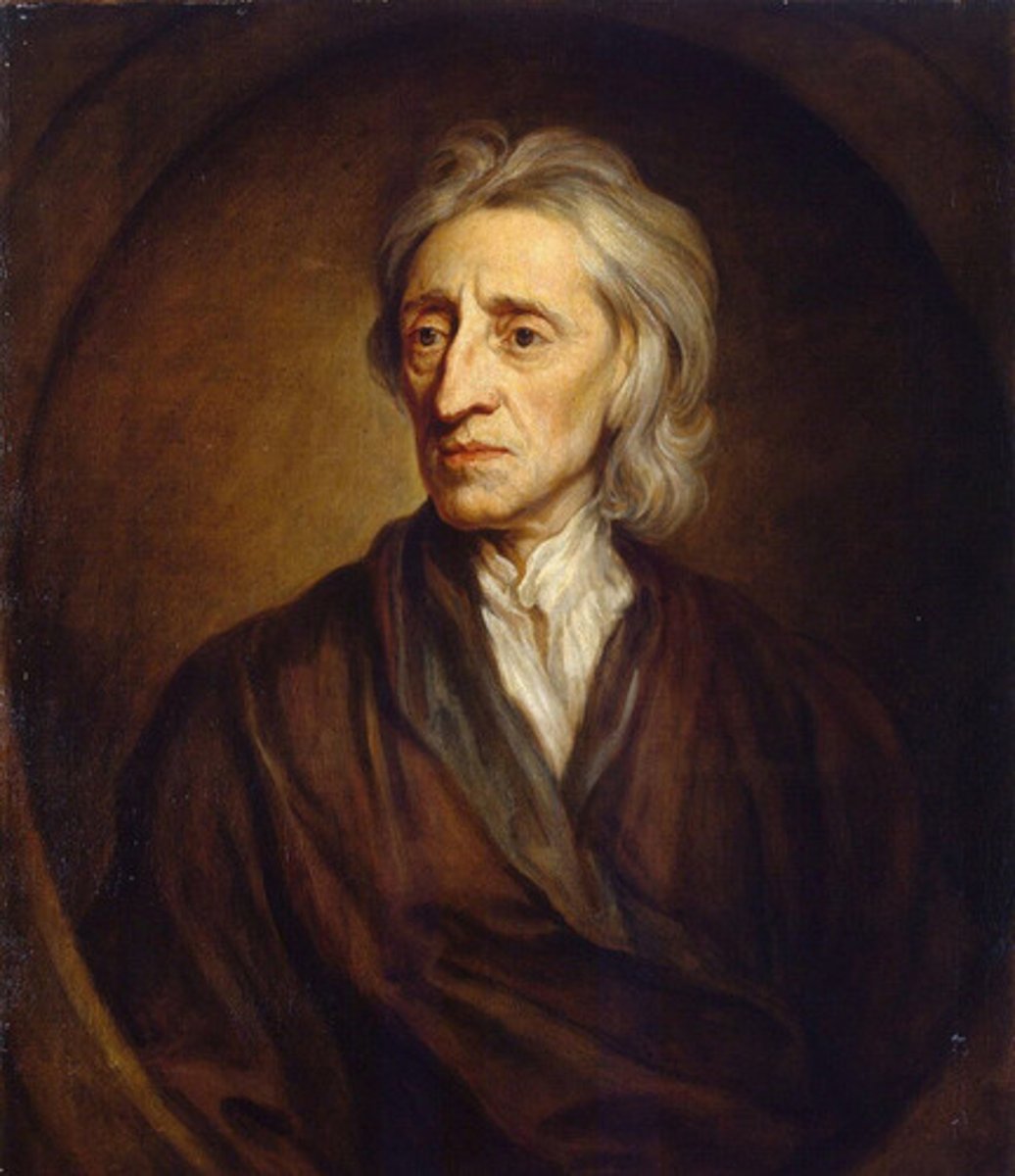
John Locke (Fact 3)
Used the example of light striking the mineral porphyry to claim that the ideas of redness and whiteness are not actually in that rock
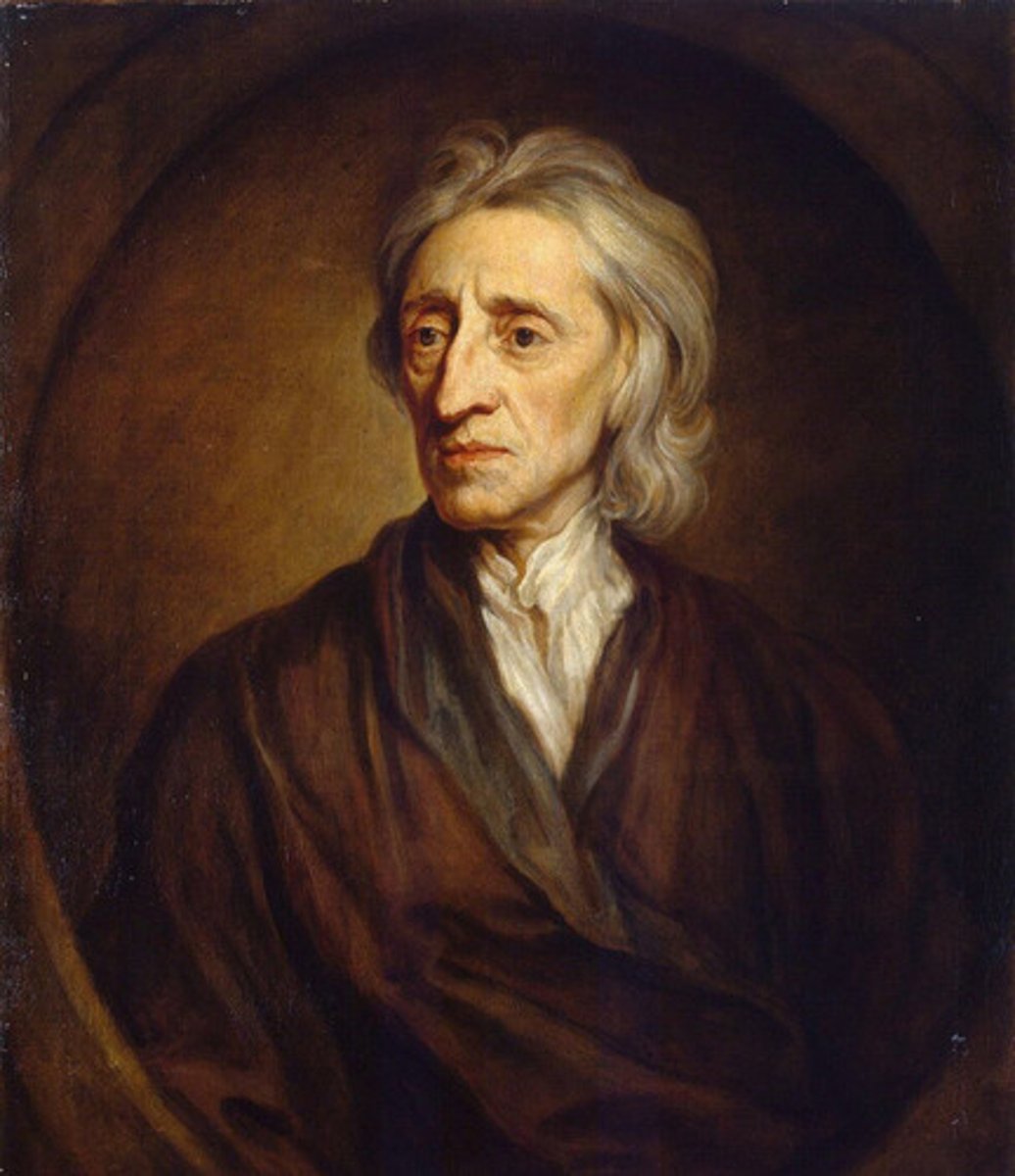
John Locke (Parents)
His father was a captain in the Parliamentary Army when the English Civil War broke out when he was 10 years old and vividly remembers hearing the screams near him while he was studying at school one day because of the public execution of Charles I that occurred close to his school
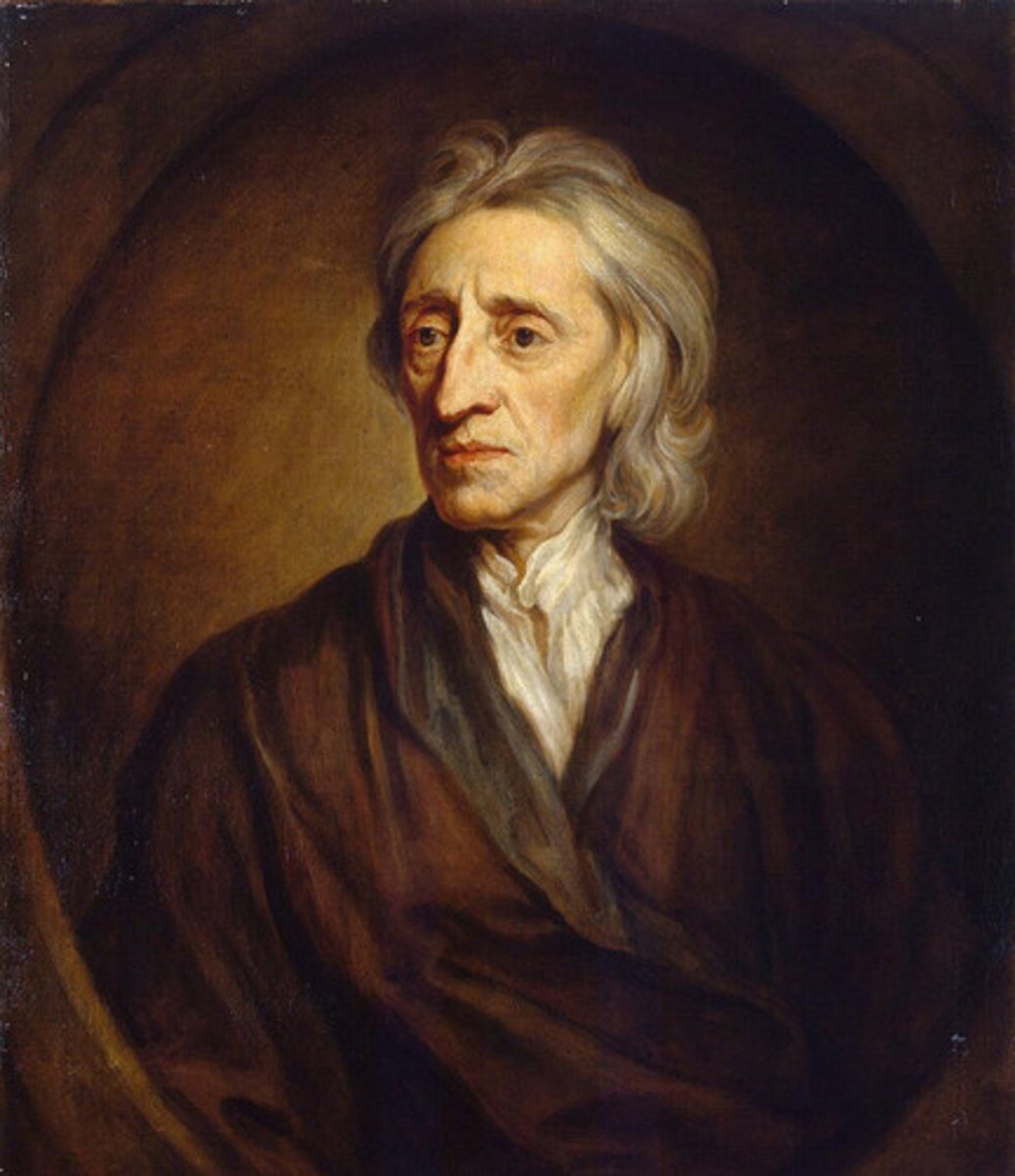
John Locke (Education)
Studied medicine at Oxford and planned to be a doctor when his life changed by chance when he met a politician named Anthony Cooper or "The First Earl of Shaftesbury" who came to Oxford to look for a cure for a liver disease
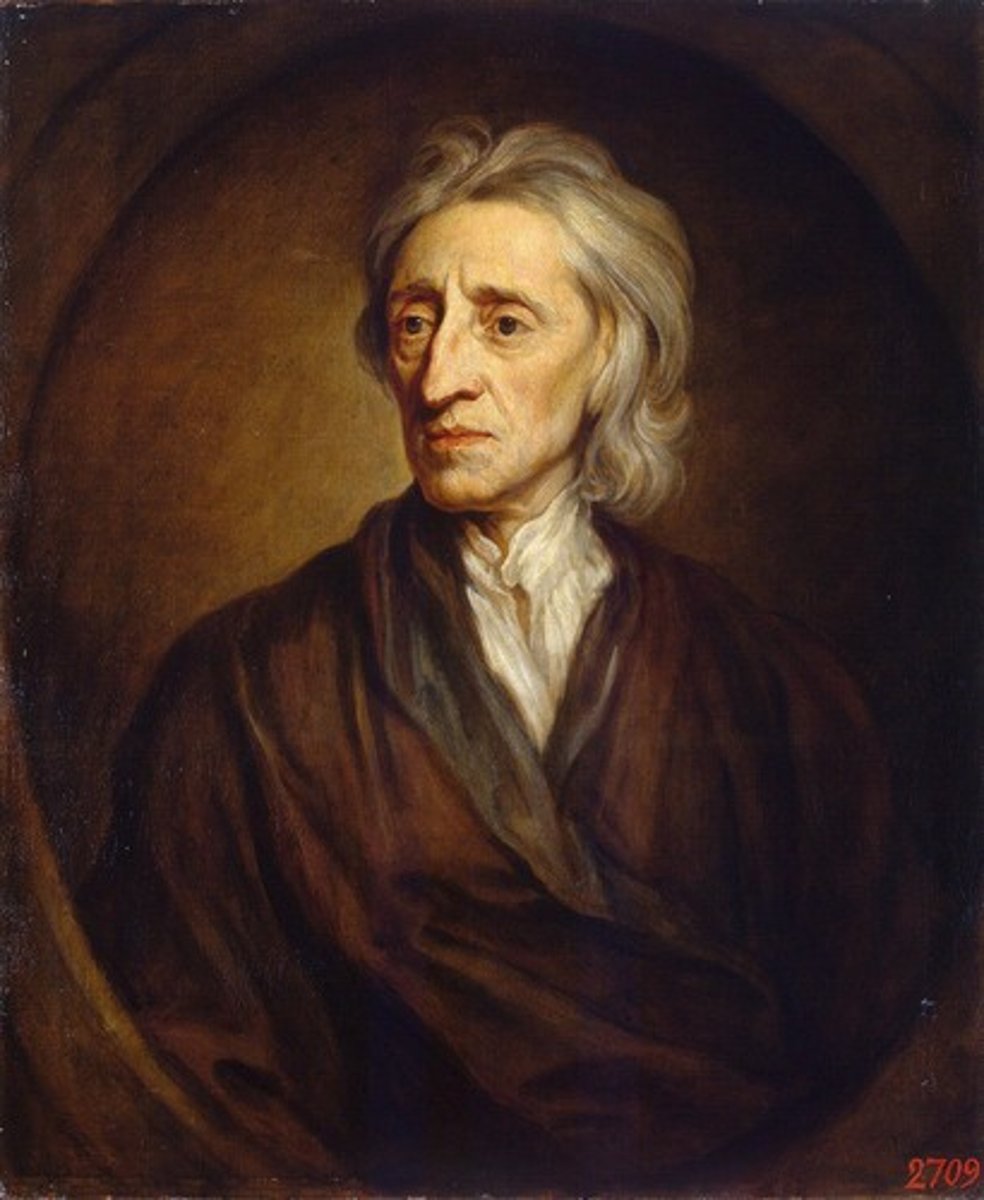
John Locke (Early Life)
"The First Earl of Shaftesbury" invited the namesake philosopher to his home to help him get through his disease where the namesake philosopher was exposed to a different type of education in which the Earl's friends and family members staying at home were engaged in debates on various topics of which Locke grew interested in
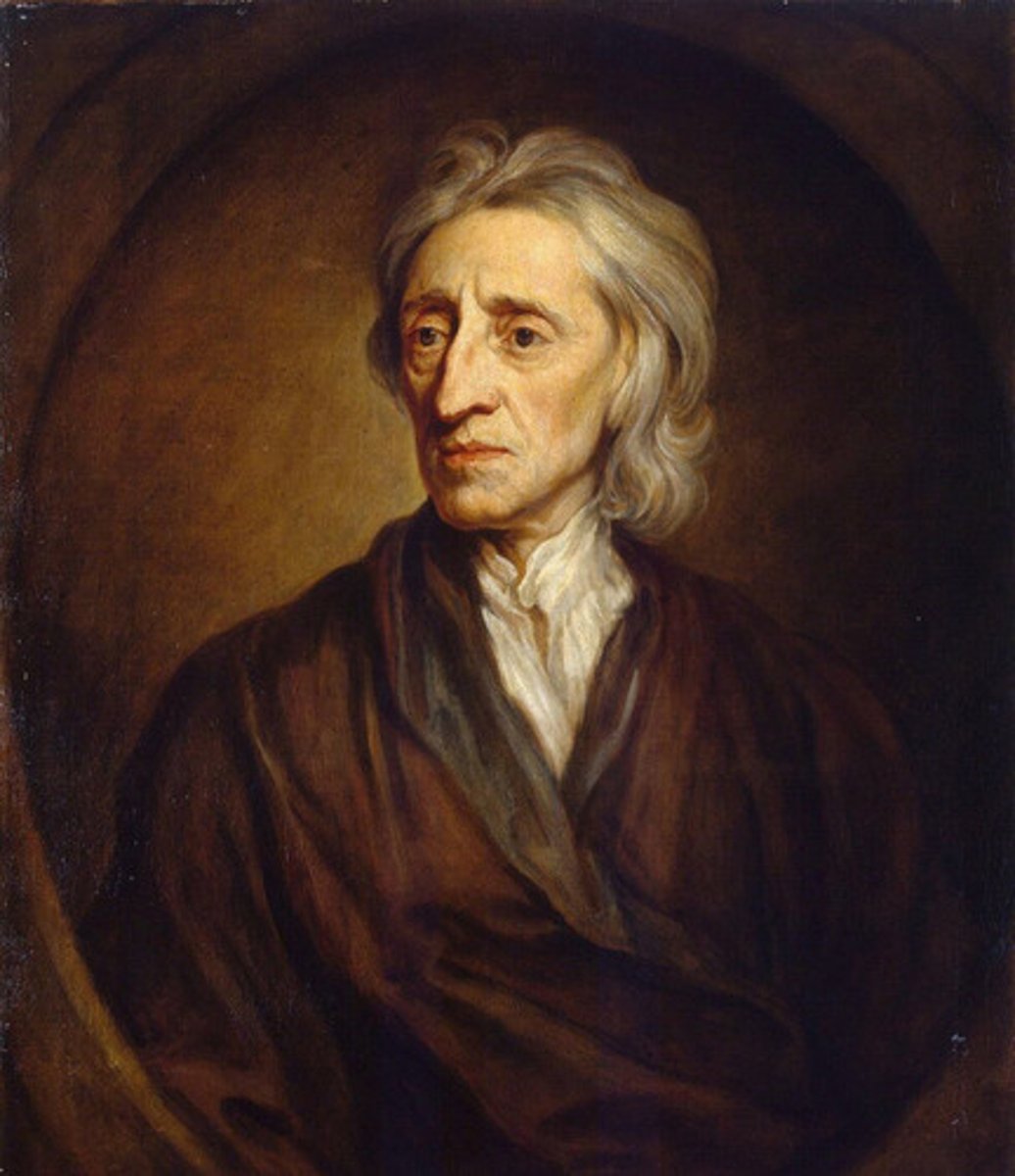
1667- John Locke: Essay Concerning Toleration (Fact 1)
Argues in favor of religious toleration (in addressing the issue of Catholics in England) for many reasons, one of which is because "earthly judges, the state in particular, and human beings in general, cannot dependably evaluate the truth claims of competing religious standpoints"
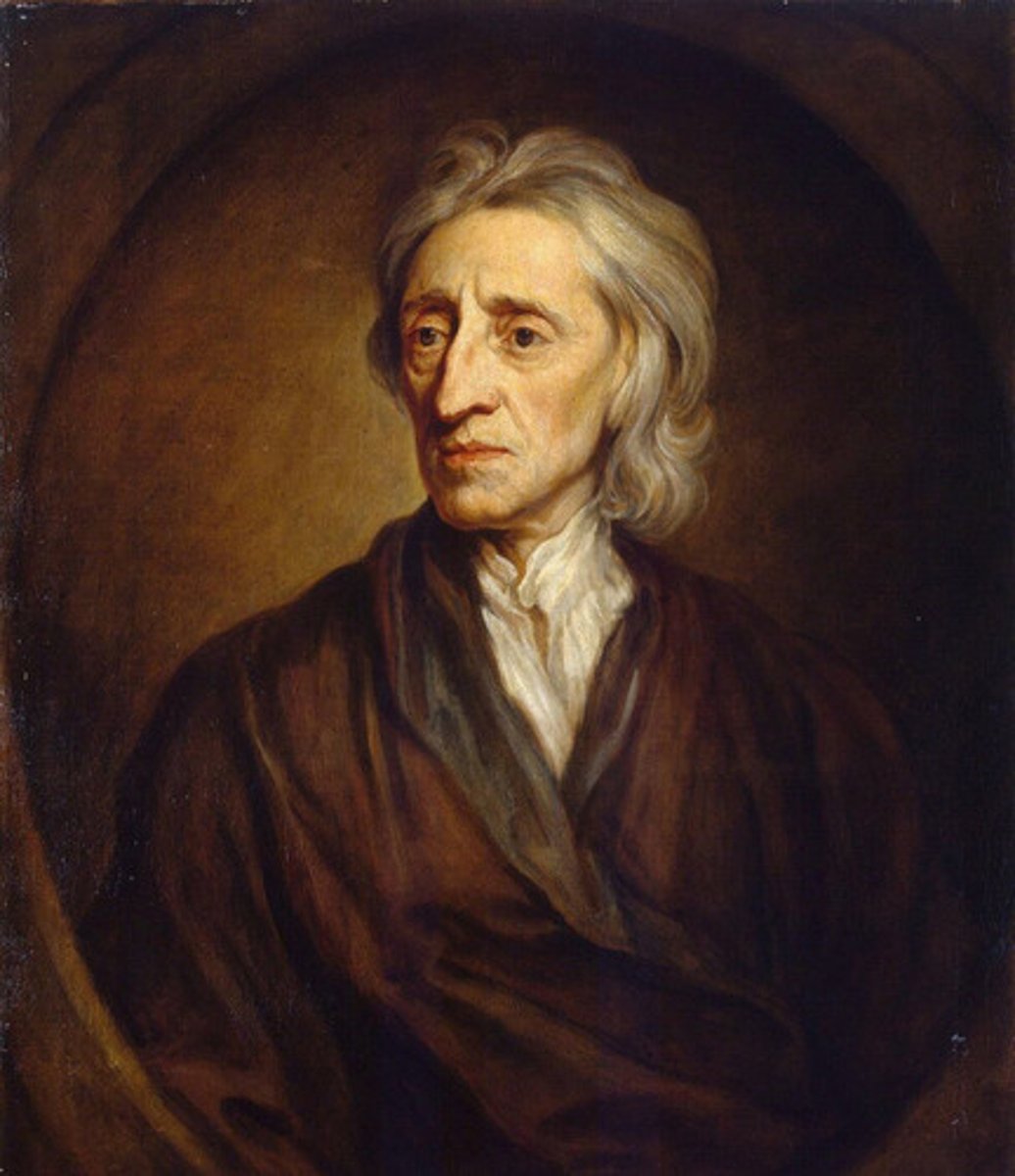
1667- John Locke: Essay Concerning Toleration (Fact 2)
Argues in favor of religious toleration (in addressing the issue of Catholics in England) for many reasons, one of which is because "even if they [judges, the state, or human beings] could [dependably evaluate truth claims of competing religious standpoints], enforcing a single "true religion" would not work, because you can't be compelled into belief through violence
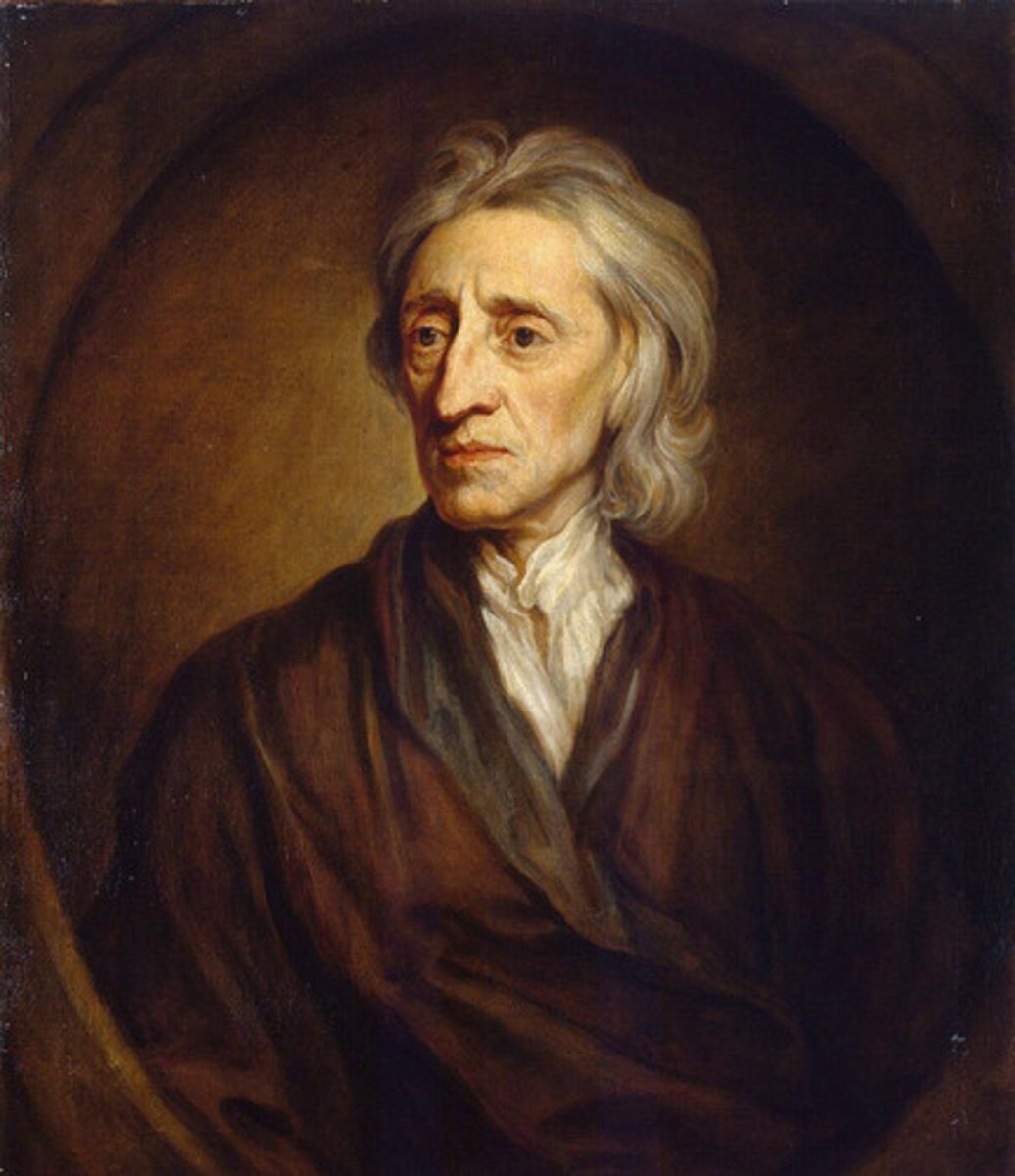
1667- John Locke: Essay Concerning Toleration (Fact 3)
Argues in favor of religious toleration (in addressing the issue of Catholics in England) for many reasons, one of which is because "coercing religious uniformity leads to far more social disorder than allowing diversity"
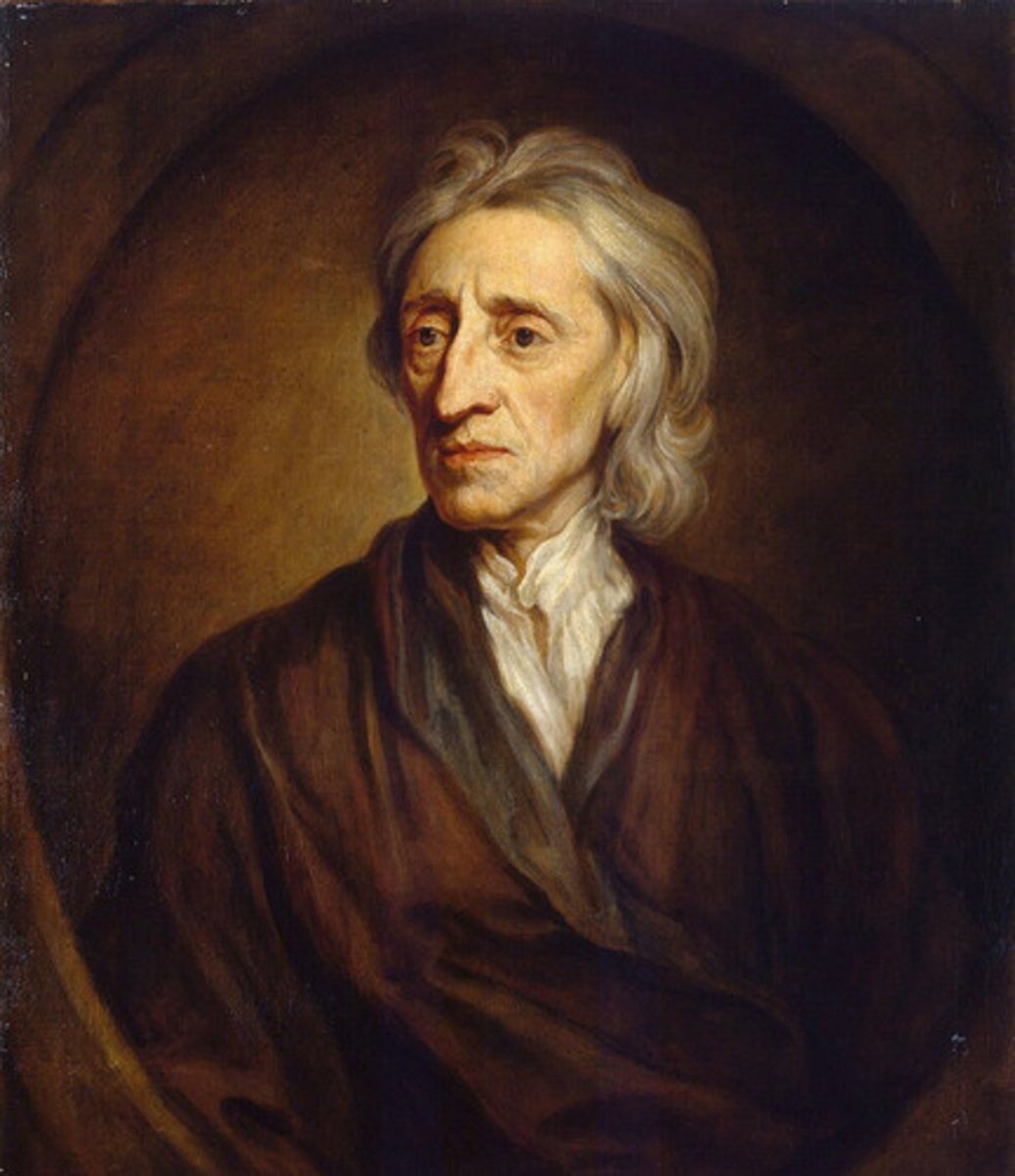
1667- John Locke: Essay Concerning Toleration (Fact 4)
Argues that the ultimate aim of the state is simply to preserve the quiet and comfortable living of men in society and has nothing to do with the "good of men's souls", that is, their personal choices regarding religion
1667- John Locke: Essay Concerning Toleration (Fact 5)
Argues that property is earned through human labor on nature
1669- John Locke: Two Treatises on Government (Fact 1)
In the first "treatise", he debunks the idea that there is a scriptural claim that God creates Kings
1669- John Locke: Two Treatises on Government (Fact 2)
In the first "treatise", he opposes the divine right of Kings as his ideas would be used to justify the Glorious Revolution
1669- John Locke: Two Treatises on Government (Fact 3)
In the second 'treatise", he agrees with Thomas Hobbes that before and/or without the namesake entity there would have been/be a state of nature, but disagrees by arguing this state of nature would have been peaceful rather than chaotic
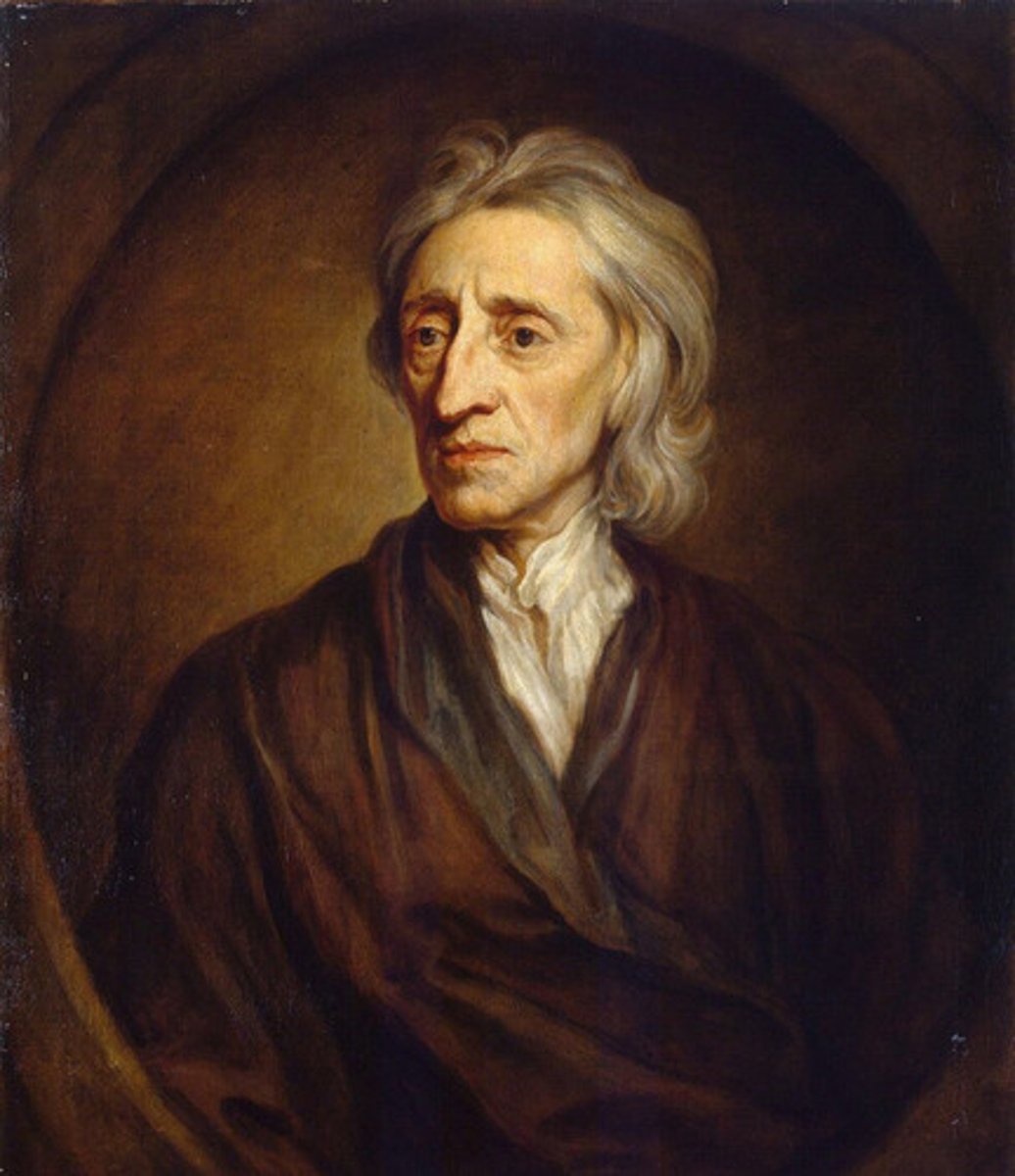
1669- John Locke: Two Treatises on Government (Fact 7)
Argued that in the "state of nature" that was peaceful rather than chaotic, human beings were free and only established government thereafter, therefore freedom came before government or that freedom came first and government came later
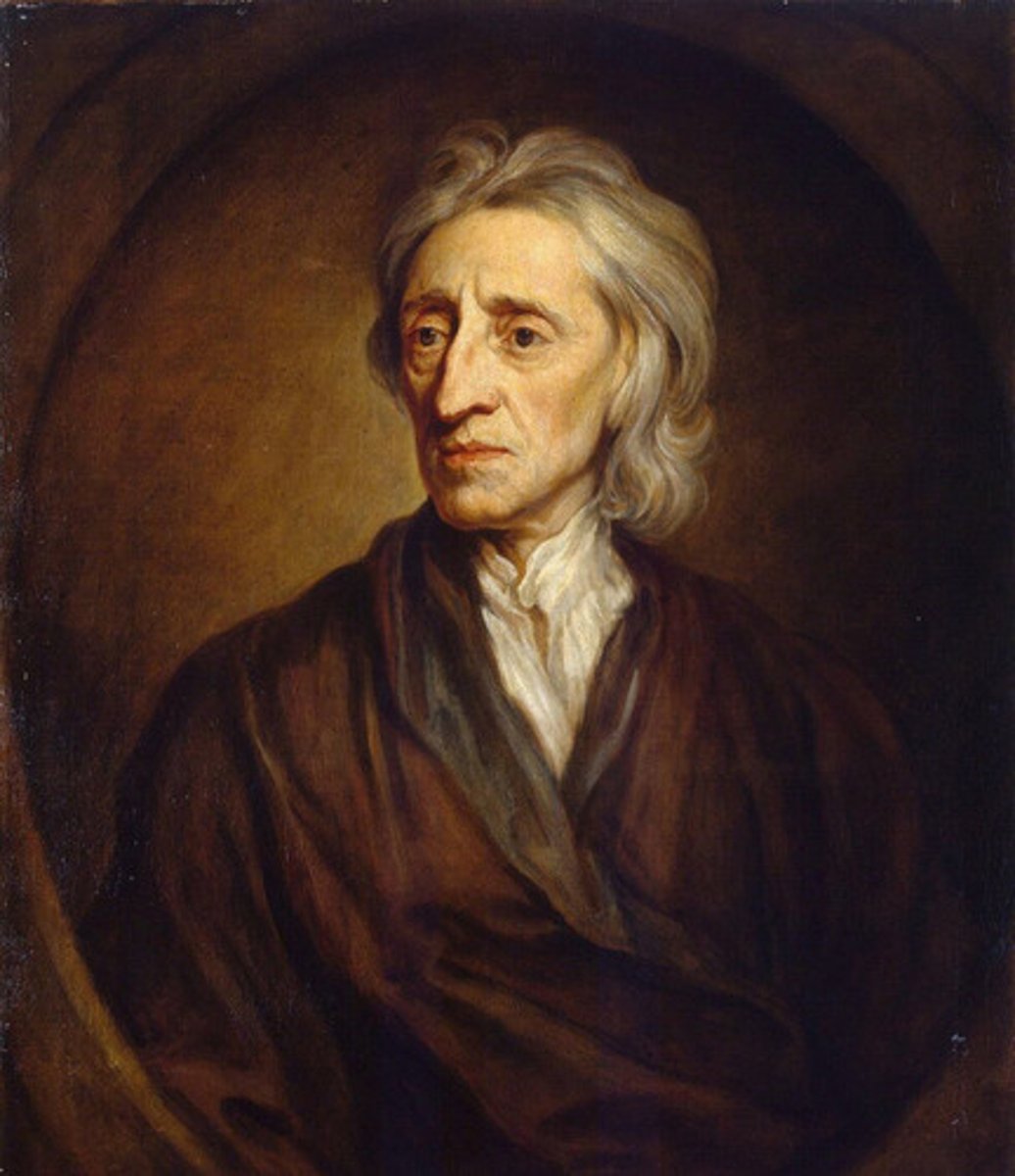
1669- John Locke: Two Treatises on Government (Fact 5)
In the second 'treatise", he argues that human beings couldn't be expected to give up these freedoms entirely because that would defeat the whole purpose of joining society in the first place, therefore if citizens in a society were expected to give up these freedoms entirely by their leader, then they have the right to overthrow their leader and withdraw consent from the agreement for the leader to rule over them, which would result in setting up a new government
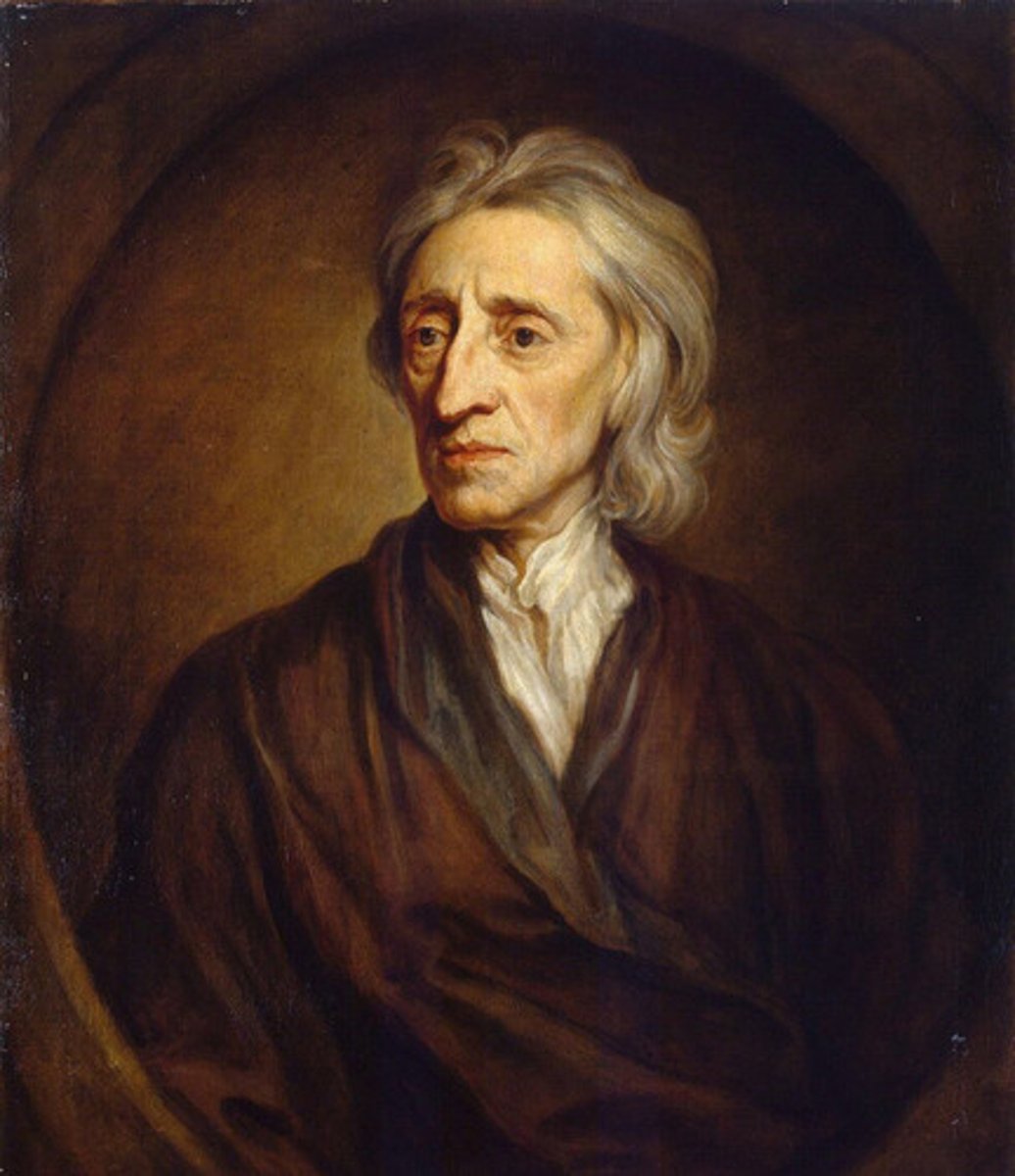
1669- John Locke: Two Treatises on Government (Fact 6)
Philosophical work in which the namesake author explains that rights must come to be understood before the development of human society and that governments are meant to arbitrate disputes and provide order
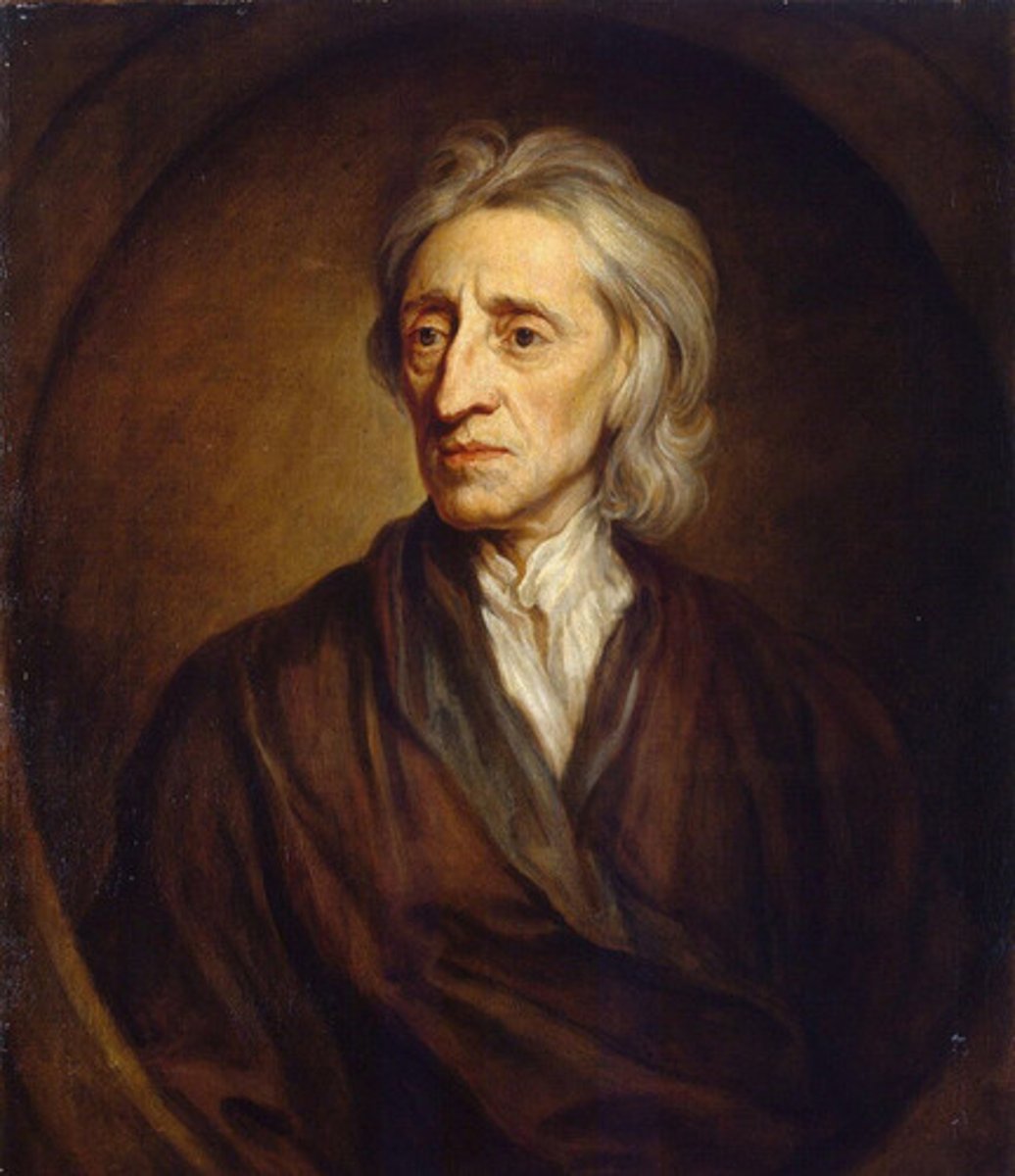
1669- John Locke: Two Treatises on Government (Fact 4)
In the second 'treatise", he argues that human beings possess "natural, inalienable" rights that no ruler could ever take away and that people consent or submit to government out of consent rather than out of fear because they are willing to give up some of their freedoms if it means they will be able to better preserve their rights
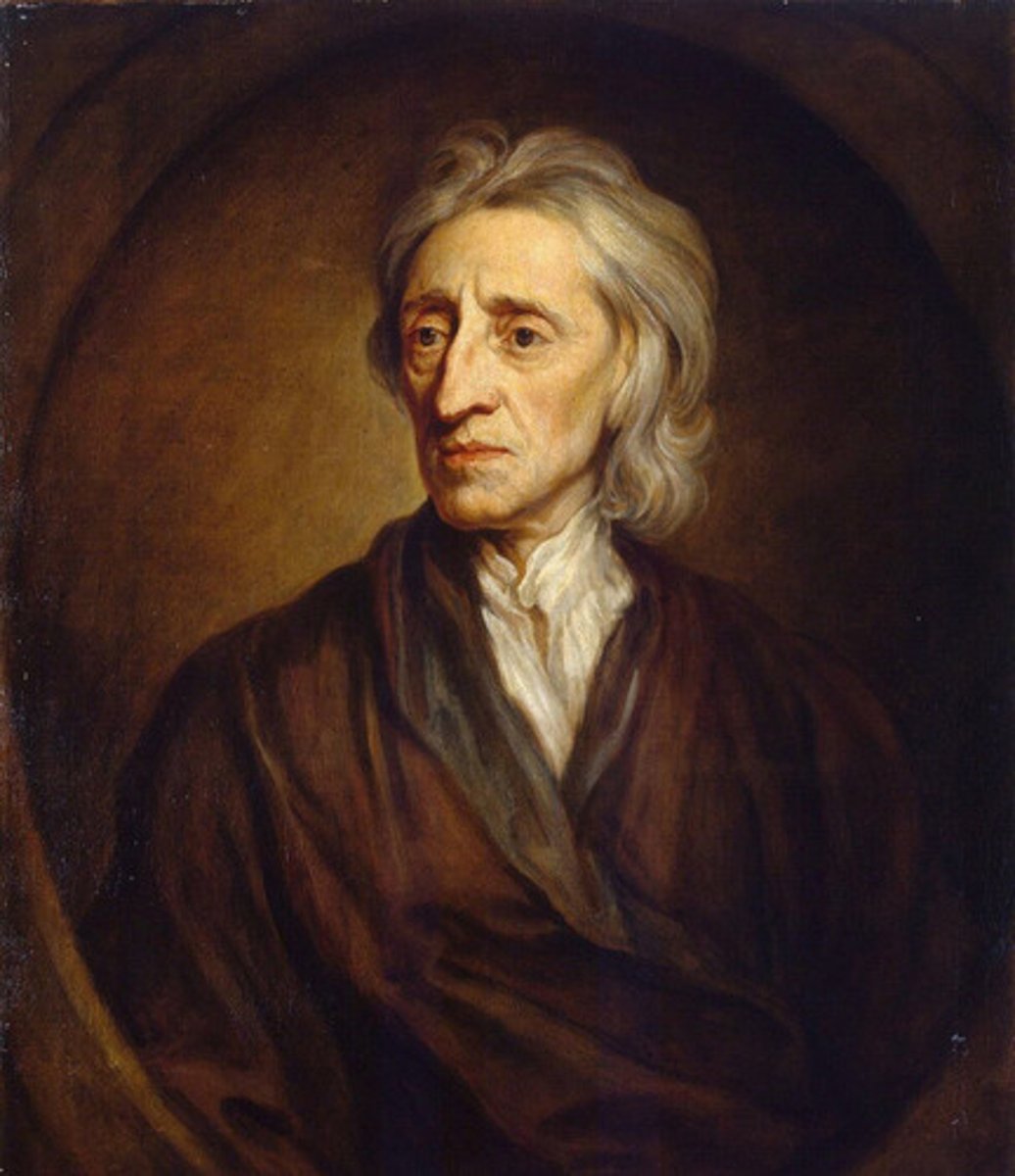
1689- John Locke: Essay Concerning Human Understanding (Fact 1)
Believed in the Blank Slate ("Tabula Rasa") and argued that all knowledge is obtained through experience and that we are born knowing nothing
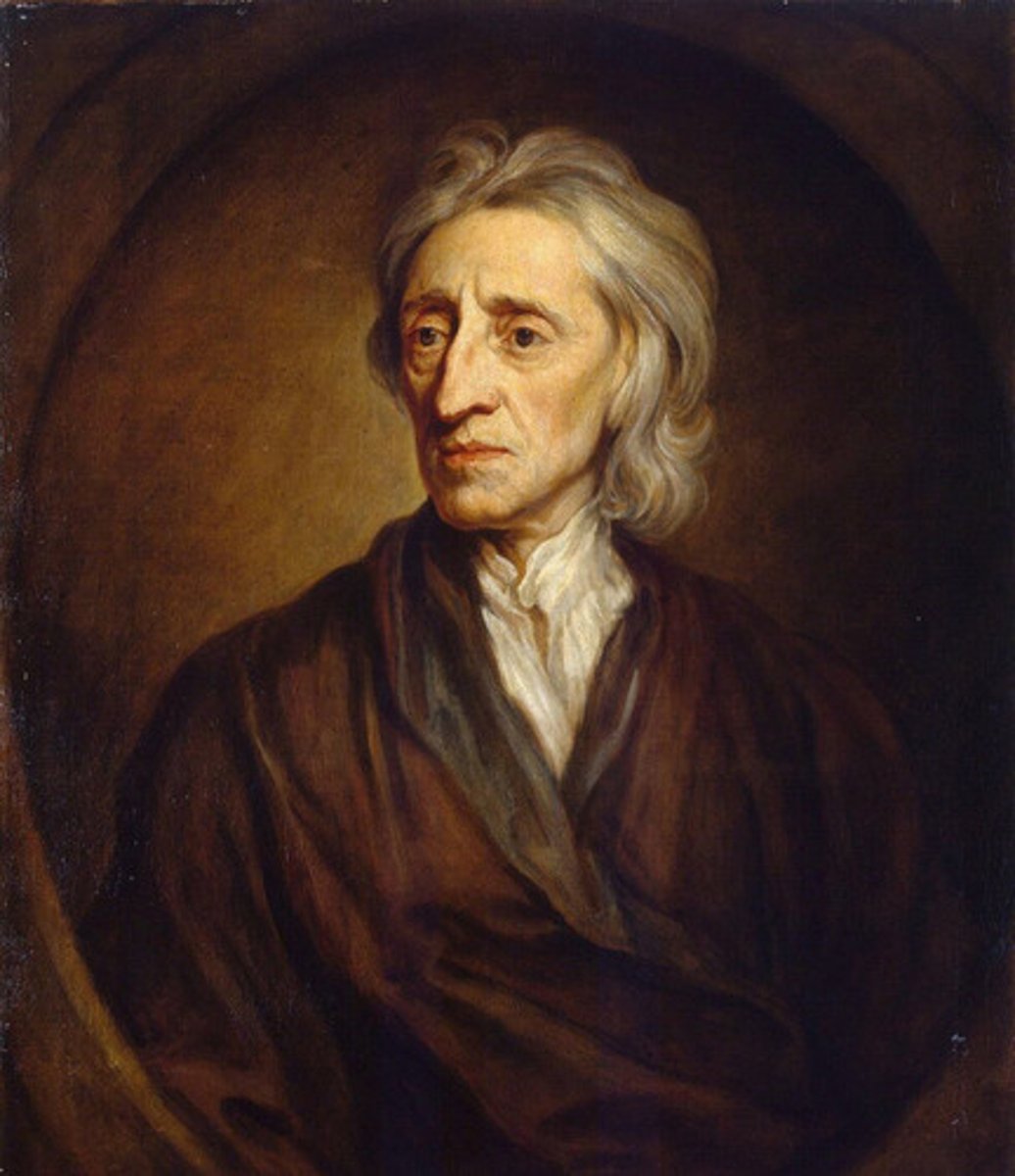
1689- John Locke: Essay Concerning Human Understanding (Fact 2)
Argued that all of our knowledge comes to us through "sense data" (sensations from the outside world and/or internal reflections on the process of our own understanding of the world around us) and that this is how we should learn and how we should structure our education systems
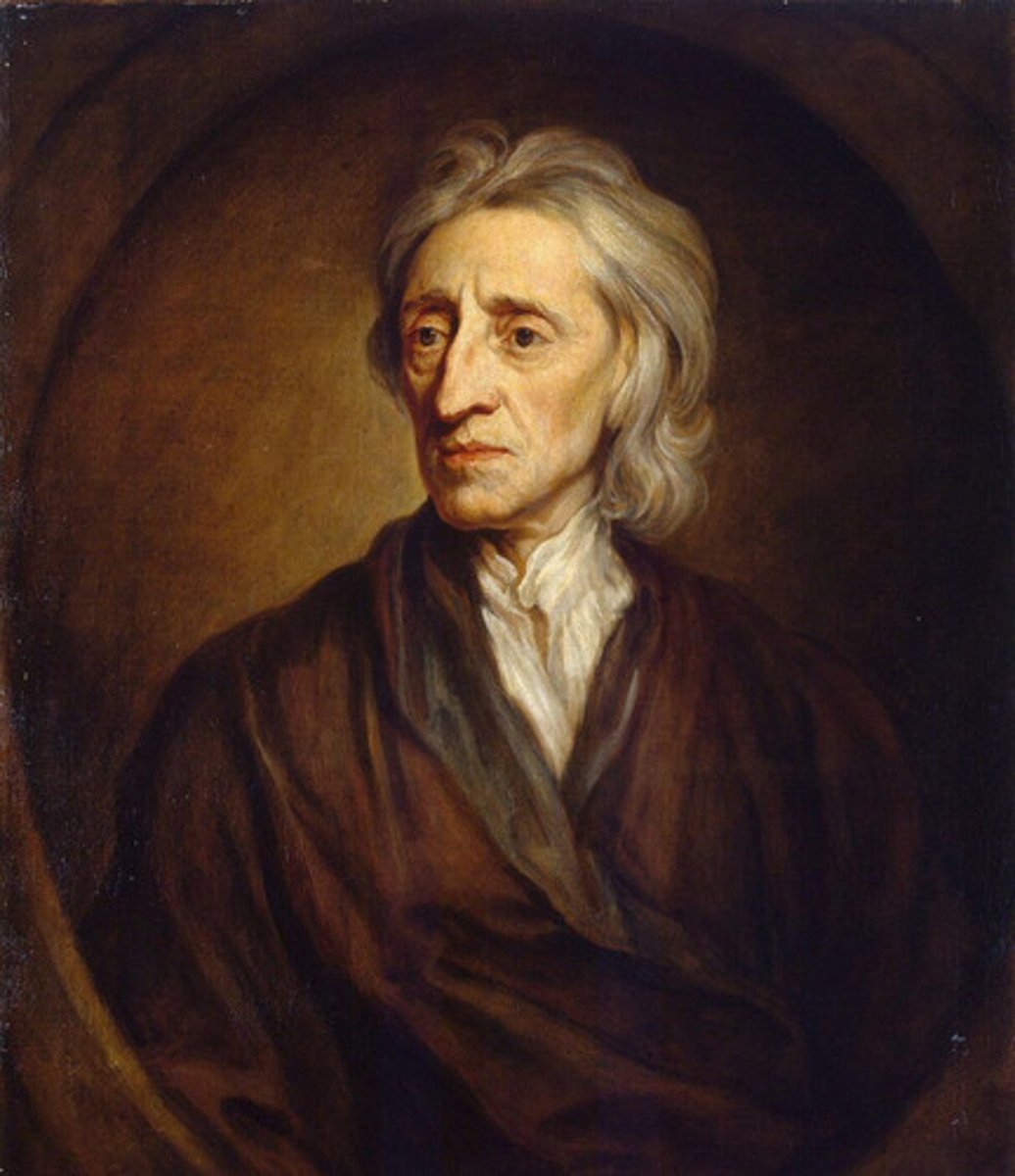
1693- John Locke: Some Thoughts Concerning Education (Fact 1)
Argued that the "Association of Ideas" that one makes when young are more important than those made later because they are the foundations of ourselves
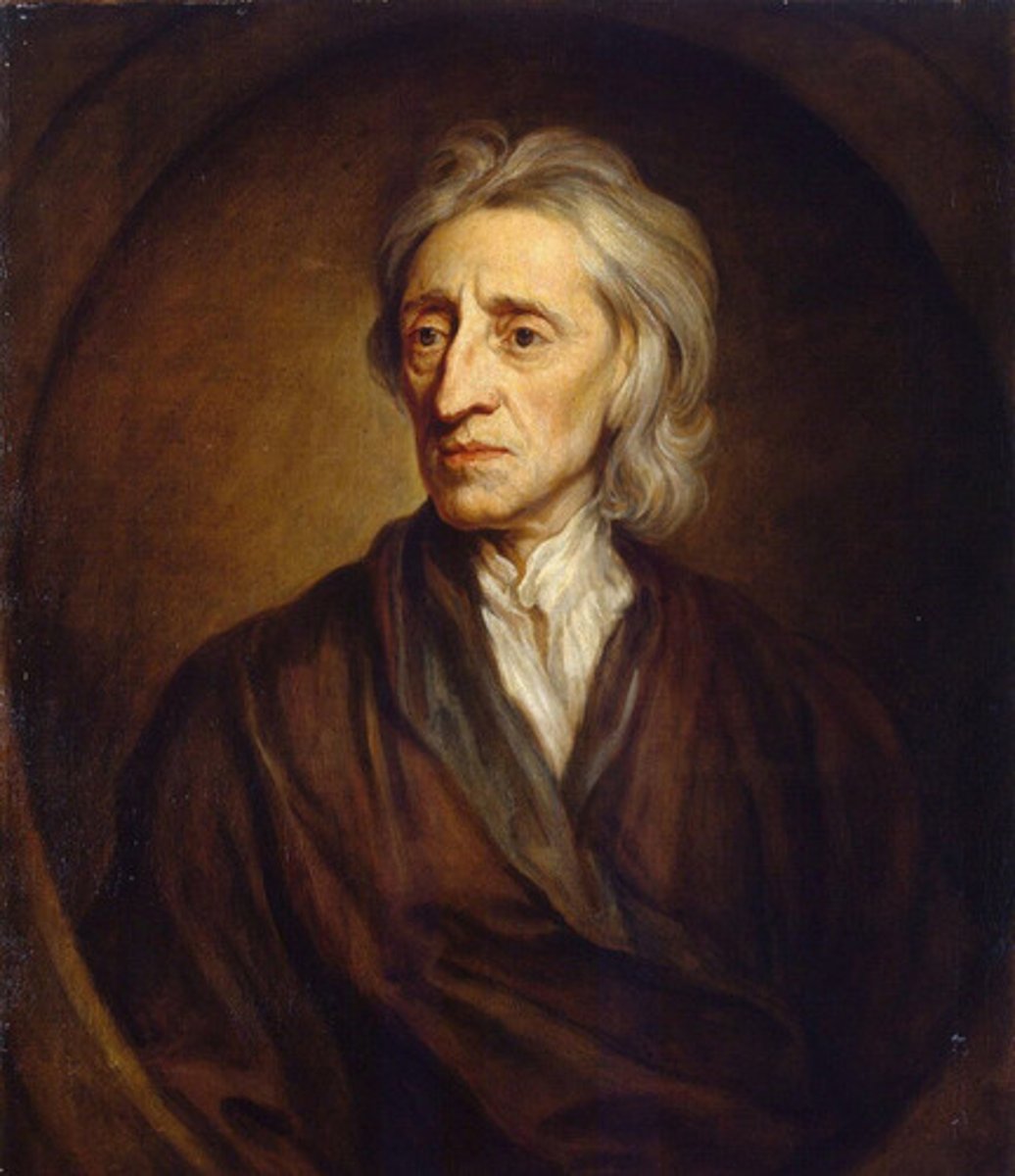
1693- John Locke: Some Thoughts Concerning Education (Fact 2)
Argued that subjects like Latin, Greek, Music, and Poetry were useless and shouldn't be a part of the school curriculum and that school should only be concerned with teaching its students that which is practical for life, therefore arguing that subjects like Science, Ethics, Business, and Psychology
1693- John Locke: Some Thoughts Concerning Education (Fact 3)
Stressed the development of critical thinking skills in the namesake institution
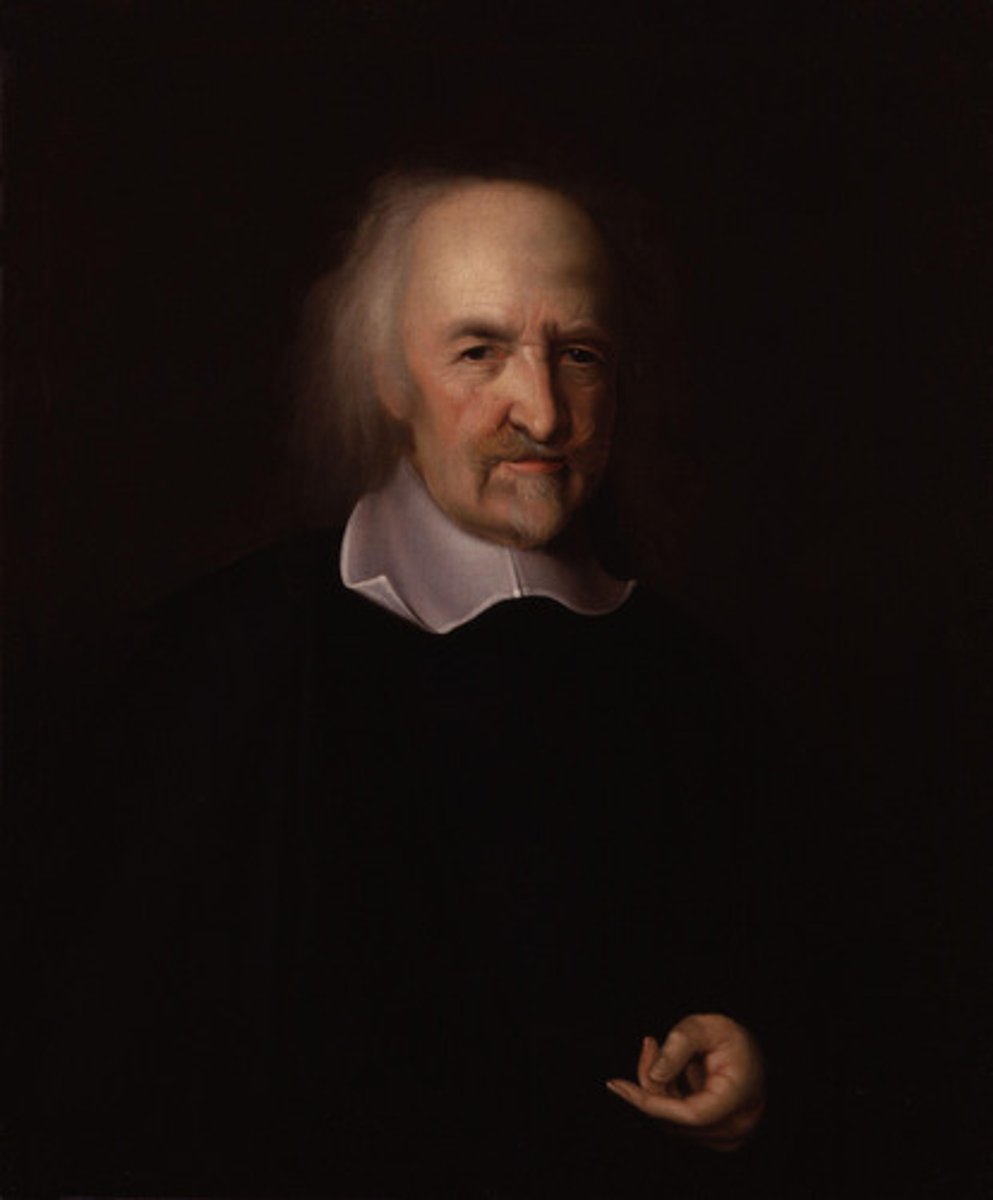
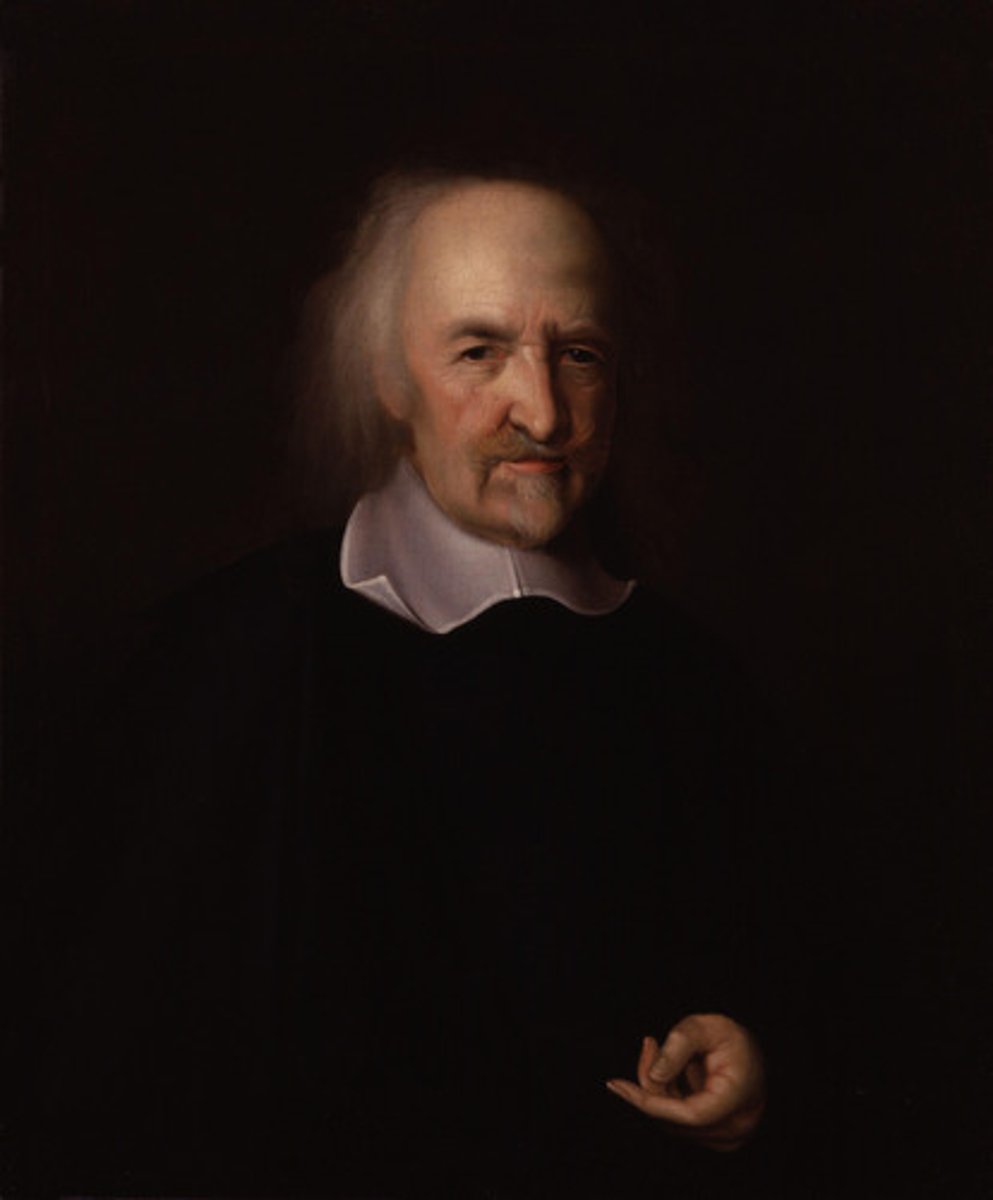
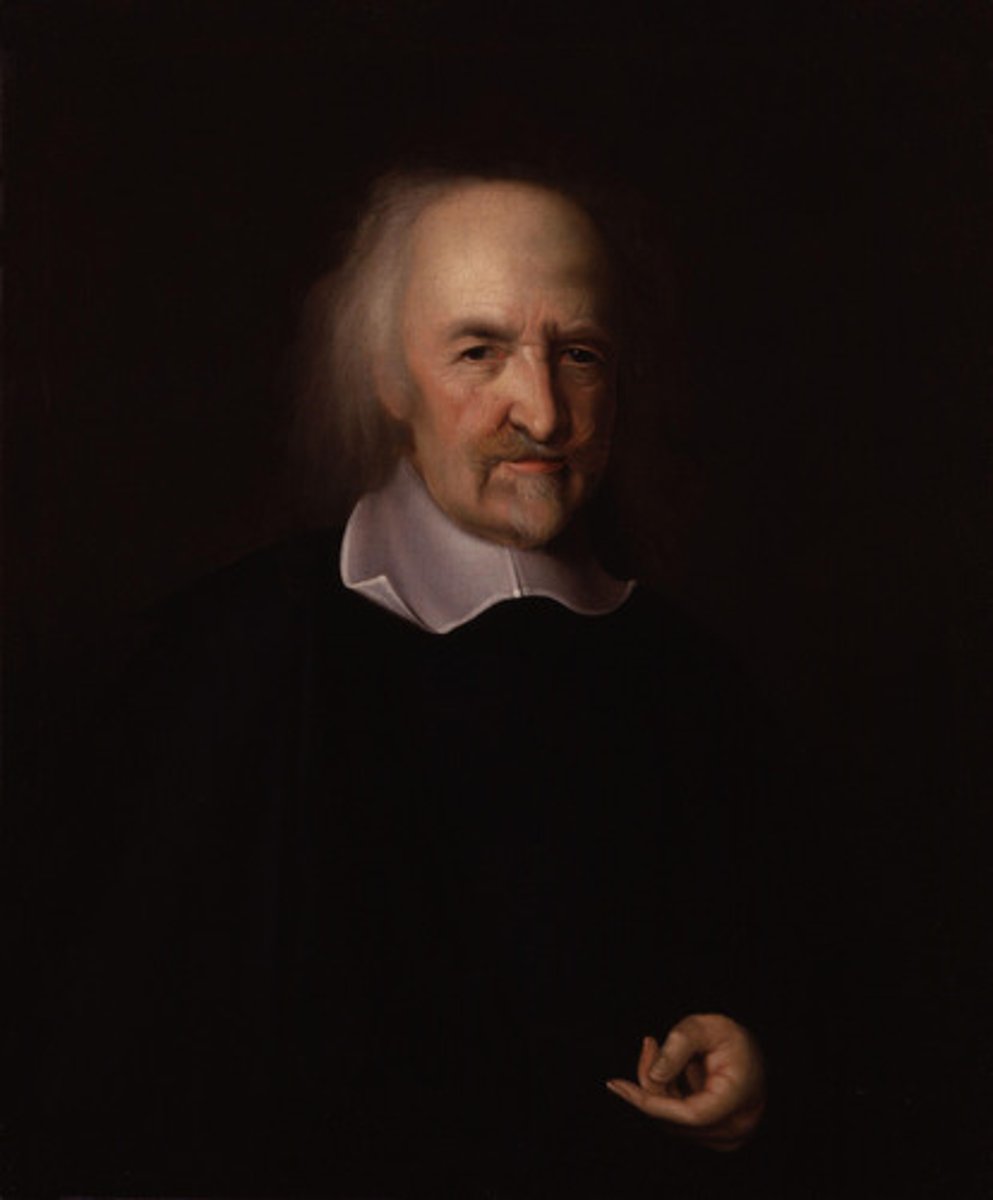
Thomas Hobbes (Fact 1)
17th Century English Enlightenment Philosopher
Thomas Hobbes (Early Life and Personality)
Peaceful, Cautious, and bore a strong hatred to all types of violence, his father left him and his family at the age of 4 after being "disgraced" as a clergyman after getting into a fight with a fellow clergyman and along with this, the English Civil War had a long-lasting impression on him and his work as much as it did for John Locke, a contemporary of his
Thomas Hobbes (Religion)
Privately, he was an atheist
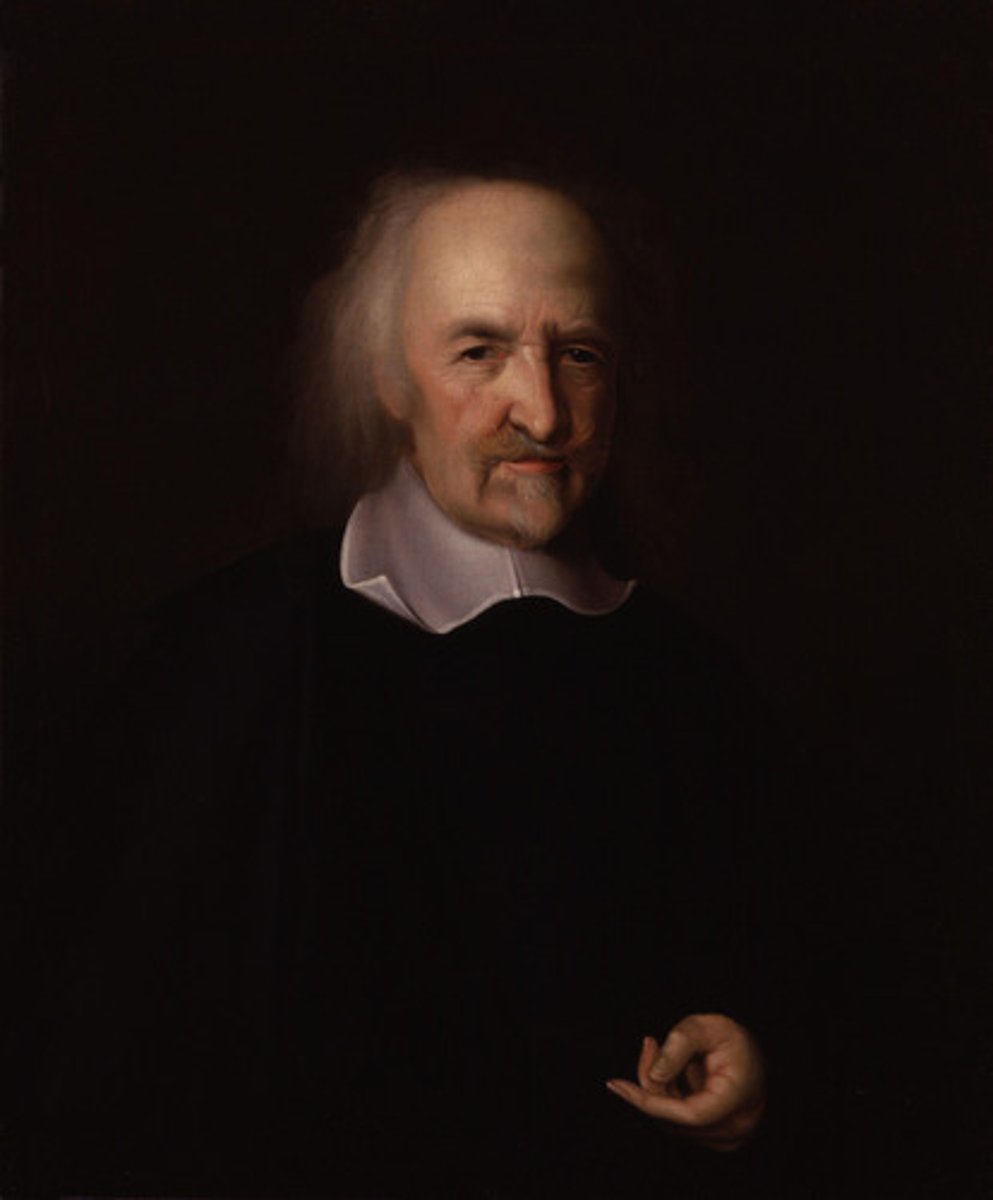
1651- Thomas Hobbes: Leviathan (Fact 1)
Expresses the need for balance in terms of the Social Contract Theory and explored when it would be right for someone to rebel against their leader and when it would be wrong and downright evil to do so
1651- Thomas Hobbes: Leviathan (Fact 2)
Expresses the idea of the "state of nature" in which there may have been a time before the rise of governments in which he argues that humans were (are) born into a state described as a life of continual war between men for gain, glory, and security and that humans are equal only in the sense that they all have the ability to destroy one another and that there is a "war of all against all" ("bellum ominum contra omnes")
1651- Thomas Hobbes: Leviathan (Fact 3)
Argues the idea that the "state of nature" would be chaotic because humans left to their own devices without a central authority to keep them in order would quickly descend into beings that would still go through with the atrocities of the English Civil War, but who would do so "in bear skins and while using flint tools" and that life in a "state of nature" would hardly be life at all (it would be solitary, poor, nasty, brutish, and short)
1651- Thomas Hobbes: Leviathan (Fact 4)
Argues that people were led to form governments both willingly but also compulsively, out of fear and dread of chaos and from destroying each other, surrendering to authority and that the only right the people were really allowed to have is to protest against the namesake type of ruler who in some way, shape, or form kills or threatens to kill them, but that any other reason was permissible and gave no valid reason to protest, given the accepted constraints of Social Contract Theory
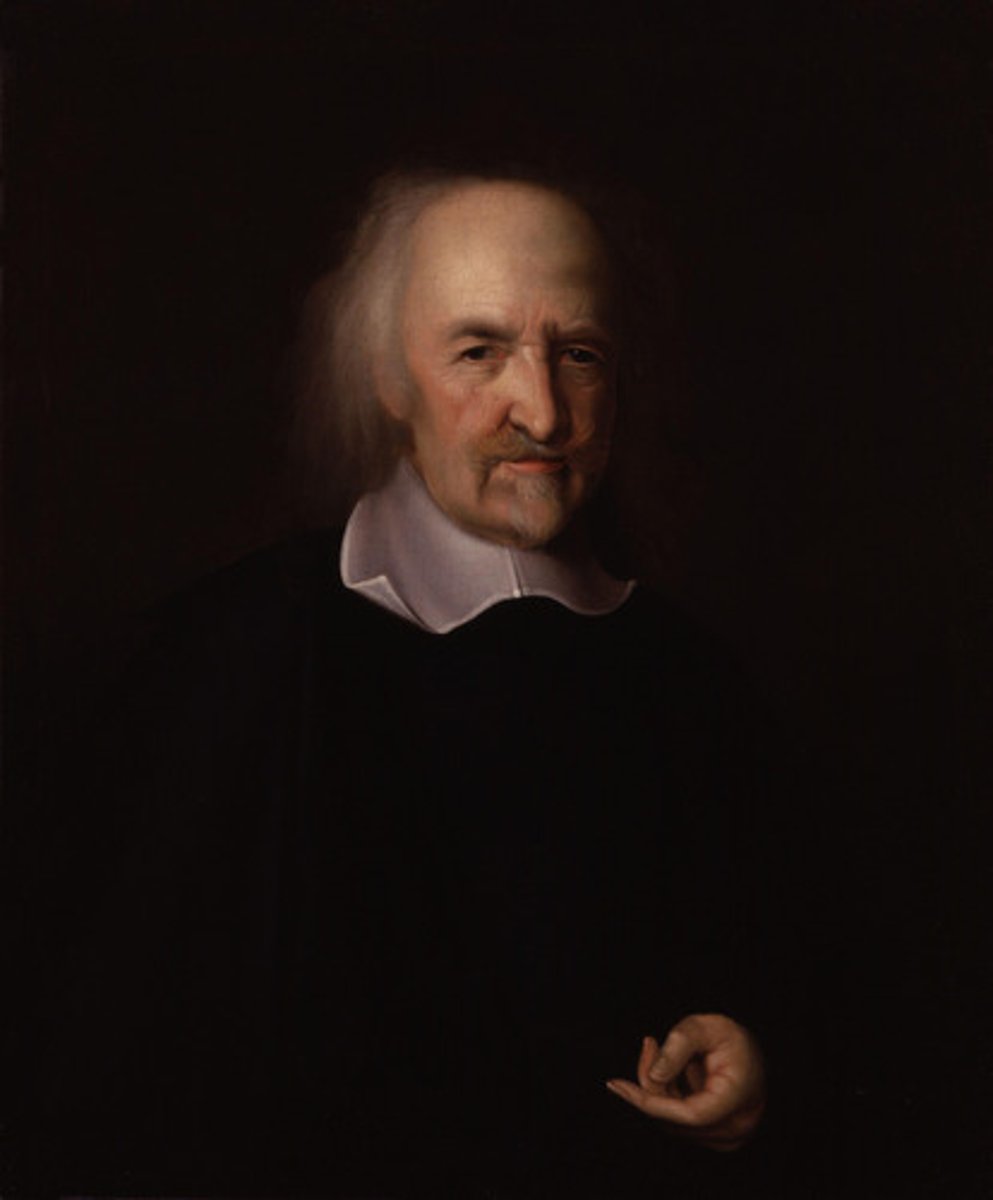
1651- Thomas Hobbes: Leviathan (Fact 5)
Argues that if a ruler inconveniently does some bad things while he rules, it is the fault of the people, not the ruler, because if the people could rule themselves (assuming they can't), there would be no need for a leader in the first place
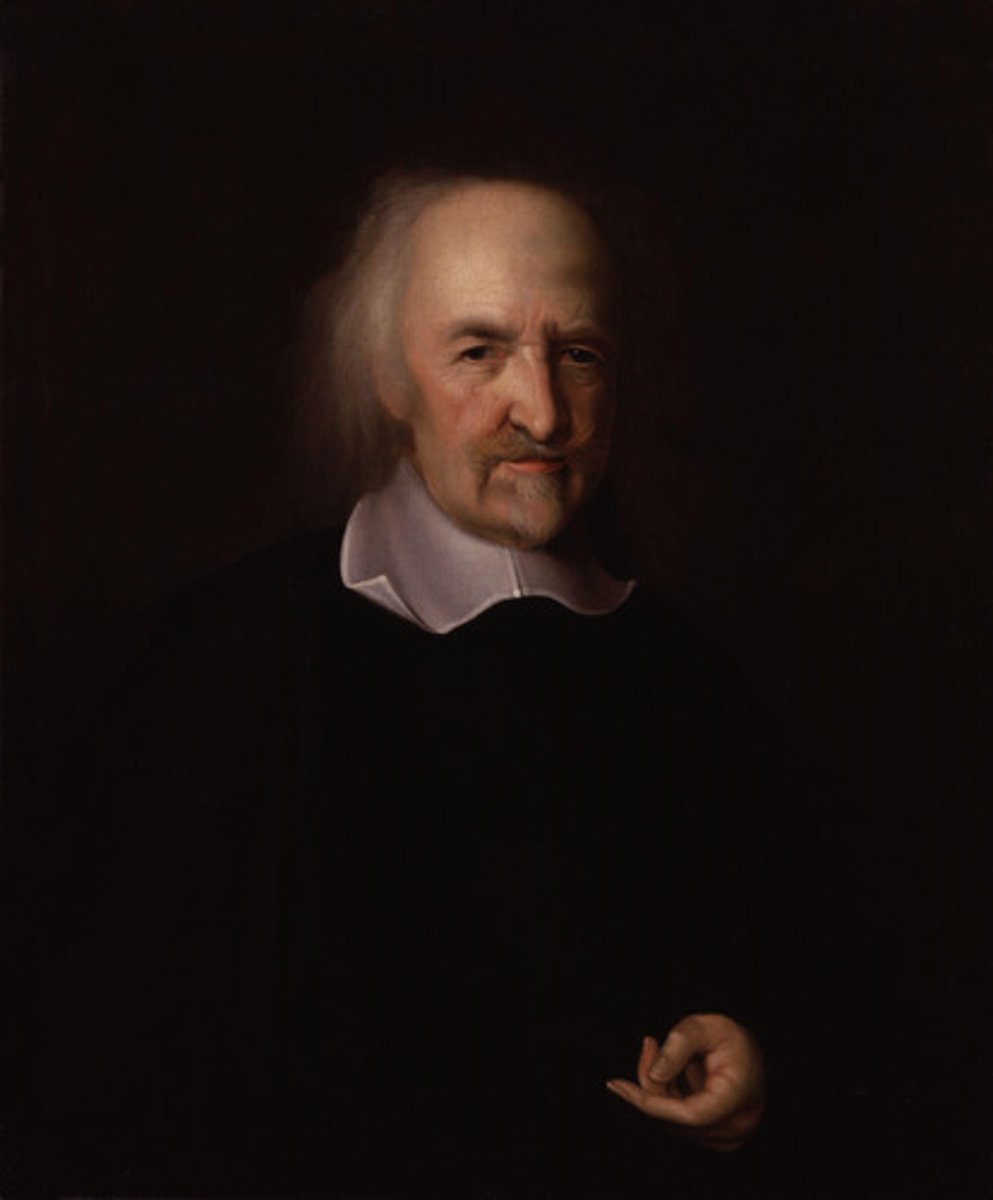
1651- Thomas Hobbes: Leviathan (Fact 6)
Philosophical work in which the namesake philosopher argues that, "though of so unlimited a power men may fancy many evil consequences, yet the consequences of the want of it, which is the perpetual war of every man against his neighbor, is much worse"
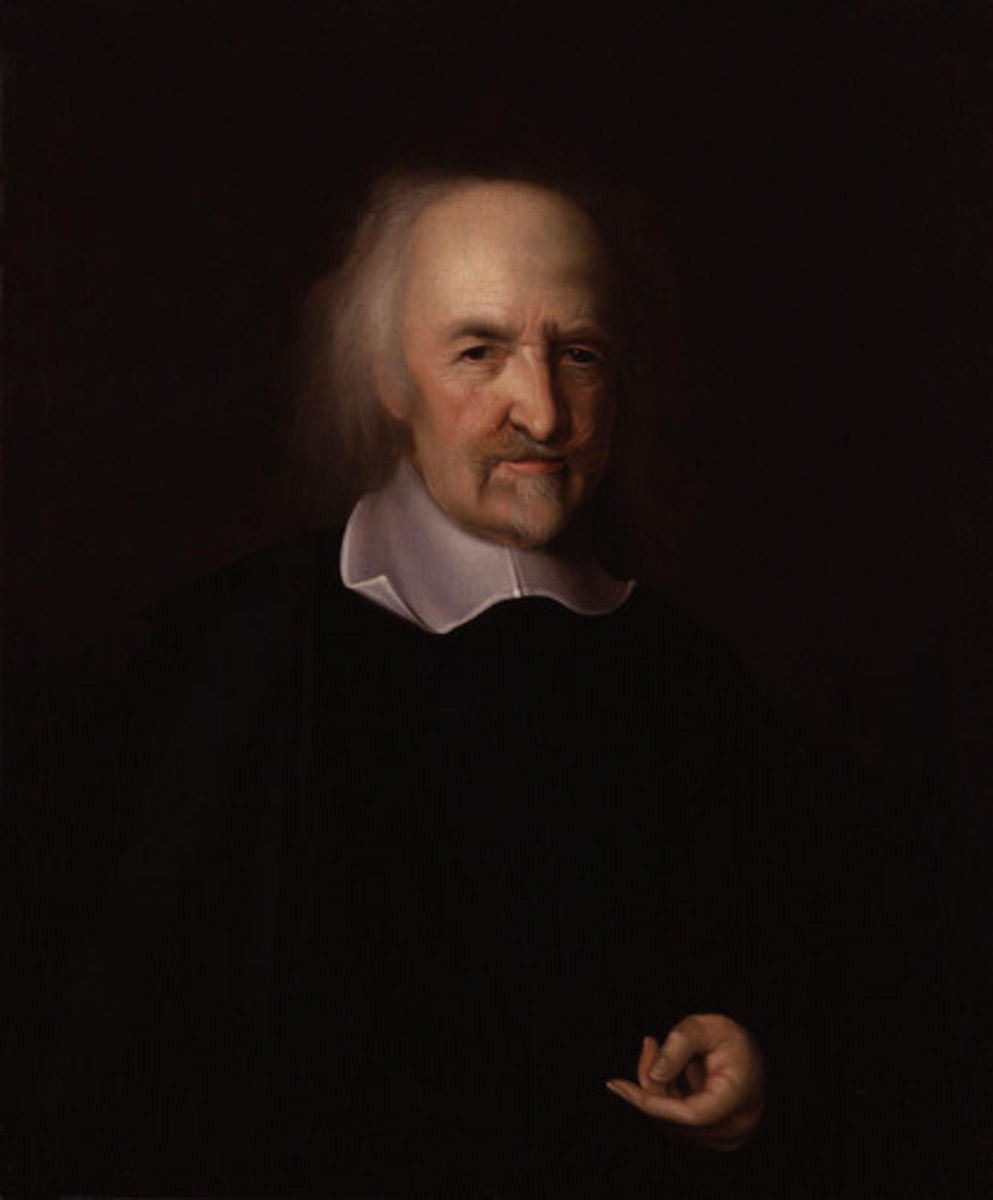
1651- Thomas Hobbes: Leviathan (Fact 7)
Philosophical work in which the namesake philosopher argues that, "he who complains of injury from his Sovereign, complains of that of which he himself is the author and therefore should not accuse any man but himself"
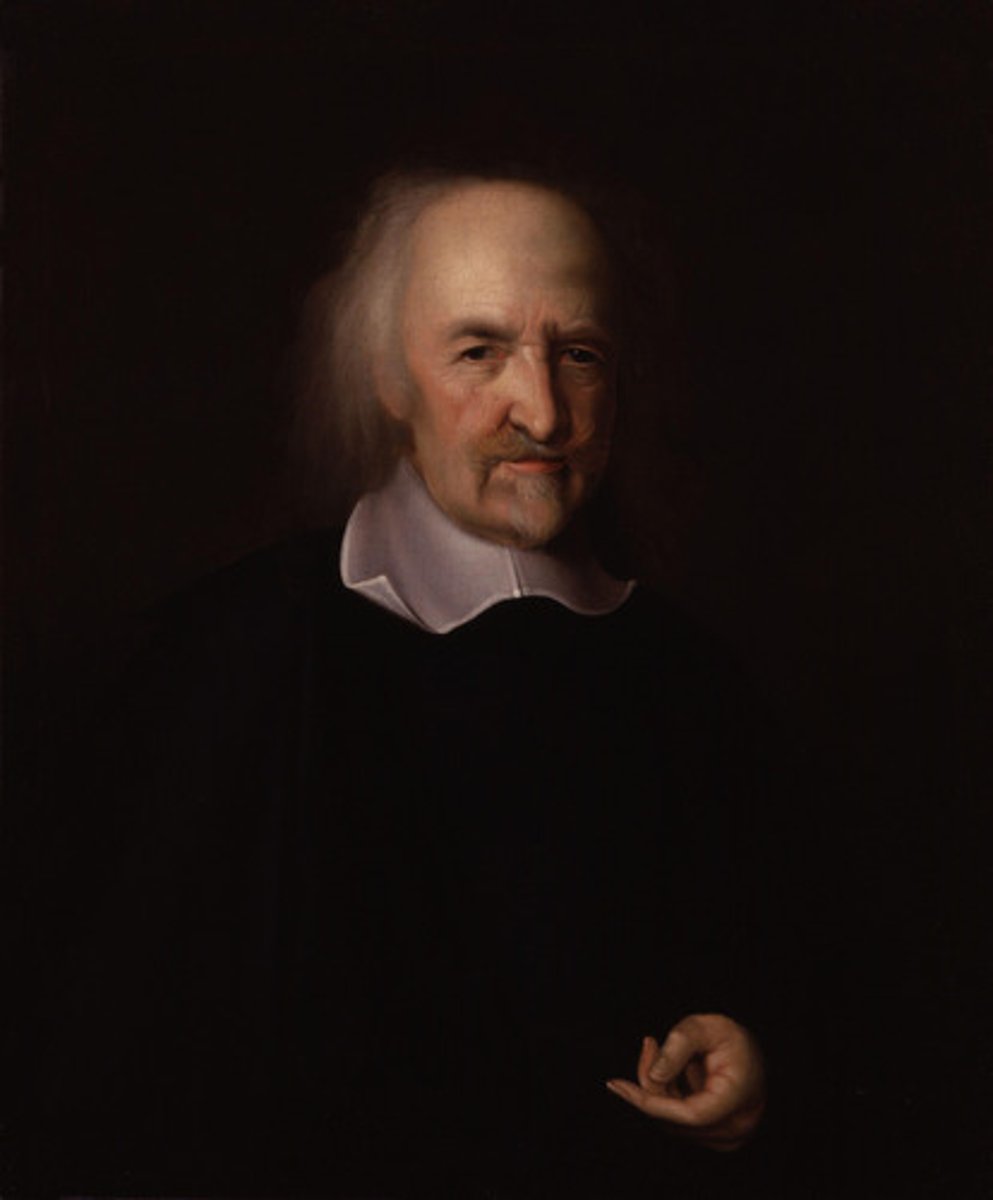
1651- Thomas Hobbes: Leviathan (Fact 8)
Expresses the idea that Human Society inevitably falls into anarchy but that with the creation of the "Social Contract", this state of nature can be avoided if such a contract is made with one another and with the sovereign so the will of the Sovereign stands as law and rebellion is prohibited unless the Sovereign kills or threatens to kill his own people
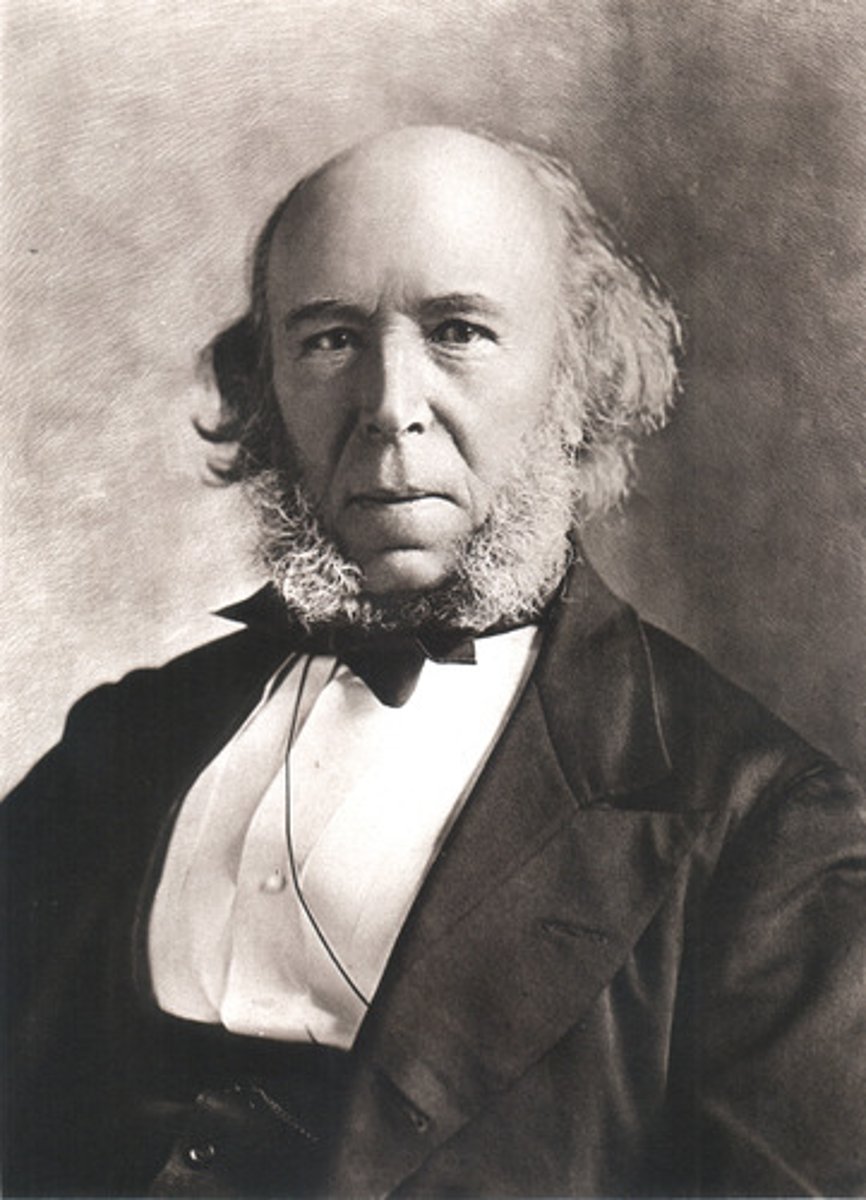
Herbert Spencer (Fact 1)
- British Classical-Liberalist-Victorian Philosopher
- Created Social Darwinism
- Coined the phrase "survival of the fittest"
Herbet Spencer: Social Statics (Fact 1)
Introduces Spencer's interpretation of Natural Selection, describes development of societies from militaristic to complex
Herbert Spencer: Principles of Sociology (Fact 1)
Conceives society as a living organism
Herbert Spencer: The Man Versus the State (Fact 1)
Argues against the liberal policies of"Gladstone"
Zeno of Cyprus (Fact 1)
Founder of Stoicism
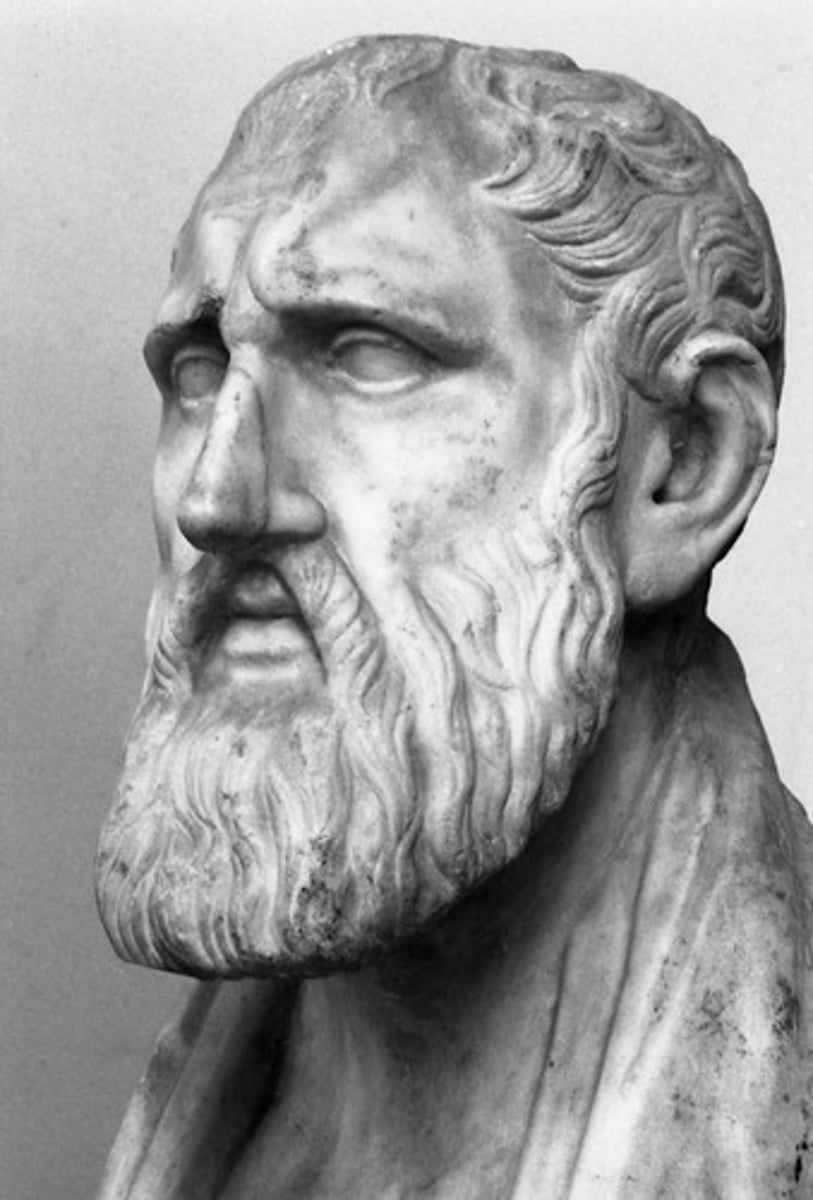
Zeno of Cyprus (Fact 2)
He was a merchant who lost everything when he was shipwrecked in Athens (around 300 BCE), so he turned to books and read philosophical works and caught up with the philosophers of his time (Socrates)
The Social Contract Theory (Fact 1)
Political Theory that states that ordinary people are responsible for giving leaders power and that one should obey a leader because the leader is doing good things for them and if the leader wasn't doing good things for them, then they don't have a right to rule
The Divine Right Theory (Fact 1)
Political Theory that states that God is responsible for giving leaders power and that one should obey a leader because God said so and you would be sent to hell if you didn't agree
Stoic (Contemporary Use)
Someone who remains calm under pressure and avoids emotional extremes
Stoicism (Influences)
Philosophy that has influenced many including:
- St. Paul
- Thomas Aquinas
- Rene Descartes
- Baruch Spinoza
Stoicism (Etymology)
Comes from the "Stoa", or the open market where the philosophical discussions Zeno of Cyprus was having with others at the time were not allocated to a specific location as with other philosophical schools such as Plato's "Academy"; and was done in order to talk with people and make their conversations more accessible in order to make people's lives better
Stoicism (Characteristic 1)
Philosophy characterized by the idea that one doesn’t have control over the events that affect them and their outcomes, but does have control over how to approach the events that affect them and their outcomes
Stoicism (Characteristic 2)
Philosophy characterized by the idea that only people who have already cultivated virtue and control for themselves can bring positive change in others
Stoicism (Characteristic 3)
Philosophy characterized by the idea that rather than pursuing idealism, one tries to deal with the world as it is
Stoicism (Characteristic 4)
Philosophy characterized by the idea that one deals with self-improvement through 4 "Cardinal Virtues"; which are Wisdom, Temperance, Justice, and Courage
Stoicism (Philosophers)
Philosophical Movement of Philosophers Including:
- Zeno of Cyprus (Citium)
- Seneca the Younger
- Marcus Aurelius
- Epictetus
- Chrysippus
Stoicism (Fact 1)
Philosophical School led by Seneca the Younger who advocated against slavery under the Roman Empire during his time, advocating for their humane treatment and stressing that we all share the same fundamental humanity
Stoicism (Characteristic 5)
Philosophy characterized by the idea that everything around us operates according to a web of cause and effect resulting in a rigid structure of the universe, which in this context is also known as "Logos"
Stoicism (Fact 2)
Philosophy that has influenced other concepts including "REBT (Rational Emotive Behavioral Therapy)", which focuses on changing the self-defeating attitudes people tend to form given their life circumstances
Stoicism (Fact 3)
Philosophy that has influenced other concepts including "Logotherapy", a concept devised by Viktor Frankel (a concentration camp prisoner) in which we can harness willpower in order to fill our lives with meaning even in the most negative of situations
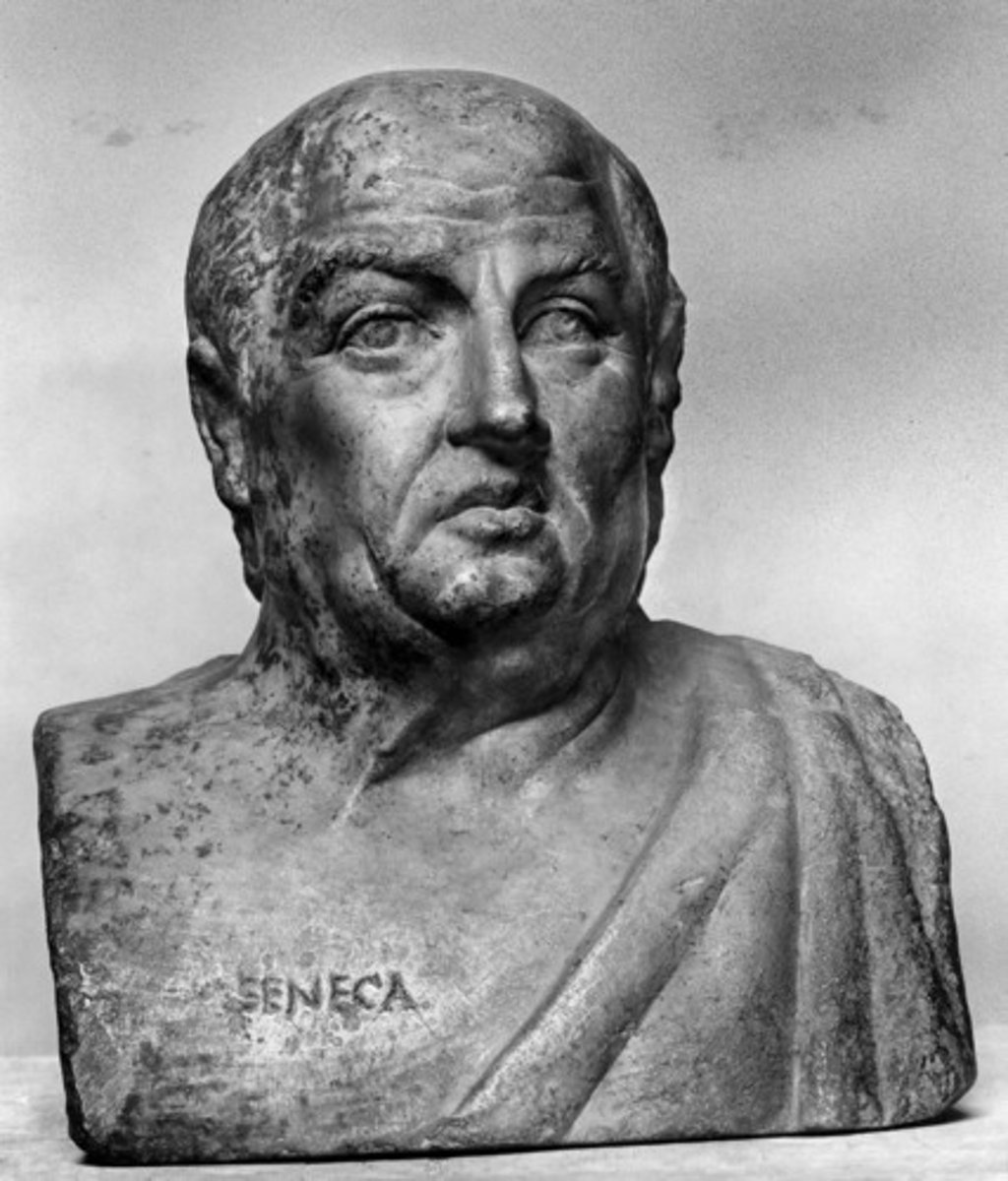
Seneca the Younger (Fact 1)
Advisor and Tutor to Nero, he was eventually asked by Nero to commit suicide in front of Nero's family
Stoicism (Fact 4)
Philosophy that has influenced other concepts including "Ataraxia", or "tranquility of the mind"; a more nuanced version of "Nirvana" in Buddhism
Stoicism (Characteristic 6)
Philosophy characterized by the idea that we can face the worst situations thrown at us by simply saying it will be okay, rather than being offered consolation or hope which will lift us up only to bring us back down again; we must face situations upfront and get through them no matter how bad they are because we are stronger than we think
Stoicism (Characteristic 7)
Philosophy characterized by the idea that we should always be expecting and prepared for the worst of situations
Marcus Aurelius (Work 1)
Meditations
Stoicism (Characteristic 8)
Philosophy characterized by the 2 Pillars, one of which is the 4 Cardinal Virtues or the idea of practical wisdom, knowing what is good for you and what is bad for you; courage- both physical and moral; temperance- not overdoing or under-doing anything; and justice
Stoicism (Characteristic 9)
Philosophy characterized by the 2 Pillars, one of which is the "Dichotomy of Control", knowing some things are up to us while other things are not up to us; and knowing only to concern yourself with first of these and acknowledging everything you do or say falls into one of these two categories
Stoicism (Characteristic 10)
Philosophy characterized by the fact that virtue alone is sufficient for happiness and that fear and passion arise from false judgements
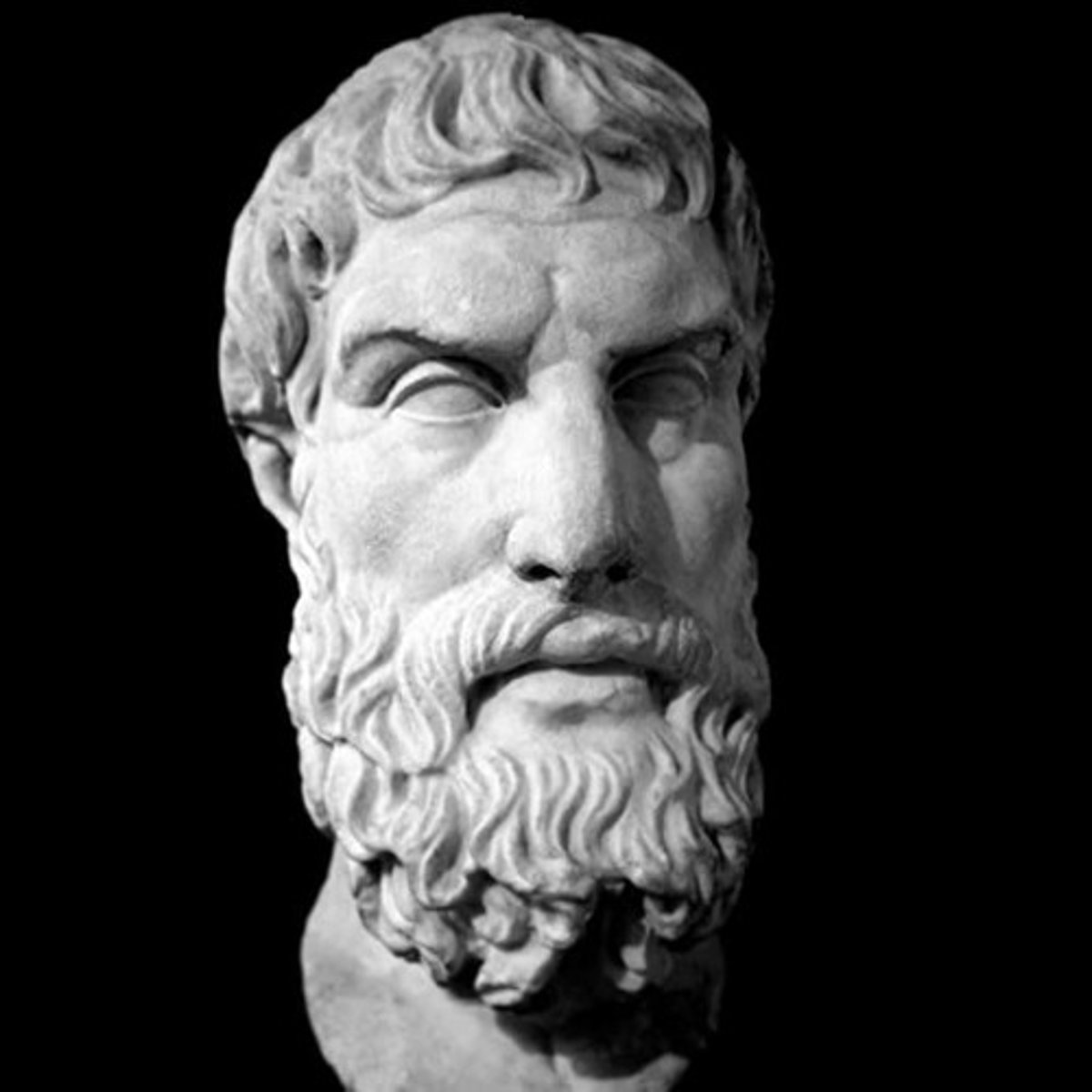
Epictetus (Fact 1)
His name means "acquired" since we don't know his real name
Epictetus (Fact 2)
Was a slave in what is now Turkey
Epictetus (Fact 3)
Brought to Rome to the court of Emperor Nero where he was eventually freed and where he taught Stoicism only to eventually be punched in the nose and kicked out by the Roman Government, along with the rest of the stoics because of their criticism of the Roman Government and moved to Northwestern Greece to reestablish and carry on the legacy of Stoicism
Epictetus (Work 1)
Discourses
1733- Voltaire: Letters Concerning the English Nation (Fact 1)
Philsophical work of the namesake type that called for Freedom of Speech and religious tolerance
1651- Thomas Hobbes: Leviathan (Fact 9)
Explains that misinterpretation of scripture causes the "Kingdom of Darkness" and explains how to avoid it
1651- Thomas Hobbes: Leviathan (Fact 10)
Argues that there are only three forms of government and that all other forms are just alternate names for the three, which are Aristocracy, Democracy, and Monarchy
1651- Thomas Hobbes: Leviathan (Fact 11)
Argues that civil law is superior to religious law because one cannot know whether God's vision as received by someone else is true
1651- Thomas Hobbes: Leviathan (Fact 12)
Describes the world as matter in motion and identifies competition, diffidence, and glory-seeking as the main sources of conflict in the naturally chaotic "state of nature", believes human nature to be that of complete selfishness and materialism
1651- Thomas Hobbes: Leviathan (Fact 13)
Points out that Apostles were teachers, not commanders, to downplay the extent of ecclesiastical power
1651- Thomas Hobbes: Leviathan (Fact 14)
Divided into two parts: "Of Commonwealth" and "Of Man", it essentially argues that monarchy is the best form of government
Thomas Hobbes (Work 2)
De Corpore
Thomas Hobbes (Work 3)
De Homine
1642- Thomas Hobbes: De Cive (Fact 1)
Argued against Aristotle's claim that man is a "political animal"
1642- Thomas Hobbes: De Cive (Fact 2)
Written to convince mathematician Marine Maresenne of the namesake philosopher's views
Thomas Hobbes: Elements of Law (Fact 1)
Argues that men give names to objects in order to give perception to those objects
1764- Voltaire: Philosophical Dictionary (Fact 1)
Work of the namesake type that compiled arguments against the Roman Catholic Church, along with other religious institutions, arguing that "if God did not exist, it would be necessary to invent him"
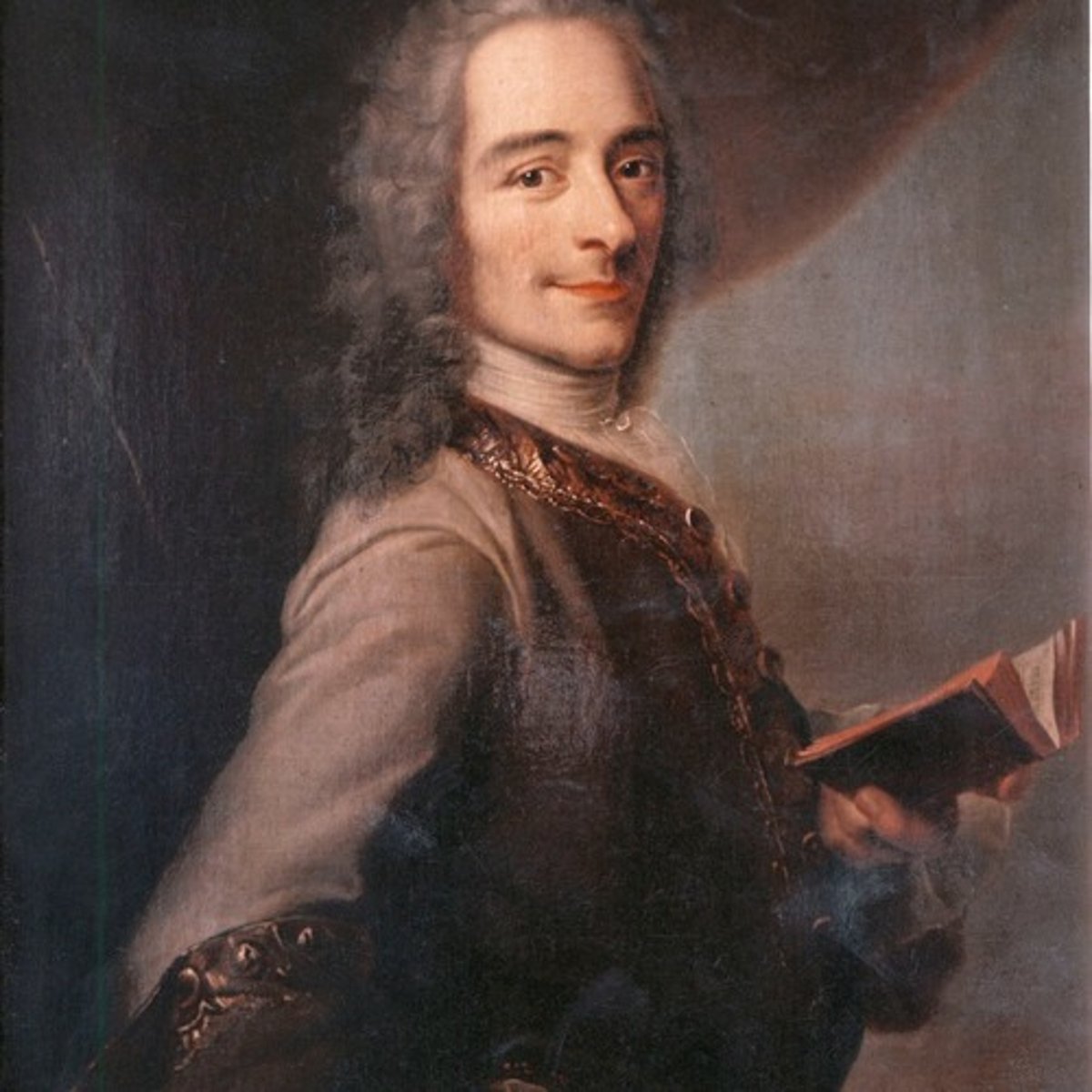
1700's- Voltaire (Fact 1)
French Enlightenment Philosopher
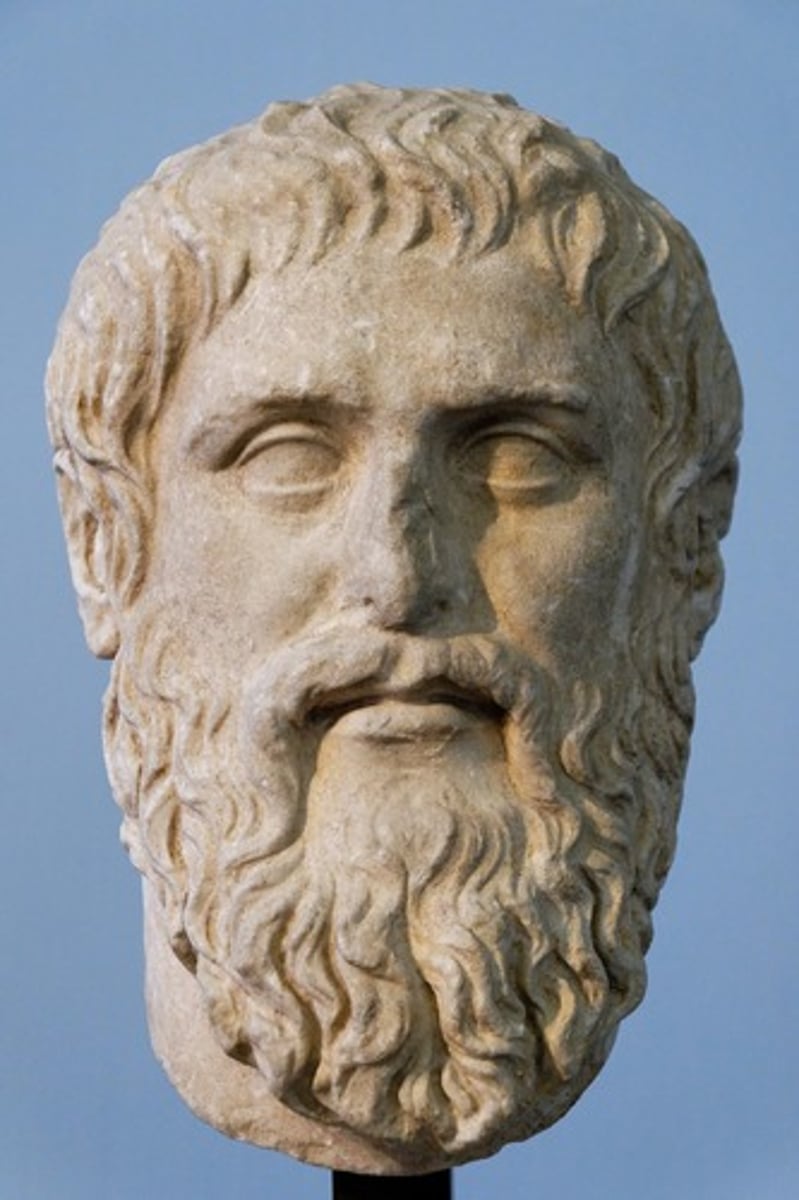
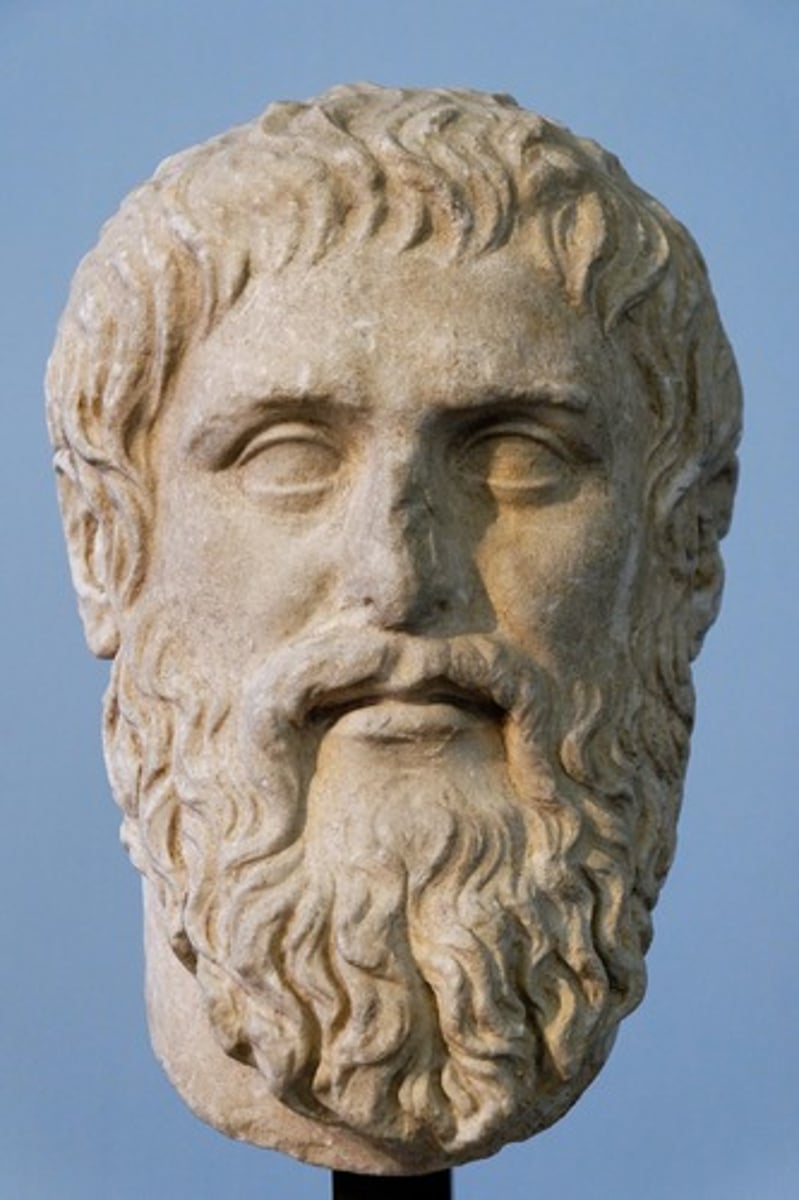
Plato (Fact 1)
Ancient Greek Philosopher
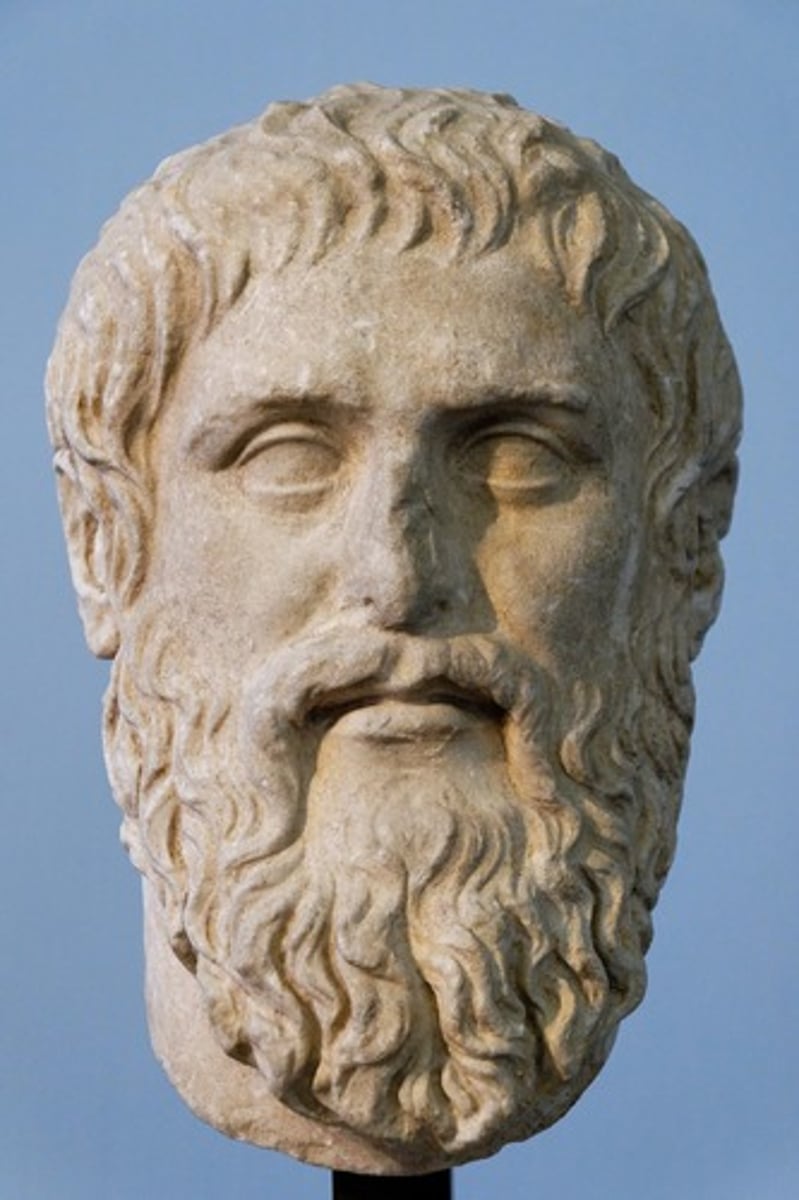
Plato (Fact 2)
Taught Aristotle, "Created the first Western Academy"
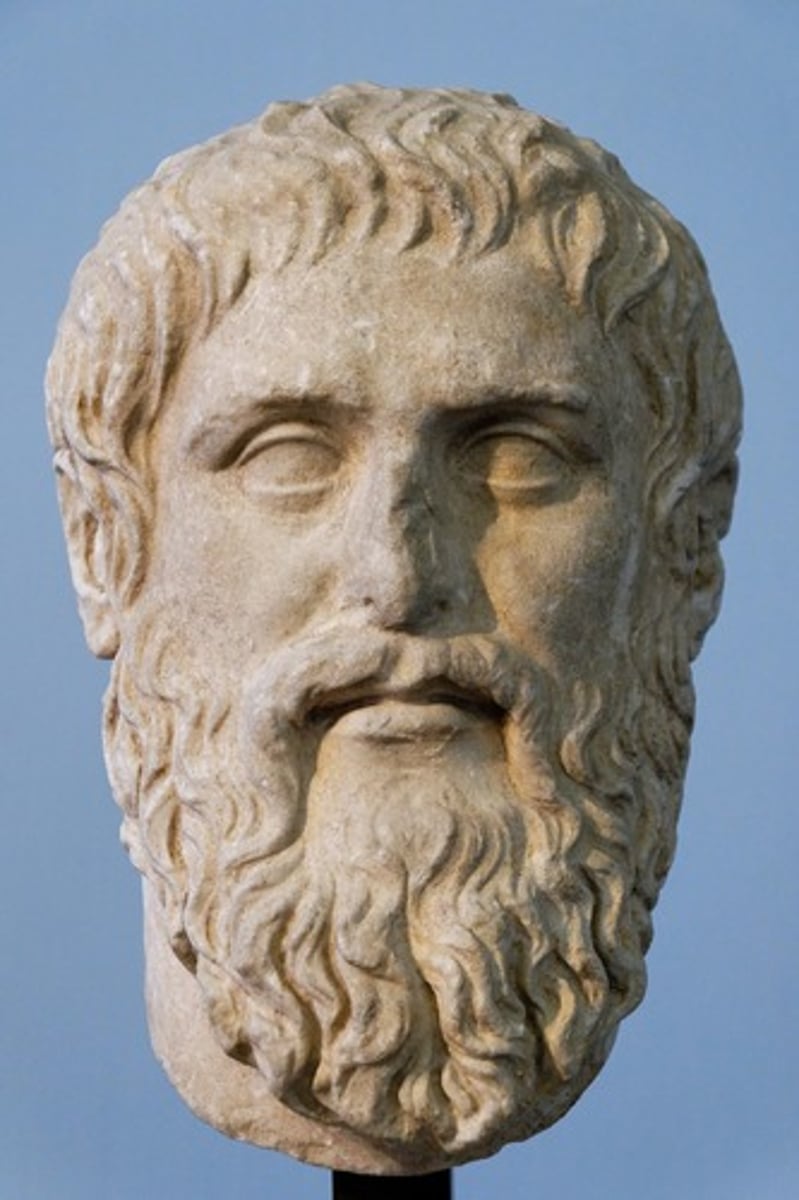
Plato (Philosophy 1) {Fact 1}
He believed that beyond our imperfect world, there was a perfect and unchanging world of Forms (forms are ideal versions of the things and concepts we see around us, that serve as a blueprint for our own world), thus are own reality is constructed of imperfect copies of ideal forms
Plato (Philosophy 1) {Fact 2}
He believed if we better understand these ideal forms we can better navigate through our misleading reality and to do so we can use reason alone, which in turn will give us the potential to contemplate the ideal Forms
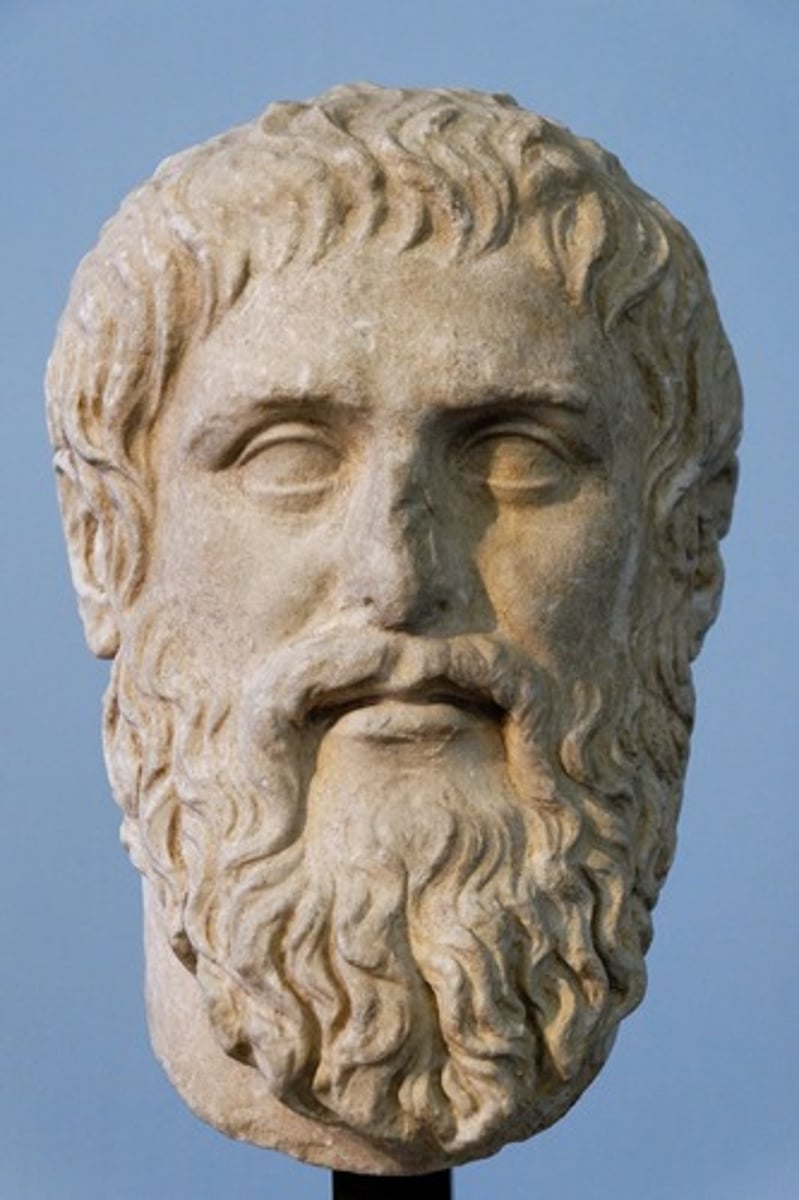
Plato (Philosophy 2)
Believed in the idea that humans were "Featherless Bipeds", in which Diogenes of Sinope actually stormed to him and presented him with a dead chicken with no arms and mocked him for believing it was still a man
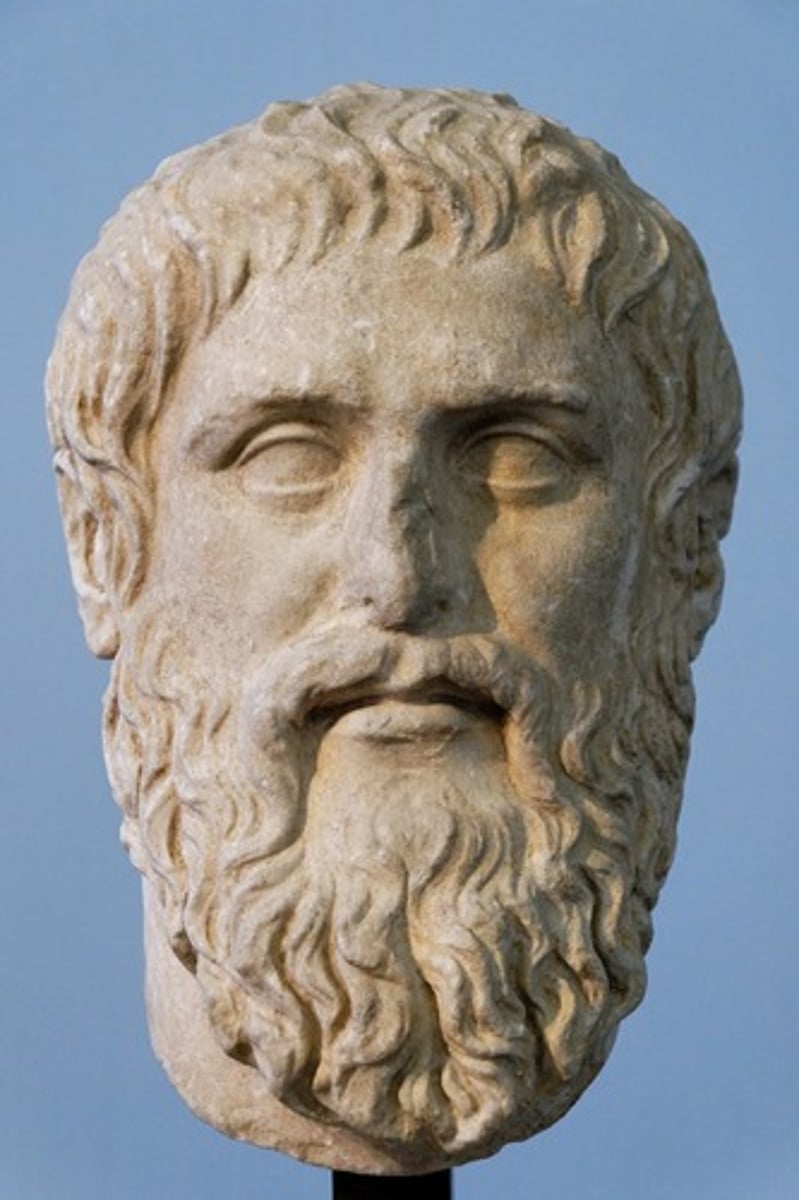
Plato (Philosophy 3)
Being a ruler was no different than belonging to any other craft and thus only those who mastered the craft were fit to lead, and he meant that the craft of ruling was equivalent to the craft of contemplating ideal Forms (in other words, all leaders must be "philosopher-kings", and they could be men OR women)
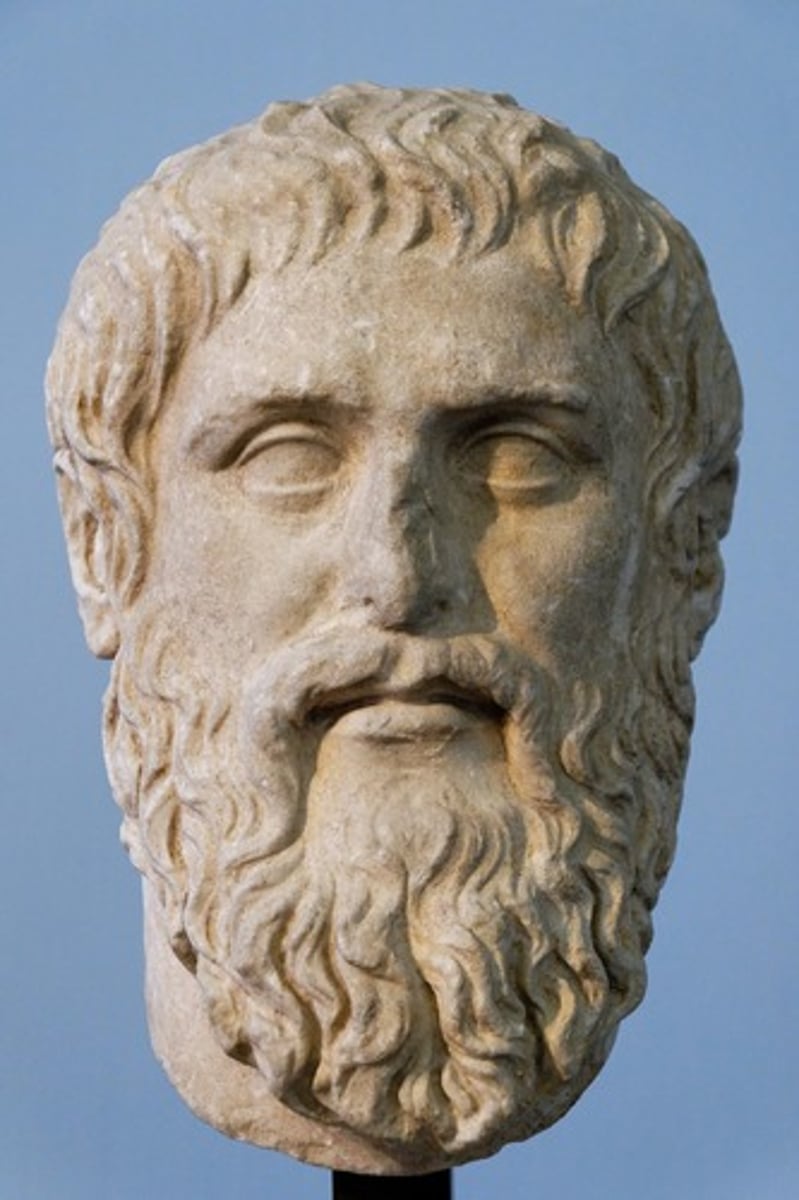
Plato (Philosophy 4)
Believed that babies in the womb of women were live animals that moved around inside them and their moving around could explain the illnesses women had while carrying
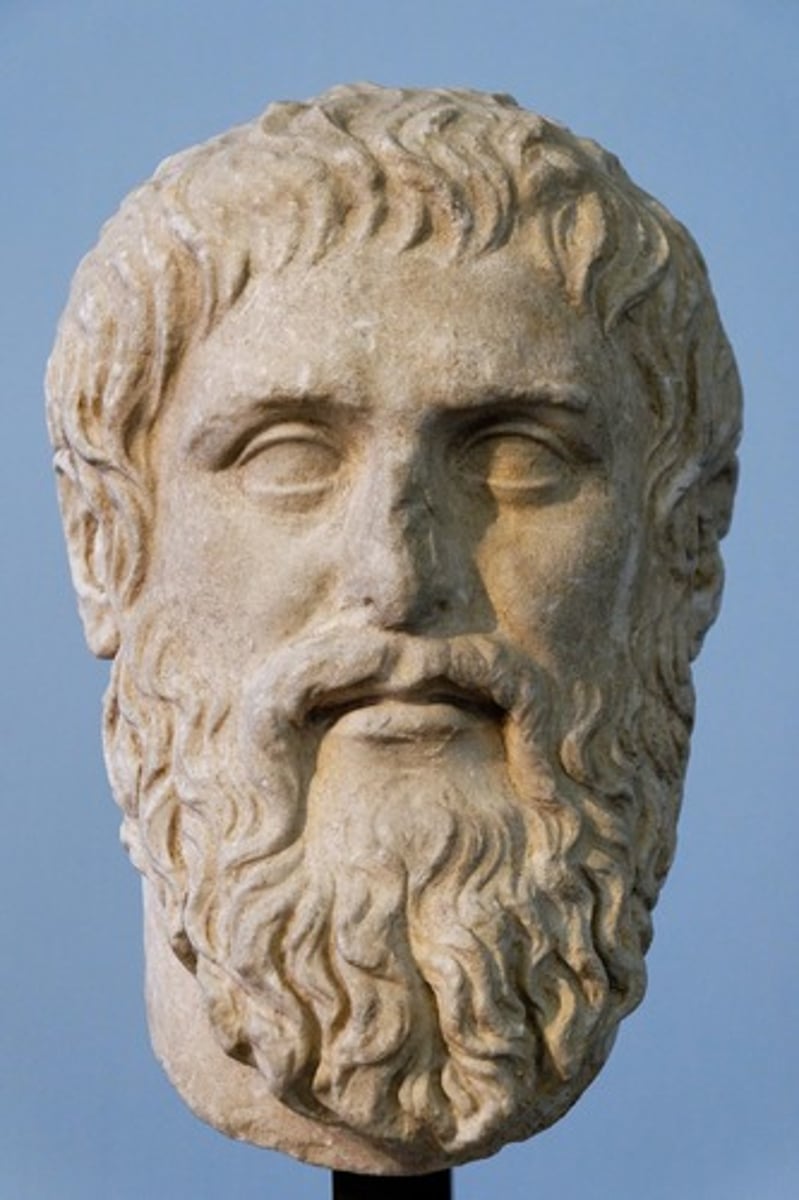
Plato (Philosophy 5)
Believed in the "Noble Lie" in that we are all born with certain mixtures (percentages) of gold, silver, brass, and/or iron which determine our roles in life and that there are 3 possible roles that should always remain separated- producer, soldier, and leader
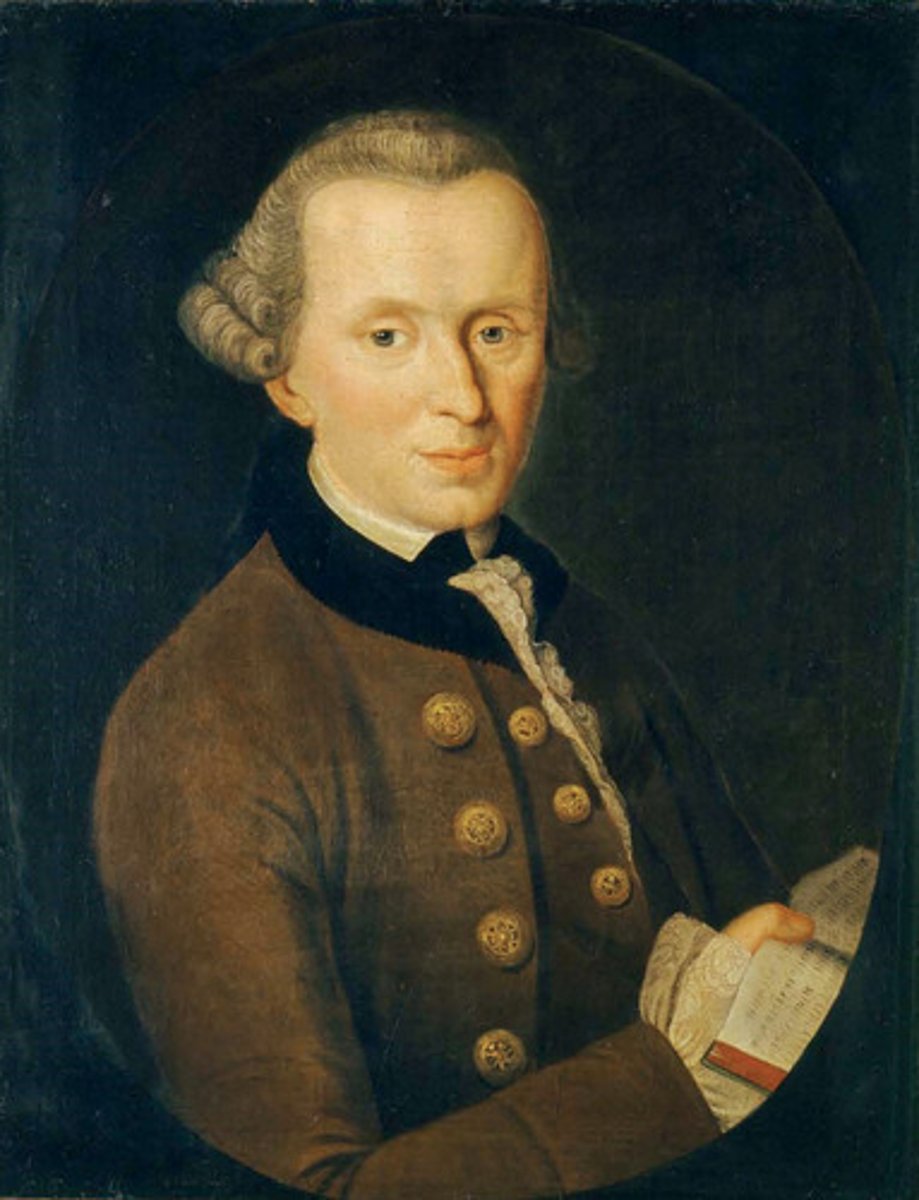
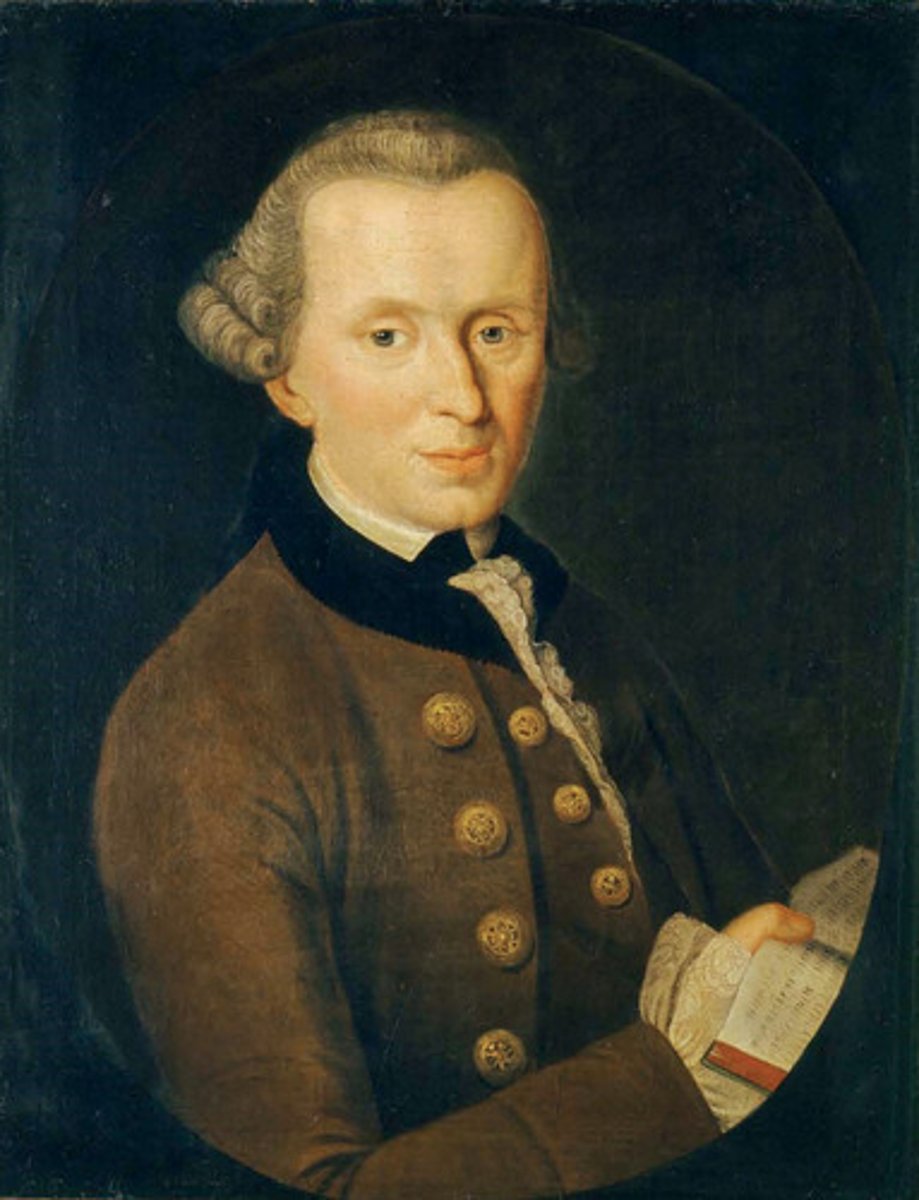
Immanuel Kant (Fact 1)
17th Century German (Prussian) Enlightenment Philosopher, "Transcendental Idealist", "Moral Absolutist"
Immanuel Kant (Fact 8)
Claimed to be most awed by "the starry sky above me and the moral law within me"
Idealism (Philosophers)
Philosophical School of Philosophers Including:
- Immanuel Kant
- Georg Hegel
- George Berkeley
Immanuel Kant (Philosophy 1) {Fact 1}
Believed in the "Hypothetical Imperative" (an if-then statement), which are commands you should follow if you want a particular thing
Immanuel Kant (Philosophy 1) {Fact 2}
Believed in the "Hypothetical Imperative" (an if-then statement), which is the instinct to make choices on whether or not we ought to do something based not on morals, but rather on our desires at the time of making the choice
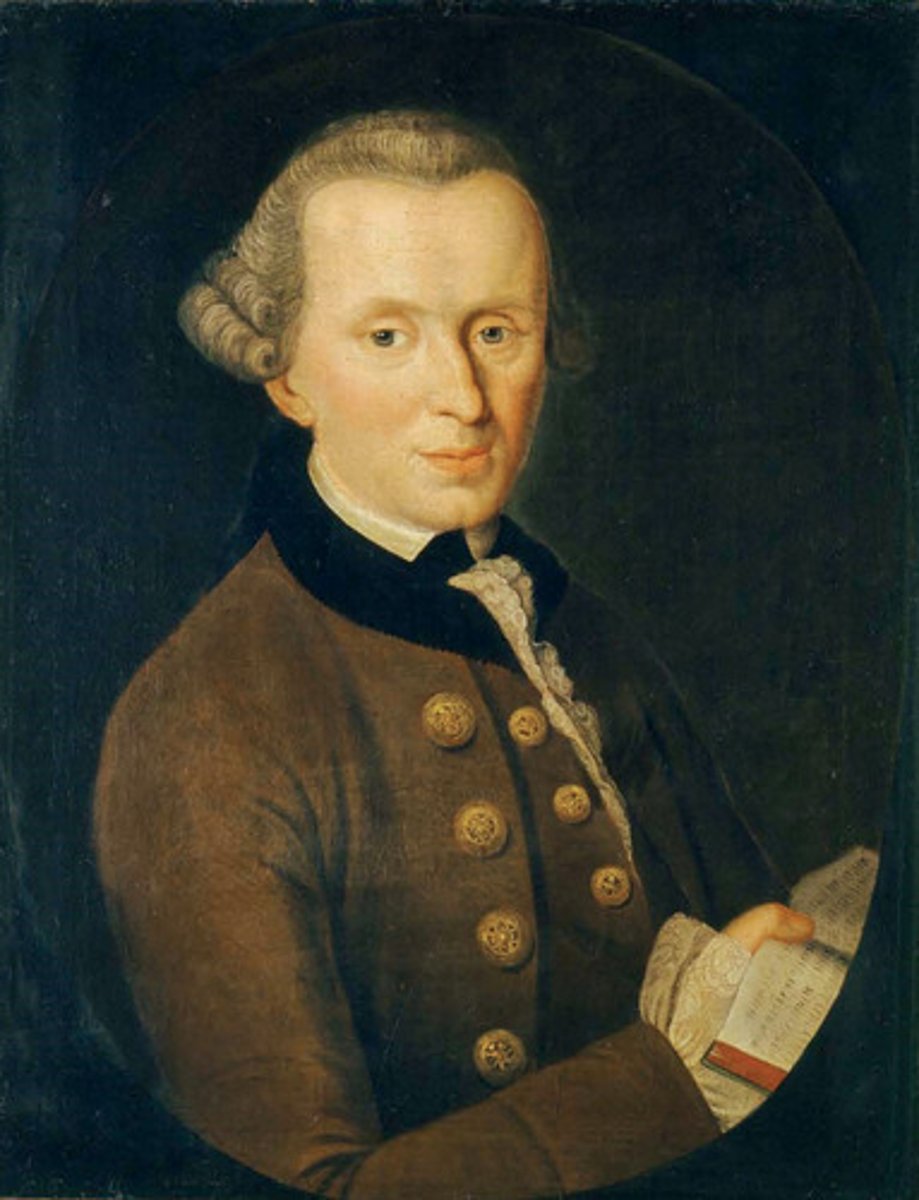
Immanuel Kant (Philosophy 2) {Fact 1}
Believed in the "Categorical Imperative", which are commands you must follow (regardless of your desires) if you want a particular thing