Menstrual Disorders and Menstrual Suppression - Besinque
 Call Kai
 Learn
 Practice Test
 Spaced Repetition
 Match
 Flashcards
 Knowt Play
1/27

There's no tags or description
Looks like no tags are added yet.
28 Terms
menstrualy physiology
average cycle length
average menstruation
> — mL loss → risk of —
Average cycle length: 28 days (range 24–38 days).
Average menstruation: 4–7 days, with ~35 mL blood loss
>80 mL loss → risk of iron-deficiency anemia.
terms
menorrhagia
metrorrhagia
bleeding
spotting
Menorrhagia – Bleeding occurs at normal intervals but is prolonged or excessive
Metrorrhagia - Irregular bleeding between menstrual cycles
Bleeding- Any bloody vaginal discharge that requires the use of such protection as pads or tampons
Spotting- Any bloody vaginal discharge that is not large enough to require sanitary protection
Dysmenorrhea =
cramping/pain
primary dismenorrhea
symptoms
mechanism
treatment
symptoms
cramping during menses
start right before
begins within 3 years of menarche
mechanism
increased prostaglandin F2a → uterine contractions, ischemia
treatment
NSAIDs
HC
secondary dysmenhorrhea
symptoms
mechanism
treatment
symptoms
onset 20 - 30 yrs old
heavy flow or irregular bleeding
poor response to NSAIDs or HC
infertility
pain w/ intercourse
vaginal discharge
mechanism
varies
treatment
referral for determination of cause
heavy menstrual bleeding (menorrhagia)
symptoms
mechanism
treatment
symptoms
excessive/prolonged flow
mechanism
hormonal imbalance
uterine pathology
treatment
NSAIDs
continuous HCs
TXA or LNG-IUD
endometriosis
symptoms
mechanism
treatment
symptoms
cyclic pelvic pain
dysparenunia
infertility
mechanism
ectopic endometrial tissue → inflammation
underlying causes vary
treatment
hormonal suppression therapy and/or surgery
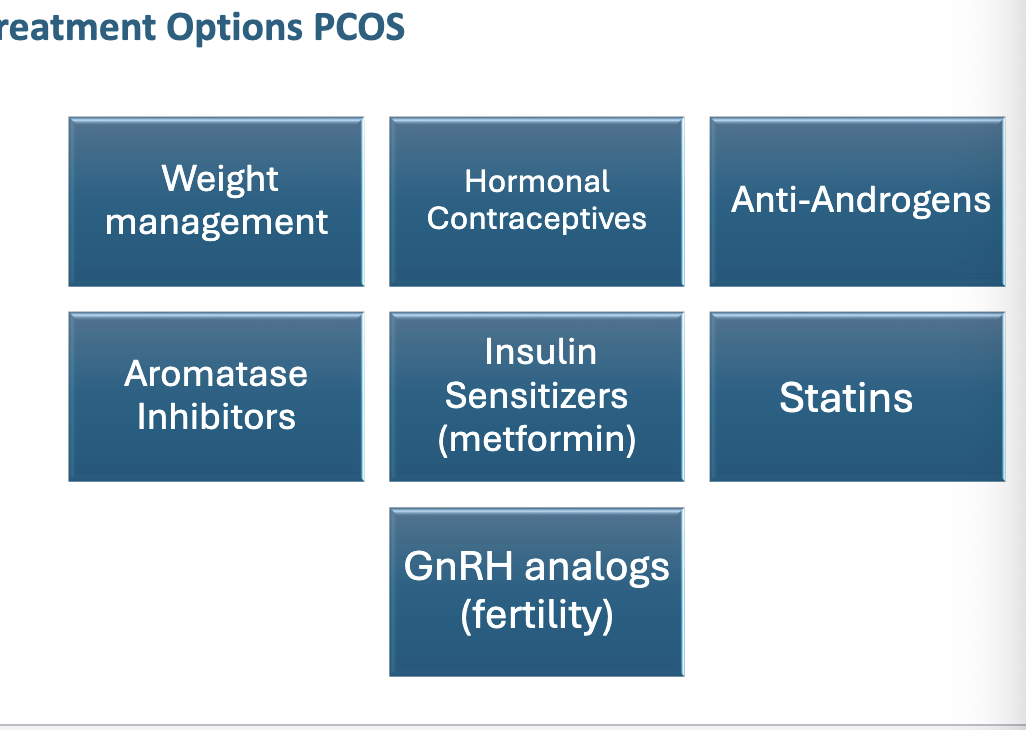
PCOS
symptoms
mechanism
treatment
symptoms
irregular menses
acne
hirsutism
mechanism
hyperandrogenism
treatment
menstrual suppression
symptoms
mechanism
treatment
symptoms
controlled or absent bleeding
mechanism
continuous hormonal regimens
treatment
guide individualized contraceptive use
dysmenorrha treatment algorithm
nondrug
topical heat and exercise
1st line: NSAIDs
start 1 day before expected menses or as soon as flow begins
take on scheduled basis (e.g ibuprofen 400 - 600 mg q6hrs)
2nd line: HCs
COCs, patch, ring, progestin-only methods
contraindications:
≥ 35 yrs old smoking
hostory of VTE
migraine w/ aura
uncontrolled HTN
management of heavy menstrual bleeding
nonhormonal options
NSAIDs
TXA (Lysteda) → taken during menstruation
hormonal options
levenorgestrel-releasing IUD (Mirena) → many become amenorrheic
COCs
progestins
managment of endometrosis
goal
pain control and suppression of lesions
supportive care
NSAIDs for pain
pelvic floorphysical therapy, diet, exercise
1st line: hormonal suppression
CHCs and progestins
2nd line
GnRH agonists (Leuprolide) and antagonists (Elagolix) → shut down estrogen production → temporary medical menopause
add-back therapy → (low dose estrogen/progestin) prescribed w/ GnRH agonists
surgical therapy → laparoscopy
management of PCOS
lifestyle changes
lifestyle changes
weight loss of 5 -10% can restore ovulation
management of PCOS
menstrual irregularity
menstrual irregularity
CHCs - 1st line to regulate cycles, reduce bleeding, provide protection
progestins - for women w/ CI to estrogen
management of PCOS
hirsutism and acne (androgen excess)
hirsutism and acne (andorgen excess)
1st line = CHCs
spironolactone = anti-adrgen added if CHCs insufficient; teratogenic
topical treatments: Eflornithine (Vaniqa) for facial hair; standard acne treatments
management of PCOS
infertility
infertility
Letrozole (aromatase inhibitor) = 1st line for inducing ovulation
clomiphene citrate = traditional option
PCOS therapies
lifestyle
GLP-1 receptor agonists
lifestyle
low carb diet
GLP-1 receptor agonists
off label for overweight/obeste pts w/ PCOS, especially w/ insulin resistance
promote weight loss and improve insulin sensitivity
stop before attempting pregnancy
management of PMS and PMDD
nondrug
supplements
nondrug
lifestyle: aerobic exercise, stress reduction, sleep
diet: eat complex carbs, avoid caffeine, sat, surgar in 2 weeks before menses
supplements
calcium (500 - 600 mg daily)
vitamin B6 (up to 100 mg daily; watch for neuropathy)
management of PMS and PMDD
pharm treatment
SSRIs
1st line = emotional symptoms
taken daily or during luteal phase
HCs
suppress hormonal fluctuations
drospinerone = FDA-approved for pMDD
continuous or extended cycle regimens preferred
diuretics (Spironolactone)
for fluid retention and bloating
benefits of menstrual suppression
treatment of menstrual disorders
reduces pain
reduces heavy bleeding → lowers risk of iron deficiency anemia
management of catamenial conditions
reduce occurence of condiitons that worsen cyclically w/ menstruation (migraine, asthma, epilepsy)
symptom relief
convenience and QOL
methods for menstrual suppression
continuous/extended use of CHCs
dedicated extended-cycle products
progestin-only methods
short-term menstrual delay
methods for menstrual suppression
continuous/extended use of CHCs
pill
skip pplacebo (inactive) pills and start new pack ASAP
vaginal ring and trandermal patch
use continuously for several weeks before taking break
methods for menstrual suppression
dedicated extended-cycle products
pills packed for 84 days of active pills → 7 inactive days
methods for menstrual suppression
progestin only methods
often leads to amenorrhea
DMPA
amenorrhea common after 6 - 12 months of use
LMG-IUD
high rates of amenorrhea
contaceptive implant (Nexplanon)
methods for menstrual suppression
short-term menstrual delay
Norethindrone (Aygestin)
5 mg 3x daily, started 3 days before menses and continued up to 2 weeks
not a contraceptive
backup contraceptive needed if pregnancy is not desired
primary risk or side effect of menstrual suppression is
breakthrough bleeding or spotting
most common during 1st few months
amt of bleeding decreases over time
patient counseling for breakthrough bleeding
Option A: Continue taking active pills. The bleeding will likely decrease and resolve on its own.
Option B: Take a planned 3- to 4-day hormone-free break to allow for a full withdrawal bleed, which can "reset" the endometrium and reduce spotting. Then, restart the active pills.
other risks of BTB and spotting
The risks are those associated with the specific hormonal method being used, not the act of suppression itself. For CHCs, this includes the risk of venous thromboembolism (VTE), especially in patients with risk factors (smoking, obesity, history of clots, migraine with aura). Proper screening is essential.