Week 4: SBAS + ACS (Blue)
 Call Kai
 Learn
Learn Practice Test
 Spaced Repetition
 Match
Match Flashcards
 Knowt Play
1/30

There's no tags or description
Looks like no tags are added yet.
Name | Mastery | Learn | Test | Matching | Spaced | Call with Kai | Chat |
|---|
No analytics yet
Send a link to your students to track their progress
31 Terms
What are key pharmacist roles during a code?
identify reversible causes/lab abnormalities, obtain medications, verify dosing/administration, and document medications
How does pharmacist involvement benefit code response?
associated with lower mortality and better ACLS guideline compliance
What other benefits are associated with pharmacists on code teams?
better guideline adherence, medication timing, patient outcomes, and potential cost savings
What characteristics define an effective code team?
designated teams, clear roles, strong communication/leadership, regular training, and debriefing
What are the main roles on a high-performance code team?
compressor, monitor/defibrillator, airway, team leader, medication provider, and timer/recorder

What are the responsibilities of the team leader?
organize the team, assign roles, monitor performance, direct care, and provide feedback
What makes an effective team member?
know your role and limitations, understand others' roles, know ACLS, and communicate when unable to perform a task
What are the key components of effective team dynamics?
clear roles, knowing limitations, constructive intervention, knowledge sharing, reevaluation, closed-loop communication, clear messages, and mutual respect
What are the 3 steps of closed-loop communication?
sender gives message → receiver repeats it → sender verifies it
Why is closed-loop communication important during ACLS?
it confirms that orders are heard, correctly performed, and documented, while helping catch errors
What should a team discuss during a post-code debrief?
what went well, what could improve, what was learned, and team/system issues
When should a code debrief occur?
as soon as practical after the code, while events are still fresh
HELP-ME
How it went, Expectations, Learnings, Preparations, Moment, and Emotions
What key step distinguishes in-hospital from out-of-hospital cardiac arrest care?
early recognition and prevention before the patient arrests
What is the purpose of a Rapid Response Team (RRT)?
identify and intervene in patient deterioration before cardiac arrest occurs
When should a rapid response be activated?
when a patient's condition appears to be worsening and additional trained assistance is needed
What findings may trigger an RRT?
airway/breathing problems, abnormal HR or BP, decreased urine output, or acute mental-status changes

What findings indicate a Code Blue instead of an RRT?
no pulse or no breathing
What happened after implementation of a defined rapid response team?
cardiac arrests and deaths decreased
How do RRT and Code Blue teams differ?
RRTs usually have fewer responders
Code Blue teams use ACLS and typically involve the crash cart
What is a hospital's payor mix?
the makeup of who pays/reimburses the hospital for its services
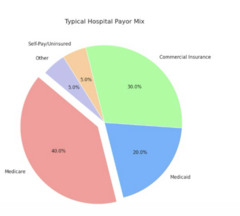
Why does payor mix matter?
different payors affect hospital reimbursement and finances, so changes in the mix can change revenue
How does value-based care differ from fee-for-service?
Value-based care = payment based on outcomes
Fee-for-service = payment for services provided
How are hospitalized Medicare patients commonly reimbursed through DRGs?
CMS provides a fixed payment per admission based on the diagnosis, not each individual service
How can pharmacists help hospitals under DRG reimbursement?
use cost-effective, appropriate medications and prevent adverse effects or prolonged stays
What 3 factors are used to calculate/estimate DRG reimbursement?
hospital base payment rate, DRG relative weight, and geometric mean length of stay (GMLOS)
What does a DRG's relative weight represent?
expected resources needed to care for that diagnosis
How is DRG reimbursement estimated from the base rate and relative weight?
Base payment rate × DRG relative weight
How does CMS penalize excess 30-day readmissions?
hospitals can lose up to 3% of total Medicare payments if readmissions exceed the threshold
Which conditions are included in CMS readmission penalties?
heart failure, AMI, COPD, pneumonia, CABG, and THA/TKA
How can pharmacists help reduce CMS readmission penalties?
optimize therapy and transitions of care to help prevent avoidable readmissions