AP Psychology Nervous & Endocrine System Quiz
 Call Kai
 Learn
Learn Practice Test
 Spaced Repetition
 Match
Match Flashcards
 Knowt Play
1/31

There's no tags or description
Looks like no tags are added yet.
Name | Mastery | Learn | Test | Matching | Spaced | Call with Kai | Chat |
|---|
No analytics yet
Send a link to your students to track their progress
32 Terms
Central Nervous System (CNS)
The brain and spinal cord. The body's decision maker.
Peripheral Nervous System (PNS)
The Sensory and Motor neurons that connect the central nervous system (CNS) to the rest of the body. Responsible for gathering info and for transmitting CNS decisions to other body parts.
Nerves
Bundled axons that form neural "cables" connecting the central nervous system with muscles, glands, and sense organs.
Functional divisions of the Nervous System

Sensory (afferent) neurons
Neurons that carry incoming info from the sensory receptors to the brain and spinal cord.

Motor (efferent) neurons
neurons that carry outgoing info from the brain and spinal cord to the muscles and glands
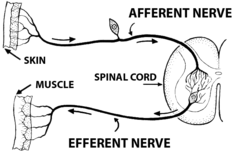
Spinal Cord
Nerves that run up and down the length of the back and transmit most of the messages between the body & brain; is protected by hard vertebrae

Vertebrae
This bony protection is vital; damage to the spinal cord could prevent transmittal of messages between brain & muscles and could result in paralysis

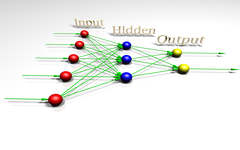
The Brain and Neural networks
Interconnected neurons form networks in the brain. These networks are complex and modify with growth and experience.
Peripheral Nervous System
Smaller branches of nerves that reach other parts of the body.
Conduct info from bodily organs to the CNS and then take back the info back to the organs
Nerves branch beyond the spinal column; thick as a pencil, those in the fingers are invisibly small
Somatic Nervous System
Division of the PNS that controls VOLUNTARY activities of the body's skeletal muscles.
E.g.: As the bell signals the end of class, your ____________ system reports to your brain the current state of your skeletal muscles and carries instructions back, triggering your body to rise from your seat.
Autonomic Nervous System
Has motor neurons that stimulate smooth and heart muscle. Part of the PNS that controls our glands and the muscles of our internal organs, influencing such functions as glandular activity, heartbeat, and digestion. Controls INVOLUNTARY activities.
E.g.: heartbeat, stomach activity, blinking.
Sympathetic Nervous System ("Arouses") (fight-or-flight)
Arouses and expends energy. Prepares the body for dealing with emergencies or strenuous activities; arouses the body for stressful strenuous situations.
Accelerates heartbeat, raises your blood pressure, pupils dilate, slows your digestion, raises your blood sugar, and cool you with perspiration. Release of glucose from your liver orders blood flow to areas most needed in emergencies.
Parasympathetic Nervous System ("Calms") (rest and digest)
Works to conserve energy and enhance the body's ability to recover from strenuous activity; calms the body; conserves energy.
Decreasing your heartbeat, lowering your blood sugar, lowers blood pressure, restores normal bladder contractions and brings back body to its normal resting state.
Reflex
A simple, automatic response to a sensory stimulus, such as the knee-jerk response.
A simple spinal reflex pathway
Composed of a single sensory neuron and a single motor nueron. Often communicate through an interneuron. The knee-jerk response, for examples, involves this

Pain reflex
When your finger touches a flame, neural activity (excited by the heat) travels via sensory neurons to interneurons in your spinal cord. These interneurons respond by activating motor neurons leading to the muscles in your arm. Because the simple _____________ pathway runs through the spinal cord and right back out, your hand jerks away from the candle's flame before your brain receives and responds to the info that causes you to feel pain.
That's why it feels as if your hand jerks away not by your choice, but on its own.

The Endocrine System
The body's "slow" chemical communication system; a set of glands that secrete hormones into the bloodstream.
Hormones
Chemical messengers that are manufactured by the endocrine glands travel through the bloodstream and affect the brain and many other tissues of the body.
E.g.: Epinephrine (adrenaline) increases heart rate, blood pressure, blood sugar, and feelings of excitement during emergency situations.
Hypothalamus
Produces hormones that stimulate or inhibit secretion of hormones by the pituitary

Pituitary gland
called the "master gland" The endocrine system's most influential gland. Under the influence of the hypothalamus, the ________ regulates growth and controls other endocrine glands

Anterior Pituitary Lobe (Part of Pituitary Gland)
Releases hormones that regulate other glands

Posterior Pituitary lobe (Part of Pituitary Gland)
Regulates water and salt balance

Thyroid Gland
Produces thyroxine, which stimulates and maintains metabolic activities

Parathyroid Glands
Helps maintain the calcium ion level in blood which is necessary for normal functioning of neurons

Adrenal Glands
A pair of endocrine glands that sit just above the kidneys and secrete hormones (epinephrine and norephinephrine ) that help arouse the body in times of stress.
Adrenal Cortex (Part of Adrenal Glands)
The outer layer
Produces steroid hormones such as cortisol, which is a stress hormone
Adrenal medulla (Part of Adrenal Glands)
The Core
Secrete adrenaline (epinephrine) and noradrenaline (norepinephrine) which prepare the body for "fight or flight," like the sympathetic nervous system
Pancreas
Regulates the level of sugar in the blood
Insulin and glucagon regulate blood sugar that fuels all behavioral processes
Testes (Gonads)
Secretes male sex hormones like androgens (especially testosterone)
Ovaries
Secretes female sex hormones like estrogen and progestins
Adrenal Cortex
Regulates salt and carbohydrate metabolism.