MKTG 330 Digital Marketing Exam 3: Lectures 9–12
 Call Kai
 Learn
 Practice Test
 Spaced Repetition
 Match
 Flashcards
 Knowt Play
1/72

There's no tags or description
Looks like no tags are added yet.
73 Terms
RTB (Real-Time Bidding)
An automated auction that sells a single ad impression the moment a webpage or app loads.
SSP (Supply-Side Platform)
The publisher's tool. It offers the publisher's ad space to many buyers at once to get the highest price.
selling ad space
DSP (Demand-Side Platform)
The advertiser's tool. It automatically decides which impressions to bid on and how much to pay.
buying ad space
Ad Exchange
The digital marketplace where SSPs and DSPs meet and the auction takes place. It works like a stock exchange for advertisements.
Responsive banner ads
Display ads that automatically adjust their size, layout, and format to fit any ad space on any device.
Retargeting
An advertising technique that uses cookies to track website visitors and later show them ads to bring them back to convert.
EX: You visit a clothing website and look at a dress. Later, you see an advertisement for that same dress on another website or social media.
Contextual Advertising
An advertising technique that places ads based on the content of the webpage being viewed, rather than on the user's personal data or browsing history.
EX: Seeing an advertisement for running shoes while reading an article about running.
Brand safety
The practice of keeping a brand's ads away from harmful or inappropriate content (violence, hate speech, or fake news) that could damage its reputation.
Linear TV
A classic system when a viewer watches a scheduled TV program when it airs on its original channel.
EX: Watching a television show at its scheduled time on a traditional TV channel.
OTT (Over the Top)
Video content streamed via the internet (not via cable or satellite).
EX: Netflix, Hulu, and Disney+.
CTV (Connected TV)
A device that connects to—or is embedded in—a television to support video content streaming via the internet.
EX: Smart TVs and streaming devices.
KPI (Key Performance Indicator)
Metrics used to measure the performance of advertising campaigns.
impressions
completion rates
reach
frequency
website visits
Impressions
The number of times an advertisement is displayed.
Completion Rates
The percentage of viewers who watch an advertisement all the way to the end.
Reach
The number of unique people who see an advertisement.
Frequency
How many times the same person sees an advertisement.
Website Visits
The number of people who visit a company's website after seeing an advertisement.
70-20-10 rule
To help create connections with potential customers and keep them engaged on a more personal level.
70% brand-building content
20% shared posts from trusted sources
10% self-promotional content.
General Engagement Rate (ER) Formula
ER = (Total Engagements ÷ Total Audience) × 100
2 important things to check when interpreating engagement rate
Which actions are counted as engagement?
likes, comments, shares, saves
What denominator (base) is used to calculate the rate?
followers, reach, impressions, views, total audience
Daily Engagement Rate
(Daily Engagements ÷ Followers) × 100
Best for tracking engagement over time.
Paradigm #1: Mobile-friendly (Responsive) Web Design
An approach to web design aimed at allowing desktop webpages to be viewed in response to the size of the screen or web browser one is viewing with.
Paradigm #2: Mobile-first Web Design
A design strategy that starts sketching and prototyping the smallest screen first and works its way up to larger screens.
Paradigm #3: Mobile-only Strategy
A strategy that focuses on mobile devices as the primary or only platform for reaching customers.
CAN-SPAM Act (2003)
FCC rules ban text messages sent to a mobile phone using an auto-dialer unless you previously gave consent to receive the message.
Federal rules require the following for commercial email/text sent to your mobile phone
Idenification
Opt-Out
Return Address
Mobile app customer journey
The complete experience a user goes through from discovering the app to becoming a loyal and regular user.

App Store Optimization (ASO)
The process of improving app visibility within the app stores and increasing app conversion rates.
Onboarding strategy
The structured process of guiding new users through an app's key features and value propositions to enhance engagement, retention, and overall user experience.
EXs: Tutorials, walkthroughs, and onboarding campaigns.
Engagement strategy
Providing the sense of achievement to enhance user engagement. ^
Ex: badges, levels, charts of performance, points, scoreboard
Goal: Encourage users to stay active and continue using the app.
Success states
Screens or pop-ups that acknowledge and celebrate a user's achievement or task completion within an app as a form of positive reinforcement.
EX: A message saying "Congratulations! You completed your goal!"
App strategies for growth and retention by 4 engagement issues
Popularity ↓ (Low awareness & installs)
Commitment ↓ (Low weekly active users)
Frequency ↓ (Low visit frequency)
Time Spent ↓ (Low session duration on app)

Location-based Advertising
Advertising that targets customers based on their geographical location.
Geo-fencing
A feature in a software program that uses GPS or RFID to define geographical boundaries.
AR (Augmented Reality)
The integration of digital information with the user's environment in real time.
EX: Using a phone camera to see virtual furniture inside your actual room.
VR (Virtual Reality)
The surrounding environment is completely virtual and computer-generated.
EX: Using a VR headset to enter a completely virtual world.
NFC (Near Field Communication)
A set of communication protocols that enable two devices to establish communication by bringing them within a few centimeters of each other.
EXs: Apple Pay, Google Pay, and contactless credit cards.
Fulfillment
The act of carrying out a customer's expectations
sending the product to the customer or delivering the service agreed on.
4 reasons why fulfillment is important
The Rise of Direct-to-Consumer (DTC)
Heightened Customer Expectations
Fulfillment Costs
Customer Satisfaction
DTC (Direct-to-Consumer)
Refers to selling products directly to customers, bypassing any third-party retailers, wholesalers, or other middlemen.
Components in fulfillment costs
Operating a call center.
Warehousing.
Packaging supplies.
Credit card processing.
Shipping.
Relationship between fulfillment costs and customer satisfaction
As fulfillment costs increase, customer satisfaction generally increases.
STAGES:
A: spending more may produce little improvement.B: customer satisfaction increases rapidly.C: customer satisfaction levels off.
Businesses need to find the right balance between fulfillment costs and customer satisfaction

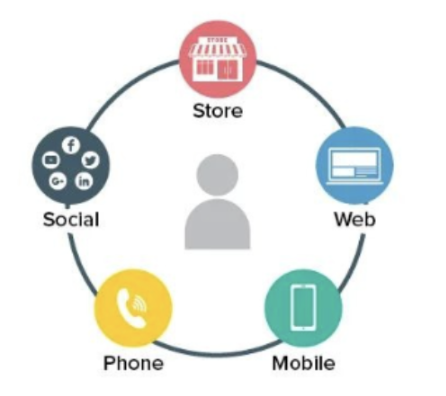
Multichannel
all channels available to the consumer but are not integrated/connected

Omnichannel
all channels avaliable to the consumer and they are connected
Showrooming
The buying pattern with offline information search and online purchase
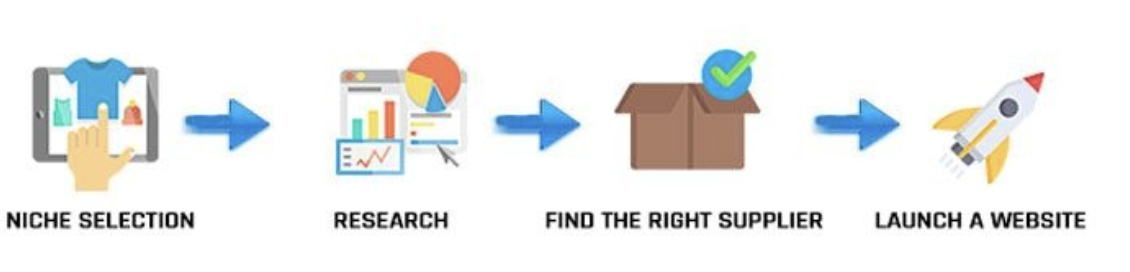
4 Fulfillment options
DIY Fulfillment
FBA (fulfillment by amazon)
3PL (3rd party logistics)
Dropshipping
DIY Fulfillment (Do-It-Yourself)
A method of order fulfillment where a business or individual handles all the steps involved in processing, packing, and shipping customer orders in-house.
Does NOT use third-party logistics (3PL) or fulfillment centers.

FBA (Fulfillment by Amazon)
You sell an item and Amazon ships it.
The seller sends bulk products to Amazon's fulfillment centers.
Amazon picks, packs, and ships the products when they are sold.

3PL (Third-Party Logistics)
The seller lists products on channels including Amazon and eBay, but a another company stores and ships products to customers.

Dropshipping
A retail model where online stores do NOT manufacture and keep products in stock.
When an order is placed through the seller's online store, a dropshipping supplier delivers the product directly to the customer.
AOV + 15 to 30% Rule
Set the free shipping threshold 15% to 30% above your current AOV.
EXAMPLE:
Current AOV = $40.
15% above $40 = $46.
30% above $40 = $52.
Free shipping threshold should be between $46 and $52
In-House Call Centers
Advantages
the degree of control the company has over telemarketing operations.
Disadvantages:
Time and expense of training telemarketers.
Large financial burden for operating a call center.
Outsourcing Call Centers
Advantages:
Low initial investment.
Fixed operating costs.
Quick startup.
Time flexibility.
Disadvantages:
Lack of direct control.
Lack of direct security.
Lack of employee loyalty.
Mass-market approach.
Service recovery strategy
Express respect
Listen to understand
Uncover the expectations
Outline the solutions
Take action and follow through
Double check for satisfaction

NPS (Net Promoter Score)
A management tool that can be used to gauge the loyalty of a firm's customer relationships.
Companies that achieve long-term profitable growth have NPS two times higher than the average company.
How to collect NPS
Ask customers: "How likely is it you would recommend [company/product] to a friend?"
Customers answer using a scale from 0 to 10.

3 customer categories for NPS
Detractors (0–6):
customers unhappy or dissatisfied.
Passives (7–8):
Customers less likely to recommend the company.
Promoters (9–10):
Loyal customers
NPS Formula
NPS = % Promoters − % Detractors.

Strategic Applications: Make NPS Meaningful
Analyze by segment: Compare different customer locations or groups (New York vs. Florida).
Track periodically: Measure NPS over time (January → March → June → October).
Compare by brand: Compare different brands (Lululemon vs. Alo vs. Vuori).
GDPR (General Data Protection Regulation)
The European Union's data protection regulation.
VCDPA (Virginia Consumer Data Protection Act)
A state privacy law that regulates how businesses handle the personal data of Virginia residents.
signed in March 2021; effective January 1 2023
Privacy Paradox
Individuals state privacy concerns versus behaving in ways that contradict their statements.
Example: Someone says they are worried about their privacy but continues to share personal information on social media.
Privacy Calculus
Consumers perceive their personal information as a commodity and weigh the benefits and costs of sharing personal info.
EXAMPLE: A customer may share personal information with a company because they believe the benefits (discounts, personalized recommendations, convenience) are worth the privacy risks.

First-party data
Collected directly by the company from its own customers.

Third-party data
Collected by another company and made available to businesses that were not directly involved in the original interaction.

Zero-party data
Information that a customer intentionally and proactively shares with a brand.
product preferences, purchase intentions, and personal context
Sensitive Data
Any confidential or private information that requires protection from unauthorized access or disclosure to prevent financial loss, identity theft, legal penalties, or security harm.
Examples of sensitive data
Health information.
Precise location.
Biometric information.
FERPA (Family Educational Rights and Privacy Act, 1974)
A U.S. federal law that governs access to, correction of, and disclosure of student education records.
COPPA (Children's Online Privacy Protection Act, 1998)
A U.S. federal law that regulates the online collection of personal information from children under 13.
Understanding Children’s Data Privacy
Parental consent is required to collect data from children.
Processing data of any child without parental consent is illegal.
Parents may request a copy of data collected from their child.
Website privacy policies must specify the collection and use of children's PII (Personally Identifiable Information).
Ensures children's data remains secure and confidential.
Schools may not share education records without parental consent.
Influencer disclosure
Disclose when you have any financial, employment, personal, or family relationship with a brand.
Place the disclosure with the endorsement message itself.
Do NOT mix the disclosure into a group of hashtags or links.
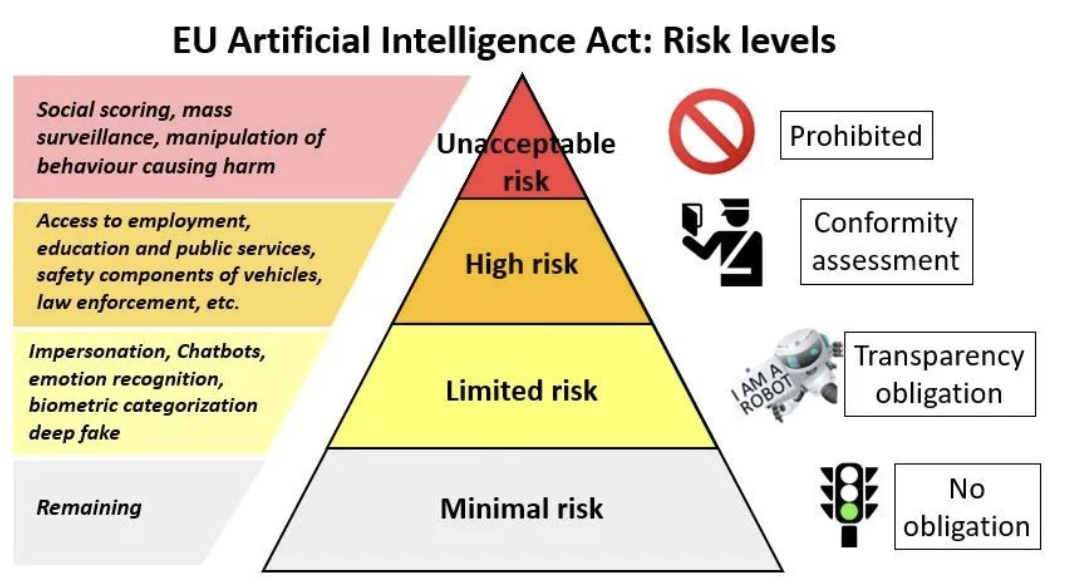
EU AI Act (2024)
A European Union law introduced in 2024 to regulate artificial intelligence.