Anatomy Lab Quiz: respiratory/digestive
 Call Kai
 Learn
 Practice Test
 Spaced Repetition
 Match
 Flashcards
 Knowt Play
1/78

There's no tags or description
Looks like no tags are added yet.
79 Terms
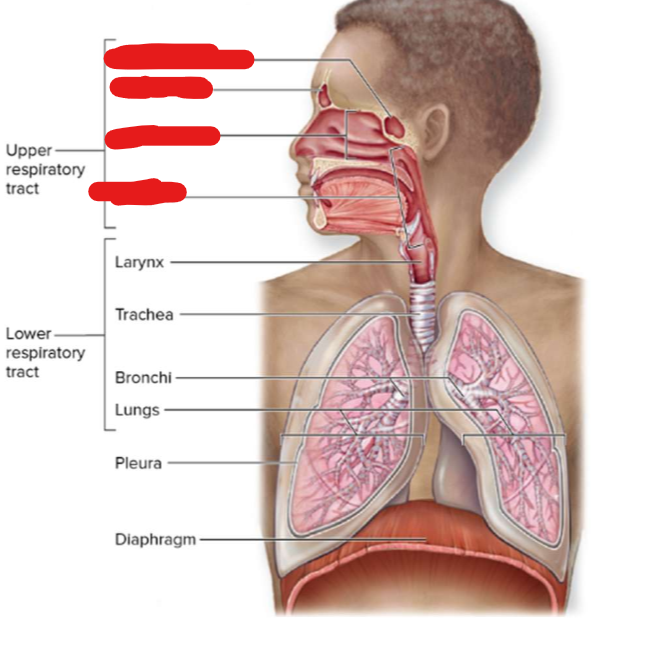
Upper Respiratory Tract Components
Nose, nasal cavity, pharynx, paranasal sinuses

Sphenoidal Sinus

Identify
Frontal Sinus

Identify
Nasal Cavity

Identify
Pharynx

Lower Respiratory Tract Components
Larynx, Trachea, Bronchi, Lungs

Identify
Larynx
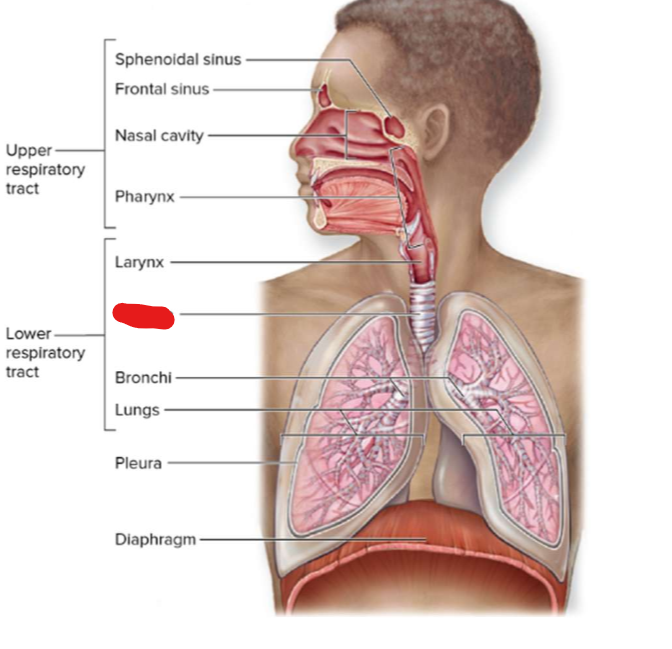
Identify
Trachea

Identify
Bronchi

Identify
Lungs
4 Paranasal Sinuses
Frontal, ethmoidal, sphenoidal, maxillary sinuses

Identify
Frontal Sinus
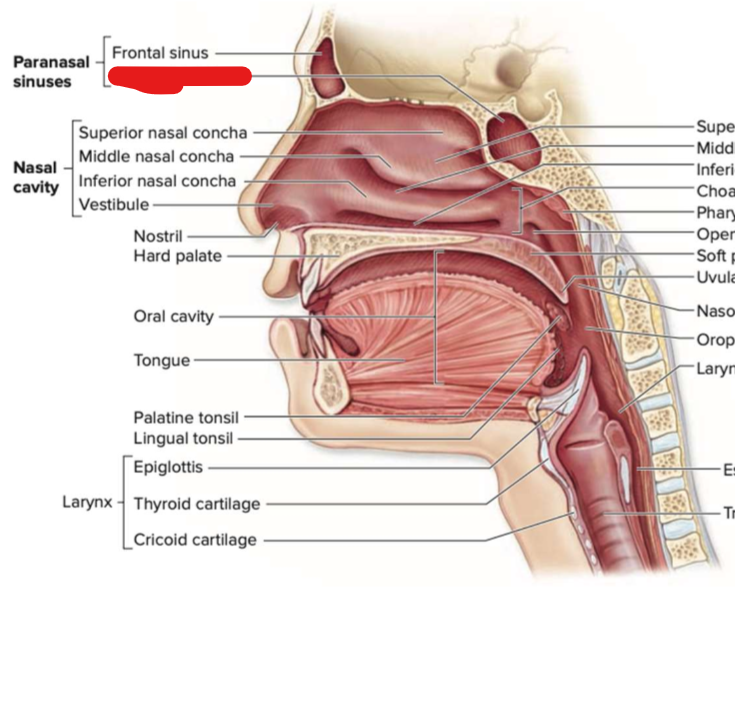
Identify
Sphenoidal Sinus

Identify
Ethmoidal Sinus
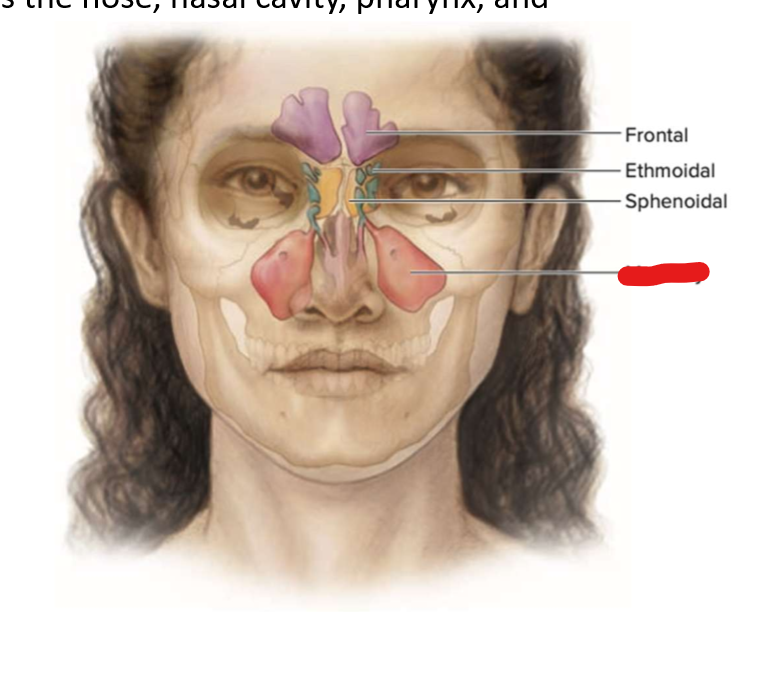
Identify
Maxillary Sinus

3 Regions of the Pharynx
Nasopharynx, oropharynx, laryngopharynx

Identify
Nasopharynx

Identify
oropharynx

identify
laryngopharynx

Epiglottis Function
Tips backward when swallowing to cover the glottis and prevent food/liquid from entering the trachea

What is the bone of the Larynx?
Hypoid bone
Largest Cartilages?
Thyroid and Cricoid

Bronchial Tree Organization
2 Main primary bronchi, Lobary (secondary) bronchi, segmental (tertiary) bronchi, smaller bronchi, bronchioles, terminal bronchioles
First Site of Gas Exchange?
Respiratory bronchiole

Alveolar Type I Cells Function
Cover most of the alveolar surface and perform gas exchange.

Alveolar Type II Cells Function
Produce pulmonary surfactant (reduces surface tension to prevent alveolar collapse during exhalation) and can divide to replace Type I cells
Pleura Layers
Parietal and Visceral
Inner Pleura Layer
Visceral Pleura
Inner pleura layer
Parietal pleura
How many lobes does the right lung have?
3 Lobes, superior, middle, inferior
How many lobes does the left lung have?
2 lobes, Superior, inferior
Left lung lobes are seperated by
oblique fissure, plus a cardiac notch and cardiac impression to make room for the heart
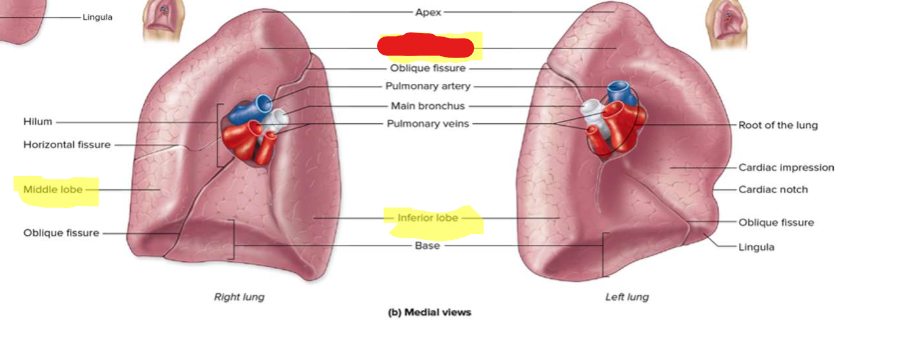
Identify
Superior Lobe

Identify
Middle Lobe

Identify
Inferior Lobe
Gastrointestinal (GI) Tract Organs
Oral cavity, pharynx, esophagus, stomach, small intestine, large intestine, anal canal

Identify
Oral Cavity

Identify
Pharynx

identify
Esophagus

Identify
Stomach
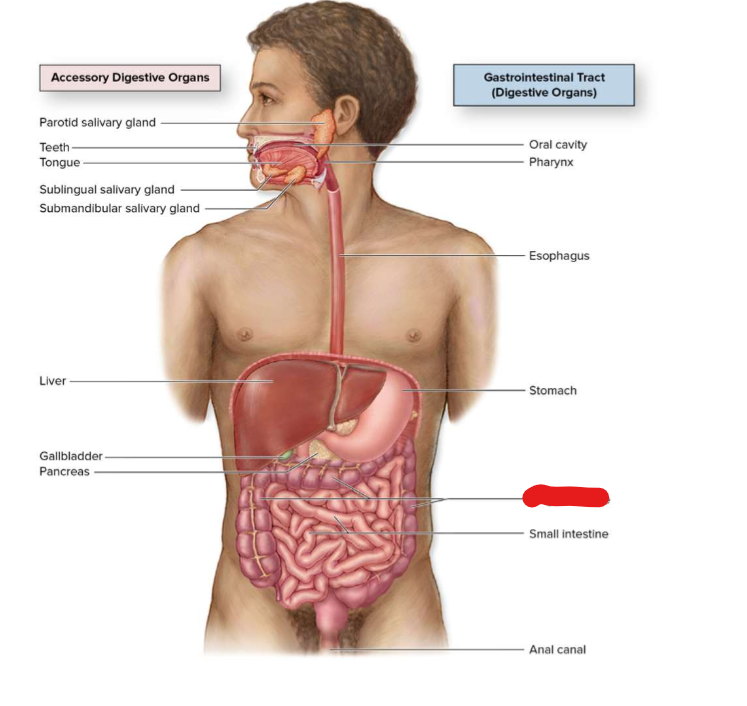
identify
Large Intenstine

identify
Small Intenstine

identify
Anal Canal

Accessory Digestive Organs
Teeth, tongue, salivary glands, liver, gallbladder, pancreas

3 Salivary Glands
Parotid, sublingual, submandibular (submaxillary) glands
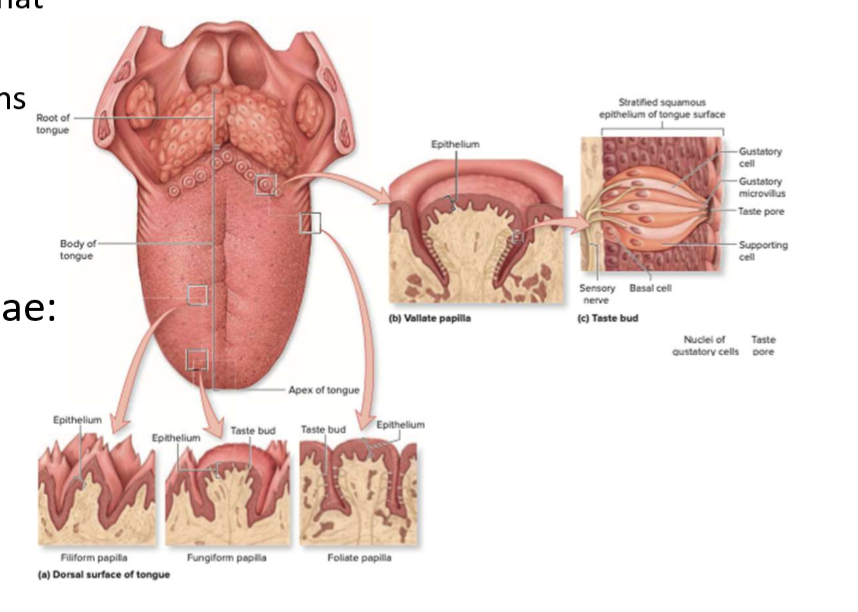
4 Lingual Papillae Types
Foliate, fungiform, vallate papillae, filiform papillae
Which papillae has taste buds
Vallate
Which papillae has sensory function
Filiform

4 Tunics (Layers) of the GI Tract
Mucosa, submucosa, muscularis, adventitia/serosa
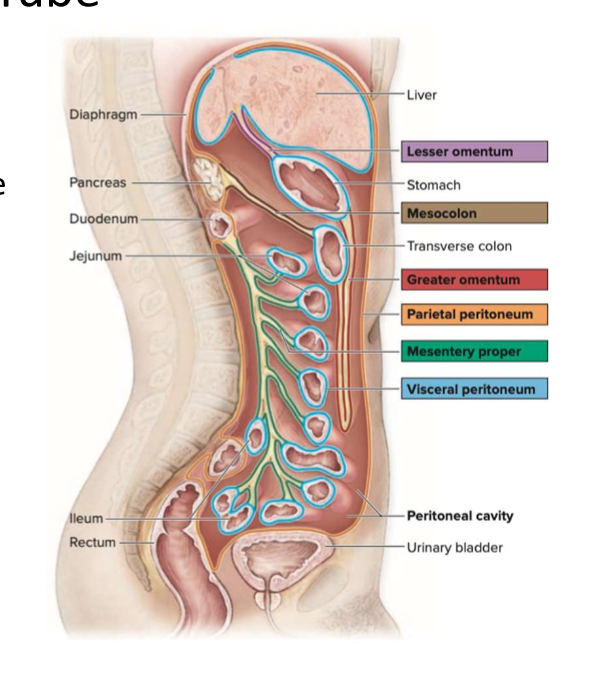
Inner Peritoneum Layer
Visceral Peritoneum

Outer Peritoneum layer
Visceral Peritoneum

Identify
Gastroesophageal Junction or Esophageal-stomach Junction
What is the Gastroesophageal Junction
Sudden tissue transition from non-keratinized stratified squamous (esophagus) to simple columnar (stomach).

4 Regions of the Stomach
Cardia, fundus, body, pylorus

Identify
Pylorus

Identify
Cardia

Identify
Body

identify
Fundus

Stomach Layer
Mucosa

Stomach layer
Submucosa

Stomach Layer
Muscularis
Stomach layer
Serosa

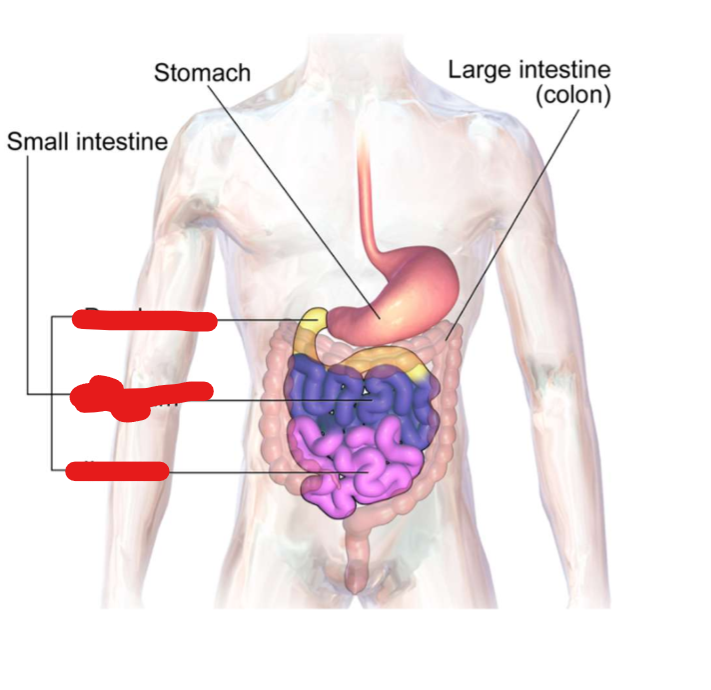
3 Regions of the Small Intestine (top to bottom)
Duodenum, jejunum, ileum
4 Regions of the Large Intestine
Cecum (with appendix attached), colon, rectum, anal canal

Identify
Cecum

identify
Colon

Identify
Rectum

Identify
Anal Canal

4 Lobes of the Liver
Right, left, quadrate, caudate lobes

Identify
Right lobe

Identify
Left lobe

identify
Caudate Lobe
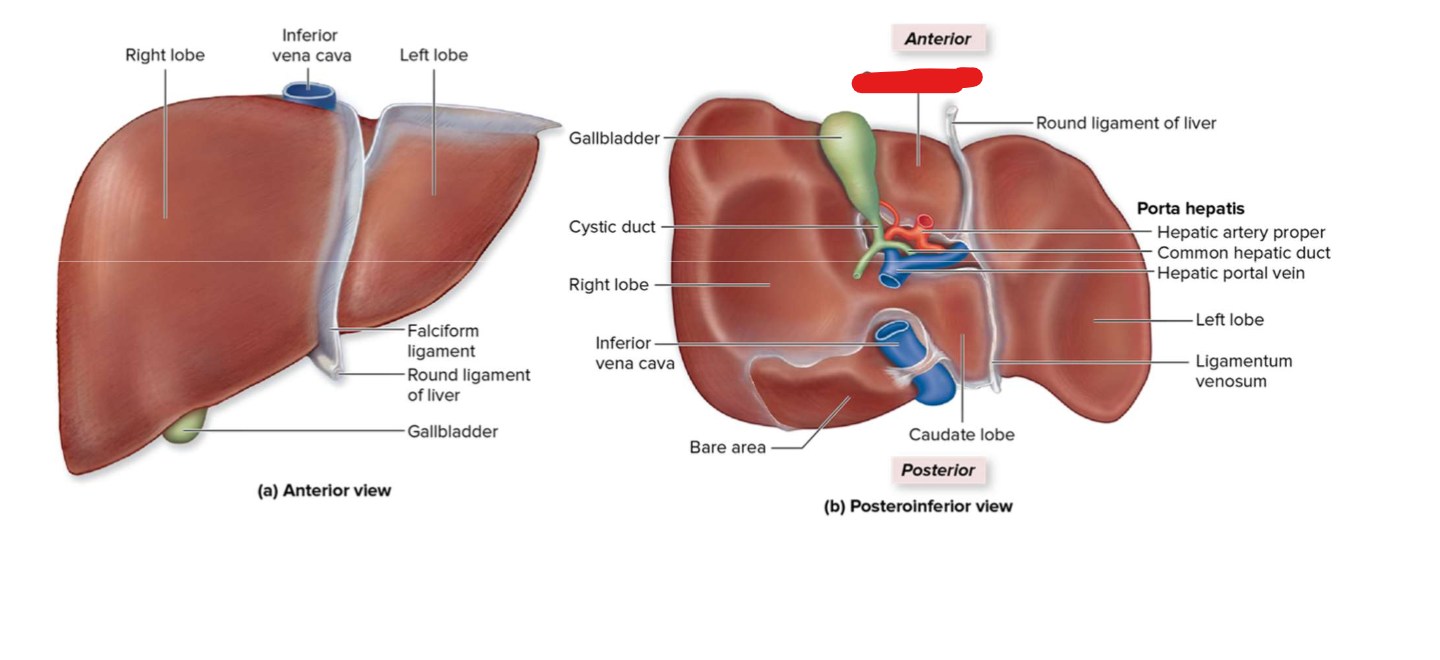
identify
Quadrate Lobe

Portal Triad Components
Hepatic portal vein, hepatic artery, and bile ductule
Hepatic Portal System Importance
Routes nutrient-rich venous blood from the GI tract through the liver so the liver can filter and detoxify it before it returns to the heart
Pancrease Exocrine Component
Pancreatic Acini
Pancrease Endocrine Component
Pancreatic islets
Where does the common bile duct and main pancreatic duct merge at?
hepatopancreatic ampulla
Where does bile and pancreatic juice travel to
duodenum of thge small instenstine through the mahor duodenal papilla