Sheep lameness
 Call Kai
 Learn
Learn Practice Test
 Spaced Repetition
 Match
Match Flashcards
 Knowt Play
1/56

There's no tags or description
Looks like no tags are added yet.
Name | Mastery | Learn | Test | Matching | Spaced | Call with Kai | Chat |
|---|
No analytics yet
Send a link to your students to track their progress
57 Terms
List the diseases associated with foot lameness
Footrot
Benign footrot, interdigital dermatitis, scald
Virulent footrot —> also affects horn of foot
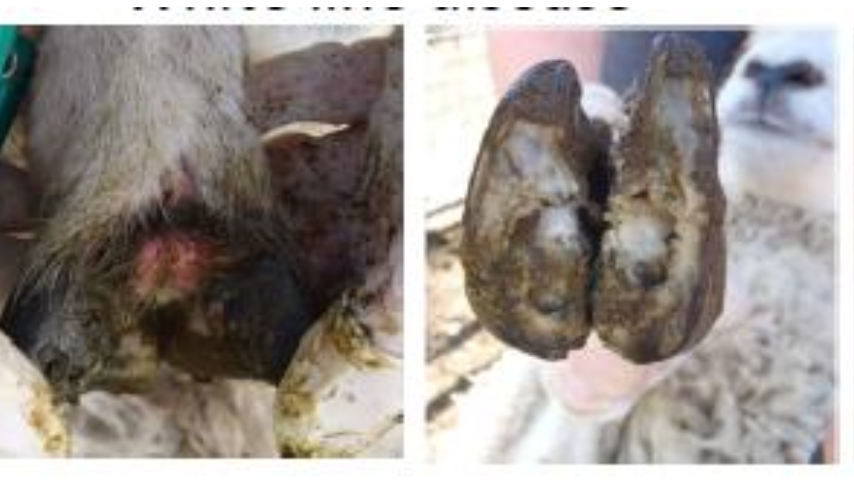
CODD (Contagious Ovine Digital Dermatitis)
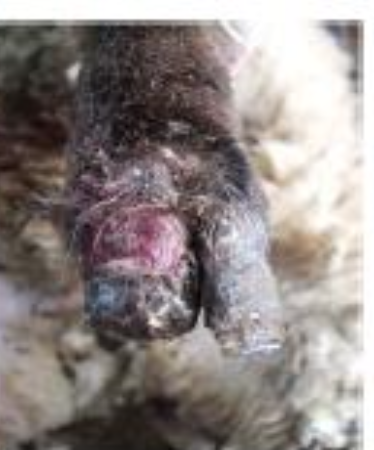
White line dx (white line separation)
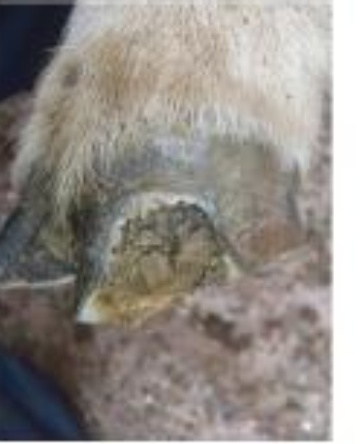
Toe granuloma
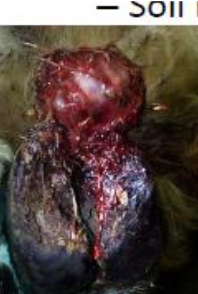
Foot abscess
Interdigital hyperplasia
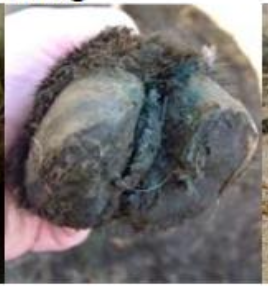
Soil balling
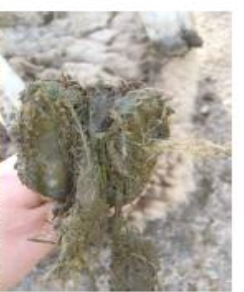
FB
Overgrown / misshapen claws
What are some non foot diseases associated with lameness?
Arthritis
Infectious e.g joint ill, septic arthritis
Osteoarthritis
Fractures
Muscular
Neuro dx ass. lameness
Make sure examine whole limb/animal not just the foot!
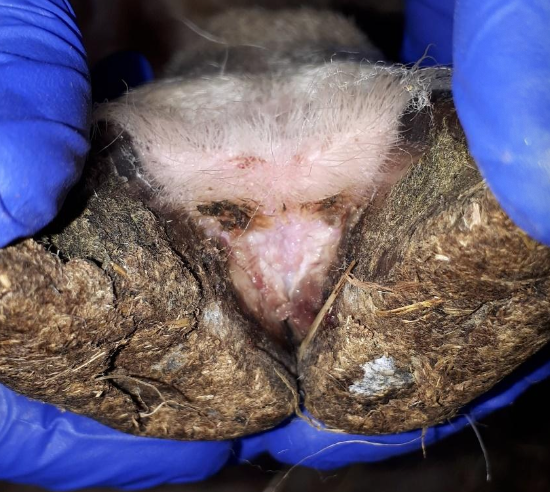
How can benign footrot / interdigital dermatitis (ID) / Scald present?
As benign footrot lesions on own
Or as part of general footrot problem or mixed infection
What are the features of benign footrot / ID / Scald?
Inderdigital skin inflammed, crust & discharge → lame
No horn underrunning
What are the predisposing factors to benign footrot?
Damp conditions underfoot → predispose to bact infection in interdigital skin
Frost
Mechanical damage from long grass / thistles
What is the main pathogen causing benign footrot?
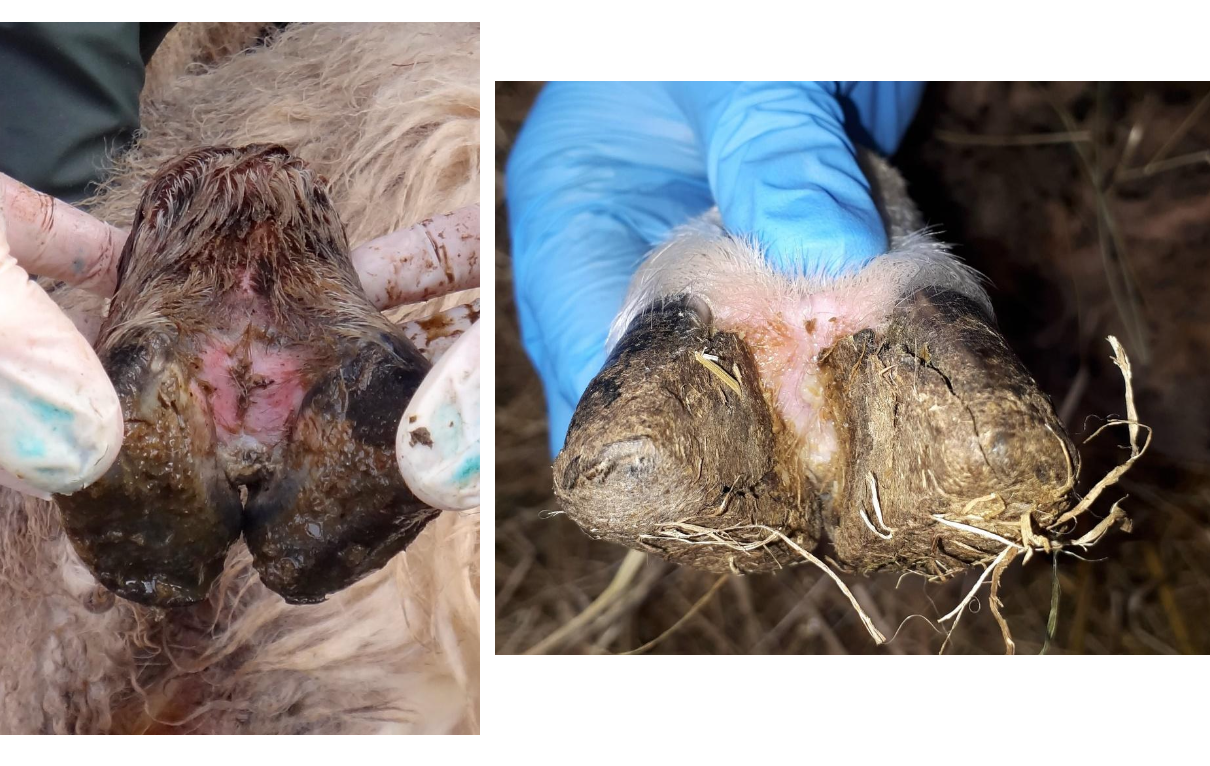
Dichelobacter nodosus
(Fusobacterium necrophorum present in some cases)
In what age sheep are benign footrot outbreaks common? What can these progress to?
(Risk factors same as footrot)
Groups of growing lambs
Can progress to footrot w/ underrunning of horn
What are the factors that determine the progressin of benign footorot to footrot?
The virulence & dose of the D. nodosus
The susceptibility of the sheep
Promptness of tx
What are the features of footrot?
Interdigital dermatitis w/ progressive underrunning of sole of hoof horn starting @ medial aspect of sole & progressing laterally
Grey necrotic pungent smelling horn
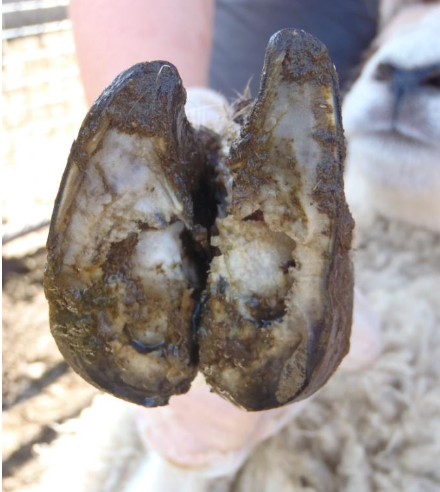
What is causing these lesions
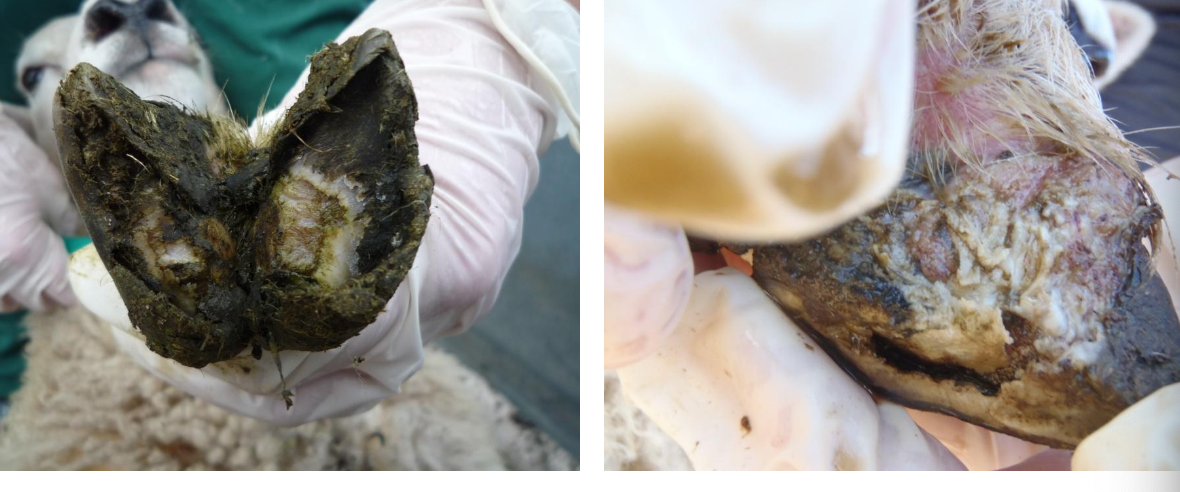
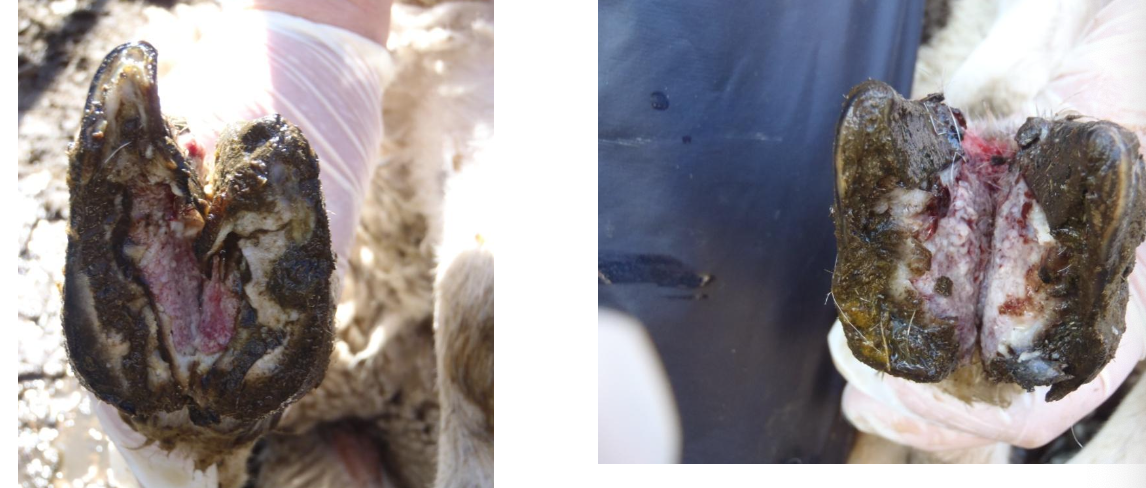
Footrot
What are the features of dichelobacter nodosus?
Facultative anaerobe
Survives in environemnt for 7d
Present in normal sheep feet as well
Virulence factors —> fimbrae & proteases
What are the features of fusobacterium necrophorum?
Anaerobe
Found in gut, faeces, widespread in environ
Often found in footrot lesions but considered 2° usually
What are the risk factors associated with footrot and ID?
Warm
Wet underfoot conditions
Muddy
Housing (lots of animals together)
Gathering
Genetics (heritable suscep)
How is benign footrot treated?
Oxytet spray (topical)
Foot bathing in antiseptic solutions
Formalin 3%
Zinc sulphate
Disinfectant footbaths
Systemic antibiotics LA oxytet (Not usually necessary)
What needs to be done to ensure a footbath for benign footrot is done appropriately?
Antiseptic needs to be exposed to infected interdigital area
Clean feet beforehand
Solution correct conc. & depth
Stand in time correct —> depends on product
Dry afterwards (concrete)
Repeat as necessary
How is footrot (under-run horn) treated?
Treat as quickly as possible
Isolate lame sheep
Treat individual & group
Injectable LA antibiotics best
LA oxytet
LA amoxicillin
LA macrolides e.g. tilmicosin
May require repeat txs & use AB topical spray as well
What is the problem with trimming as a tx for footrot?
May delay healing
May spread disease through hands and clippers
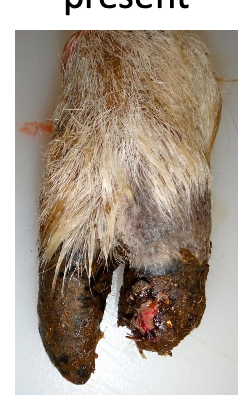
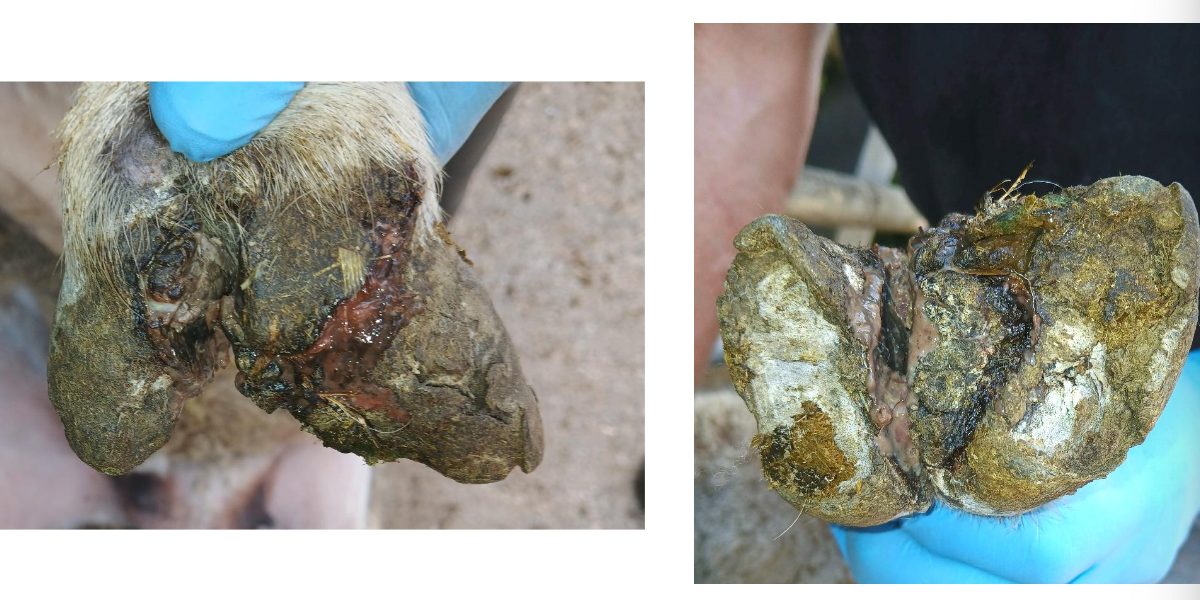
What is the clinical appearance of CODD?
Ulcerative / proliferative lesion starting @ coronary band
Very severe lameness
Progressive underunning of hoof wall downwards
Hoof sloughs off
Often mixed infections in flocks w/ issues
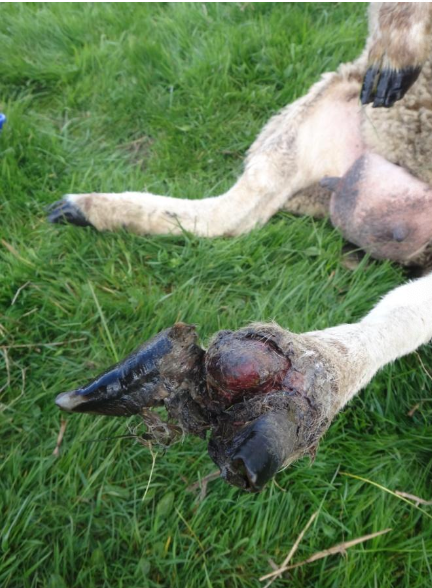
What are the different grades of CODD?
Grade 1 —> coronoary band lesion only
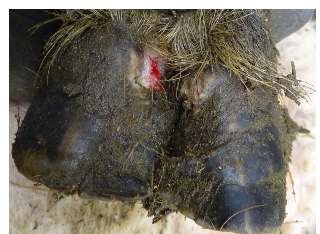
Grade 2 —> <50% horn capsule separate
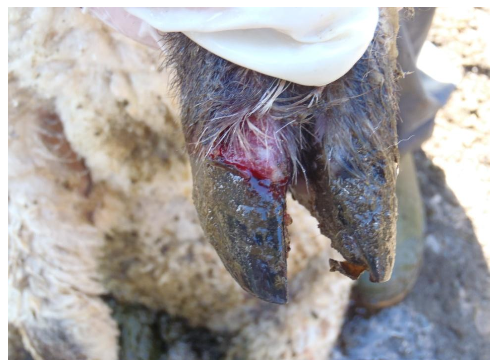
Grade 3 —> 50-100% hoof capsule off
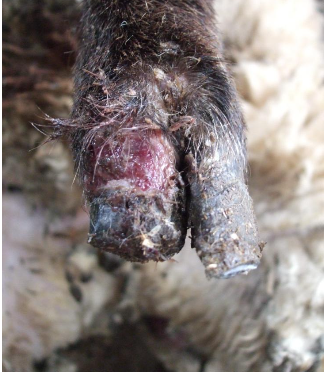
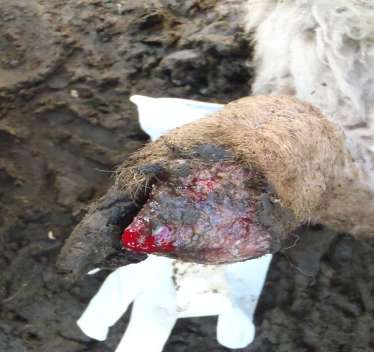
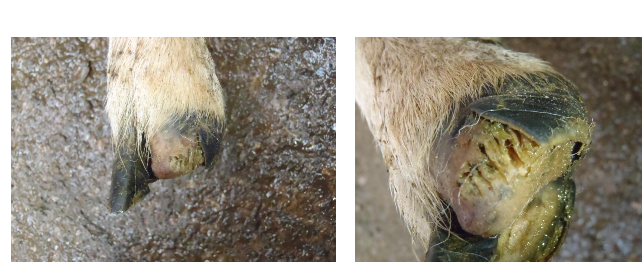
Grade 4 —> healing but still active lesion present
Grade 5 —> healed
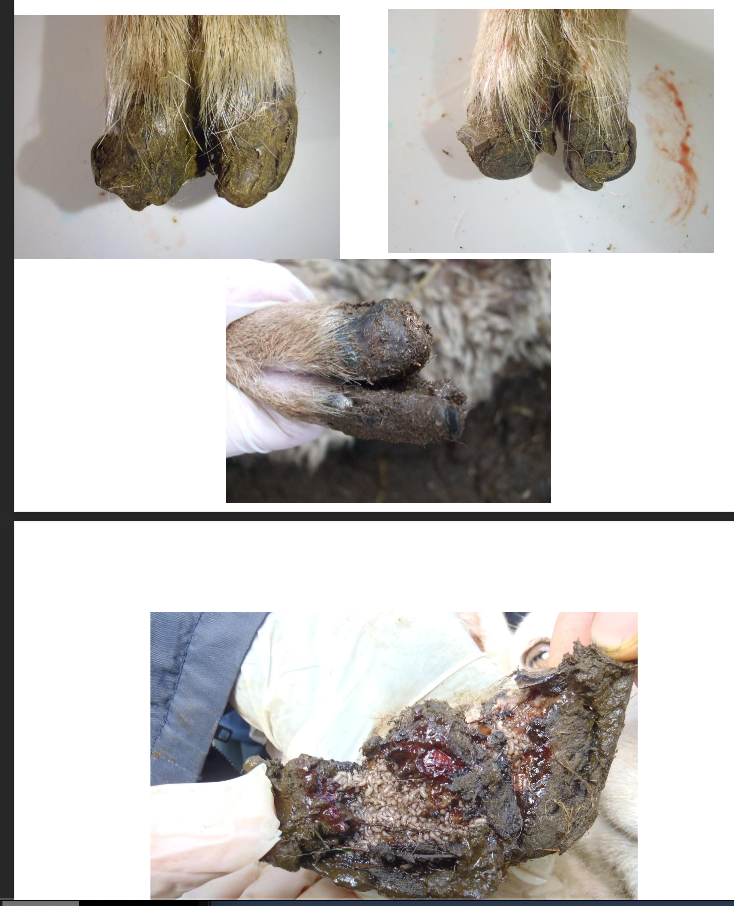
What is the consequence of footrot even after it is healed?
Deformed foot
Susceptible to maggots
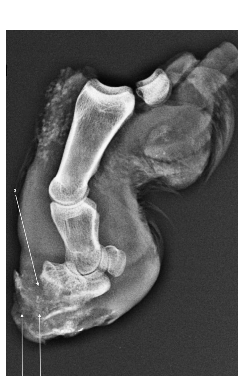
What internal damage can CODD cause?
Can infect bone and cause osteolysis
What aetiological agents cause CODD?
Treponeme bacteria (same as those causing digital dermatitis in cattle)
T. medium
T. phagedenis
T. pedis
Dichelobacter nodosus & Fusobacterium necrophorum also found

What are the risk factors for CODD?
Very similar to footrot
Large flock size
Late summer/ early autumn
Muddly pasture —> lowland, lush, poached
Lush masture
Footrot
How is CODD treated?
Isolate
LA amoxicillin
Usually require repeated injections
Treat until clinical cure (giving every other day)
Macrolides licensed for sheep useful as LA —> tilmicosin
NSAIDs
Remove separated horn tissue
How do you prevent infectious foot dx?
Treat as soon as seen
Flock level management
Five point plan
Same principles can apply to CODD/ Footrot and Scald as very closely related
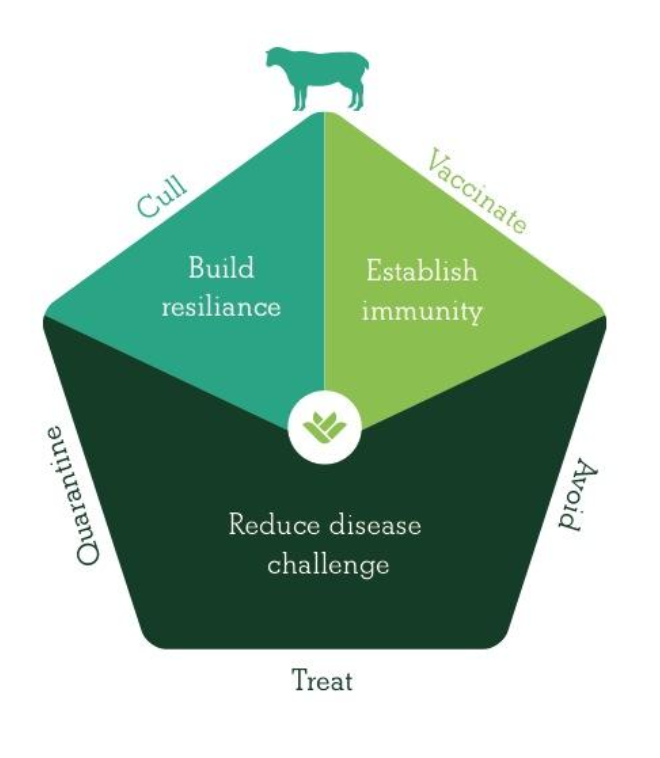
What is the 5 point plan for foot disease management?
Vaccinate twice yearly —> Footvax
Treat lame sheep quickly
Biosecurity
Environmental challenge
Cull chronically lame
What are the features of footvax?
Both treats and prevents footrot
Very useful in outbreak
Multivalent vacc containing multiple straains of D nodosus
What are the potential side effects and contraindications of the footrot vaccine?
Oily adjuvant can cause injection site lumps
Don't use prior to shearing
Don't use close to lambign
Don't use with 1% moxidectin
How often do you have to give the footrot vaccine?
Initial vaccination 2 doses 4-6 weeks apart
6 monthly booster at risk periods
Post scanning (housing) Dec
Post shearing summer —> when flock numbers are lowers
How is footrot treated?
Prompt individual / group isolation & tx —> sheep will get more likely, red. baceria challenge in enviornemt
LA oxytet
LA amoxicillin, Mcrolies
Reapest until clinical cure
What enviornmental hygiene should you be mindful of in controlling foot dx?
Clean and disinfect trimming equipment
Don’t buy in sheep → new dx or new strains of dx, consider where buy from, new strains or dx
Isolate 3-4wks
Avoid wet muddy areas in field
Move buckets and feed troughs
Fix leaky water drinkers
Dry out gateways
Bedding dry
When should you consider culling a lame sheep?
Had 2-3 cases of lameness
What is causing this?
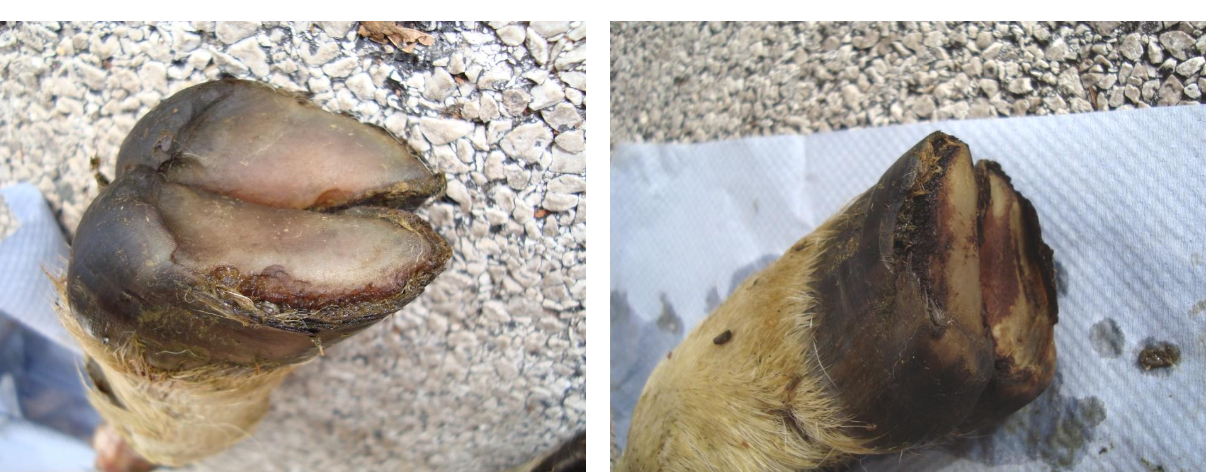
White line disease/shelly hoof
A lot will have it without showing signs of lameness
Only show lameness when things get trapped in it
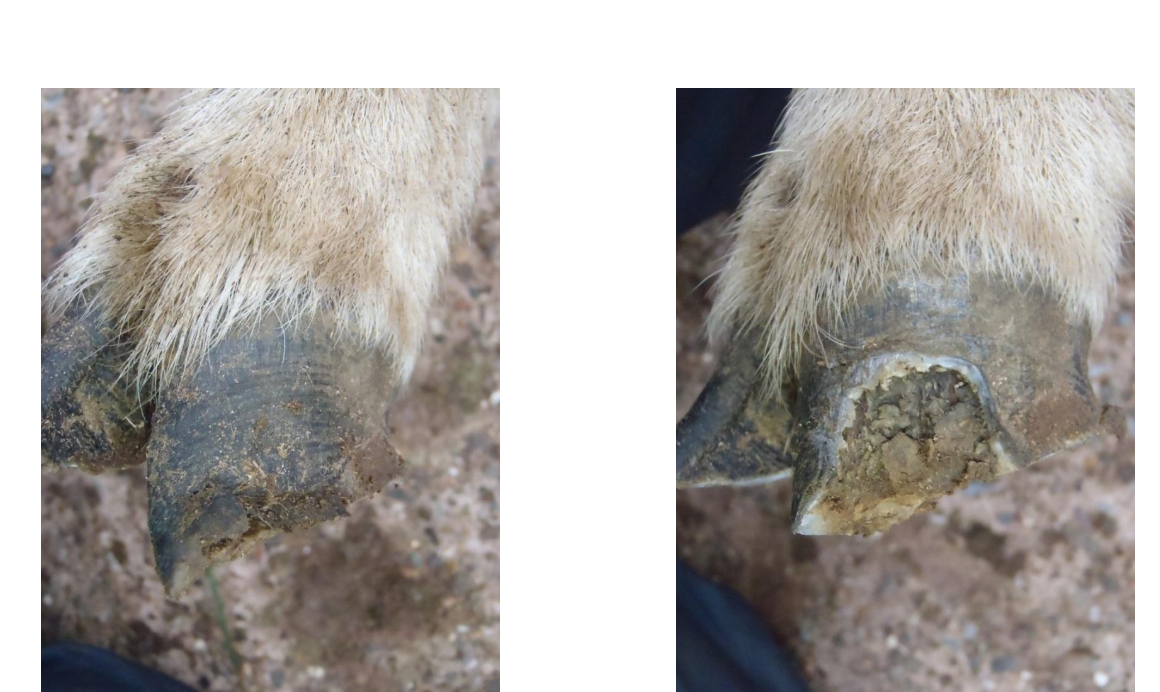
What is this showing?
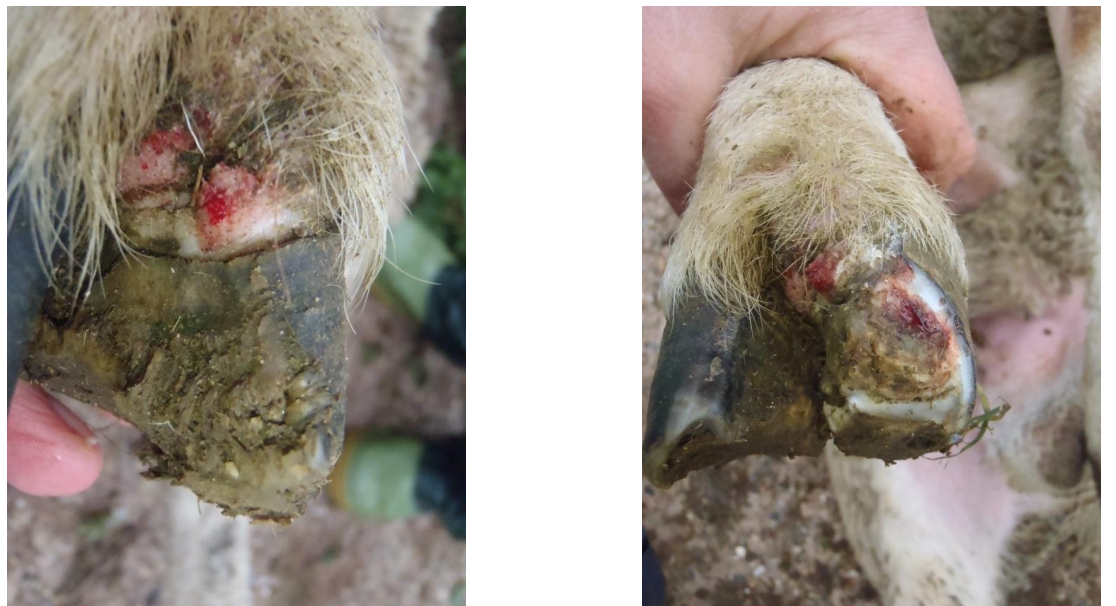
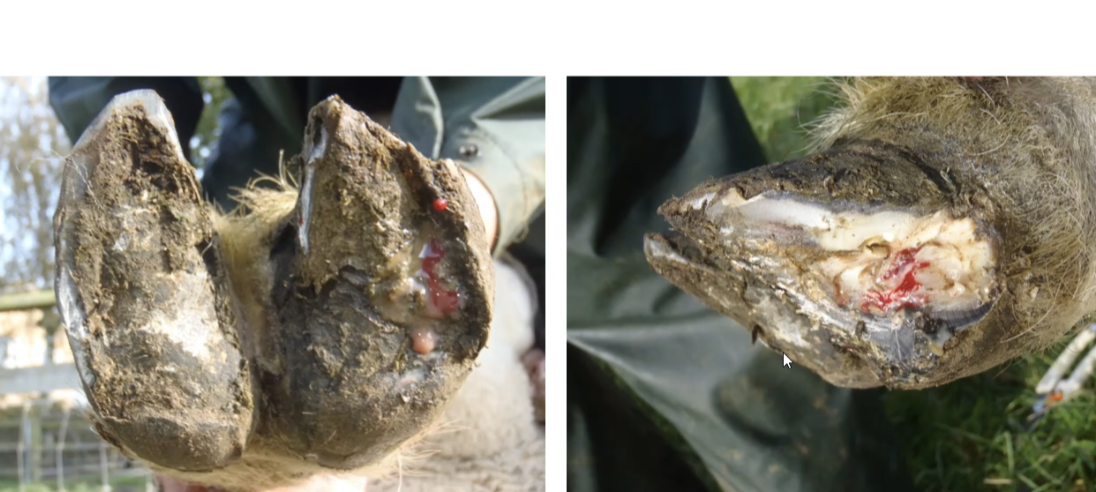
A white line abscess
How is white line dx treated?
Can carefully trim out area of separation if no infection
Developed into an abscess —> trim to release pus and underrun/ separated horn, avoid damaging sensitive tissue → abscess forming
What causes a toe granuloma?
Over trimming

How do you treat toe granulomas?
IV regional anaesthesia
LA infiltration
Cut back granulation tissue
Cauterise disbudding iron to stop bleeding & ensure granuloma removed
What causes interdigital hyperplasia?
Often secondary infected, may recur

How do you treat interdigital hyperplasia?
Treat clean area & ABs
How do you treat soil balling?
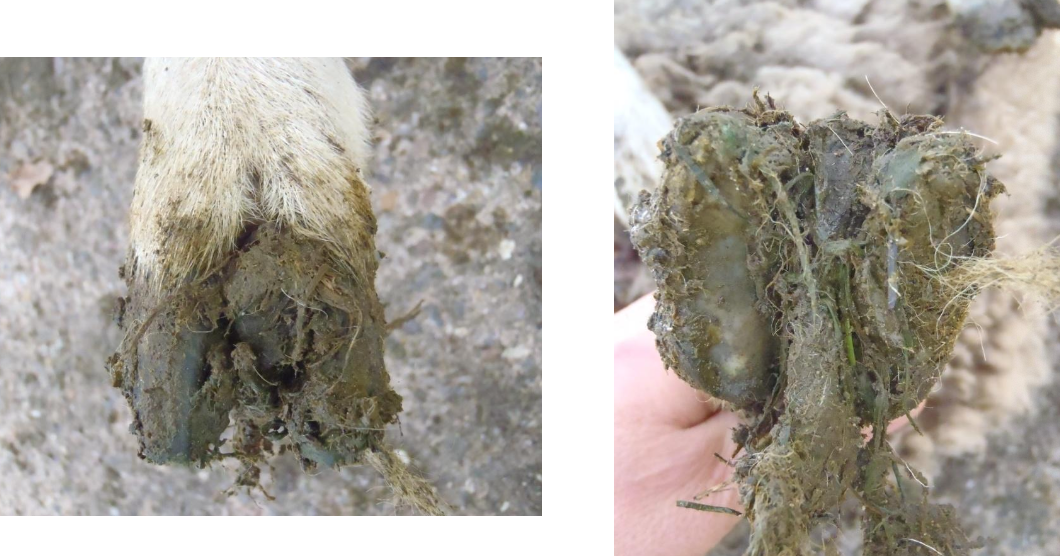
Clean, topical ABs
What are the signs of laminitis in sheep?
Affected animals reluctant to stand due to lameness
When standing hold all limbs vlose under abdomen
Digits warm to touch with inc digital pulses
Hooves subsq develop horizontal grooves
What can cause laminitis in sheep?
Excess access to high energy or cereal-based feed and acute disease such as metritis or mastitis can predispose to development of laminitis.
How is laminitis treated in sheep?
NSAIDs
Address underlying cause
What is the cause of a pedal joint abscess?
Consequence of extension of interdigital infection into distal interphalngeal joint structures
Pus tracks abaxially across DIP to emerge adn abaxial coronary band
Consequence of white line abscess
What are the clinical signs of a pedal joint abscess?
Severe lameness
Swelling
Widened interdigital space
Purulent discharging sinus maybe
Present on the abaxial coronary band
How do you treat a pedal joint abscess?
Flush and antibiotics
Digit Amputation
What causes digit amputation?
Disarticulation between P1 and P2
How do you perform a digit amputation?
Sedation (Xylazine)
Local anaesthesia, IV regional or ring block. 5-10ml procaine
Clip, clean & prepare
Disarticulation between P1 & P2
Bandage foot (change after 3/4 days)
ABs and NSAIDs
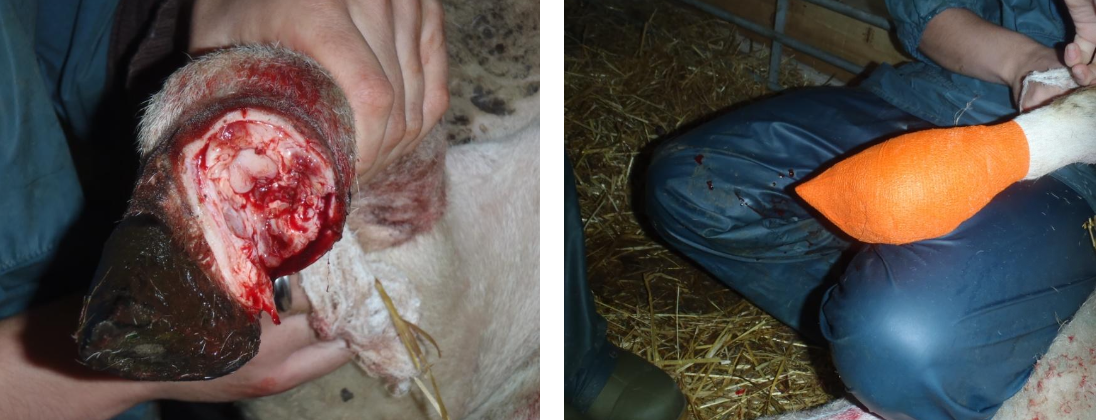
What is being shown here?
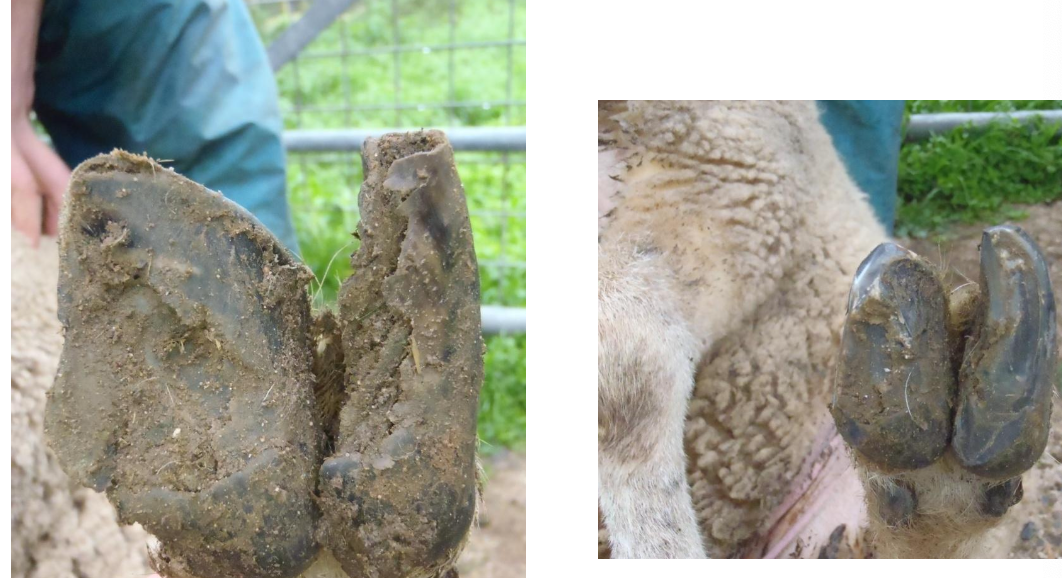
Overgrowth that has been trimmed back to healthy shape
What are some causes of non foot lameness?
Strawberry footrot
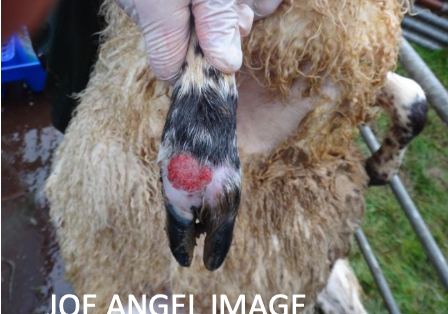
White muscle disease
Bone diseases
Arthritis
What is strawberry footrot? How do you treat it?
Proliferative scab lesion distal limbs
Maybe caused by orf & dermatophillus
Systemic & topical antibiotics and move to dry fields
What causes white muscle disease?
Vit E/ Sel deficiency → stiffness & relutance to move → progresses over several weeks
What are the C/S of white m. dx how is it diagnosed?
C/S —> progressing to inability to stand, skeletal muscles painful and swollen
Raised glutathione peroxidase levels in blood
How is white muscle disease treated?
Vit E /Selenium supplementation
What bone diseases can cause lameness? What are their treatments?
Fractures —> sudden onset lameness, pain, swelling
Cast, confinement, often successful in young animals
Rickets (Vit D def) —> lameness, stiffness, swollen joints, angular limb deformities
Vit D & Ca supplementation
What are the two causes of athritis in sheep?
Infectious athritis
Degenerative joint disease
Can occur as consequence of joint infection
Elbow joint mostly affected
What are some causes of infectious athritis?
Neonatal infections
Strep dysgalactaie
Tick pyaemia
Staph aureus infection in joints- lambs cripples
Erysipelothrix rhusiopathie