3.1.3.2 Nature of covalent and dative covalent bondss
 Call Kai
 Learn
Learn Practice Test
 Spaced Repetition
 Match
Match Flashcards
 Knowt Play
1/63

There's no tags or description
Looks like no tags are added yet.
Name | Mastery | Learn | Test | Matching | Spaced | Call with Kai | Chat |
|---|
No analytics yet
Send a link to your students to track their progress
64 Terms
What is covalent bonding?
Strong electrostatic forces of attraction between shared pair(s) of electrons and the nuclei of the bonded atoms.
What are small covalent molecules often referred to as?
Molecular structures.
How soluble are molecular molecules in water?
Generally poor
How good are molecular molecules as electrical conductors when solid
poor bc ions are fixed
How good are molecular molecules as electrical conductors when molten
poor bc no ions
molecular substances general state of matter
mainly gases and liquids
What are large covalent molecules known as?
Giant covalent molecules or macromolecules.
How soluble are macromolecules in water?
insoluble
How good are macromolecules as electrical conductors when solid
diamond and sand no bc electrons cant move
graphite good bc delocalised electrons between layers
How good are macromolecules as electrical conductors when molten
poor
macromolecular substances general state of matter
solids
Why do atoms share electrons in covalent bonding?
To achieve a full outer shell with a stable electron configuration, similar to that of a noble gas.
Give an example of a simple covalent molecule.
Methane (CH₄).
What is the octet rule?
The principle that atoms tend to bond in such a way that they have eight electrons in their outer shell.
Which elements often have less than 8 electrons in their outer shells?
Boron and aluminium, particularly in group 3 of the periodic table.
What is a notable exception to the octet rule?
Some stable molecules may have more or less than 8 electrons in their outer shell.
Which non-metals generally follow the octet rule?
Hydrogen, Fluorine, Neon, Helium, and Boron.
What is the significance of the periodic table in covalent bonding?
It helps predict bonding patterns and electron configurations of elements.
What is a common characteristic of non-metals in period 3 and below regarding their outer electrons?
They often have more than 8 electrons in their outer shells.
What is the role of shared electrons in covalent bonds?
They create a bond by being attracted to the nuclei of both bonded atoms.
What is the relationship between covalent bonding and molecular stability?
Covalent bonding leads to the formation of stable molecules.
What is the difference between molecular structures and giant covalent structures?
Molecular structures consist of small numbers of atoms, while giant covalent structures consist of large networks of atoms.
What type of bond do carbon dioxide (CO₂) and water (H₂O) involve?
Covalent bonds.
What is a characteristic of covalent bonds compared to ionic bonds?
Covalent bonds involve the sharing of electrons, while ionic bonds involve the transfer of electrons.
What is the significance of achieving a full outer shell in covalent bonding?
It leads to increased stability of the molecule formed.
What is the typical electron configuration goal for atoms in covalent bonding?
To achieve an electron configuration similar to that of noble gases.
What is the effect of covalent bonding on the physical properties of substances?
It can affect melting points, boiling points, and solubility.
What is a dative covalent bond?
A bond where the shared pair of electrons comes from only one of the bonding atoms.
What must one atom have to form a covalent bond?
A lone pair of electrons. (not used in bonding)
What must the other atom have to form a covalent bond?
A vacant orbital or be electron deficient.
What happens to the charge of the atom that donates electrons in a dative covalent bond?
It increases its charge by 1.
What happens to the charge of the atom that receives electrons in a dative covalent bond?
It decreases its charge by 1.
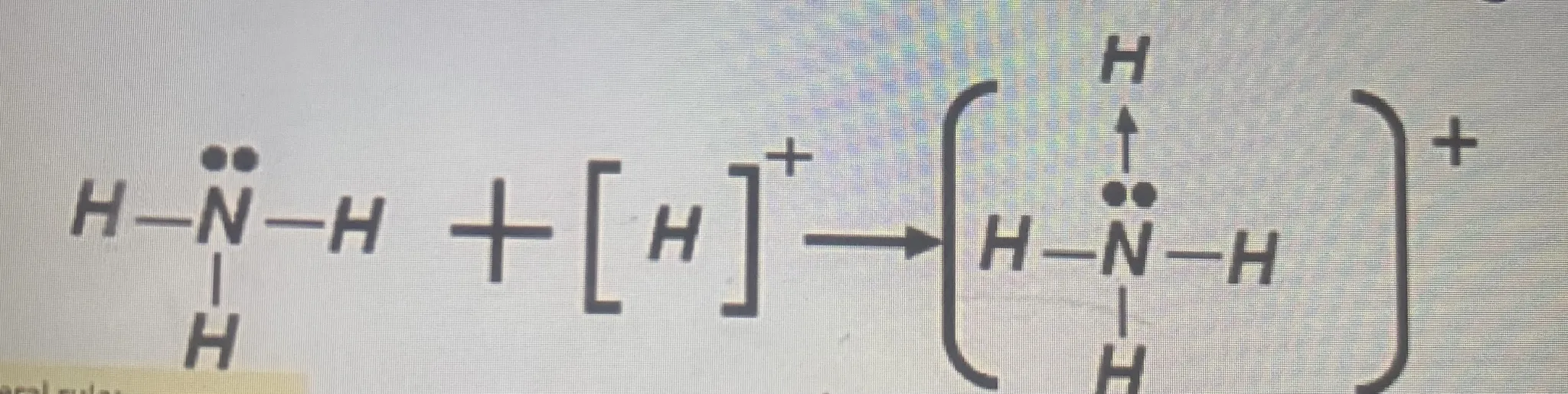
Draw and explain Bonding in the ammonium ion NH₄⁺ (use previous language to explan which one gained and lost electron)
N in ammonia uses lone pair to form dative covalent bond
N ‘loses’ electron and becomes positive
H+ ‘gains’ electron & becomes NEUTRAL (1 electron)
Why can ammonia form a dative covalent bond with boron trifluoride?
Ammonia donates an electron to boron trifluoride, which is electron deficient.
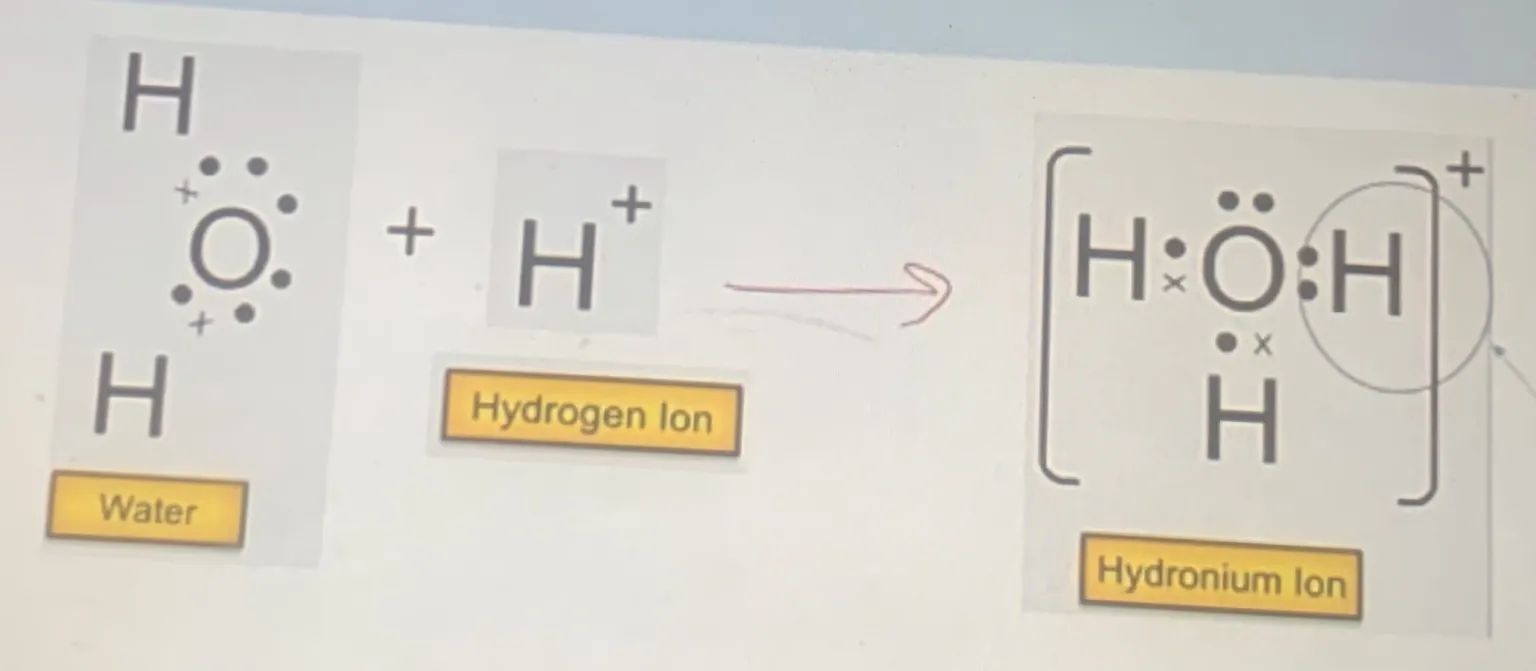
Draw and explain Bonding and the structure of the hydronium ion? (use prev lang)
circled H shows dative covalent bond
Why can ammonia molecules form dative covalent bond with boron trifluoride?
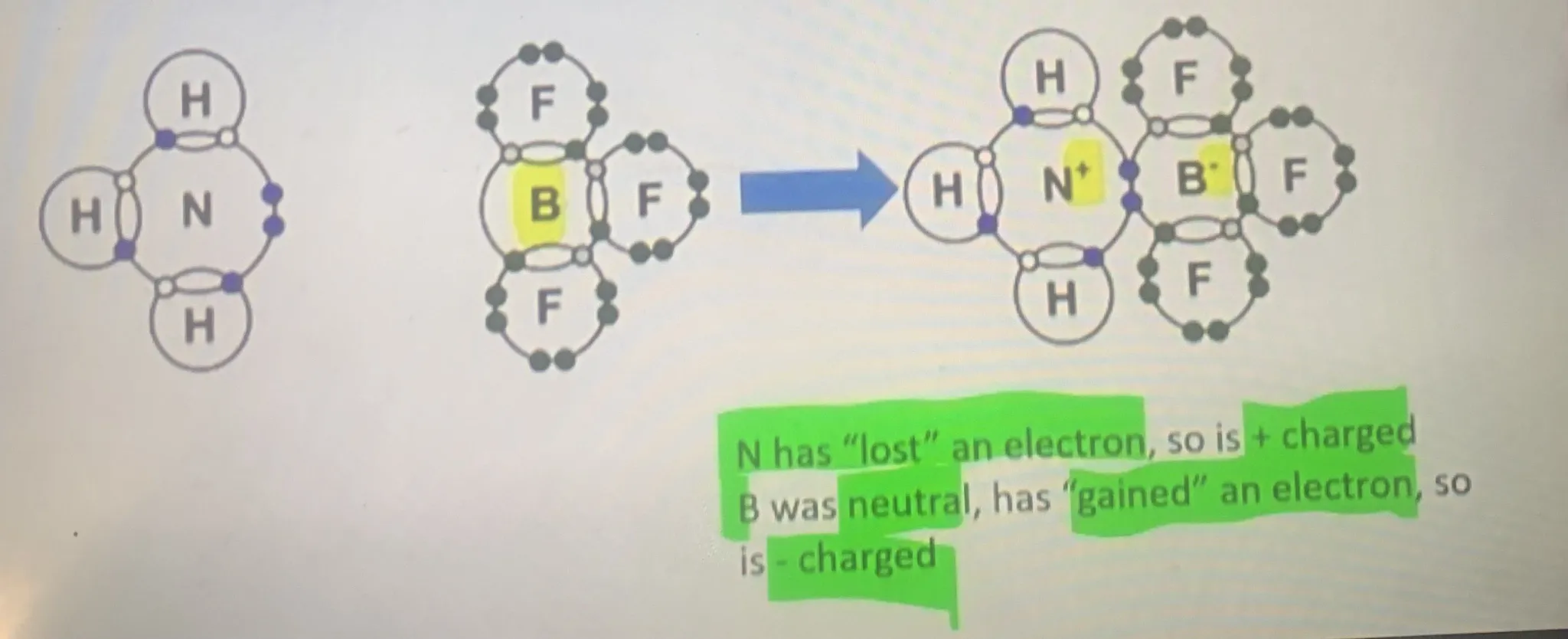

Draw stick diagram of this, showing dative covalent bond
H-O-N → O ARROW SHOWS DATIVE COV BOND FROM NITROGEN ATOMS
II
O
What is covalent bonding?
Strong electrostatic forces of attraction between shared pair(s) of electrons and the nuclei of the bonded atoms.
What are small covalent molecules often referred to as?
Molecular structures.
How soluble are molecular molecules in water?
Generally poor
How good are molecular molecules as electrical conductors when solid
poor bc ions are fixed
How good are molecular molecules as electrical conductors when molten
poor bc no ions
molecular substances general state of matter
mainly gases and liquids
What are large covalent molecules known as?
Giant covalent molecules or macromolecules.
How soluble are macromolecules in water?
insoluble
How good are macromolecules as electrical conductors when solid
diamond and sand no bc electrons cant move
graphite good bc delocalised electrons between layers
How good are macromolecules as electrical conductors when molten
poor
macromolecular substances general state of matter
solids
Why do atoms share electrons in covalent bonding?
To achieve a full outer shell with a stable electron configuration, similar to that of a noble gas.
Give an example of a simple covalent molecule.
Methane (CH₄).
What is the octet rule?
The principle that atoms tend to bond in such a way that they have eight electrons in their outer shell.
Which elements often have less than 8 electrons in their outer shells?
Boron and aluminium, particularly in group 3 of the periodic table.
What is a notable exception to the octet rule?
Some stable molecules may have more or less than 8 electrons in their outer shell.
Which non-metals generally follow the octet rule?
Hydrogen, Fluorine, Neon, Helium, and Boron.
What is the significance of the periodic table in covalent bonding?
It helps predict bonding patterns and electron configurations of elements.
What is a common characteristic of non-metals in period 3 and below regarding their outer electrons?
They often have more than 8 electrons in their outer shells.
What is the role of shared electrons in covalent bonds?
They create a bond by being attracted to the nuclei of both bonded atoms.
What is the relationship between covalent bonding and molecular stability?
Covalent bonding leads to the formation of stable molecules.
What is the difference between molecular structures and giant covalent structures?
Molecular structures consist of small numbers of atoms, while giant covalent structures consist of large networks of atoms.
What type of bond do carbon dioxide (CO₂) and water (H₂O) involve?
Covalent bonds.
What is a characteristic of covalent bonds compared to ionic bonds?
Covalent bonds involve the sharing of electrons, while ionic bonds involve the transfer of electrons.
What is the significance of achieving a full outer shell in covalent bonding?
It leads to increased stability of the molecule formed.
What is the typical electron configuration goal for atoms in covalent bonding?
To achieve an electron configuration similar to that of noble gases.
What is the effect of covalent bonding on the physical properties of substances?
It can affect melting points, boiling points, and solubility.