BIO 224 LAB 5 CSN
 Call Kai
 Learn
 Practice Test
 Spaced Repetition
 Match
 Flashcards
 Knowt Play
1/91

There's no tags or description
Looks like no tags are added yet.
92 Terms
Paranasal Sinuses

Frontal Sinus

Sphenoid Sinus

Vomer

Perpendicular Plate of Ethmoid

Hard Palate

Palatine Process of Maxilla
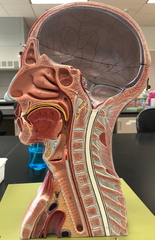
Palatine Bone
What is C?

Nasal Cavity

Superior Nasal Concha

Middle Nasal Concha

Inferior Nasal Concha
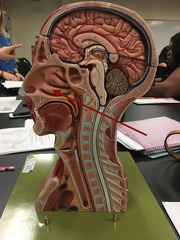
Superior Meatus

Middle Meatus

Inferior Meatus

Internal Nares

External Nares

Soft Palate

Uvula

Pharynx

Opening of Auditory Tube

Nasopharynx
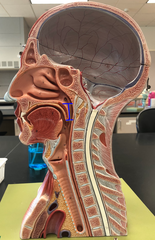
Oropharynx

Laryngopharynx

Larynx

Epiglottis (1)

Epiglottis (2)

Thyroid Cartilage (1)

Thyroid Cartilage (2)

Cricoid Cartilage (1)
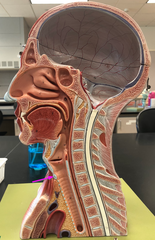
Cricoid Cartilage (2)

Corniculate Cartilage

Arytenoid Cartilage

Laryngeal Prominence
#3

Thyrohyoid Ligament

Thyrohyoid Ligament (1)
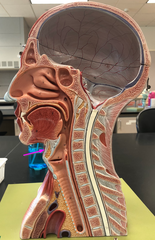
Thyrohyoid Ligament (2)

Cricothyroid Ligament

Vocal Fold
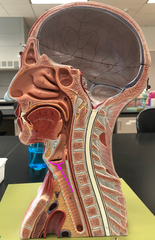
Vestibular Fold

Trachea (1)
What is W?
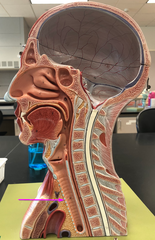
Right Primary Bronchus

Left Primary Bronchus

Secondary Bronchi

Tertiary Bronchi
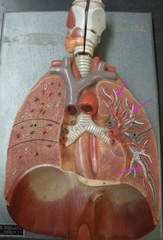
Lungs

Horizontal Fissure
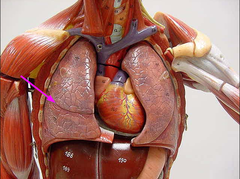
Left Oblique Fissure

Right Oblique Fissure

Right Superior Lobe

Left Superior Lobe
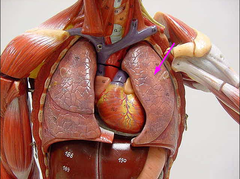
Right Inferior Lobe
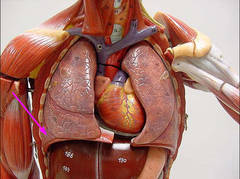
Left Inferior Lobe
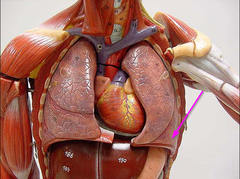
Right Middle Lobe

Alveoli (1)

Terminal Bronchiole

Segmental Artery
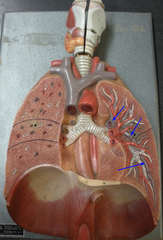
Segmental Vein

Tidal Volume (TV)
The volume of air moved in OR out of the lungs in a normal resting breath.
Expiratory Reserve Volume (ERV)
The amount of air that can be forcefully exhaled from the lungs after a normal, quiet exhalation (tidal air).
Vital Capacity (VC)
The greatest volume of air that can be expelled from the lungs after taking the deepest possible breath.
Inspiratory Reserve Volume (IRV)
The amount of air that can be forcibly inhaled after a normal quiet inspiration.
Vital Capacity Equation
VC = TV + ERV + IRV
Inspiratory Reserve Volume Equation
IRV = VC - (TV + ERV)
Residual Volume (RV)
Amount of air left in the lungs after a forced expiration.
Hyperventilate
excessively rapid and deep breathing
Apnea
absence of breathing
Decreases
1. After hyperventilating in the fresh air, blood carbon dioxide content increases or decreases?
Decrease
2. Results obtained in step 2 under collection data indicate that a decrease in blood carbon dioxide levels is followed by an increase or a decrease in the rate and depth of respiration?
Increase
3. Hyperventilation into the paper bag causes the blood carbon dioxide content to decrease or increase?
Increase
4. Results observed in step 3 under-collection of data indicate that an increase in blood carbon dioxide will be followed by a decrease or increase in the rate and depth of respiration?
did
5. The subject was able to hold their breath longer when they did or did not hyperventilate first (without a paper bag).
CO2
6. The explanation for the results observed in the preceding answer is that hyperventilation decreases the ____________ content of the blood so it takes longer for it to accumulate high enough to stimulate respiration.
Directly
7. Based on the results obtained in these experiments, you can conclude that the rate and depth of respirations are inversely or directly related to blood carbon dioxide levels?
Increases
8. Normally when blood carbon dioxide levels increase, the rate of respiration increases or decreases?
Alveoli (2)

Trachea
name the organ?

Goblet Cells
cells stain clear due to mucus

Incomplete Rings of Hyaline Cartilage

Bronchiole

Alveoli (2)
sacs/pockets in lungs

Capillaries (1)
small red circles between alveoli containing erythrocytes

Diaphragm (1)
name the organ in respiratory tract that has this tissue?

Trachea
a large membranous tube reinforced by rings of cartilage, extending from the larynx to the bronchial tubes and conveying air to and from the lungs; the windpipe.
Goblet cells
many found in pseudo stratified columnar epithelium (trachea)
Incomplete rings of hyaline cartilage
support trachea and prevent its collapse
Bronchioles
Airways in the lungs that lead from the bronchi to the alveoli.
Alveoli (3)
thin walled sacs in lungs
Capillaries
alveoli surround... in the lungs
Diaphragm
thin, dome shaped sheet of skeletal muscle which separates the thoracic and abdominopelvic cavities
Ventilation Model (inspiration)
volume up = pressure down
Ventilation Model (expiration)
volume down = pressure up