A&P2 Lab Practical 2 Review
 Call Kai
 Learn
 Practice Test
 Spaced Repetition
 Match
 Flashcards
 Knowt Play
1/37

Earn XP
Description and Tags
Week 8-12 content review
38 Terms

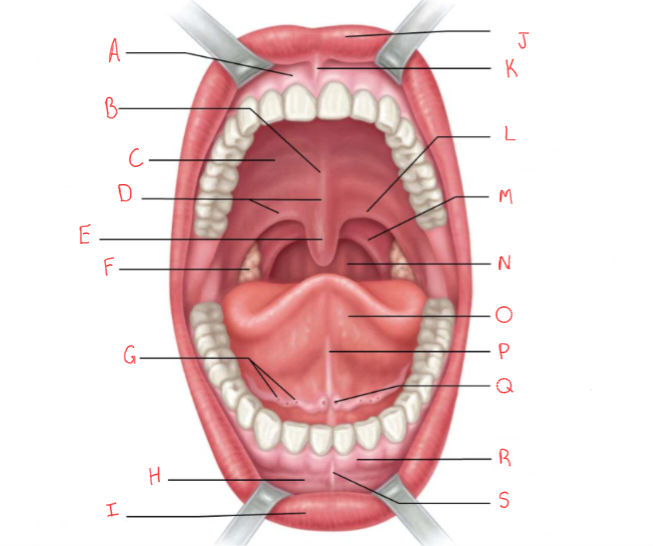
C
Hard Palate


D
Soft Palate

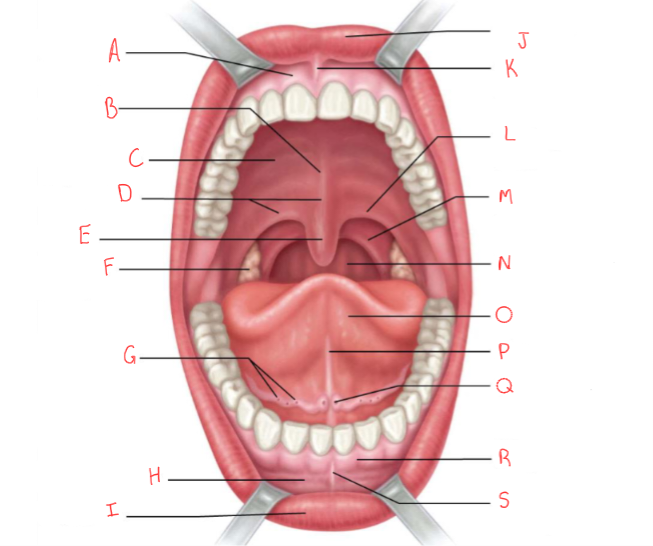
E
Uvula


F
Palatine Tonsil

A
Hard Palate

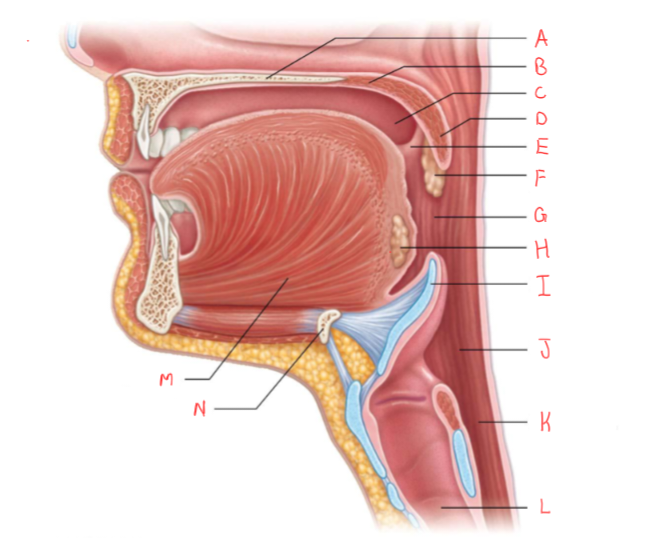
B
Soft Palate


F
Palatine Tonsil


G
Oropharynx


H
Lingual Tonsil


J
Laryngopharynx


7
Lesser Curvature
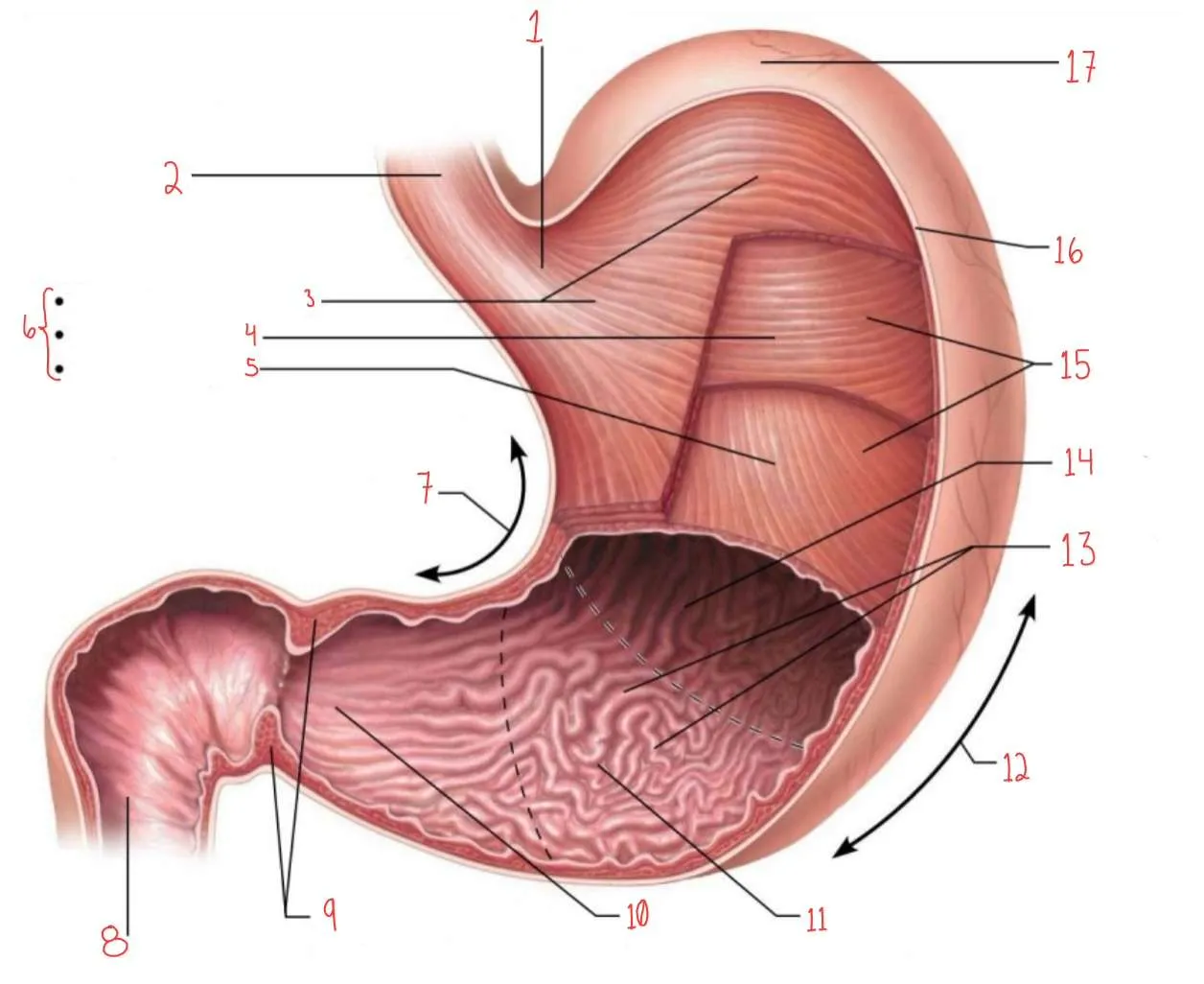

12
Greater Curvature
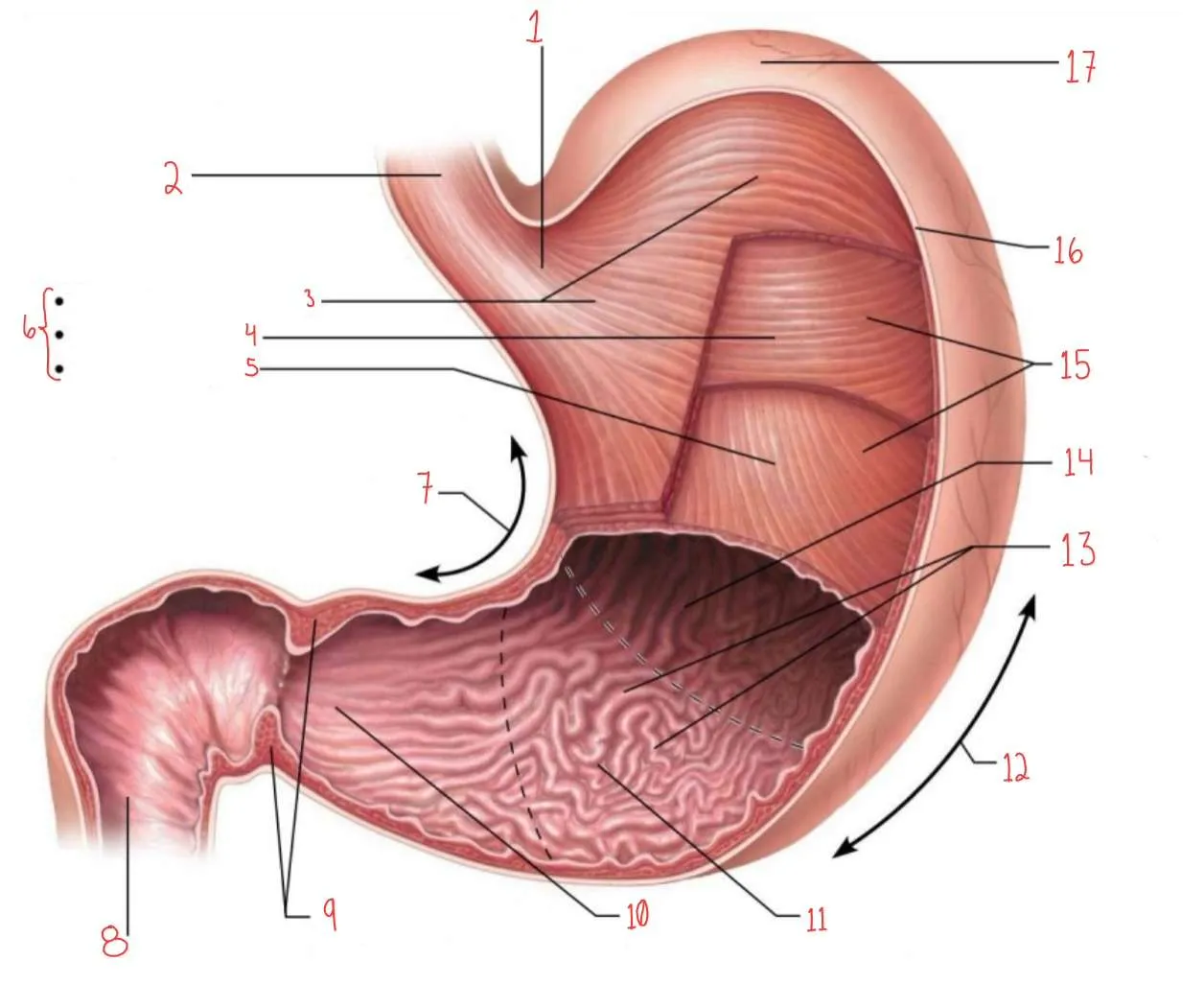

9
Pyloric Sphincter

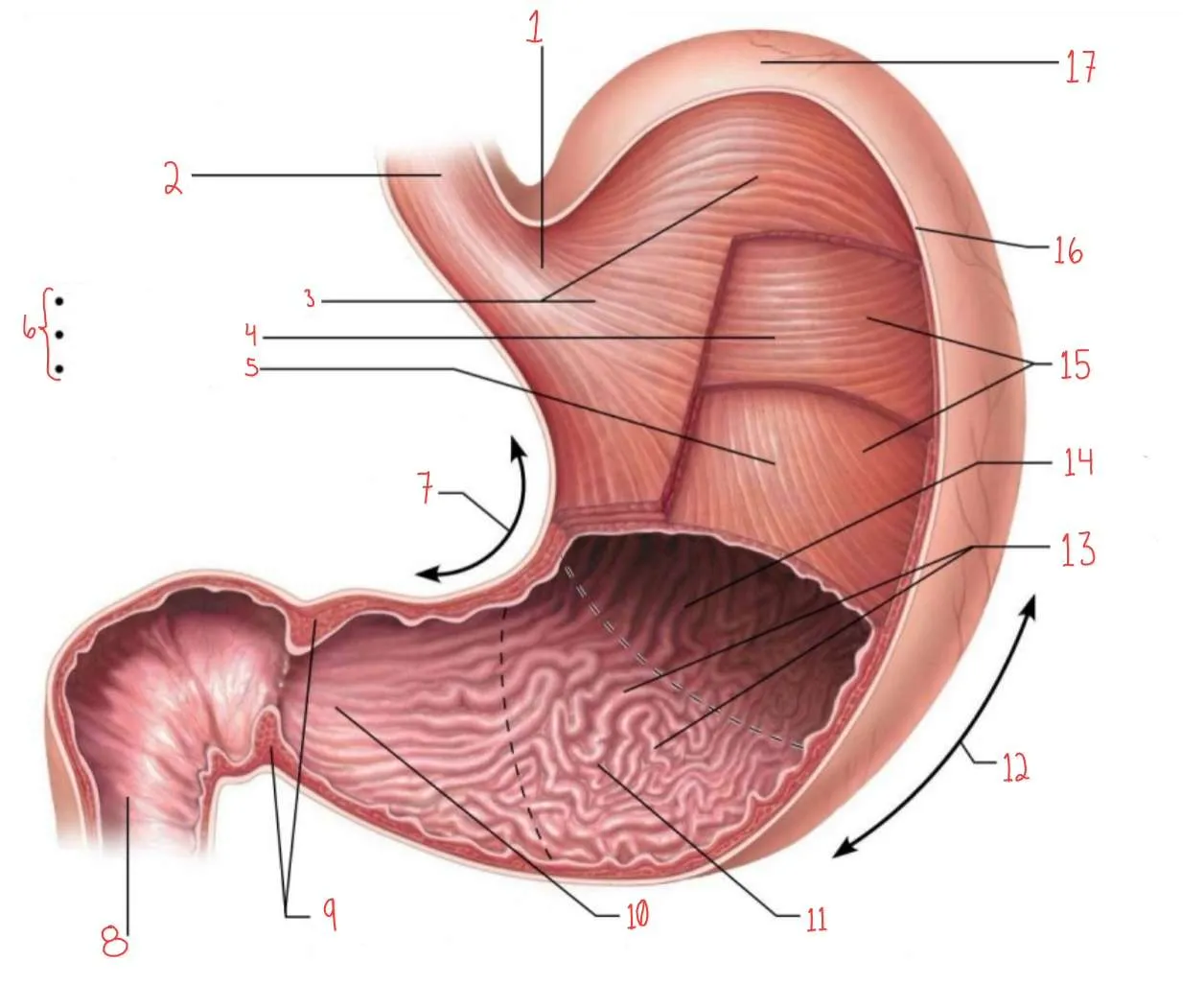
13
Rugae


4
Gastroesophageal sphincter

Enzyme(s) that breakdown carbohydrates
Salivary amylase
Pancreatic amylase
Enzyme(s) that breakdown proteins
Pepsin
Trypsin
Chymotrypsin
Enzyme(s) that breakdown lipids
Lingual lipase
Gastric lipase
Bile salts
Pancreatic lipase
Enzyme(s) that breakdown nucleic acids
Pancreatic ribonuclease
Enzyme(s) with site of action in mouth
Salivary amylase
Lingual lipase
Enzyme(s) with site of action in stomach
Pepsin
Gastric lipase
Enzyme(s) with site of action in small intestine
Pancreatic amylase
Trypsin
Chymotrypsin
Bile salts
Pancreatic lipase
Pancreatic ribonuclease
Starch and water use this enzyme to convert to maltose
Salivary amylase is used to convert starch and water into this sugar
This test turns a solution a blue-black color if there is presence of starch
Lugol’s iodine test uses the terms positive and negative to refer to the presence of this substance in a solution
This test turns a solution a green to orange color if there is presence of starch
Benedict’s blue test uses the terms positive and negative to refer to the presence of this substance in a solution

What is pictured here? How can you tell?
Pancreas; pancreatic islets

E
Mesentery


C
Duodenum


F
Jejunum


G
Ileum


G
Main pancreatic duct & sphincter


L
Bile duct and sphincter


H
Cecum


I
Appendix


E
Ascending colon


J
Rectum


K
Anal canal
