Introduction to Visual Culture Midterm Study Guide PART I.
 Call Kai
 Learn
Learn Practice Test
 Spaced Repetition
 Match
Match Flashcards
 Knowt Play
1/39

There's no tags or description
Looks like no tags are added yet.
Name | Mastery | Learn | Test | Matching | Spaced | Call with Kai | Chat |
|---|
No analytics yet
Send a link to your students to track their progress
40 Terms

a.
Date: ~1860s
Artist: Francis Bedford
Subject/Title: Mt. Snowdon in Wales
Medium: Photograph
Imperial Relationship: Formal Rule, Internal Empire

b.
Date: late 19th-mid 20th centuries
Artist: n/a
Subject/Title: ‘everyday’ of Indian life and livelihoods (“caste” to British”)
Medium: Lithographed ‘label’ on bolts of cloth
Imperial Relationship: Formal Rule, External Empire

c.
Date: ~1874
Artist: John Thomson
Subject/Title: “Street Groups, Kiu-Kang” in China
Medium: Photograph
Imperial Relationship: Informal Rule, External Empire

d.
Date: ~1857
Artist: Felice Beato
Subject/Title: Bodies uncovered following the 1857 Mutiny in India; punishments of resistance
Medium: Photograph
Imperial Relationship: Formal Rule, External Empire

e.
Date: ~1860s
Artist: Felice Beato
Subject/Title: Temple Street, Native Town in ‘traditional’ Japan
Medium: Photograph
Imperial Relationship: No informal or formal rule; own empire

f.
Date: 20th century
Artist: n/a
Subject/Title: Post Office; Japan’s modernization
Medium: Postcard
Imperial Relationship: Internal Empire
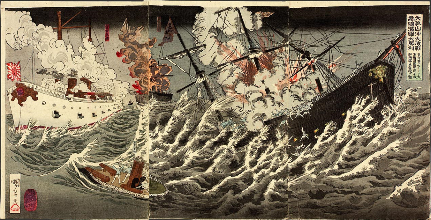
g.
Date: 19th century
Artist: n/a
Subject/Title: Japanese warships; Japan’s modernization
Medium: Woodblock print
Imperial Relationship: Internal Empire

h.
Date: Late 19th century
Artist: Hiroshige
Subject/Title: Japanese Westernization; the ‘railway’
Medium: Woodblock print
Imperial Relationship: Internal Empire

i.
Date: ~1860s
Artist: Francis Bedford
Subject/Title: Wales
Medium: Photograph
Imperial Relationship: Formal Rule, Internal Empire

j.
Date: Early 20th century
Artist: Edward Curtis
Subject/Title: “Vanishing Race-Navahos;” cultural salvage
Medium: Photograph
Imperial Relationship: Internal Empire

k.
Date: ~1860s
Artist: Felice Beato
Subject/Title: Packaging the Other (Japan) for Western tourists
Medium: Painted photograph
Imperial Relationship: No formal or informal rule; own empire

l.
Date: 1857
Artist: Francis Frith
Subject/Title: Jerusalem
Medium: Photograph
Imperial Relationship: External Empire

m.
Date: ~1870s
Artist: n/a
Subject/Title: People Eating People
Medium: Woodblock
Imperial Relationship: Internal Empire
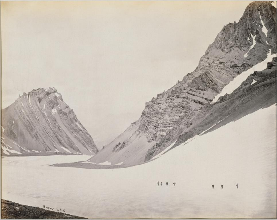
n.
Date: 1866
Artist: Bourne
Subject/Title: Himalayan Pass in India
Medium: Photograph
Imperial Relationship: Formal Rule, External Empire
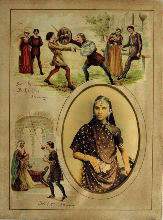
o.
Date: late 19th-mid 20th centuries
Artist: n/a
Subject/Title: Indian ‘fantasy;’ demonstrated wealth
Medium: Painting photographs
Imperial Relationship: Internal Empire

p.
Date: 19th century
Artist: Maxime Du Camp
Subject/Title: Colossal Statue
Medium: Photograph
Imperial Relationship: External Empire

q.
Date: 1900
Artist: n/a
Subject/Title: Great Pyramid of Giza; resurgence to learn about the world through these cards
Medium: Stereoptic Card
Imperial Relationship: External Empire

r.
Date: 1856-58
Artist: Shiva Lal
Subject/Title: Indian labor; processing opium
Medium: Painting
Imperial Relationship: External Empire

s.
Date: 1869
Artist: Felice Beato
Subject/Title: “The Tokaido” in Japan
Medium: Photograph
Imperial Relationship: No formal or informal rule; own empire

t.
Date: 19th century
Artist: Hiroshige
Subject/Title: “The Takaido” in Japan
Medium: Woodblock print
Imperial Relationship: Internal Empire

u.
Date: late 19th-mid 20th centuries
Artist: n/a
Subject/Title: Indians reworked British labels for “modern” and devotional needs
Medium: Lithographed labels
Imperial Relationship: Internal Empire

v.
Date: Late 19th - early 20th centuries
Artist: n/a
Subject/Title: Carlisle School Students; “conflicted acculturation”
Medium: Photograph
Imperial Relationship: Internal Empire
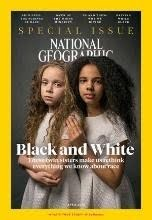
w.
Date: 2018
Artist: n/a
Subject/Title: Self-criticism of noting nothing about race at home
Medium: Magazine/Photograph
Imperial Relationship: Internal Empire

y.
Date: Early 20th century
Artist: Edward Curtis
Subject/Title: Adhering to market’s expectations about Native Americans; removing the clock
Medium: Photograph
Imperial Relationship: Internal Empire

z.
Date: 1910
Artist: n/a
Subject/Title: Thomas Wasson a student from one of the assimilation schools; runs an unloader
Medium: Postcard
Imperial Relationship: Internal Empire
“cultural salvage”
outsiders documenting and preserving cultures they consider to be disappearing, often representing cultures as frozen in the past
“missing steps”
the unspoken, often predictable mental transformations that connect different pieces of material evidence and allow viewers to infer what a representation stands for
Print capitalism
the profit-driven mass production and circulation of printed materials that helped create shared languages, ideas, and identities across large audiences
The Gaze
the power images have to influence the way viewers look at and interpret others; it can turn people into objects of observation, desire, judgement, or control
Meaning-making
process of creating, interpreting, and negotiating meaning of images and visual representations using cultural knowledge, context, and visual cues
Internal Empire
when a dominant group controls and marginalizes other groups within the same country using colonial or imperial forms of power (this can be done through images)
“Anthropology of Art”
images and other art gain meaning, value, and social power through considering the cultural context in which they were produced, circulated, and viewed
agency
the ability to act independently and influence meaning, behavior, or social relationships
cultural appropriation
the exploitative or disrespectful use of elements from a culture that is not one’s own, especially by a dominant group
“photography complex”
the network of people, technologies, institutions, and power relations that produce, circulate, and give meaning to photographs
“conflicted acculturation”
the painful, forced, or unequal adaptation of a marginalized people to a dominant culture under colonial pressure
surveillance, counter-surveillance
the state monitoring, collection, and use of information about people in order to observe, manage, control, or influence them
the public ‘watching,’ critiquing, and communicating about the state’s actions; resistance
representation
utilizing both language and images to create meaning about our world
hegemony, counter-hegemony
the power of dominant ideas to shape what people see as normal or natural
the use of alternative ideas and images to challenge what dominant groups present as normal
Tokaido
a major travel route in Japan made famous through Hiroshige’s mass-produced woodblock-print series showing its 53 travel stations